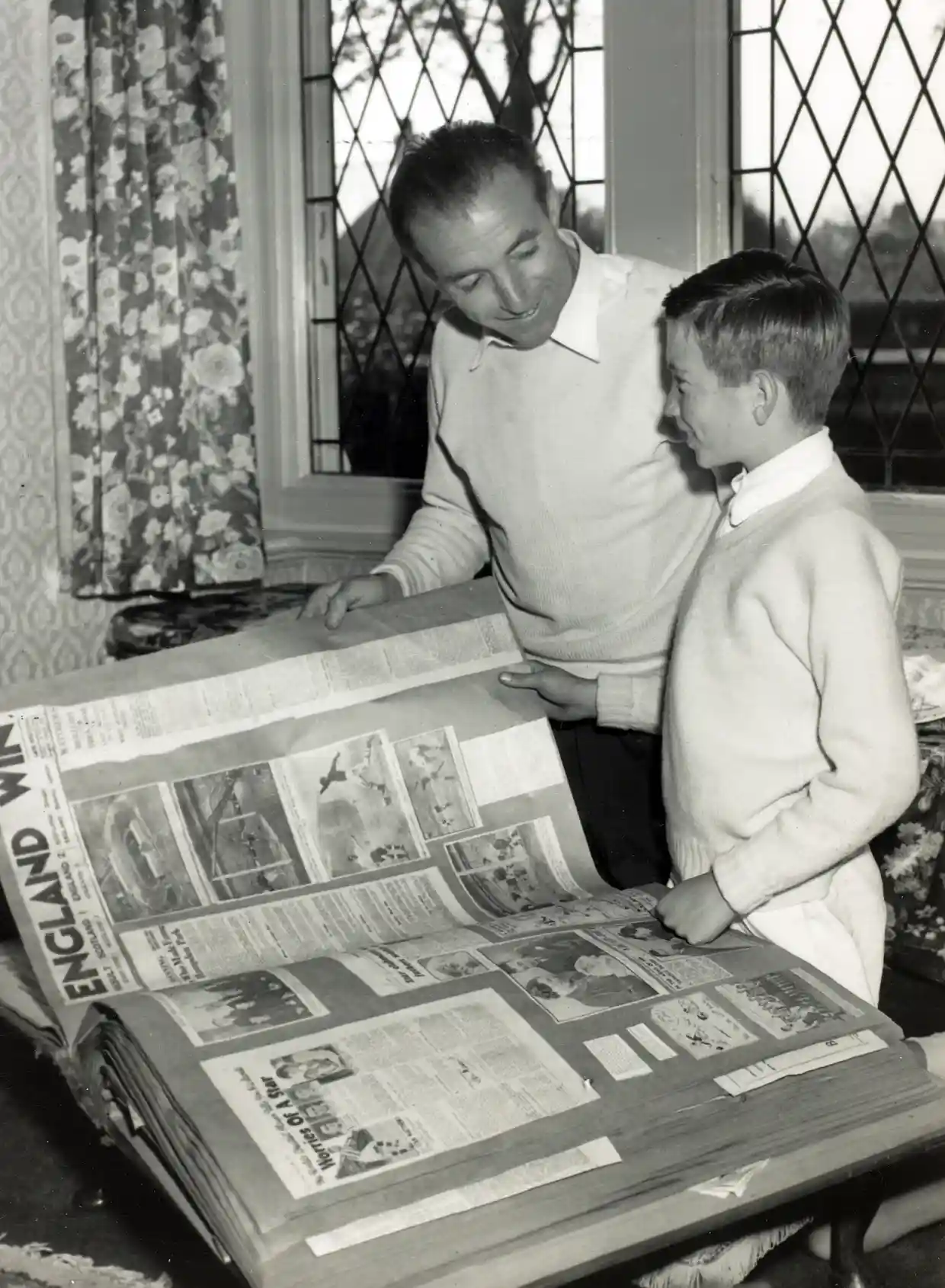
The Ballon dâOr ceremony is returning to England in a special tribute to Stanley Matthews, the legendary footballer who became the award’s inaugural winner 70 years ago. The event, scheduled to take place at London’s Palladium, offers an opportunity to celebrate the extraordinary career of a player whose influence extended far beyond the football pitch.
Matthews made history in 1956 when he received the first Ballon d’Or, an award conceived by French journalist Gabriel Hanot to recognise the best footballer in Europe. The ceremony was a modest affair compared with the modern spectacle, but the honour established Matthews as one of the most celebrated figures in the sport.
His family will attend this year’s ceremony, reflecting on a career defined by exceptional longevity, technical brilliance, disciplined training and a willingness to challenge conventional ideas about how footballers should prepare for the game. For Matthews, innovation was not limited to his dribbling skills. His approach to fitness, equipment and nutrition helped establish a model that modern professionals would later embrace.
Ballon d’Or Returns to England 70 Years After Matthews’ Historic Win
The first Ballon d’Or presentation took place at Blackpool town hall in 1956, far removed from the glamour and global attention surrounding the award today. Matthews was 41 when he received the inaugural prize from Gabriel Hanot, the influential editor of French sports newspaper L’Équipe who proposed the annual award.
The ceremony was relatively informal. Alongside the trophy, Matthews received a specially commissioned china plate from the mayor of Blackpool. His son, Stanley Matthews Jr, has recalled the occasion as a simple presentation rather than the elaborate event football fans now associate with the Ballon d’Or.
Matthews Jr is expected to attend the London ceremony alongside his sister, Jean, and her two daughters. The family sees the event as an opportunity to reflect on the scale of his father’s achievement and how the award has grown into one of football’s most prestigious individual honours.
The decision to stage the ceremony in England is a symbolic gesture towards the player who began the Ballon d’Or’s history. Matthews remains the oldest winner of the award, having claimed it at 41, and his achievement continues to stand out in an era when the honour is generally associated with players at the peak of their careers.
His victory also marked the beginning of a distinguished list of winners whose achievements have shaped football history. The award has evolved considerably since 1956, expanding its international profile and becoming a major annual occasion for players, clubs, supporters and the wider sporting world.
Stanley Matthews: The ‘Wizard of Dribble’ Who Changed Football
Stanley Matthews earned the nickname “Wizard of Dribble” through his extraordinary ability to control the ball, beat defenders and create attacking opportunities. His playing style made him a household name, while his consistency and fitness allowed him to compete at the highest level for decades.
His professional career began with Stoke City in 1932. From there, he established himself as one of England’s most recognisable footballers, known for his balance, agility, close control and ability to change direction at speed. Rather than relying on physical strength alone, Matthews used technique and timing to outmanoeuvre opponents.
His career stretched across several generations of football. He played before and after the Second World War, returning to the game after the interruption caused by the conflict. The war also affected his international career, limiting the number of appearances he might otherwise have made for England.
Matthews eventually earned 54 caps for his country, with his final international appearance coming in 1957 at the age of 42. His longevity was remarkable even by the standards of a sport in which players often retired much earlier than they do today.
His influence was not confined to his achievements on the pitch. Matthews helped popularise the idea that a footballer could extend his career through disciplined preparation, careful attention to physical condition and an understanding of how equipment could affect performance.
His legacy is therefore about more than winning the first Ballon d’Or. Matthews demonstrated that technical skill, professionalism and physical preparation could work together to sustain elite performance over an unusually long career.
How Matthews Was Ahead of His Time in Training and Fitness
Matthews Jr has described his father as a player who was ahead of his time in several aspects of professional football. His approach to training and equipment reflected a desire to gain even the smallest advantage, long before sports science became a routine part of elite football.
One example was his preference for lightweight football boots. According to his son, Matthews sought footwear that felt almost like slippers, allowing him to move quickly and maintain close control of the ball. The emphasis on lightness and mobility reflected the qualities that made him such an effective dribbler.
He also paid close attention to the playing surface. During his later years at Stoke, he reportedly arranged for the pitch to be watered before matches so that the surface would be slick. Such conditions suited his style, helping the ball move smoothly and supporting the quick footwork on which his game depended.
Pitch watering is now a familiar part of football preparation, but Matthews’ attention to the condition of the surface illustrates how carefully he considered the circumstances in which he played. He understood that small environmental factors could influence the way a match unfolded.
Fitness was another essential part of his routine. Matthews was known for early-morning exercise on the beach near his Blackpool hotel, using regular physical activity to help maintain his conditioning. His commitment to preparation contributed to his ability to continue playing well into an age when most footballers had already retired.
His approach anticipated several principles that are now central to professional sport: consistent training, attention to recovery, appropriate equipment and the importance of tailoring preparation to an athlete’s individual strengths.
Stanley Matthews’ Diet and Unusual Business Ventures
Matthews’ reputation for discipline extended to his diet and lifestyle. Famously teetotal, he was careful about maintaining his fitness and experimented with nutrition at a time when professional footballers had far fewer resources to guide their choices.
His son has joked that his father might have celebrated receiving the first Ballon d’Or with a double serving of carrot juice rather than an alcoholic drink. The anecdote captures Matthews’ distinctive approach to health and his commitment to maintaining the physical condition required for a long career.
Nutrition was also an area in which Matthews explored commercial opportunities. He experimented with vegetable juice products, although one attempt to sell the drink in cans reportedly failed because the contents spoiled. His business interests extended to football boots, hats and books.
These ventures reflected the financial realities of football during his playing days. Unlike modern stars, who can earn enormous salaries and substantial commercial income, Matthews played during a period when professional footballers faced strict limits on their wages.
The maximum wage for English footballers remained in place until 1961. As a result, even a player of Matthews’ stature could not earn anything close to the sums available to elite athletes in the modern era.
His financial circumstances highlight the enormous transformation of professional football. Today’s leading players benefit from global television rights, sponsorship agreements, commercial partnerships and social media exposure. Matthews became internationally famous in a very different economic environment, making his attempts to supplement his income understandable.
From Blackpool to Knighthood: A Career of Exceptional Longevity
Matthews’ achievements extended well beyond his inaugural Ballon d’Or victory. In 1965, he became the first active footballer to receive a knighthood, an honour that recognised his contribution to the sport and his standing in British public life.
He retired later that year at the age of 50, bringing an extraordinary playing career to a close. His longevity remains one of the most remarkable features of his story, particularly when considered against the physical demands of football and the comparatively limited medical and sports-science support available during his career.
Matthews’ final England appearance had come eight years earlier, in 1957. By then, he was already 42, demonstrating a level of durability that remains unusual in international football.
His career was also shaped by his family background. His father, Jack Matthews, was a boxer known as the Fighting Barber of Hanley. The work ethic associated with his father is often cited as an influence on Stanley’s own determination and commitment to preparation.
That discipline helped him maintain his reputation across different eras of the game. While football tactics, equipment and playing conditions changed throughout his career, Matthews continued to rely on technical ability, intelligence and a meticulous approach to his profession.
His status as the oldest Ballon d’Or winner remains a reminder that individual excellence does not always belong exclusively to younger athletes. Matthews’ victory at 41 stands as one of the award’s defining historical achievements.
Stanley Matthews and His Lasting Connection With Africa
Matthews’ influence extended beyond England and Europe through his coaching work and visits to Africa. Between 1953 and 1978, he reportedly travelled to an African country during the summer, using his reputation and experience to support the development of football in different communities.
His relationship with Ghana became particularly memorable after he visited the country following his Ballon d’Or win. Matthews took part in exhibition matches held around the period of Ghana’s independence celebrations and was presented with an ivory sword. He was also given the honorary title of “soccerhene”, meaning a soccer chief.
The experience left a lasting impression on his family. Matthews Jr has recalled that his sister still possesses the stool associated with his father’s ceremonial crowning. The episode illustrates the admiration Matthews received far beyond the British football scene.
His interest in African football was not simply a matter of celebrity appearances. Matthews sought opportunities to coach and encourage players, believing that talent could flourish when young footballers received guidance and support.
His involvement in the region also reflected a broader connection between football and community development. For Matthews, the sport provided a way to meet people, share knowledge and build relationships across national and cultural boundaries.
Stan’s Men: Matthews’ Work in South Africa During Apartheid
South Africa became another important part of Matthews’ story. During the 1970s, he developed a particular connection with footballers in Soweto, where he coached a team that became known as Stan’s Men.
Matthews helped secure sponsorship from Coca-Cola and supported the team in travelling to compete in a tournament in Brazil. The project demonstrated his commitment to helping players gain experience and opportunities beyond their immediate surroundings.
However, the work took place during apartheid, when racial segregation and government restrictions shaped nearly every aspect of life in South Africa. Matthews’ efforts to support Black footballers brought political complications, and his plans to travel and work with the team reportedly attracted opposition from the apartheid authorities.
Joe Pierce, who produced a 2017 film about Matthews, described the pressure and political involvement surrounding the project. The episode involved concerns extending beyond football, with government officials and security personnel reportedly monitoring developments.
Matthews nevertheless continued to push forward with the initiative. His family has recalled that he took pride in standing up to restrictions, and he remained impressed by the speed and talent of the South African players he encountered.
His association with Stan’s Men ended after the 1976 Soweto Uprising, a major turning point in South Africa’s struggle against apartheid. The separation was emotionally significant for some of the players involved, reflecting the relationships they had developed with the English football legend.
This part of Matthews’ legacy shows how his sporting reputation could be used to create opportunities and challenge barriers. His work in South Africa was not simply an extension of his playing career; it reflected a belief that football could connect people and help talented players develop despite difficult circumstances.
How Matthews’ Legacy Connects to Modern Football
Matthews played in an era when professional football was far less commercialised than it is today. His earnings were limited by the maximum wage, sports science was still developing, and players did not have access to the advanced facilities, recovery programmes and specialist coaching available to modern professionals.
Yet many of the principles he followed remain familiar. Modern players use carefully selected boots, individual training programmes, nutritional planning and detailed analysis of playing conditions to improve performance. Matthews’ approach to these areas offers an early example of the professional attention now expected at the highest level.
His work with African footballers also provides a historical connection to the sport’s growing international reach. Modern leagues feature players from across the world, and the Premier League in particular has become a global competition in which African footballers have made significant contributions.
That international presence reflects decades of change in scouting, player development and the movement of talent across borders. Matthews’ efforts to support players in Africa form one small but meaningful part of that broader history.
His career also remains a reminder that football’s biggest stories are not always defined by trophies alone. Longevity, technical innovation, personal discipline and a willingness to help others can shape a legacy that survives long after retirement.
Who Has Followed Stanley Matthews in Winning the Ballon d’Or?
Matthews was the first player to win the Ballon d’Or, and only a relatively small number of English players have won the award since its creation. Bobby Charlton, Kevin Keegan and Michael Owen are among the English winners who followed him.
Liberian striker George Weah also won the award, becoming the first African player to receive the honour. His victory was an important moment in the award’s history and highlighted the growing recognition of footballing talent from beyond Europe.
The Ballon d’Or has since become a global symbol of individual excellence, with winners recognised for their performances at club and international level. The award’s history now spans generations of players and reflects the evolution of football from a predominantly European competition into a truly international sport.
The player who receives the latest award will join a distinguished list, but Matthews will always retain a unique place as the inaugural winner. His achievement established a tradition that continues to attract worldwide attention every year.
Ballon d’Or Ceremony: A Tribute to a Football Pioneer
The ceremony at the London Palladium offers a fitting opportunity to revisit Stanley Matthews’ extraordinary career. From the modest presentation at Blackpool town hall in 1956 to the global spectacle the Ballon d’Or has become, the award’s history remains connected to the player who first received it.
For Matthews’ family, the occasion is also a chance to celebrate a man whose influence went beyond his reputation as a gifted dribbler. His training habits, attention to equipment, disciplined lifestyle and work with players overseas all contributed to a legacy that continues to attract interest.
Matthews died in 2000 at the age of 85. His death prompted an enormous public response in Stoke, where more than 100,000 people reportedly turned out to pay their respects. The scale of the tribute reflected the deep affection in which he was held by supporters and the wider community.
Seventy years after his first Ballon d’Or, Matthews remains a defining figure in football history. The return of the ceremony to England is more than a change of venue: it is an opportunity to recognise a pioneer whose commitment, skill and innovation helped shape the modern image of the professional footballer.
For breaking news and live news updates, like us on Facebook or follow us on Twitter and Instagram. Read more on Latest Football on thefoxdaily.com.






COMMENTS 0