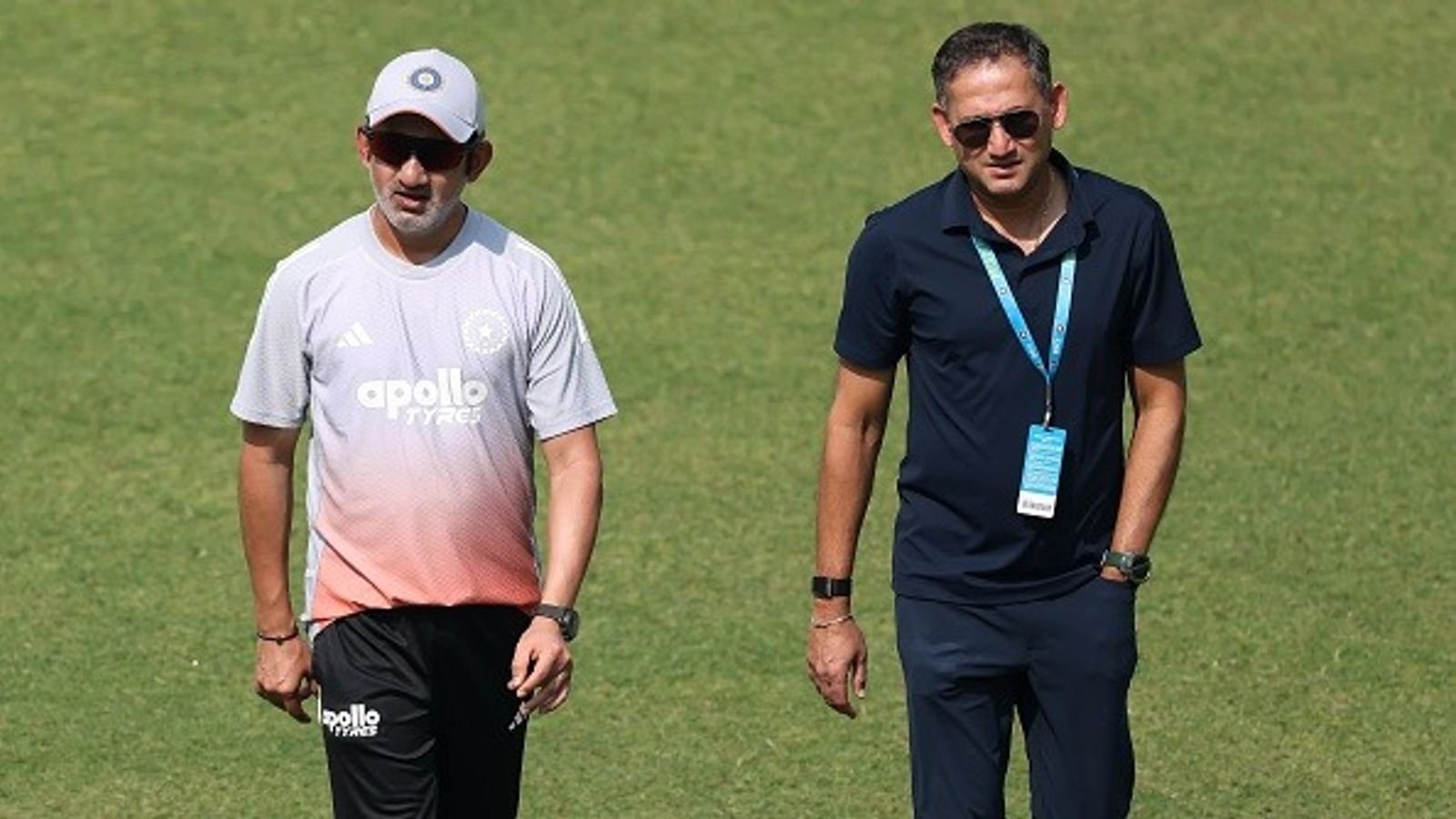
The BCCI review meeting with Gautam Gambhir, Ajit Agarkar and VVS Laxman is set to become an important checkpoint for Indian cricket after a difficult overseas run. The Board of Control for Cricket in India has summoned the head coach, chief selector and Centre of Excellence chief to its Mumbai headquarters on September 3, according to a report by The Indian Express.
The timing of the meeting is significant. India have endured a disappointing European campaign, with their previously unbeaten T20I run ending in Ireland before a heavy series defeat against England. The ODI campaign in England also ended 2-1 in the hosts’ favour despite India winning the opening match in Birmingham.
However, the review is expected to go beyond match results. Player fitness, injury rehabilitation, communication between different departments, workload management and the planning of India’s next major assignments are likely to receive serious attention.
That makes this meeting more than a routine performance review. It could become an opportunity for the BCCI to examine whether India’s wider cricketing system is functioning efficiently when international demands collide with franchise cricket, player workload and increasingly packed calendars.
Why the BCCI has called Gambhir, Agarkar and Laxman
The three men represent three different but interconnected parts of India’s cricket structure.
Gautam Gambhir is responsible for the senior team’s coaching and tactical direction. His assessment will therefore be important when the board examines India’s performances and preparation during the overseas assignments.
Ajit Agarkar, as chief selector, represents the selection side. Squad construction, player availability, replacement decisions and the management of workloads all intersect with the selection committee’s responsibilities.
VVS Laxman, who heads the Centre of Excellence, is central to India’s high-performance and rehabilitation ecosystem. His presence means the meeting can address not only which players were unavailable, but also how injuries were managed and how information moved between the medical, selection and team-management departments.
Bringing all three together allows the BCCI to examine the problem from multiple angles instead of treating every defeat or injury as an isolated incident.
India’s overseas results have forced a wider conversation
The immediate trigger for the review is India’s underwhelming overseas performance.
India’s long unbeaten T20I streak came to an end with a 2-0 defeat in Ireland. The problems continued during the England tour, where India suffered a 4-0 T20I series loss.
The defeat at Nottingham was particularly damaging, with England winning by 125 runs. India subsequently lost the ODI series 2-1 after taking an early advantage in Birmingham.
Results alone do not explain why an international team struggles. Conditions, player availability, opposition quality and individual performances can all influence a series. But when setbacks occur across formats and are accompanied by fitness and preparation concerns, the board has a legitimate reason to examine the entire process.
The key question is therefore not simply whether India lost. It is whether the systems behind preparation, selection and player management gave the team the best possible chance to succeed overseas.
The biggest issue could be communication, not just injuries
One of the most important themes surrounding the meeting is reportedly communication.
India’s cricket ecosystem involves several departments. The selection committee decides squads, the team management prepares players for matches, the Centre of Excellence handles aspects of rehabilitation and performance support, while players also have obligations with their IPL franchises and other domestic commitments.
When information does not move quickly between these groups, problems can multiply.
The situation surrounding Jasprit Bumrah has reportedly raised questions because selectors were allegedly not fully aware of his fitness status for an extended period. Washington Sundar’s setback and Sai Sudharsan’s prolonged recovery have also added to concerns about how injury information is communicated and managed.
The significance of such issues goes beyond one player. Selection decisions depend on accurate medical information. Coaches need to know which players are genuinely available. Players need clarity about their rehabilitation targets. And the board needs reliable information when planning tours months in advance.
In that sense, Thursday’s meeting could be as much about establishing clearer communication protocols as it is about analysing cricket results.
Why injury management has become a major BCCI concern
Indian cricket’s workload problem has become increasingly complicated because the modern calendar gives players little time to recover.
International cricket now overlaps with major franchise competitions, with the IPL occupying a particularly important position in the Indian cricket ecosystem. Players can spend weeks playing high-intensity matches before moving into international assignments.
For a fast bowler, the physical demands can be especially significant. Repeated high-speed bowling, travel, training and match workloads require careful monitoring.
The BCCI therefore faces a difficult balancing act. It wants its best players available for international cricket, while the IPL remains a crucial part of Indian cricket’s commercial and competitive structure.
The answer cannot simply be to blame franchise cricket. Instead, the more practical challenge is determining how workload can be monitored across competitions and how players can be given appropriate recovery periods without weakening either domestic or international cricket.
Injuries could influence India’s next phase
The problem becomes more urgent because India have several important assignments ahead.
The upcoming T20I series against Afghanistan is already expected to involve fitness assessments for several players. Jasprit Bumrah, Washington Sundar, Nitish Reddy and Harshit Rana are among those whose availability is linked to fitness considerations.
The assessments scheduled for September 9 could therefore provide an early test of whether India’s rehabilitation and selection processes are producing clearer information.
Beyond that series, India’s upcoming New Zealand tour adds another layer of importance. Long-term planning will be required to ensure that key players arrive at major assignments physically prepared rather than recovering from injuries immediately before selection deadlines.
Hardik Pandya presents a different kind of selection problem
Hardik Pandya’s fitness situation could also feature prominently in the wider discussion.
The all-rounder remains an important part of India’s plans for the 2027 World Cup, but his bowling workload presents a tactical complication. His current ability to bowl only around five or six overs in an ODI limits how a captain can construct a bowling attack.
An all-rounder provides enormous tactical value when fully fit because he effectively gives a team another specialist without requiring an additional place in the XI. But that advantage decreases if the player’s bowling contribution has to be carefully restricted.
This creates a difficult question for selectors and the coaching staff: should the team continue building around a player whose workload is limited, or should selection plans prioritize greater flexibility and bowling depth?
There is no simple answer. Pandya’s batting and experience remain valuable, but his workload has to be considered within the broader team balance.
What the BCCI should examine beyond the scorecards
A useful review cannot stop at win-loss records. Several deeper questions need to be addressed.
- Preparation: Did players receive enough preparation time before overseas series?
- Selection: Were squads built around players who were genuinely fit and available?
- Communication: Did selectors, coaches, medical staff and players receive timely updates?
- Workload: Were players’ cumulative workloads tracked across international and franchise cricket?
- Rehabilitation: Did injured players follow clear and measurable return-to-play programmes?
- Backup planning: Did India have enough ready replacements when important players became unavailable?
- Overseas strategy: Were preparation methods specifically designed for foreign conditions?
These questions could produce more meaningful answers than simply asking why India lost a particular match.
India’s overseas problem needs a long-term solution
One of the biggest mistakes any cricket administration can make is treating every overseas defeat as a completely separate event.
International cricket rewards teams that build systems rather than temporary solutions. A strong overseas programme requires succession planning, specialist preparation, injury prevention and a reliable group of players capable of stepping into the team when first-choice options are unavailable.
India have the depth to manage injuries better than many international teams, but depth is only useful when replacement players are prepared for the demands of international cricket.
That means the BCCI’s review should also look beyond the current senior squad. The Centre of Excellence and domestic cricket structure can play an important role in ensuring that emerging players are physically and technically prepared before they are suddenly required at international level.
Comparison: short-term reaction vs long-term planning
| Short-term approach | Long-term approach |
|---|---|
| Focuses mainly on recent defeats | Examines the complete preparation system |
| Finds immediate replacements | Builds a reliable player pipeline |
| Responds after injuries occur | Tracks workload and recovery proactively |
| Changes tactics after poor results | Develops format and condition-specific plans |
| Looks for individual accountability | Improves communication between departments |
The second approach is likely to provide greater value. India’s cricketing resources are enormous, but resources alone do not guarantee overseas success. The system must ensure that information, preparation and decision-making are connected.
Why the 2027 World Cup should already be part of the conversation
The next ODI World Cup is still ahead, but India’s planning cannot wait until the tournament year.
Major tournaments require clarity about player roles long before the competition begins. The management needs to know which players are first-choice options, who provides backup and which players can cover multiple roles.
Hardik Pandya’s workload is therefore relevant to the broader discussion. So is the fitness of India’s fast bowlers and the development of younger players.
If the BCCI uses this review to establish a clear roadmap through 2027, the meeting could become much more important than its immediate headline suggests.
The Gambhir-Agarkar partnership will face scrutiny
The relationship between the head coach and chief selector is another area worth watching.
Coaches and selectors do not always need to agree on every decision, but they need a common understanding of player roles, fitness standards and long-term priorities.
For example, if the coaching staff wants a player for a particular tactical role but the selection committee considers that player’s workload unsafe, the disagreement must be resolved through a clear process rather than last-minute communication.
The BCCI review provides an opportunity to establish precisely those processes.
That could involve clearer fitness reporting, regular meetings between departments and defined responsibilities for communicating injury updates.
A unique angle: India’s biggest advantage can also create its biggest challenge
India’s extraordinary cricket ecosystem is both an advantage and a challenge.
The country has a huge talent pool, the IPL provides elite competitive experience, domestic cricket produces a constant stream of players and the national team has access to extensive performance resources.
But the same ecosystem creates a crowded calendar.
A player can move from domestic cricket to the IPL, then into international cricket and back into franchise competition within a relatively short period. Different teams may have different workloads, training methods and medical systems.
The BCCI’s challenge is therefore not finding more cricket opportunities. It is coordinating the opportunities that already exist.
If the board can create better information-sharing between franchise, national and high-performance environments, India’s enormous cricket infrastructure could become an even greater competitive advantage.
What could change after the review meeting?
The meeting may not immediately produce dramatic public announcements. Important administrative decisions often require further consultation, particularly when they involve medical protocols, player workloads and long-term selection policy.
However, several changes could emerge over time.
- More structured injury reporting between the Centre of Excellence and selectors.
- Clearer communication about player availability before squad announcements.
- Greater monitoring of workloads for fast bowlers and all-rounders.
- More detailed overseas preparation plans.
- Stronger succession planning for the 2027 World Cup cycle.
- Closer coordination between international and franchise cricket commitments.
The effectiveness of the meeting will ultimately be judged not by the seriousness of the discussion but by whether those processes actually improve.
Prediction: fitness management could become India’s defining priority
The most likely long-term outcome is a greater emphasis on availability rather than simply selecting the biggest names.
India have enough talent to field strong teams even when several first-choice players are missing. But constant injuries can disrupt combinations, prevent players from building rhythm and force coaches to repeatedly change tactical plans.
For the 2027 World Cup cycle, maintaining a stable core could become more important than ever.
That does not mean players should be protected from every workload. Instead, India’s system needs to become better at identifying when a player is ready, when additional recovery is necessary and when another player should be developed as cover.
What the BCCI review means for Team India
The BCCI’s decision to bring Gautam Gambhir, Ajit Agarkar and VVS Laxman together reflects the seriousness of the issues facing Indian cricket after a disappointing overseas period.
The defeats in Ireland and England have naturally attracted attention, but the deeper concerns involve fitness, workload, rehabilitation, communication and long-term planning.
That is why the September 3 meeting could prove significant. It gives the board an opportunity to move beyond reacting to individual results and examine whether India’s wider cricket structure is preparing the national team effectively.
For Gambhir, the review offers a chance to explain the team’s preparation and tactical requirements. For Agarkar, it provides an opportunity to address selection and player-availability issues. For Laxman, the focus will likely include rehabilitation, fitness pathways and communication from the Centre of Excellence.
The most important outcome should not be a single decision or a public statement. It should be a clearer system in which the selectors, coaching staff, medical teams and players operate from the same information.
India’s next challenge is not merely to win the next series. It is to build a team that can remain competitive across conditions, formats and demanding schedules.
If the BCCI uses this review as the starting point for that broader reset, India’s recent overseas struggles could eventually become a useful turning point rather than just another disappointing chapter.
For breaking news and live news updates, like us on Facebook or follow us on Twitter and Instagram. Read more on Latest Cricket on thefoxdaily.com.






COMMENTS 0