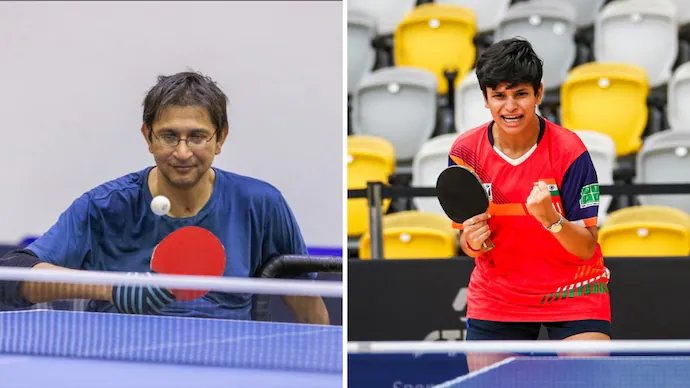
Tamil Nadu Chief Minister C. Joseph Vijay has announced a cash reward of ₹30 lakh each for para table tennis players Jehan Dorab Madan and Baby Sahana Ravi following their bronze-medal performances at the Asian Para Games 2026 in Aichi-Nagoya, Japan. The announcement recognises the athletes’ achievements on the continental stage and celebrates their contributions to Indian para table tennis.
Vijay congratulated both players through separate posts on social media platform X, praising their dedication and the pride they have brought to Tamil Nadu and the country. The financial incentives are intended to recognise their performances at a major international sporting event and encourage other aspiring para athletes to pursue excellence.
While Jehan Madan secured bronze in the men’s singles Class 1 event, Sahana Ravi earned a place on the podium in the women’s singles Class 9 competition. Sahana’s achievement was particularly significant, as she became one of the Indian para table tennis players to win a medal in the standing category at the Asian Para Games, alongside compatriot Prachi Pandey.
The announcement highlights the growing recognition of para sports in India, where athletes continue to demonstrate their abilities and challenge expectations through performances at international competitions.
CM Vijay Announces ₹30 Lakh Reward for Jehan Madan
In his message congratulating Jehan Dorab Madan, Chief Minister Vijay praised the para table tennis player for winning bronze in the men’s singles competition. The ₹30 lakh incentive was announced in recognition of Madan’s performance at the Asian Para Games.
Vijay also expressed hope that the athlete’s achievement would inspire young para athletes across Tamil Nadu. By recognising Madan’s success, the state government has highlighted the importance of supporting athletes who represent India at major international events.
The bronze medal marked an important accomplishment for Madan, who competed in the men’s singles Class 1 category. The classification is intended for wheelchair athletes with severe impairments that significantly affect sitting balance and the playing arm.
Success in para table tennis requires a combination of technical ability, tactical awareness, concentration and adaptability. Athletes must adjust their playing styles to the demands of their classifications while competing against opponents with similar functional limitations.
Madan’s medal contributed to India’s overall campaign in para table tennis at the continental competition. His achievement also brought recognition to Tamil Nadu’s para sporting community, demonstrating the impact athletes from the state can make on the international stage.
Sahana Ravi Receives Recognition for Women’s Singles Bronze
Vijay also announced a ₹30 lakh cash incentive for Baby Sahana Ravi after she won bronze in the women’s singles Class 9 event. In a separate message, the Chief Minister congratulated the athlete and praised her determination and commitment to the sport.
“Sportswoman Baby Sahana Ravi has accomplished this feat through her hard work and dedication,” Vijay said, wishing her more victories and further success in bringing pride to Tamil Nadu and India.
The Chief Minister’s message recognised the effort required to reach the semifinals of a major international tournament. Sahana’s bronze medal represented a significant milestone for her career and added to India’s achievements in para table tennis.
Her performance also carried wider significance for standing-category athletes. By reaching the podium at the Asian Para Games, Sahana helped demonstrate the progress being made by Indian players competing in classifications beyond wheelchair events.
The ₹30 lakh reward provides official recognition of her performance while reinforcing the Tamil Nadu government’s support for athletes who achieve success at international competitions. It also places a spotlight on para table tennis, a sport in which Indian players continue to pursue greater visibility and stronger results.
Sahana Ravi Makes History in the Standing Category
Sahana’s bronze medal was significant beyond the individual achievement. She became one of the Indian para table tennis players to win a medal in the standing category at the Asian Para Games, alongside compatriot Prachi Pandey.
Standing-category para table tennis features athletes who compete while standing and are classified according to their impairments and functional abilities. Sahana’s result in Class 9 marked an important breakthrough for India’s representation in these classifications at the continental event.
However, her route to the podium included a difficult semifinal against China’s Mao Jingdian, a five-time Paralympic gold medallist. Sahana lost the match 8-11, 2-11, 4-11, ending her hopes of reaching the final.
Despite the defeat, her semifinal appearance secured a bronze medal. Reaching the last four of the competition was a notable achievement, particularly given the quality of the opposition she faced.
Competing against an opponent with Mao’s experience presented a demanding challenge. The Chinese player has established herself as one of the leading figures in para table tennis, and the match offered Sahana an opportunity to test herself against an accomplished international competitor.
Although Sahana could not progress to the final, her performance ensured that she returned home with a medal and a place in India’s successful campaign.
Prachi Pandey Adds Another Bronze Medal for India
India’s progress in the standing category received further encouragement through Prachi Pandey’s bronze medal in the women’s Class 6 event. Her podium finish, alongside Sahana’s result, marked an important moment for Indian para table tennis at the Asian Para Games.
The achievements of both athletes demonstrated that India’s success in the sport extends across multiple classifications. Their medals also provided valuable recognition for standing-category players, whose performances have helped broaden the country’s presence in international para table tennis.
For athletes competing at this level, reaching the podium represents more than an individual accomplishment. It can also help raise awareness of para sports, encourage greater participation and inspire younger players to pursue competitive opportunities.
Sahana and Prachi’s performances may therefore have an impact beyond the immediate results. Their achievements offer examples for aspiring athletes who want to compete internationally and show that Indian players can challenge established competitors across different classifications.
India Improves on Its Previous Asian Para Games Performance
India’s overall para table tennis medal tally at the 2026 Asian Para Games surpassed its performance at the previous edition, when the country won two bronze medals.
The improved campaign reflects the contributions of Indian players across different events and classifications. Reaching the semifinals and securing podium finishes in Japan provided the team with encouraging results as it continues to build its standing in international para table tennis.
While individual medals remain important, a country’s overall performance also depends on the depth of its athletes and their ability to compete across multiple categories. India’s results at Aichi-Nagoya highlighted contributions from both wheelchair and standing-category players.
Jehan Madan’s bronze in men’s singles Class 1 and the medals won by Sahana Ravi and Prachi Pandey added to the country’s achievements. Their performances helped improve on the previous edition’s medal haul and provided further evidence of India’s growing participation in the sport.
The results also underline the importance of continued opportunities for para athletes to compete at high levels. International tournaments offer experience against elite opponents, while strong performances can encourage greater attention to training, coaching and athlete development.
Why Jehan Madan’s Class 1 Medal Matters
Jehan Madan’s bronze medal in the men’s singles Class 1 event highlighted the skill and determination required to compete at the highest level of wheelchair para table tennis.
Class 1 is designed for athletes with severe impairments that affect sitting balance and the playing arm. These functional challenges influence how competitors position themselves, control their movements and execute shots during a match.
Para table tennis requires athletes to combine precise ball placement with quick decision-making and an understanding of their opponent’s strengths and weaknesses. In wheelchair classifications, players must also adapt their movement and positioning to their individual capabilities.
Madan’s performance in Japan earned him a bronze medal and contributed to India’s broader success at the competition. The recognition from the Tamil Nadu government further highlighted the significance of his result.
For Tamil Nadu, the achievement represents another opportunity to celebrate a local athlete competing successfully at an international level. The state’s decision to provide a ₹30 lakh incentive reflects its recognition of the commitment and effort involved in reaching the podium.
Tamil Nadu Government Reinforces Support for Para Athletes
The announcement of equal cash rewards for Jehan Madan and Sahana Ravi highlights the Tamil Nadu government’s effort to recognise achievements in para sports. By awarding ₹30 lakh to each athlete, the state has acknowledged their contributions without distinguishing between their respective events or classifications.
Financial incentives can provide meaningful recognition for athletes who represent their country in demanding international competitions. They also communicate that performances in para sports deserve the same attention and appreciation as achievements in other sporting disciplines.
Beyond the immediate rewards, public recognition can help bring greater visibility to athletes and encourage more young people with disabilities to explore competitive sports. The success of established competitors can play an important role in challenging misconceptions about disability and highlighting the opportunities available through sport.
For aspiring para table tennis players in Tamil Nadu, the achievements of Madan and Sahana provide examples of what dedication and sustained effort can accomplish. Their medals demonstrate that athletes from the state can compete at a high level and earn recognition on an international platform.
Jehan Madan and Sahana Ravi Lead a Proud Moment for Indian Para Table Tennis
The ₹30 lakh rewards announced by Chief Minister Vijay celebrate two athletes whose bronze medals contributed to India’s improved para table tennis campaign at the Asian Para Games 2026 in Japan.
Jehan Madan earned recognition for his performance in men’s singles Class 1, while Sahana Ravi made a significant contribution in women’s singles Class 9. Sahana’s medal was particularly noteworthy because of its importance for India’s standing-category competitors, alongside Prachi Pandey’s bronze in Class 6.
India’s performance surpassed its two-bronze medal tally from the previous edition, providing an encouraging result for the country’s para table tennis programme. The achievements of Madan, Sahana and their teammates have also brought greater attention to the skill, commitment and determination required to succeed in the sport.
With the state government announcing ₹30 lakh for each of the two athletes, Tamil Nadu has formally recognised their achievements and the pride they have brought to the state and India. Their performances in Aichi-Nagoya will serve as an inspiration for aspiring para athletes seeking to make their own mark on the international stage.
For breaking news and live news updates, like us on Facebook or follow us on Twitter and Instagram. Read more on Latest Sports on thefoxdaily.com.





COMMENTS 0