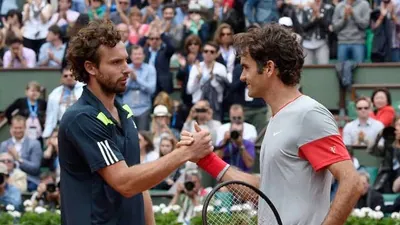
Ernests Gulbis remains one of the most fascinating examples of unfulfilled potential in modern Tennis. The Latvian possessed the weapons required to compete with the greatest players of his generation, and on his best days, he proved that repeatedly.
Gulbis defeated Novak Djokovic, beat Roger Federer twice and pushed Rafael Nadal to the limit on clay. He also reached the semi-finals of the 2014 French Open and climbed as high as world No. 10.
Those achievements would represent an outstanding career for many players. Yet Gulbis’ story is remembered differently because his talent suggested that even greater success was possible.
His powerful serve, aggressive baseline game and fearless shot-making made him capable of producing extraordinary tennis. The problem was sustaining it. Injuries, inconsistent performances, motivation issues and controversies away from the court repeatedly interrupted his progress.
That combination made Gulbis a fascinating figure. Like Nick Kyrgios years later, he became associated with spectacular giant-killing performances and an unpredictable personality, creating the impression of a player who could accomplish almost anything but struggled to consistently produce his best tennis.
The Early Promise of Ernests Gulbis
Gulbis emerged from Latvia with considerable expectations and developed at the Niki Pilic Academy in Munich, where he trained alongside a young Novak Djokovic.
Training around elite prospects gave Gulbis an early understanding of the standards required to reach the highest level. He had the physical tools and attacking mentality to compete against established players, but his development was never completely linear.
One of his first major statements came in 2009 at the Brisbane International. Gulbis faced defending Australian Open champion Novak Djokovic, who was then ranked world No. 3.
Instead of being overwhelmed by the occasion, Gulbis played aggressively and secured a straight-sets victory. He won 6-4, 6-4, producing one of the biggest victories of his young career.
It was particularly notable because Djokovic had already established himself as one of the leading players in men’s tennis. Gulbis’ victory showed that his ceiling was considerably higher than his ranking suggested.
Ironically, that victory remained Gulbis’ only success against Djokovic. The pair met eight times during their professional careers, with Djokovic winning the other seven encounters.
The Roger Federer Upset That Changed the Conversation
Gulbis took another significant step forward in 2010 when he faced Roger Federer at the Rome Masters.
Federer was one of the dominant figures of the sport, while Gulbis entered the tournament ranked around No. 40 in the world. The ranking difference suggested a difficult assignment, but Gulbis played without fear.
He defeated Federer in three sets, producing a major upset at the Foro Italico. The result was particularly notable because it ended Federer’s long run of avoiding first-round defeats at the tournament.
The victory demonstrated one of Gulbis’ defining characteristics: when his timing was right and his aggressive tennis clicked, even the greatest players could struggle to contain him.
His tournament did not end there. Gulbis subsequently faced Nadal on clay and pushed the Spaniard into a deciding set before losing 6-4, 3-6, 6-4.
The defeat was hardly a disappointment. Nadal was one of the greatest clay-court players in tennis history, yet Gulbis managed to take a set and seriously challenge him.
Nadal later acknowledged the quality of Gulbis’ game and suggested that the Latvian possessed the ability to reach the top 10.
Why the Nadal Match Was So Significant
The 2010 Rome meeting offered an early glimpse of what Gulbis could accomplish on clay. His aggressive game was particularly dangerous when he could take the ball early and dictate rallies.
Nadal’s defensive ability eventually proved decisive, but Gulbis had already demonstrated that he could attack one of the sport’s greatest defenders without backing away from the challenge.
That performance also highlighted an important pattern in Gulbis’ career. His peak level was not merely good enough to compete with top players; it was sometimes good enough to make them uncomfortable.
The challenge was turning those isolated performances into a consistent season.
His Best Grand Slam Run Came at Roland Garros
The defining achievement of Gulbis’ career arrived at the 2014 French Open.
Gulbis had already shown promise at Roland Garros, reaching the quarter-finals in 2008. Six years later, however, he went even further and produced the deepest Grand Slam run of his career.
His path included a major victory over Federer in the fourth round. The Latvian won a five-set battle against the Swiss star, adding another major chapter to their rivalry.
Gulbis then defeated Tomas Berdych in the quarter-finals, earning his place in the final four of a Grand Slam tournament for the first and only time.
The semi-final against Djokovic proved to be the end of the run. Nevertheless, reaching the last four in Paris represented a huge milestone.
The tournament also helped Gulbis achieve a career-high ranking of world No. 10. For a brief period, the player who had always appeared capable of challenging the biggest names finally looked like he had found consistency at the highest level.
Gulbis and Federer: A Remarkable Record Against a Legend
Gulbis’ record against Federer became one of the most memorable parts of his career.
He defeated the Swiss great twice, including once at the French Open. For a player who never established himself permanently among the world’s elite, beating Federer on multiple occasions was an extraordinary achievement.
His 2014 Roland Garros victory was especially important because it came during his deepest Grand Slam run. It demonstrated that his powerful game was capable of surviving the pressure of a best-of-five match against an all-time great.
However, Gulbis’ success against Federer also illustrated the contrast that defined his career. He could defeat a legendary opponent one week and then struggle to reproduce the same level against a much lower-ranked player.
The Nadal Rivalry Produced Another Memorable Match
Gulbis’ clashes with Nadal were often competitive, but their 2013 Rome meeting was particularly dramatic.
Gulbis started the match brilliantly, taking a commanding lead in the opening set. His aggressive tennis disrupted Nadal’s rhythm and allowed him to attack from inside the baseline.
He eventually won the opening set 6-1 and moved into a strong position in the second. For a period, Nadal appeared genuinely vulnerable on the surface where he had built one of the greatest records in sports.
Nadal ultimately recovered and won the match 1-6, 7-5, 6-4. The comeback demonstrated the Spaniard’s extraordinary resilience, but Gulbis’ performance remained significant because he had exposed Nadal to sustained pressure on clay.
The match also produced a memorable exchange afterward. Gulbis argued that he had been the better player during parts of the contest, while Nadal responded by suggesting that the Latvian needed greater composure and patience if he wanted to realize his talent.
The disagreement captured the personality contrast between the two players. Nadal was known for relentless discipline and consistency, while Gulbis often embraced a much more unpredictable approach.
Talent Was Never the Main Question
When discussing Gulbis, the central issue is rarely whether he had enough ability. His victories over Djokovic and Federer, his performances against Nadal and his French Open semi-final answered that question.
The bigger question was whether he could maintain the standards required to compete with the world’s best throughout an entire season.
Tennis is particularly demanding because success requires performance week after week. A player may produce an extraordinary tournament, but maintaining a top ranking requires consistent results across different surfaces, opponents and conditions.
Gulbis often struggled with that part of the sport.
His game could look spectacular when everything was working. But when his timing disappeared or his concentration dropped, his results could change dramatically.
The Temperament That Became Part of His Reputation
Gulbis’ personality became almost as recognizable as his tennis.
He was known for his emotional reactions during matches and his willingness to speak openly during interviews. Racket-breaking incidents and blunt comments contributed to an image of a player who refused to behave according to the conventional expectations of professional tennis.
That attitude made him entertaining to some fans but also contributed to questions about whether he was giving the sport the level of commitment required to reach his full potential.
Gulbis himself often appeared comfortable with being unconventional. He criticized what he considered the overly polite culture of professional tennis and argued that the sport could benefit from more personality and competitive intensity.
His outspoken nature ensured that his career generated headlines even when his results did not.
Controversies Added to the Story
Gulbis’ career also included several controversies away from the court. Some of his comments attracted criticism, particularly when he discussed gender and professional tennis.
There was also a legal incident in Sweden in 2009 involving a prostitution-related charge during a tournament week. Gulbis described the episode as a misunderstanding and paid a fine.
These incidents became part of the wider narrative surrounding him, reinforcing the perception that he was a player whose life outside tennis could be almost as unpredictable as his performances inside the stadium.
However, it is important to separate controversy from sporting achievement. His results on court remain the clearest evidence of his ability, while statements and off-court incidents help explain why his public image became so distinctive.
The Decline After Reaching World No. 10
Gulbis’ climb to world No. 10 in 2014 represented the peak of his career. Unfortunately, it did not become the beginning of a sustained period among the game’s elite.
Instead, his ranking began to slide as injuries and inconsistent results affected his progress.
By 2017, he had fallen outside the world’s top 500. That decline was remarkable considering how recently he had been competing in a Grand Slam semi-final.
His career became increasingly focused on Challenger-level tournaments and attempts to regain the form that had once taken him into the top 10.
There were occasional reminders of his old ability. One of the most notable came at Wimbledon, when he produced a surprise victory over Juan Martin del Potro.
But those flashes became increasingly rare.
Ernests Gulbis Compared With Nick Kyrgios
| Category | Ernests Gulbis | Nick Kyrgios |
|---|---|---|
| Playing style | Aggressive baseline tennis and powerful serving | Explosive serving and creative attacking tennis |
| Big wins | Defeated Djokovic and Federer | Produced major wins against elite opponents |
| Peak ranking | World No. 10 | World No. 13 |
| Grand Slam highlight | 2014 French Open semi-final | 2014 Wimbledon quarter-final |
| Public image | Outspoken and unpredictable | Outspoken and unpredictable |
| Main career question | Whether he could sustain his best level | Whether his talent could be consistently converted into results |
The comparison with Kyrgios is understandable because both players became associated with enormous natural ability, spectacular victories and unconventional personalities.
However, their careers are not identical. Gulbis reached a Grand Slam semi-final and the world top 10, while Kyrgios achieved his own significant milestones at Wimbledon and on the ATP Tour.
The broader similarity is the question of what might have happened if either player had consistently maintained the discipline and physical availability required by the modern professional game.
What Prevented Gulbis From Going Further?
There was no single reason for Gulbis’ failure to sustain his peak. His career was shaped by several factors rather than one decisive problem.
- Injuries: Physical setbacks interrupted momentum and made it difficult to maintain a consistent schedule.
- Inconsistent form: His level could fluctuate dramatically from one tournament to another.
- Motivation: Questions about his commitment to tennis became a recurring theme throughout his career.
- Expectations: His extraordinary wins created expectations that were difficult to meet consistently.
- Competition: He played during an era dominated by Federer, Nadal, Djokovic and other elite players.
The final point is particularly important. Gulbis was attempting to establish himself during one of the strongest eras in men’s tennis history.
Even reaching the top 10 required exceptional consistency, because the leading players were producing extraordinary results year after year.
The Difference Between Peak Ability and Career Consistency
Gulbis’ story provides an important lesson about professional sport: having the ability to beat the best players is not the same as consistently competing at their level.
A player can possess the serve, forehand, backhand and athletic ability to defeat a Grand Slam champion. But ranking among the world’s best requires the ability to repeat that performance against dozens of opponents throughout an entire season.
Gulbis repeatedly demonstrated the first quality. The second proved much more difficult.
That is why his career remains so intriguing. His biggest victories were too significant to dismiss as luck, yet his overall record never matched the extraordinary level suggested by those performances.
His Final Years and Retirement
After falling down the rankings, Gulbis continued competing primarily on the Challenger circuit. The goal was to rebuild his ranking and rediscover the form that had once made him one of the most dangerous players outside the established elite.
Those efforts produced occasional moments of success but never resulted in another sustained return to the world’s top players.
Eventually, the Latvian stepped away from professional competition. He confirmed his retirement in 2024, more than a year after his last competitive match.
His career therefore ended with a mixture of impressive achievements and unanswered questions.
Ernests Gulbis’ Legacy in Tennis
Gulbis will not be remembered as one of the sport’s greatest champions. He did not win a Grand Slam title or spend years dominating the rankings.
But that does not make his career insignificant.
He defeated Djokovic, beat Federer twice, pushed Nadal to the limit on clay, reached a French Open semi-final and became a top-10 player. Those accomplishments are substantial by any reasonable measure.
What makes his story memorable is the gap between what he achieved and what many believed he could achieve.
His career became a reminder that raw talent is only one component of sporting greatness. Discipline, motivation, physical health, consistency and the ability to handle pressure are equally important.
Conclusion: The Player Who Always Looked Capable of More
Ernests Gulbis left professional tennis with a career filled with extraordinary victories and frustrating missed opportunities. He was capable of beating some of the greatest players in history, and his 2014 French Open run proved that he could perform at the highest level on the biggest stage.
Yet the Latvian never transformed those flashes of brilliance into sustained dominance. His world No. 10 ranking represented the highest point of a career that often felt as though another breakthrough was just around the corner.
That is ultimately why Gulbis remains such an intriguing figure in tennis history. He was not simply a failed prodigy, nor was he an ordinary journeyman who happened to score a few major upsets.
He was a genuine top-level player whose best tennis could trouble legends.
The unanswered question is what he might have achieved had that peak level appeared more often. His victories over Federer, his battle with Nadal and his French Open semi-final showed the possibilities. His later career showed how difficult it is to turn possibilities into a lasting legacy.
In that sense, Gulbis’ story stands as one of professional tennis’ most compelling examples of extraordinary talent that never quite became extraordinary consistency.
For breaking news and live news updates, like us on Facebook or follow us on Twitter and Instagram. Read more on Latest Sports on thefoxdaily.com.






COMMENTS 0