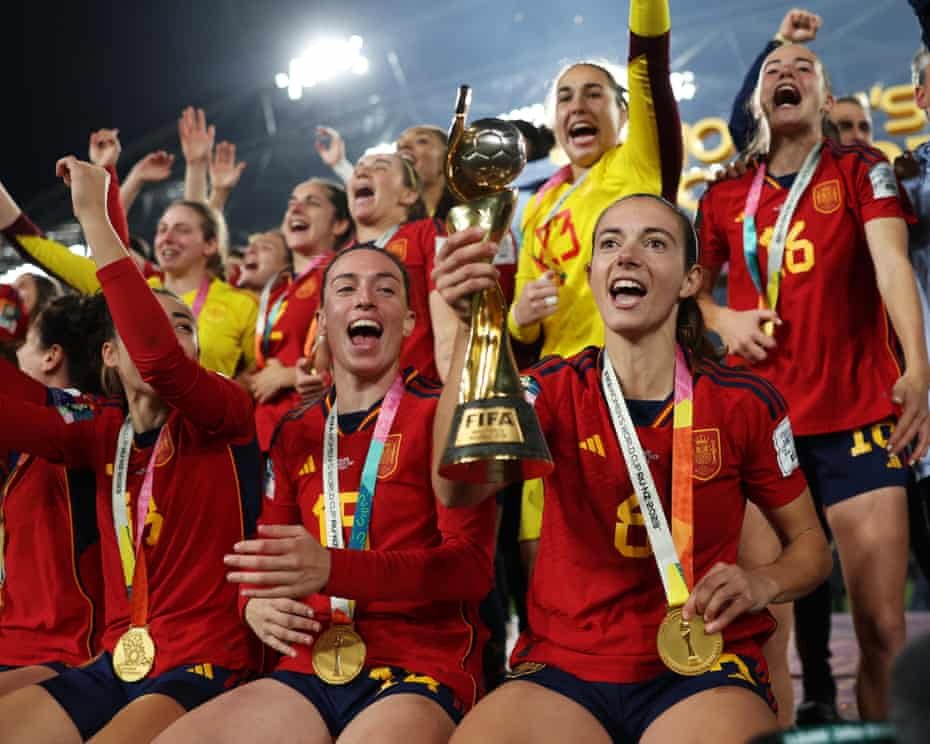
FIFA has announced a significant increase in preparation funding for the 2027 Women’s World Cup in Brazil, with each of the 32 participating national teams set to receive $2.5 million. The revised allocation more than doubles the previous preparation allowance and brings the financial support into line with that provided to teams competing at the 2026 men’s World Cup.
The total preparation fund will rise from $31 million at the 2023 Women’s World Cup to $80 million for the 2027 tournament, according to the supplied report. FIFA has also committed to improved travel and accommodation arrangements, including business-class or chartered flights and individual hotel rooms for every player.
The announcement addresses longstanding questions about whether women footballers receive the same practical support and professional standards as their male counterparts at major international competitions. While the increase represents a substantial improvement in preparation funding, the final prize money for the 2027 tournament has not yet been determined.
The changes also arrive as women’s football continues to expand internationally, with FIFA pursuing opportunities to develop the women’s game at both national-team and club level. The funding announcement therefore has implications beyond the next World Cup, raising broader questions about financial equality, player welfare and the resources required to compete at the highest level.
FIFA Increases Women’s World Cup Preparation Money to $2.5 Million Per Team
The central change is the increase in preparation funding available to each of the 32 national teams participating in the 2027 Women’s World Cup. FIFA has raised the allocation to $2.5 million per team, matching the preparation funding provided to teams at the 2026 men’s tournament.
Preparation money is distinct from tournament prize money. It supports the work required to get a national team ready for a major competition, potentially including training arrangements, camps, logistical planning and other preparation-related expenses. The exact distribution of the funds will depend on the applicable arrangements, so the allocation should not be confused with a direct payment of $2.5 million to every player.
The increase is particularly significant because preparing a national team involves expenses well before the first match. Teams must coordinate training schedules, arrange travel, manage equipment and support staff, and ensure players are ready for the demands of an international tournament.
Providing more preparation funding can give participating associations greater financial flexibility when planning these activities. It may also help reduce the pressure on national federations that have fewer resources available for their women’s programmes.
How the preparation fund has changed
| Funding measure | 2023 Women’s World Cup | 2027 Women’s World Cup |
|---|---|---|
| Total preparation funding | $31 million | $80 million |
| Preparation allocation per team | Previous allocation was lower | $2.5 million |
| Participating national teams | 32 | 32 |
| Preparation funding compared with men’s tournament | Not established by the supplied figures | Matches the 2026 men’s tournament allocation |
The increase from $31 million to $80 million represents an additional $49 million in preparation funding. The new total is more than two and a half times the previous figure, demonstrating the scale of the change.
For national associations, the additional resources could make a meaningful difference to the planning and delivery of their World Cup programmes. However, the actual benefit for each team will depend on its existing infrastructure, staffing requirements and how the money is used.
Improved Travel and Accommodation for Women’s World Cup Players
Beyond the financial allocation, FIFA has committed to bringing the travel and accommodation arrangements for the 2027 Women’s World Cup into line with those provided to players at the 2026 men’s tournament.
Under the announced provisions, every player will be guaranteed business-class or chartered flights, as well as an individual hotel room. These measures address practical aspects of tournament preparation that can influence players’ comfort, recovery and ability to perform during an intensive international competition.
Travel arrangements are particularly important at major tournaments, where national teams must coordinate international journeys, training schedules and match preparation. Long journeys and demanding travel schedules can create logistical challenges, making adequate rest and accommodation valuable components of player welfare.
Individual hotel rooms also provide players with greater privacy and control over their recovery time. Although accommodation alone does not determine performance, appropriate facilities can help teams establish consistent routines during a tournament.
Why business-class travel has become an important issue
Travel arrangements have previously generated controversy in women’s football, particularly when players have questioned whether the support provided to them matches the standards available to male footballers.
A survey conducted by players’ union FIFPRO in 2023, following the Women’s World Cup hosted by Australia and New Zealand, found that 94% of players travelled to the tournament in business class on their outbound flights. For return journeys, the figure was 80%.
These figures provide useful context for understanding the discussion around travel standards. They indicate that business-class arrangements were already common among surveyed players, while also showing that the provision was not universal across the journeys covered by the survey.
FIFA’s new commitment establishes a clearer standard for the 2027 competition by guaranteeing business-class or chartered flights. The inclusion of chartered travel as an alternative means the precise arrangement may differ, but the stated objective is to bring the service level into line with the men’s tournament.
The individual-room guarantee is another important part of that commitment. Together, the travel and accommodation provisions indicate that FIFA’s approach extends beyond preparation funding to the practical conditions under which players participate in the tournament.
Why Equal Preparation Funding Matters for National Teams
The increase in preparation money has implications for more than the headline financial figures. National teams enter major tournaments with different levels of domestic investment, professional infrastructure and access to resources. Additional funding can help participating associations prepare their squads and organize the support required for an international competition.
Preparation involves much more than selecting 11 players for a starting lineup. National associations must coordinate training, coaching, medical support, equipment, travel and other logistical requirements. The precise demands vary between teams, but all participating countries need to organize their programmes before the competition begins.
A larger preparation allowance can give associations more flexibility when planning these activities. For teams with limited existing resources, the increase could help address practical constraints that affect their ability to prepare for the World Cup.
However, equal allocations do not necessarily produce equal outcomes. National associations have different budgets, staffing structures and domestic football systems. Some may already have extensive professional infrastructure, while others may need to use a larger share of their available resources to establish the necessary arrangements.
The significance of FIFA’s decision is therefore twofold. It raises the financial support available to every participating association while establishing a common preparation allowance across the women’s tournament and the 2026 men’s World Cup.
Funding equality is not the same as complete financial equality
The preparation-money announcement should be understood as one part of the broader discussion about equality in international football. Preparation funding, player payments, tournament prize money and commercial revenues are separate financial categories.
FIFA has confirmed that preparation funding will rise to $2.5 million per participating association, but the total prize fund for the 2027 Women’s World Cup remains undecided in the supplied report.
That distinction matters because preparation resources do not automatically determine how much national associations earn from the tournament or how much individual players receive. Those questions depend on the wider financial distribution arrangements.
The latest announcement therefore represents a specific commitment rather than proof that every financial difference between the men’s and women’s competitions has been eliminated. A fuller assessment will require information about prize money, player compensation and other distributions once those arrangements are confirmed.
FIFA Women’s World Cup 2027: What Remains Undecided?
Although the preparation allowance and player service standards have been announced, the total prize fund for the 2027 Women’s World Cup has yet to be determined, according to the supplied report.
Prize money is a separate consideration from preparation funding. While preparation money helps national associations organize for the tournament, prize money is associated with the competition’s financial rewards and distribution arrangements.
The distinction is important for players and national federations seeking to understand the full financial implications of FIFA’s decisions. A higher preparation allowance provides additional resources before the competition, but it does not by itself establish the total financial reward associated with participation or tournament performance.
FIFA’s wider financial approach is therefore still relevant to the discussion. The eventual prize-money announcement will provide a more complete picture of the resources allocated to the 2027 tournament and how its financial arrangements compare with those of the men’s competition.
Until the remaining details are confirmed, it would be premature to conclude that the new preparation allowance resolves every concern about financial equality in international football.
Women’s Football Expansion Continues With a New Club World Cup
FIFA’s preparation-funding announcement comes alongside another significant development for the women’s game: the United States has been selected to host the inaugural FIFA Women’s Club World Cup in January 2028.
The tournament will feature 19 clubs from across the world’s six continental football confederations. Its introduction represents an additional international competition for leading women’s club sides, complementing the established national-team calendar.
The first seven clubs have already qualified: Arsenal, Club América Femenil, Barcelona, Gotham FC, Naegohyang from North Korea, Corinthians and Wuhan Jiangda.
The remaining places will complete a field designed to include clubs from different regions. The competition’s allocation provides six places for European teams, three each for clubs from the Asian Football Confederation, Confederation of African Football, Confederation of North, Central America and Caribbean Association Football, and South American Football Confederation, alongside one representative from Oceania.
This distribution creates a structure that combines representation across the global game with places for multiple European clubs. It also provides a platform for clubs from different domestic leagues to compete in a single international tournament.
Why the United States was selected
FIFA chief women’s football officer Sarai Bareman identified the United States’ experience in hosting major FIFA competitions, its interest in women’s football and its sporting infrastructure as key reasons for the selection.
Bareman’s explanation reflects the practical requirements of organizing an international club tournament. A suitable host needs facilities, transport, accommodation and operational capacity to support participating teams and the wider event.
The United States also offers an established environment for women’s football, providing FIFA with an opportunity to stage the inaugural competition in a country where the sport has attracted substantial attention.
Los Angeles and San Diego were identified in the supplied report as among the favoured host cities, although the final host-city arrangements were not established in the material provided. The confirmed selection of the United States should therefore be distinguished from any unconfirmed details about individual venues.
Bareman said FIFA wanted the inaugural competition to establish a strong standard for women’s club football and provide a benchmark for future editions. The tournament’s long-term significance will depend on its organization, competitive quality, audience engagement and the opportunities it creates for participating clubs.
How the Women’s Club World Cup Could Complement National-Team Football
International football operates through both national teams and clubs, but the two levels serve different purposes. The Women’s World Cup brings together national sides, while the Women’s Club World Cup will provide a global competition for teams representing professional clubs.
The new tournament could offer clubs from different confederations greater exposure to international opposition. For participating teams, competing against clubs from other regions can create opportunities to test their playing standards in a different competitive environment.
It may also help raise the international profile of women’s club football. A tournament featuring established names such as Arsenal and Barcelona alongside clubs from Asia, Africa and the Americas could introduce supporters to teams and leagues they do not regularly follow.
However, the scale of that impact will depend on how the competition develops. A new tournament requires sustained interest from fans, broadcasters, sponsors and participating clubs to establish itself as a major event in the football calendar.
The 2028 competition should therefore be viewed as an important step in FIFA’s expansion of women’s club football, rather than evidence that all participating leagues already operate at the same financial or competitive level.
What FIFA’s Latest Decisions Mean for the Future of Women’s Football
The increased preparation allowance for the 2027 Women’s World Cup and the creation of the Women’s Club World Cup reflect two related priorities: improving support for international national teams and expanding opportunities for elite women’s clubs.
For national associations, the immediate benefit is clearer. Each participating team will receive $2.5 million in preparation funding, while players will be guaranteed the specified travel and accommodation standards.
For clubs, the new international tournament offers a different opportunity. A 19-team competition involving representatives from all six confederations could provide a broader stage for women’s club football and strengthen connections between competitions in different regions.
Yet the effectiveness of these initiatives will depend on implementation. Preparation funding must translate into useful support for national teams, while the club competition will need to deliver a compelling sporting event that benefits participants and attracts audiences.
The unresolved prize-money arrangements for the 2027 Women’s World Cup will also remain important. Preparation support is a major part of tournament planning, but the full picture of financial equality cannot be assessed without examining the wider distribution of tournament revenues and player payments.
For now, FIFA’s announcement establishes a substantial increase in preparation funding and clearer guarantees for player services. It also signals continued investment in the structures surrounding women’s football, from national-team competitions to a new global stage for clubs.
Conclusion: A Significant Step Toward Greater Equality in Football
FIFA’s decision to increase preparation funding for the 2027 Women’s World Cup to $2.5 million per team represents a substantial change in the financial support available to participating national associations. The total preparation fund will rise from $31 million in 2023 to $80 million in 2027, bringing the allocation into line with the men’s tournament in 2026.
The guarantee of business-class or chartered flights and individual hotel rooms further addresses the practical conditions under which players prepare and compete. These provisions establish clearer standards for travel and accommodation, areas that have previously attracted scrutiny in women’s football.
Nevertheless, preparation funding is only one component of tournament finance. The total prize fund for the 2027 Women’s World Cup remains undecided in the supplied report, meaning the broader question of financial equality will require further information.
The announcement also coincides with plans for the inaugural Women’s Club World Cup in the United States in January 2028, creating another international platform for leading women’s clubs.
Together, these developments represent meaningful progress in the organization and support of women’s football. Whether they produce lasting improvements will depend on how effectively the funding is used, how the remaining financial arrangements are finalized and whether the new club competition establishes itself as a valuable part of the global game.
For breaking news and live news updates, like us on Facebook or follow us on Twitter and Instagram. Read more on Latest Football on thefoxdaily.com.






COMMENTS 0