The 2026 FIFA World Cup has delivered dramatic goals, shocking upsets and unforgettable performances, but few stories have generated as much debate as FIFA’s decision to overturn the suspension of United States striker Folarin Balogun. What initially appeared to be a routine disciplinary matter has evolved into a controversy involving football governance, sporting integrity, political influence and the future of FIFA’s disciplinary processes.
Balogun, one of the standout performers for the United States during the tournament, was originally expected to miss the Round of 16 clash against Belgium after receiving a straight red card during the Americans’ victory over Bosnia and Herzegovina. However, FIFA’s disciplinary committee later rescinded the suspension, clearing him to play in one of the most important matches of the tournament.
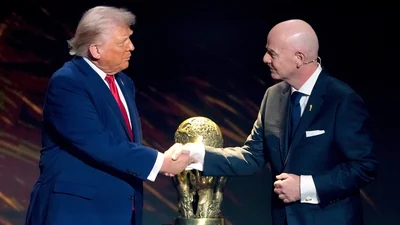
The decision immediately triggered strong reactions across the football world. While American supporters celebrated the ruling, Belgian officials questioned the precedent it could create. The controversy intensified further after reports emerged that U.S. President Donald Trump had personally contacted FIFA President Gianni Infantino regarding the incident.
What could have been a simple disciplinary review has now become a defining governance story of World Cup 2026.
What Happened in the Folarin Balogun Red Card Incident?
The controversy began during the United States’ knockout-stage victory over Bosnia and Herzegovina. During a challenge for possession, Balogun made contact with defender Tarik Muharemovic, catching him around the ankle area.
The referee immediately produced a straight red card, leaving the United States to complete the match with ten players.
Under FIFA regulations, a direct red card typically carries an automatic suspension for the following match. As a result, Balogun appeared certain to miss the crucial Round of 16 encounter against Belgium.
However, almost immediately after the match, analysts, former players and supporters began debating whether the punishment was excessive.
Many observers argued that the challenge appeared mistimed rather than malicious. Others pointed out that similar incidents earlier in the tournament had resulted in significantly lighter punishments.
Those arguments ultimately formed the foundation of the appeal process that followed.
Why FIFA’s Decision Is So Significant
Disciplinary appeals occur regularly in football, but successful appeals involving World Cup red cards are extremely rare.
The reason is simple: FIFA traditionally prioritizes consistency and avoids creating situations where disciplinary rulings become unpredictable.
By overturning Balogun’s suspension, FIFA entered unusual territory.
The decision was interpreted by many as an acknowledgment that the original red card may have been overly harsh. At the same time, critics argued that reversing such decisions after matches can create uncertainty regarding officiating standards.
The debate extends beyond Balogun himself.
It raises broader questions about:
- How FIFA evaluates disciplinary incidents.
- Whether appeals are applied consistently.
- The role of external pressure in major decisions.
- How future World Cup cases may be handled.
- The balance between justice and consistency.
These concerns explain why the story has attracted attention far beyond the United States and Belgium.
Donald Trump and Gianni Infantino: Why the Political Angle Matters
The controversy escalated dramatically after reports suggested that Donald Trump contacted FIFA President Gianni Infantino shortly after Balogun’s dismissal.
According to reports, Trump expressed concerns about the decision and encouraged FIFA to review the incident.
Whether that conversation directly influenced FIFA’s disciplinary review remains unproven. FIFA has not publicly indicated that political pressure played any role in its final decision.
However, perception matters in global sports governance.
Even the appearance of political involvement can create concerns among supporters, national associations and rival teams.
The relationship between politics and football has always been complicated. Major tournaments involve governments, international organizations, sponsors and billions of viewers worldwide.
When political leaders publicly comment on disciplinary matters, scrutiny inevitably follows.
That scrutiny intensified after Trump publicly praised FIFA’s ruling once Balogun’s suspension was overturned.
Belgium’s Angry Response Highlights a Bigger Issue
No country reacted more strongly than Belgium.
From Belgium’s perspective, the issue extends beyond one player.
The Belgian Football Association argued that tournament rules should apply equally to all teams regardless of their profile, popularity or political influence.
Belgium manager Rudi Garcia publicly questioned the decision and suggested it was unprecedented in World Cup history.
His comments reflected concerns shared by many neutral observers who fear that exceptional rulings can undermine confidence in sporting governance.
For Belgium, the timing was especially frustrating.
Instead of preparing exclusively for a major knockout match, attention shifted toward legal discussions, disciplinary procedures and tournament politics.
The controversy became part of the match narrative before a ball had even been kicked.
Understanding FIFA’s Disciplinary Process
One reason the controversy has generated confusion is that many fans are unfamiliar with how FIFA disciplinary reviews actually work.
After a red card is issued, FIFA’s disciplinary committee has authority to review incidents under specific circumstances.
Factors considered can include:
- Video evidence.
- Referee reports.
- Player intent.
- Severity of contact.
- Potential errors in interpretation.
- Consistency with previous cases.
Appeals are not automatically granted, and successful reversals remain uncommon.
In Balogun’s case, FIFA evidently concluded that the original punishment warranted reconsideration.
However, because FIFA has not released extensive public reasoning, speculation has filled the information gap.
How Balogun’s Availability Changes the USA’s World Cup Chances
From a purely sporting perspective, Balogun’s return is enormously important for the United States.
The striker has been one of the team’s most effective attacking players throughout the tournament.
| Key Factor | Impact for USA |
|---|---|
| Goals Scored | Major attacking contribution |
| Movement | Creates space for teammates |
| Finishing Ability | Reliable scoring threat |
| Pressing | Supports defensive structure |
| Knockout Experience | Important in high-pressure matches |
Losing Balogun for a knockout match against a strong Belgian side would have significantly weakened the American attack.
His reinstatement not only boosts the United States tactically but also provides a psychological lift for a squad that viewed the original dismissal as unfair.
Head coach Mauricio Pochettino and captain Christian Pulisic both welcomed the decision, emphasizing their belief that the challenge did not warrant a suspension.
The Consistency Problem Facing Modern Football
The Balogun case also highlights one of football’s biggest modern challenges: consistency.
Fans increasingly expect identical incidents to receive identical punishments.
Yet football remains a sport filled with subjective decisions.
Two similar tackles can produce different outcomes depending on factors such as:
- Referee interpretation.
- Player speed.
- Point of contact.
- Intent.
- Match context.
- VAR intervention.
The introduction of video review technology was supposed to reduce controversy, but in many cases it has simply shifted debates from referees to disciplinary committees.
The Balogun decision represents another example of how difficult it remains to achieve universal agreement on officiating matters.
Could This Decision Set a New World Cup Precedent?
One of the most important long-term questions is whether FIFA’s ruling will influence future tournaments.
If disciplinary committees become more willing to overturn suspensions, teams may increasingly challenge red-card decisions.
That could create a new environment where post-match appeals become a strategic tool rather than an exceptional measure.
On the other hand, supporters of the decision argue that correcting perceived mistakes improves fairness and protects players from unjust punishments.
The challenge for FIFA will be finding a balance between flexibility and consistency.
Too much flexibility risks undermining referees. Too much rigidity risks preserving obvious errors.
The Media and Social Media Effect
Another unique aspect of this controversy is how quickly social media amplified the discussion.
Within minutes of FIFA’s announcement, debates exploded across platforms worldwide.
Supporters, former players, journalists and analysts offered conflicting interpretations.
Some praised FIFA for correcting a mistake.
Others accused the governing body of favoritism.
The speed and scale of online reactions demonstrate how modern sports governance now operates under unprecedented public scrutiny.
Every major decision is immediately examined, challenged and debated by millions of people globally.
Why the Balogun Case Matters Beyond One Tournament
At first glance, this story appears to concern a single player’s suspension.
In reality, it touches several fundamental questions about modern football:
- Can governing bodies remain independent from political influence?
- How should disciplinary errors be corrected?
- What level of transparency should FIFA provide?
- Should historical precedent outweigh perceived fairness?
- How can football maintain trust in its decision-making processes?
The answers to these questions will continue shaping the sport long after the 2026 World Cup ends.
Conclusion
The overturning of Folarin Balogun’s suspension has become one of the defining controversies of FIFA World Cup 2026. What began as a disputed red card evolved into a global debate involving football governance, political influence, disciplinary consistency and competitive fairness.
For the United States, the ruling represents a significant sporting boost ahead of a crucial knockout match. For Belgium, it raises concerns about precedent and equal treatment. For FIFA, it creates pressure to explain and defend one of the most closely scrutinized disciplinary decisions in recent World Cup history.
Regardless of where supporters stand on the issue, one thing is clear: the Balogun controversy has highlighted the increasingly complex intersection of football, politics and public perception. As the tournament progresses, the performance of both Balogun and the United States may ultimately determine whether FIFA’s historic decision is remembered as a justified correction—or one of the most controversial rulings ever seen at a World Cup.
For breaking news and live news updates, like us on Facebook or follow us on Twitter and Instagram. Read more on Latest Sports on thefoxdaily.com.






COMMENTS 0