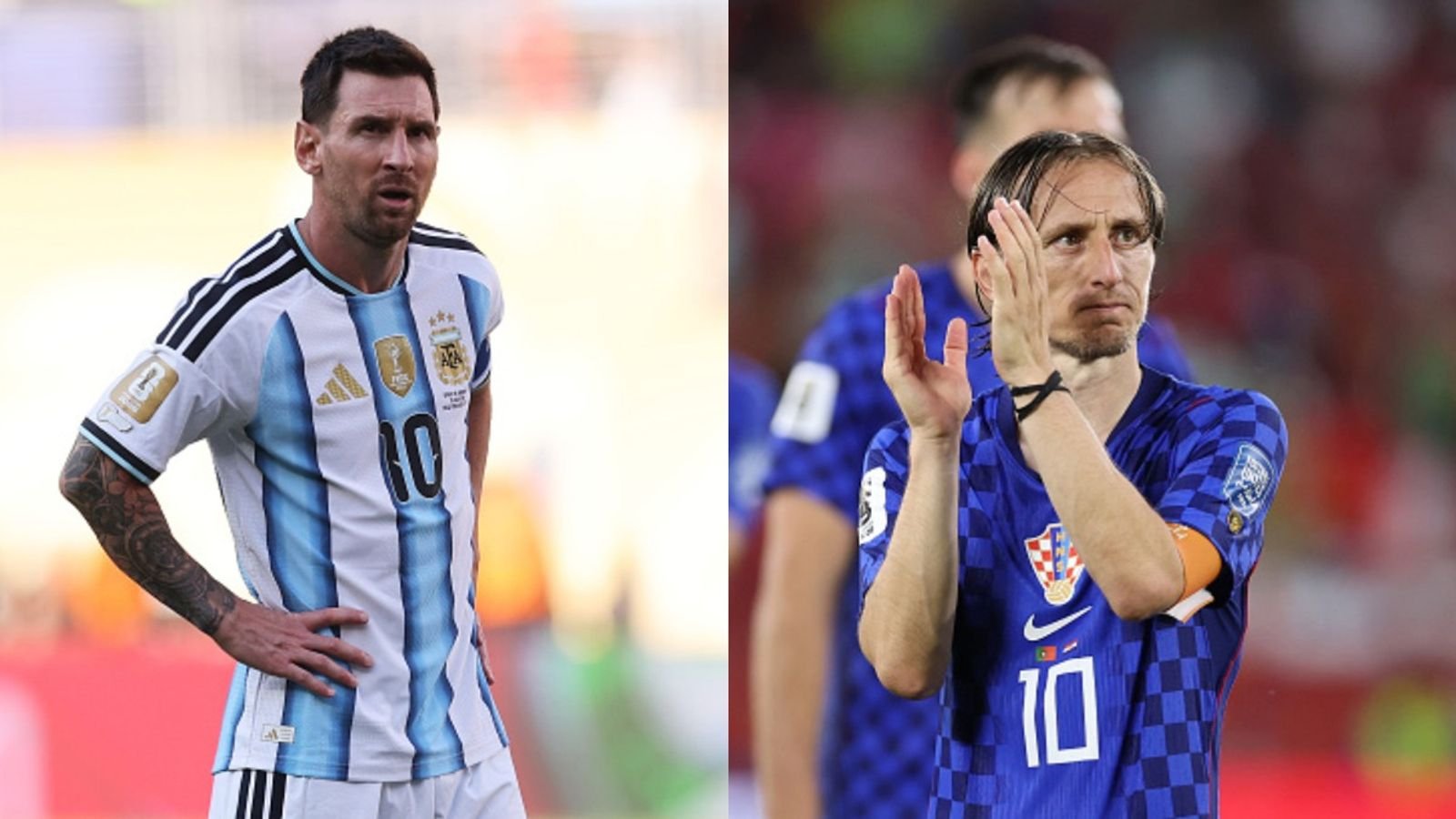
Every FIFA World Cup introduces new stars, but it also serves as a farewell stage for legends whose careers have shaped football history. The 2026 edition appears to represent one of the most significant generational transitions the sport has witnessed.
Players such as Lionel Messi, Cristiano Ronaldo, Luka Modric, Neymar, Kevin De Bruyne, and Manuel Neuer have influenced football far beyond trophies and statistics. They have inspired millions, redefined positions, broken records, and become symbols of excellence for an entire generation of supporters.
While few of these players have officially announced retirement from international football, age, physical demands, and the four-year gap until the 2030 World Cup make another appearance increasingly unlikely.
If 2026 truly was their final World Cup, football fans witnessed the closing chapter of one of the most talented eras the game has ever produced.
The End of Football’s Golden Generation
The generation that dominated world football from the mid-2000s through the 2020s transformed the sport.
Unlike previous eras that were often defined by one or two dominant figures, this generation featured multiple all-time greats competing simultaneously across clubs and international teams.
The rivalry between Lionel Messi and Cristiano Ronaldo alone elevated football’s global popularity to unprecedented levels. Around them emerged extraordinary talents such as Neymar, Modric, De Bruyne, Neuer, and others who became icons in their own right.
The 2026 World Cup may therefore represent more than individual farewells. It could mark the symbolic end of football’s most celebrated generation.
Lionel Messi: The Complete World Cup Journey
Few careers in football history can match the journey of Lionel Messi.
From his World Cup debut as a teenager in 2006 to becoming a world champion in 2022, Messi’s relationship with football’s biggest tournament evolved into one of the sport’s greatest stories.
For years, critics argued that international success was the only missing piece in his legacy. That debate ended when argentina lifted the World Cup in Qatar.
The 2026 tournament provided one final opportunity to witness one of football’s greatest artists on the global stage.
At 39 years old, another World Cup appearance appears unlikely, making 2026 a fitting conclusion to a remarkable international journey.
Cristiano Ronaldo: The Relentless Competitor
Few athletes in any sport have demonstrated longevity comparable to Cristiano Ronaldo.
His dedication to fitness, professionalism, and performance allowed him to remain competitive long after many contemporaries retired.
Although the World Cup trophy ultimately eluded him, Ronaldo’s impact on international football remains extraordinary.
From Portugal’s rise as a major football nation to countless record-breaking achievements, his influence extends far beyond tournament results.
If 2026 was indeed his final World Cup, it closes a chapter that began two decades earlier and inspired millions around the world.
Luka Modric: The Midfield Master Who Defied Time
Luka Modric’s career serves as proof that intelligence can be just as powerful as athleticism.
The Croatian midfielder became one of football’s most respected figures through vision, technical quality, and leadership.
His role in Croatia’s historic 2018 World Cup run remains one of the tournament’s most inspiring stories.
Leading a nation of relatively modest footballing resources to a World Cup final elevated Modric from elite midfielder to national icon.
At 40 years old, the possibility of another World Cup appearance seems remote, but his legacy is already secure.
Neymar: Brazil’s Brilliant Yet Unfulfilled World Cup Dream
Neymar’s international career has often balanced brilliance with heartbreak.
Widely regarded as one of Brazil’s most gifted players, he carried enormous expectations throughout multiple World Cup campaigns.
His creativity, flair, and ability to change matches made him the focal point of Brazil’s attack for more than a decade.
Despite numerous memorable moments, the World Cup trophy remained elusive.
Nevertheless, Neymar’s contribution to Brazilian football extends beyond silverware. He inspired a generation of players while maintaining Brazil’s tradition of expressive attacking football.
Kevin De Bruyne and the End of Belgium’s Golden Generation
Belgium’s golden generation promised much and delivered some unforgettable football.
At the center of that era stood Kevin De Bruyne, one of the most complete midfielders of modern times.
His passing range, creativity, and football intelligence made him the heartbeat of Belgium’s national team.
Although Belgium never captured a major international trophy, De Bruyne’s influence on the country’s football development cannot be overstated.
The 2026 World Cup likely marks the conclusion of Belgium’s most successful football generation.
Son Heung-min: Asia’s Global Football Ambassador
Few players have done more to elevate Asian football’s global reputation than Son Heung-min.
Combining elite-level club success with consistent international performances, Son became a symbol of excellence across the continent.
His World Cup career included memorable goals, leadership moments, and performances that showcased the growing strength of Asian football.
For many supporters in South Korea and beyond, Son’s legacy extends beyond football. He became a source of national pride and international recognition.
Manuel Neuer’s Lasting Influence on Goalkeeping
When football historians discuss the evolution of goalkeeping, Manuel Neuer will occupy a central place in the conversation.
The German star revolutionized the position through his aggressive positioning, distribution, and ability to act as an additional defender.
His performances during Germany’s 2014 World Cup triumph helped redefine expectations for modern goalkeepers.
Even as younger generations emerged, Neuer continued to demonstrate why he remains one of the most influential players ever to wear gloves.
Other Legends Who May Have Said Goodbye
The list of potential World Cup farewells extends beyond the biggest headlines.
| Player | Country | Legacy |
|---|---|---|
| Virgil van Dijk | Netherlands | One of the best defenders of his generation |
| Casemiro | Brazil | Midfield anchor and serial winner |
| James Rodríguez | Colombia | 2014 Golden Boot winner and creative playmaker |
| Son Heung-min | South Korea | Asian football icon |
| Kevin De Bruyne | Belgium | World-class midfielder and playmaker |
Each player leaves behind a unique legacy that influenced both their national teams and the global game.
Why 2030 Will Look Very Different
The potential departure of so many icons means the 2030 FIFA World Cup could feel dramatically different.
Football is already entering a new era led by younger stars who grew up watching Messi, Ronaldo, Neymar, and Modric.
The next generation will inherit enormous expectations as they attempt to fill the void left by players who dominated headlines for nearly twenty years.
Every football era eventually changes, but few transitions have involved so many legendary names simultaneously.
The Legacy Beyond Trophies
One of the most important lessons from this generation is that greatness is not measured solely by trophies.
Some players won the World Cup, while others fell short despite extraordinary careers.
Yet all of them changed football in meaningful ways.
- Messi redefined creativity and consistency.
- Ronaldo set new standards for longevity and ambition.
- Modric showcased the power of intelligence and leadership.
- Neymar embodied flair and entertainment.
- Neuer revolutionized goalkeeping.
- De Bruyne elevated modern playmaking.
Their collective impact will continue to influence football long after their playing careers end.
Conclusion: The End of an Era, the Beginning of Another
The FIFA World Cup 2026 may ultimately be remembered not only for the champion it crowned but also for the legends it bid farewell to.
Lionel Messi, Cristiano Ronaldo, Luka Modric, Neymar, Kevin De Bruyne, Son Heung-min, Manuel Neuer, Virgil van Dijk, Casemiro, and James Rodríguez represent a generation that transformed football through skill, leadership, and unforgettable moments.
Whether or not every player officially retires from international football, the likelihood of seeing them together on the World Cup stage again is extremely small.
As football prepares for the future, supporters can reflect on how fortunate they were to witness a generation filled with some of the greatest players the sport has ever produced. Their World Cup journeys may be ending, but their legacy will continue to inspire football fans for decades to come.
For breaking news and live news updates, like us on Facebook or follow us on Twitter and Instagram. Read more on Latest Sports on thefoxdaily.com.






COMMENTS 0