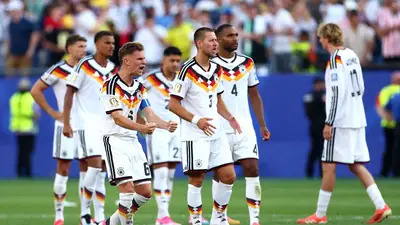
German football is experiencing one of its most turbulent periods in recent memory. Just as the nation was attempting to process a painful FIFA World Cup 2026 exit, a separate controversy has emerged that has once again placed the spotlight on the country’s football administration.
Authorities in Germany have conducted searches linked to an investigation involving ticket allocations and hospitality arrangements connected to UEFA Euro 2024. While officials have emphasized that the investigation is unrelated to Germany’s recent World Cup campaign, the timing has amplified public attention and intensified discussions about transparency, governance, and accountability in football.
The case is particularly significant because it touches on one of the most sensitive issues in modern sports administration: the distribution of high-demand tickets and exclusive hospitality benefits during major international tournaments.
Although the German Football Association (DFB) has stated that it is cooperating fully and is not itself an accused party, the investigation has raised important questions about how major sporting events are managed and how public trust can be maintained.
What Is the Euro 2024 Investigation About?
The investigation centers on allegations involving ticket allocations, hospitality benefits, travel arrangements, and hotel accommodations connected to UEFA Euro 2024.
Large sporting events generate enormous demand for tickets, particularly among government officials, sponsors, business leaders, and individuals connected to tournament operations.
As a result, authorities in many countries closely monitor how premium access and hospitality privileges are distributed.
Investigators are examining whether certain benefits were improperly provided or received in circumstances that may violate regulations governing public officials and administrative conduct.
The focus is not on matches themselves but rather on whether valuable event-related benefits were distributed appropriately.
Such investigations are common in jurisdictions with strict anti-corruption and transparency laws, especially when public-sector employees are involved.
Why Investigators Searched the German Football Association Headquarters
Searches involving sports organizations often attract immediate attention, but they do not automatically indicate wrongdoing by the organization itself.
In this case, authorities reportedly sought information and documentation that could assist their investigation.
The DFB has publicly stated that it is cooperating with investigators and is participating as a witness rather than as an accused entity.
This distinction is important.
When organizations are classified as witnesses, authorities may still require access to records, communications, and administrative information relevant to ongoing inquiries.
Such cooperation can help investigators establish timelines, verify transactions, and understand how specific decisions were made.
The Importance of Transparency in Major Football Tournaments
Modern football tournaments are enormous commercial enterprises involving billions of dollars in economic activity.
Events such as the FIFA World Cup and UEFA European Championship require coordination among:
- Football federations
- Government agencies
- Host cities
- Corporate sponsors
- Security authorities
- Tourism organizations
- Hospitality providers
Because of this complexity, transparency has become a central pillar of sports governance.
Even relatively minor questions regarding ticket distribution can attract significant scrutiny because public confidence depends on the perception of fairness and integrity.
For governing bodies, maintaining trust is often just as important as delivering a successful tournament on the field.
Why Ticket Allocation Has Become a Sensitive Issue in Global Sports
Ticket distribution controversies are not unique to Germany or football.
Across global sports, major events frequently face questions about who receives premium access and how those allocations are determined.
High-demand tickets can carry substantial financial and symbolic value.
As a result, governing bodies increasingly implement strict procedures to ensure accountability.
Common areas of scrutiny include:
- Corporate hospitality programs
- VIP guest invitations
- Sponsor allocations
- Government official access
- Complimentary ticket programs
- Travel and accommodation packages
The goal is to prevent conflicts of interest and ensure that benefits are distributed in accordance with established regulations.
Germany’s Difficult Week in Football
The investigation arrives at a particularly sensitive moment for German football.
Only days earlier, Germany experienced one of the most disappointing moments of its recent sporting history with an unexpected World Cup elimination.
For a nation with one of football’s richest traditions, expectations remain exceptionally high at every major tournament.
Germany’s exit generated intense debate about:
- Squad development
- Tactical decisions
- Youth pathways
- Competitive standards
- Long-term planning
Although the Euro 2024 investigation is entirely separate, the overlapping timing has contributed to a broader sense of uncertainty surrounding German football.
Why Public Trust Matters in Sports Governance
One of the most important themes emerging from the investigation is public trust.
Major sporting tournaments depend heavily on cooperation between governing bodies and public institutions.
Host governments often invest significant resources into infrastructure, transportation, security, and event operations.
In return, the public expects transparency and accountability.
When allegations involving preferential treatment or improper benefits arise, authorities typically move quickly to demonstrate that oversight mechanisms are functioning properly.
This approach helps protect both the credibility of the event and the reputation of participating organizations.
How Sports Governance Has Changed Over the Last Decade
The sports industry has undergone significant transformation in recent years.
Football organizations now face greater scrutiny than ever before from regulators, media outlets, and fans.
| Past Era | Modern Era |
|---|---|
| Limited transparency requirements | Extensive compliance expectations |
| Less regulatory oversight | Greater government involvement |
| Fewer public disclosures | Increased accountability standards |
| Traditional administration | Corporate governance frameworks |
| Minimal public scrutiny | Constant media attention |
This evolution reflects the growing financial and cultural significance of global sports organizations.
As football generates larger revenues and attracts larger audiences, expectations regarding governance continue to rise.
What This Means for UEFA and Future Tournaments
Although the investigation does not directly target UEFA, the case may influence discussions surrounding future tournament management.
Football authorities across Europe constantly review operational procedures to minimize risks and strengthen transparency.
Areas that may receive increased attention include:
- Ticket allocation policies
- Hospitality oversight
- Compliance monitoring
- Record-keeping procedures
- Public-sector engagement protocols
- Audit processes
Such reviews are common following high-profile investigations, regardless of whether wrongdoing is ultimately established.
Separating the Investigation From Germany’s World Cup Performance
One challenge facing observers is avoiding the temptation to connect unrelated events.
Germany’s World Cup elimination and the Euro 2024 investigation involve entirely different issues.
The national team’s performance relates to sporting matters such as tactics, player development, and match execution.
The investigation concerns administrative and governance questions connected to tournament operations.
While both stories involve German football, they should be analyzed independently.
Doing so allows for a clearer understanding of each issue and avoids creating misleading narratives.
Could the Investigation Damage German Football’s Reputation?
Reputation management is often one of the biggest challenges organizations face during investigations.
Even when organizations are not accused of wrongdoing, public perception can be influenced by headlines and ongoing media coverage.
However, the long-term impact often depends on how institutions respond.
Transparent cooperation, clear communication, and effective governance practices can help maintain credibility throughout the investigative process.
In many cases, organizations emerge stronger after demonstrating a commitment to accountability and reform.
Lessons for Sports Organizations Worldwide
The situation offers valuable lessons that extend far beyond Germany.
Sports organizations around the world operate in increasingly complex regulatory environments.
Success now depends not only on athletic performance but also on strong governance structures.
Key lessons include:
- Transparency builds trust.
- Documentation and compliance matter.
- Public perception requires careful management.
- Major events demand robust oversight.
- Accountability strengthens institutional credibility.
These principles apply across football, basketball, cricket, athletics, and virtually every major professional sport.
What Happens Next?
Investigations of this nature typically take time.
Authorities will continue reviewing evidence, interviewing relevant individuals, and assessing whether any regulations were violated.
Additional information may emerge through official statements or legal proceedings in the coming months.
For now, the DFB maintains that it is cooperating fully and is participating as a witness rather than as a target of the investigation.
The final conclusions will depend on the findings produced through the legal process.
Conclusion
The search of the German Football Association headquarters represents another significant chapter in a challenging period for German football. While the investigation is unrelated to Germany’s FIFA World Cup 2026 disappointment, its timing has intensified attention on the sport’s administration and governance structures.
At its core, the case highlights the growing importance of transparency, accountability, and public trust in modern football. As major tournaments become larger and more commercially significant, scrutiny of ticket allocations, hospitality arrangements, and administrative practices is likely to increase.
For German football, the coming months will involve not only evaluating on-field performance but also navigating questions surrounding governance and institutional integrity. Regardless of the investigation’s outcome, the episode serves as a reminder that success in modern sport depends on strong leadership both on and off the pitch.
For breaking news and live news updates, like us on Facebook or follow us on Twitter and Instagram. Read more on Latest Sports on thefoxdaily.com.






COMMENTS 0