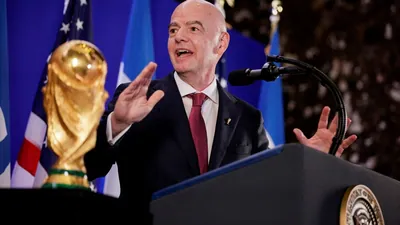
The FIFA World Cup 2026 has already secured its place in football history, but FIFA President Gianni Infantino believes its significance extends far beyond the sport itself. Speaking ahead of the final between Argentina and Spain, Infantino described the tournament as the greatest human, social, and cultural event ever witnessed by mankind. While such a statement may sound ambitious, the scale of the tournament provides substantial evidence for why FIFA views this World Cup as a transformational moment.
Hosted across the United States, Canada, and Mexico, the FIFA World Cup 2026 introduced an expanded format featuring 48 national teams and 104 matches. Combined with unprecedented attendance figures, massive global television audiences, and growing commercial success, the tournament has become a case study in how sport can influence societies, economies, and international relationships.
As the football world prepares for the final showdown, the bigger story may not be who lifts the trophy but how the tournament has reshaped expectations for global sporting events.
Why FIFA World Cup 2026 Is Being Called a Historic Tournament
Every World Cup claims to be bigger than the previous edition, but the numbers surrounding FIFA World Cup 2026 genuinely stand out. The tournament represented the largest expansion in the competition’s history, increasing participation from 32 to 48 teams.
This change was designed to achieve several objectives:
- Increase global representation in football.
- Create opportunities for emerging football nations.
- Expand the tournament’s commercial reach.
- Grow fan engagement across new markets.
- Strengthen football’s influence in North America.
The result was a competition that brought together more countries, more supporters, and more cultures than any previous World Cup.
The Numbers Behind FIFA World Cup 2026’s Success
One of the strongest arguments supporting Infantino’s claim comes from the tournament’s remarkable attendance figures. Stadiums across North America consistently attracted massive crowds, demonstrating football’s growing popularity in regions once considered secondary markets for the sport.
| Category | FIFA World Cup 2026 |
|---|---|
| Participating Teams | 48 |
| Total Matches | 104 |
| Host Nations | United States, Canada, Mexico |
| Attendance Before Final | Over 6.6 Million |
| Average Match Attendance | 65,351 |
| Stadium Occupancy Rate | 99.7% |
These figures highlight how the tournament managed to attract fans at a level rarely seen in sporting history. Beyond attendance, digital engagement, social media interaction, and streaming viewership reached unprecedented levels, reflecting football’s expanding global footprint.
How the 48-Team Expansion Changed the World Cup
The move from 32 to 48 teams was one of the most debated decisions in FIFA history. Critics feared the tournament would become diluted and less competitive. However, several outcomes suggest the expansion achieved many of its intended goals.
More Nations, More Stories
Smaller footballing nations received opportunities to compete on the world’s biggest stage. For many countries, qualification itself became a historic achievement, creating new heroes and inspiring future generations.
Greater Global Representation
The expanded format allowed regions traditionally underrepresented in the World Cup to gain additional places. This increased diversity contributed to a broader global audience and stronger emotional investment across continents.
Economic Growth for Football
More matches created additional sponsorship opportunities, broadcasting revenue, tourism activity, and merchandise sales. The expansion strengthened FIFA’s commercial ecosystem while also generating economic benefits for host cities.
The United States and Football’s New Era
One of the most important developments of FIFA World Cup 2026 has been the continued rise of football in the United States. For decades, American sports culture was dominated by the NFL, NBA, MLB, and college athletics. Football often occupied a secondary position.
That perception has changed dramatically.
The success of the tournament demonstrated that football is no longer a niche sport in America. Packed stadiums, widespread media coverage, and growing youth participation indicate a long-term shift rather than a temporary trend.
Hosting the world’s largest sporting competition has accelerated football’s mainstream acceptance and may influence future investment in infrastructure, youth academies, and professional leagues.
Why This World Cup Matters Beyond Football
Infantino’s comments focused heavily on the social and cultural dimensions of the tournament. Whether or not one agrees with the description of the event as mankind’s greatest cultural gathering, there is little doubt that the World Cup remains one of the few occasions capable of capturing worldwide attention simultaneously.
In a period characterized by political divisions, international conflicts, and social fragmentation, global sporting events often serve as rare moments of collective experience.
Millions of people from different cultures, religions, and backgrounds followed the same matches, celebrated the same goals, and shared the same emotions. This unique ability to unite diverse populations remains one of football’s most powerful characteristics.
“One country will be the world champion, but the world has already won” reflects the broader idea that sport can create shared experiences beyond national rivalries.
The Economic Impact of FIFA World Cup 2026
Major sporting events are increasingly evaluated not just by results on the field but by their economic contributions. FIFA World Cup 2026 generated substantial benefits across multiple sectors.
Tourism
Millions of domestic and international visitors traveled to host cities, boosting hotels, restaurants, transportation services, and local attractions.
Infrastructure Development
Several host regions invested in stadium improvements, transportation systems, and urban development projects that could continue delivering value long after the tournament ends.
Job Creation
The event created employment opportunities in hospitality, security, event management, media production, and tourism-related industries.
Business Exposure
Host cities gained international visibility, potentially attracting future investment and tourism.
Argentina vs Spain: A Final That Reflects Football’s Evolution
The final between Argentina and Spain symbolizes two different football traditions meeting on the biggest stage.
Argentina entered the tournament carrying the legacy of previous triumphs and generations of football legends. Spain, meanwhile, represented a modern footballing philosophy built on technical excellence, youth development, and tactical innovation.
Regardless of the outcome, the matchup highlights football’s continued evolution and the emergence of new competitive dynamics in international competition.
Comparison: How FIFA World Cup 2026 Differs From Previous Editions
| Feature | Previous World Cups | World Cup 2026 |
|---|---|---|
| Teams | 32 | 48 |
| Matches | 64 | 104 |
| Host Countries | Usually 1 | 3 |
| Geographic Scale | Single Nation | North America Wide |
| Attendance Potential | Lower | Record Breaking |
| Commercial Reach | High | Historic High |
The comparison illustrates why FIFA views this edition as a milestone. Nearly every measurable category expanded significantly compared with previous tournaments.
The Criticism and Challenges FIFA Must Address
While FIFA celebrates the tournament’s achievements, critics argue that larger events also create new challenges.
- Longer travel distances for teams and supporters.
- Increased scheduling demands on players.
- Higher organizational complexity.
- Greater environmental impact due to transportation requirements.
- Questions regarding tournament sustainability.
These concerns will likely influence future discussions about the optimal size and structure of World Cups.
For FIFA, balancing growth with sustainability remains one of the most important challenges moving forward.
A Unique Insight: The World Cup Is Becoming a Global Cultural Platform
One overlooked aspect of FIFA World Cup 2026 is how the event increasingly functions as a cultural platform rather than merely a sporting competition.
Modern World Cups combine entertainment, technology, tourism, diplomacy, and digital engagement on an unprecedented scale. Concerts, social media campaigns, influencer participation, fan festivals, and international business partnerships have become nearly as significant as the matches themselves.
This evolution suggests that future World Cups may be viewed less as football tournaments and more as global cultural festivals centered around sport.
In that sense, Infantino’s comments may represent a broader strategic vision for FIFA’s future.
What Happens Next for FIFA and International Football?
The success of FIFA World Cup 2026 could shape football’s direction for years to come. FIFA will likely use the tournament’s commercial and attendance achievements as evidence supporting further global expansion initiatives.
Potential future developments include:
- Expanded investment in emerging football markets.
- Greater use of technology and digital fan experiences.
- Enhanced international competitions.
- Stronger commercial partnerships.
- New approaches to tournament hosting models.
The tournament may also influence how other major sporting organizations design and market global events.
Conclusion: Why FIFA World Cup 2026 May Be Remembered as a Turning Point
Whether one agrees with Gianni Infantino’s description of the FIFA World Cup 2026 as the greatest cultural event in human history, the tournament has undeniably changed the scale of international football. Record attendance, unprecedented global engagement, expanded participation, and widespread cultural impact have combined to create a landmark moment for the sport.
More importantly, the tournament demonstrated football’s extraordinary ability to connect people across borders, languages, and cultures. While Argentina and Spain compete for the trophy, the broader legacy of FIFA World Cup 2026 may be its role in redefining what a global sporting event can achieve.
Years from now, historians may remember this World Cup not only for its champion but also for the moment football fully embraced its role as one of the world’s most influential cultural forces.
For breaking news and live news updates, like us on Facebook or follow us on Twitter and Instagram. Read more on Latest Sports on thefoxdaily.com.






COMMENTS 0