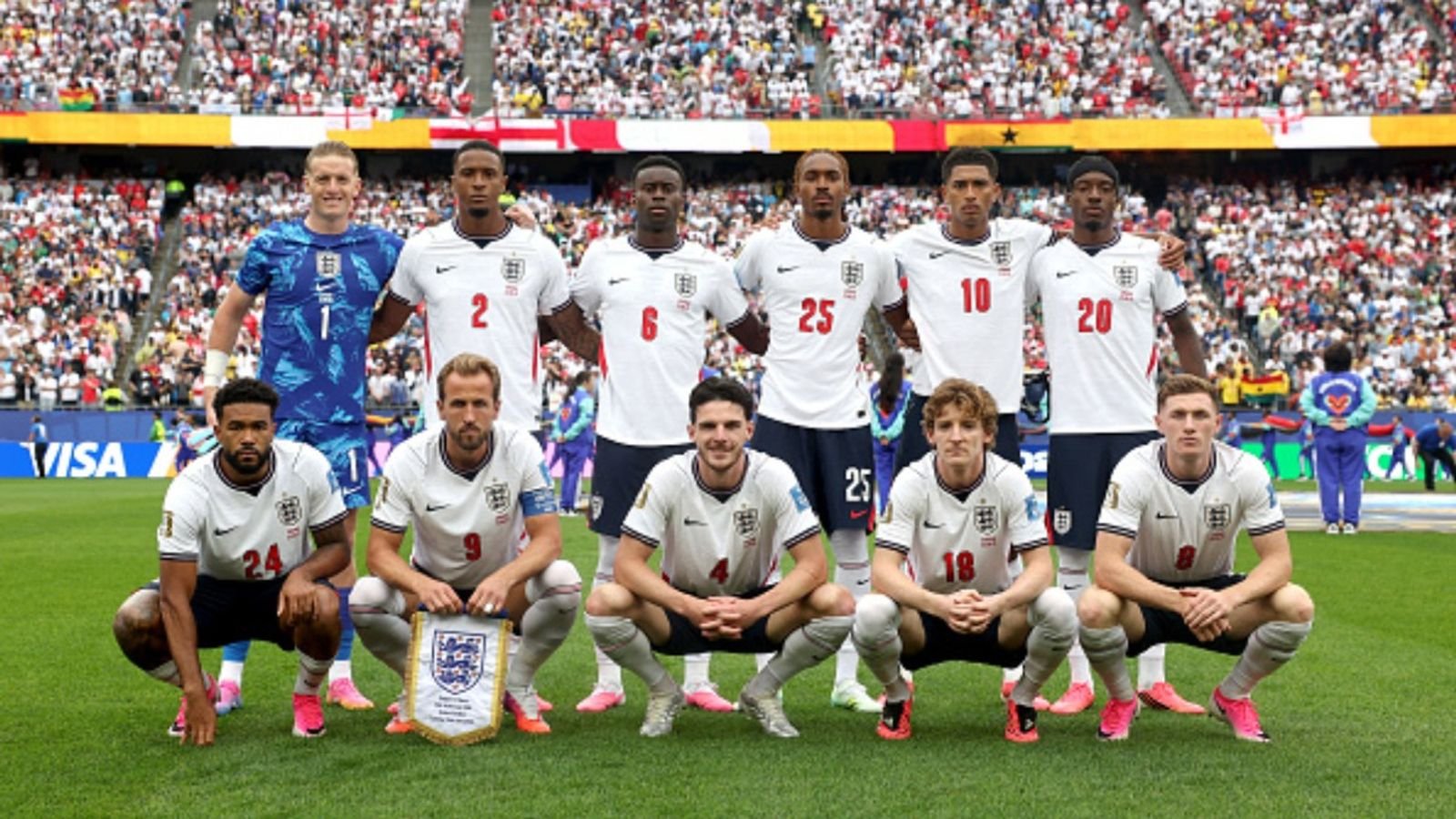
England have secured their place in the FIFA World Cup 2026 knockout stage, but their destiny in the tournament remains far from decided. While qualification from Group K is already guaranteed, the Three Lions still have plenty at stake heading into their final group-stage match against Panama.
The expanded 48-team FIFA World Cup has introduced a new format that makes knockout qualification more complex than ever before. Finishing first, second, or even the overall positioning of third-placed teams can dramatically alter the route a nation takes through the competition.
For England, that means their final group-stage performance could determine whether they receive a favorable Round of 32 opponent or face a much tougher challenge immediately after the group phase.
England’s Position in Group K Ahead of the Final Matchday
England booked their place in the Round of 32 after a disciplined defensive display against Ghana. The goalless draw ensured the Three Lions collected enough points to advance, but it also left the battle for top spot in Group K unresolved.
As a result, England enter their final match against Panama knowing that victory could strengthen their chances of finishing as group winners. They could also benefit if other results go their way, particularly in the clash involving Ghana and Croatia.
While qualification has been secured, the difference between finishing first and second could prove crucial when the knockout bracket takes shape.
How FIFA’s New 48-Team World Cup Format Works
The FIFA World Cup 2026 is the first edition featuring 48 teams, a major expansion from the previous 32-team format.
Under the new structure, teams are divided into multiple groups, with the top two nations from each group automatically progressing to the Round of 32. In addition, several of the best third-placed teams also advance.
This system creates a far more complicated knockout equation because the identity of qualifying third-placed teams can change until the final group-stage matches are completed.
As a result, knockout pairings cannot be finalized early, leaving teams uncertain about their future opponents.
Why Finishing First Could Be Important for England
Historically, winning a World Cup group has often provided teams with a smoother route through the knockout stages. While there are no guarantees in international Football, group winners generally avoid facing the strongest opponents immediately.
For England, topping Group K could potentially reduce the risk of encountering one of the tournament favorites in the Round of 32.
More importantly, it would allow Gareth Southgate’s side to maintain momentum and confidence heading into the business end of the competition.
Advantages of Winning Group K
- Potentially more favorable Round of 32 matchup.
- Improved knockout bracket positioning.
- Avoiding some elite teams until later rounds.
- Maintaining winning momentum.
- Boosting squad confidence ahead of knockout football.
Potential Opponents England Could Face
One of the most intriguing aspects of the current situation is the uncertainty surrounding England’s next opponent.
Based on the current standings and qualification projections, England could potentially face teams emerging from several different groups.
| Potential Opponent | Region | Current Status |
|---|---|---|
| Ecuador | South America | In qualification contention |
| Cape Verde | Africa | Possible third-place qualifier |
| Senegal | Africa | Strong knockout contender |
| Algeria | Africa | Qualification race ongoing |
| DR Congo | Africa | Potential Round of 32 opponent |
However, these possibilities remain fluid. A single result elsewhere in the tournament could completely reshape the knockout bracket.
The Hidden Danger of the Expanded Tournament
The biggest challenge created by the expanded World Cup format is unpredictability.
Unlike previous tournaments where knockout paths became relatively clear after two group matches, teams now face a constantly changing landscape. The qualification of third-placed teams means multiple scenarios remain alive until the final whistle of the group stage.
This uncertainty makes tactical planning significantly more difficult for managers and coaching staffs.
Teams can no longer prepare weeks in advance for a likely opponent because several outcomes remain possible simultaneously.
Could England Face a Tournament Giant Early?
While some potential opponents may appear favorable on paper, England cannot afford to underestimate the risks.
Depending on how the final group standings develop, several high-profile nations could unexpectedly enter the Round of 32 qualification equation.
Football history has repeatedly shown that tournament football is unpredictable. A nation that struggles during the group stage can suddenly become dangerous in a knockout environment.
That means England’s path could become considerably more difficult if one of the traditional powerhouses enters their section of the bracket.
How England Have Performed So Far
England’s campaign has been built on defensive organization, tactical discipline, and effective game management.
While critics may point to a lack of attacking fireworks, tournament football is often decided by consistency rather than spectacle.
The ability to avoid defeat and collect points efficiently has historically been a hallmark of successful World Cup teams.
England’s ability to control matches without exposing themselves defensively could become a major asset as the tournament progresses.
What Gareth Southgate Must Focus On Next
Regardless of the mathematical permutations, England’s primary objective remains simple: defeat Panama and finish the group stage strongly.
Rather than worrying about potential opponents, Southgate and his coaching staff will likely prioritize:
- Maintaining squad fitness.
- Avoiding unnecessary injuries.
- Improving attacking efficiency.
- Building confidence ahead of the knockout rounds.
- Keeping tactical flexibility for different opponents.
A convincing victory would not only improve England’s chances of topping the group but also send a strong message to the rest of the tournament.
Comparison: World Cup 2022 vs World Cup 2026 Format
| Feature | World Cup 2022 | World Cup 2026 |
|---|---|---|
| Total Teams | 32 | 48 |
| Knockout Start | Round of 16 | Round of 32 |
| Third-Placed Qualification | No | Yes |
| Knockout Complexity | Moderate | High |
| Total Matches | 64 | 104 |
What This Means for England’s World Cup Ambitions
The expanded World Cup format rewards adaptability as much as quality. England may already be through to the Round of 32, but the details of their qualification position could have lasting consequences.
Every point, every goal, and every group-stage result now carries additional significance because of the interconnected nature of FIFA’s new qualification system.
For a nation with ambitions of lifting the World Cup trophy, managing these variables effectively is just as important as winning matches.
Final Verdict
England have successfully achieved their first objective by reaching the FIFA World Cup 2026 Round of 32, but their tournament equation remains incomplete. The outcome of their final Group K match against Panama, combined with results elsewhere, will determine how favorable their knockout route becomes.
In a World Cup shaped by a new 48-team format and an intricate qualification system, finishing strongly could provide England with a significant competitive advantage. While the Three Lions cannot control every scenario, they can control their own performance—and that begins with delivering a winning display in their final group-stage fixture.
As the knockout phase approaches, one thing is certain: England’s World Cup destiny will be influenced not only by their talent on the pitch but also by the complex mathematics of FIFA’s most ambitious tournament ever.
For breaking news and live news updates, like us on Facebook or follow us on Twitter and Instagram. Read more on Latest Sports on thefoxdaily.com.






COMMENTS 0