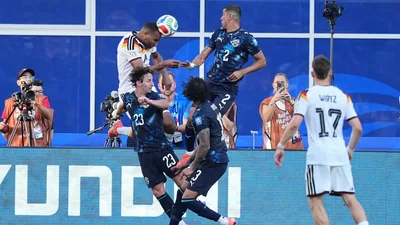
The FIFA World Cup 2026 has produced spectacular goals, dramatic upsets, and unforgettable moments. Yet few incidents have generated as much debate as the VAR decision that disallowed Germany’s extra-time goal against Paraguay in the Round of 32.
For German supporters, the moment felt devastating. A goal that appeared to have secured progression to the Round of 16 was erased after a lengthy video review. Moments later, the match headed to penalties, where Paraguay completed one of the tournament’s biggest shocks.
However, FIFA’s refereeing department believes the decision was not only correct but also entirely consistent with instructions provided to teams before the tournament began.
The controversy has reignited global discussions about VAR, modern refereeing standards, and the increasingly complex interpretation of fouls inside the penalty area. More importantly, it highlights a significant tactical change that could influence knockout matches throughout the remainder of the World Cup.
What Happened in Germany vs Paraguay?
The match had already become one of the most intense contests of the Round of 32.
Germany entered the tournament as one of the favorites but found themselves in a difficult battle against a disciplined Paraguay side determined to create history.
During extra time, Germany appeared to finally find the breakthrough. A headed finish found the back of the net, sparking celebrations among players and fans.
But before play could restart, VAR intervened.
After reviewing the sequence, officials determined that an attacking player had illegally obstructed Paraguay’s goalkeeper during the build-up. The goal was subsequently disallowed, leaving the score level.
The match eventually proceeded to a penalty shootout, where Paraguay held their nerve and secured a historic victory.
Without the VAR intervention, the outcome of the match—and perhaps Germany’s entire World Cup campaign—might have been very different.
Why FIFA Believes the Decision Was Correct
According to FIFA’s refereeing leadership, the ruling was based on a principle that has become increasingly important in modern football.
The issue was not whether physical contact occurred. Instead, officials focused on whether an attacking player deliberately moved to prevent an opponent from defending.
FIFA has emphasized that attackers cannot intentionally block defenders or goalkeepers when they are attempting to challenge for the ball.
This distinction is critical.
A player simply holding a natural position is generally permitted. However, once movement is made specifically to obstruct an opponent rather than play the ball, referees may interpret the action as a foul.
In Germany’s case, officials concluded that the movement prevented the goalkeeper from properly defending the situation.
The Growing Crackdown on Set-Piece Blocking
One of the most significant developments in modern football officiating involves set-piece enforcement.
For years, teams have used sophisticated blocking tactics during corners and free kicks.
These strategies often involve attackers deliberately positioning themselves between defenders and the ball, creating space for teammates to attack crosses.
While many coaches consider such tactics a legitimate part of football, referees have become increasingly concerned about actions that cross the line into illegal obstruction.
FIFA’s latest guidance appears designed to address exactly this issue.
Officials are being encouraged to distinguish between:
- Legal positioning
- Natural body movement
- Physical challenges for the ball
- Deliberate obstruction
- Blocking without intent to play the ball
- Interference with goalkeepers
The Germany incident has become one of the most prominent examples of this stricter interpretation.
How VAR Changed Refereeing at the World Cup
Video Assistant Referee technology has transformed football more dramatically than any officiating innovation in recent history.
Before VAR, incidents like the one involving Germany may never have been reviewed in sufficient detail.
Referees often had only a fraction of a second to assess complex situations involving multiple players inside crowded penalty areas.
VAR now allows officials to examine:
- Player positioning
- Off-the-ball movement
- Potential fouls
- Handball incidents
- Offside decisions
- Goalkeeper interference
Supporters of VAR argue that the technology improves accuracy and fairness.
Critics, however, believe it can remove spontaneity from football and sometimes penalize actions that previously would have gone unnoticed.
The Germany-Paraguay controversy sits at the center of this ongoing debate.
Why Goalkeeper Protection Has Become a Major Priority
Modern football places significant emphasis on protecting goalkeepers during set pieces.
Historically, goalkeepers often faced heavy physical pressure inside crowded penalty areas. Many referees allowed substantial contact before awarding fouls.
Over time, governing bodies concluded that excessive interference could unfairly prevent goalkeepers from performing their primary role.
As a result, officials now pay much closer attention to situations involving:
- Blocking goalkeeper movement
- Holding or grabbing
- Screening without playing the ball
- Intentional collisions
- Physical obstruction during crosses
FIFA’s interpretation reflects this broader trend.
The objective is not to favor goalkeepers but to ensure every player has a fair opportunity to compete for the ball.
Could Germany Have Avoided the Situation?
One of the most interesting questions emerging from the controversy is whether teams should adapt their attacking strategies.
If FIFA continues enforcing obstruction rules aggressively, coaches may need to rethink certain set-piece routines.
Many modern attacking systems rely heavily on coordinated blocking movements designed to create space.
Those tactics may become riskier if referees consistently penalize actions interpreted as deliberate obstruction.
This could lead to a broader tactical evolution where teams focus more on movement, timing, and positioning rather than physical screening.
Comparing Traditional Football vs Modern VAR-Era Football
| Aspect | Pre-VAR Era | VAR Era |
|---|---|---|
| Set-Piece Scrutiny | Limited | Extensive |
| Goalkeeper Protection | Less Strict | More Strict |
| Off-the-Ball Fouls | Frequently Missed | Regularly Reviewed |
| Decision Accuracy | Dependent on Live View | Multiple Camera Angles |
| Goal Reviews | Rare | Common |
This comparison helps explain why some fans feel frustrated when older football traditions collide with modern officiating standards.
Actions once considered acceptable are increasingly being reviewed and penalized.
Why the Decision Matters Beyond Germany
The significance of this ruling extends far beyond a single World Cup match.
Every team still competing in the tournament is now paying close attention to how referees interpret similar incidents.
Coaches will likely use the Germany-Paraguay example when preparing players for future knockout fixtures.
The lesson is clear: any movement interpreted as deliberately preventing a defender or goalkeeper from challenging for the ball could result in a foul.
In a tournament where margins are incredibly small, that distinction could determine who advances and who goes home.
The Psychological Impact of a Disallowed Goal
Few moments in football are more emotionally challenging than having a goal overturned.
Players often experience a dramatic shift from celebration to disappointment within seconds.
For Germany, the psychological consequences appeared significant.
Instead of carrying momentum into the final stages of extra time, the team suddenly faced renewed pressure.
Paraguay, meanwhile, received a major emotional boost.
Momentum in knockout football can change rapidly, and controversial decisions often play a major role in shaping outcomes.
The ability to recover mentally from setbacks frequently separates successful teams from eliminated ones.
Will FIFA Continue This Strict Interpretation?
All indications suggest that FIFA intends to maintain its current approach.
Officials have repeatedly emphasized consistency as one of the primary goals of modern refereeing.
If players and coaches have already been informed about specific enforcement standards, governing bodies are unlikely to abandon those principles simply because a decision becomes controversial.
In fact, FIFA may view the Germany incident as evidence that the system is working exactly as intended.
From a refereeing perspective, consistency is often considered more important than popularity.
What This Means for the Future of Football
The Germany-Paraguay controversy reflects a broader evolution occurring across world football.
Technology is providing referees with more information than ever before. As a result, actions that previously escaped punishment are now receiving detailed examination.
This trend is unlikely to reverse.
Instead, players, coaches, and fans will continue adapting to an era where every significant incident can be reviewed from multiple angles.
Future generations of footballers may eventually develop different habits and tactical approaches because of these officiating standards.
The game itself remains the same, but the interpretation of key moments continues to evolve.
Conclusion
The decision to disallow Germany’s extra-time goal against Paraguay may remain one of the most debated moments of the FIFA World Cup 2026. For German supporters, it represents a painful turning point that contributed directly to an unexpected elimination.
For FIFA, however, the incident serves as a clear example of referees applying tournament guidelines exactly as intended. Officials concluded that the obstruction prevented the goalkeeper from defending properly, making VAR intervention necessary.
Whether fans agree with the ruling or not, the message from football’s governing body is unmistakable. Deliberate blocking and obstruction—particularly involving goalkeepers—will face increased scrutiny throughout the modern game.
As the World Cup knockout rounds continue, teams across the tournament will undoubtedly study this incident closely. In an era defined by VAR and microscopic analysis, even the smallest movement inside the penalty area can change the fate of a nation.
For breaking news and live news updates, like us on Facebook or follow us on Twitter and Instagram. Read more on Latest Sports on thefoxdaily.com.






COMMENTS 0