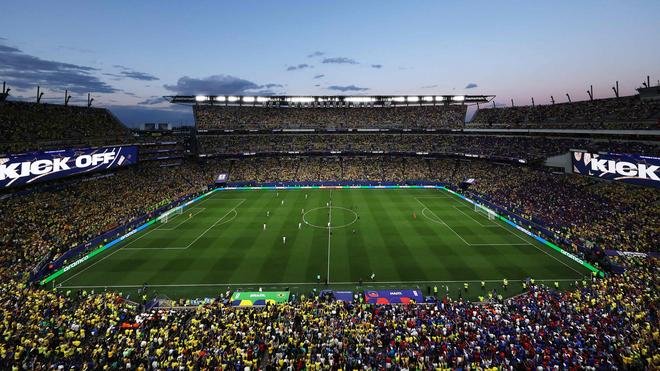
The FIFA World Cup 2026 is unlike any edition in history. For the first time, the tournament features 48 teams, expanding the competition from 32 and fundamentally changing how teams progress to the knockout rounds.
With 12 groups of four teams and the introduction of the best third-placed teams advancing, the traditional “top two only” qualification rule no longer applies. Instead, teams now have multiple pathways to reach the Round of 32.
This shift has created a new obsession among fans, analysts, and even coaches: how many points are actually needed to qualify for the knockout stage?
The answer is not fixed—but historical data from FIFA tournaments, continental competitions, and youth World Cups gives a strong statistical benchmark that helps predict the “safe zone” for qualification.
How the FIFA World Cup 2026 knockout qualification system works
The structure of the tournament is the key to understanding qualification requirements.
- 48 teams are divided into 12 groups of 4
- Each team plays 3 group-stage matches
- The top 2 teams from each group automatically qualify (24 teams)
- The best 8 third-placed teams also qualify
- This creates a Round of 32 knockout stage
This system introduces a new layer of complexity. In previous World Cups (32-team format), finishing third meant elimination. In 2026, third place can still be enough—but only if your performance ranks among the best across all groups.
That means teams are no longer only competing within their group—they are indirectly competing against third-placed teams from 11 other groups.
The golden question: how many points guarantee qualification?
Based on historical FIFA tournaments and similar formats, we can break qualification probabilities into clear performance tiers.
While no fixed cutoff exists, patterns from previous 24-team and youth tournaments offer strong indicators of what is typically required to advance.
Points benchmark analysis for FIFA World Cup 2026
| Points Total | Qualification Probability | What It Usually Means |
|---|---|---|
| 5 points | Almost 100% (safe qualification) | Strong performance; likely top 2 in group |
| 4 points | Very high (90–95%) | Usually enough even for third place qualification |
| 3 points | Moderate (40–60%) | Depends heavily on goal difference and group strength |
| 2 points | Low (10–20%) | Rare qualification; requires favorable results elsewhere |
| 1 point or less | Almost zero | Elimination in most scenarios |
This table shows a crucial reality: in the 48-team format, 4 points is effectively the “safe zone” threshold, while 3 points enters a highly uncertain territory.
Why 4 points has become the psychological qualification barrier
Across multiple FIFA tournaments with expanded knockout qualification systems, teams reaching 4 points have almost always advanced.
There are only rare exceptions where a team with 4 points failed to progress, and those cases are considered statistical anomalies rather than trends.
The reason 4 points is so powerful is simple:
- It typically requires at least one win and one draw
- It prevents a team from relying entirely on other results
- It usually places teams in the top half of third-placed rankings
- It significantly improves goal difference scenarios
In a 3-match group stage, 4 points reflects consistency—even if not dominance.
The dangerous zone: what happens at 3 points?
Three points is where the World Cup group stage becomes unpredictable.
A team can reach 3 points in multiple ways:
- One win, two losses
- Three draws
But the qualification outcome depends heavily on goal difference, goals scored, and group competitiveness.
In historical comparisons across FIFA and continental tournaments:
- Teams with positive goal difference on 3 points often advance
- Teams with negative goal difference frequently get eliminated
- Group strength significantly alters the threshold
In short, 3 points is the “borderline survival zone.”
Why 2 points is almost never enough
Statistically, teams finishing on 2 points rarely qualify for knockout stages in any FIFA-format competition.
This typically represents:
- Two draws and one loss
- Or a highly inconsistent group performance
Only in extremely unusual tournament scenarios—where multiple groups are tightly contested—do teams on 2 points survive as one of the best third-placed sides.
Even then, it requires favorable results across several groups simultaneously.
The real game-changer: best third-placed teams rule
The introduction of the “best third-placed teams” qualification rule fundamentally changes group-stage strategy.
Teams are no longer just trying to finish top two—they are also trying to outperform third-placed teams in other groups.
This creates a parallel competition table across all groups, where:
- Goal difference becomes critical
- Scoring goals matters more than ever
- Even losing teams may continue attacking late in matches
- Margin of defeat can decide qualification fate
This system encourages more aggressive football and reduces the effectiveness of defensive “parking the bus” strategies.
How this compares to previous World Cup formats
The 2026 format is not the first time FIFA has experimented with third-place qualification, but it is the largest version of it.
In earlier 24-team World Cups (1986–1994), four best third-placed teams advanced from six groups. That system provided useful statistical patterns:
- 5 points almost always guaranteed progression
- 4 points was usually sufficient
- 3 points was uncertain but occasionally successful
The 2026 format expands this uncertainty because more groups mean more variation in group strength and outcomes.
Goal difference: the hidden tiebreaker that decides everything
Points alone do not determine qualification. Goal difference is often the silent deciding factor.
In tight groups, the difference between advancing and elimination can come down to:
- One extra goal scored
- A single late equalizer conceded
- Performance against weaker opponents
This makes every goal in the group stage extremely valuable, even in matches where qualification already seems likely.
Strategic implications for teams in FIFA World Cup 2026
The expanded format forces national teams to rethink their entire group-stage strategy.
Previously, teams might have played cautiously, especially in opening matches. Now, attacking football is incentivized because:
- Goal difference can determine third-place ranking
- 3 points alone may not guarantee advancement
- Scoring more goals increases safety margin
Expect to see more aggressive tactics, especially from mid-tier national teams aiming to secure early qualification points.
Key insight: consistency matters more than perfection
One of the most important takeaways from historical data is that teams do not need perfect records to advance—but they do need consistency.
A balanced group-stage performance such as:
- 1 win + 1 draw + 1 loss (4 points)
is often more effective than:
- 1 win + 2 losses (3 points)
even though both involve a single victory.
This highlights the importance of avoiding heavy defeats and maintaining competitiveness in every match.
What fans should watch during group stages
For viewers, the 2026 World Cup group stage will be more dynamic than ever. Key elements to watch include:
- Live third-place rankings across all groups
- Goal difference swings in real time
- Late goals affecting multiple groups simultaneously
- Teams chasing “best third-place” positioning
The tournament will feel more like a connected ecosystem rather than isolated group battles.
Conclusion: the new World Cup math rewards ambition and consistency
The FIFA World Cup 2026 introduces a revolutionary format that transforms group-stage qualification into a multi-layered competition. While there is no fixed cutoff, historical data strongly suggests that 4 points is the safest threshold for advancement, while 3 points remains uncertain and 2 points is rarely sufficient.
However, beyond the numbers lies a deeper truth: the expanded format rewards teams that combine consistency with attacking intent. Goal difference, not just points, will decide who advances.
As the world prepares for the biggest World Cup in history, one thing is clear—every goal, every point, and every moment in the group stage will matter more than ever before.
For breaking news and live news updates, like us on Facebook or follow us on Twitter and Instagram. Read more on Latest Sports on thefoxdaily.com.






COMMENTS 0