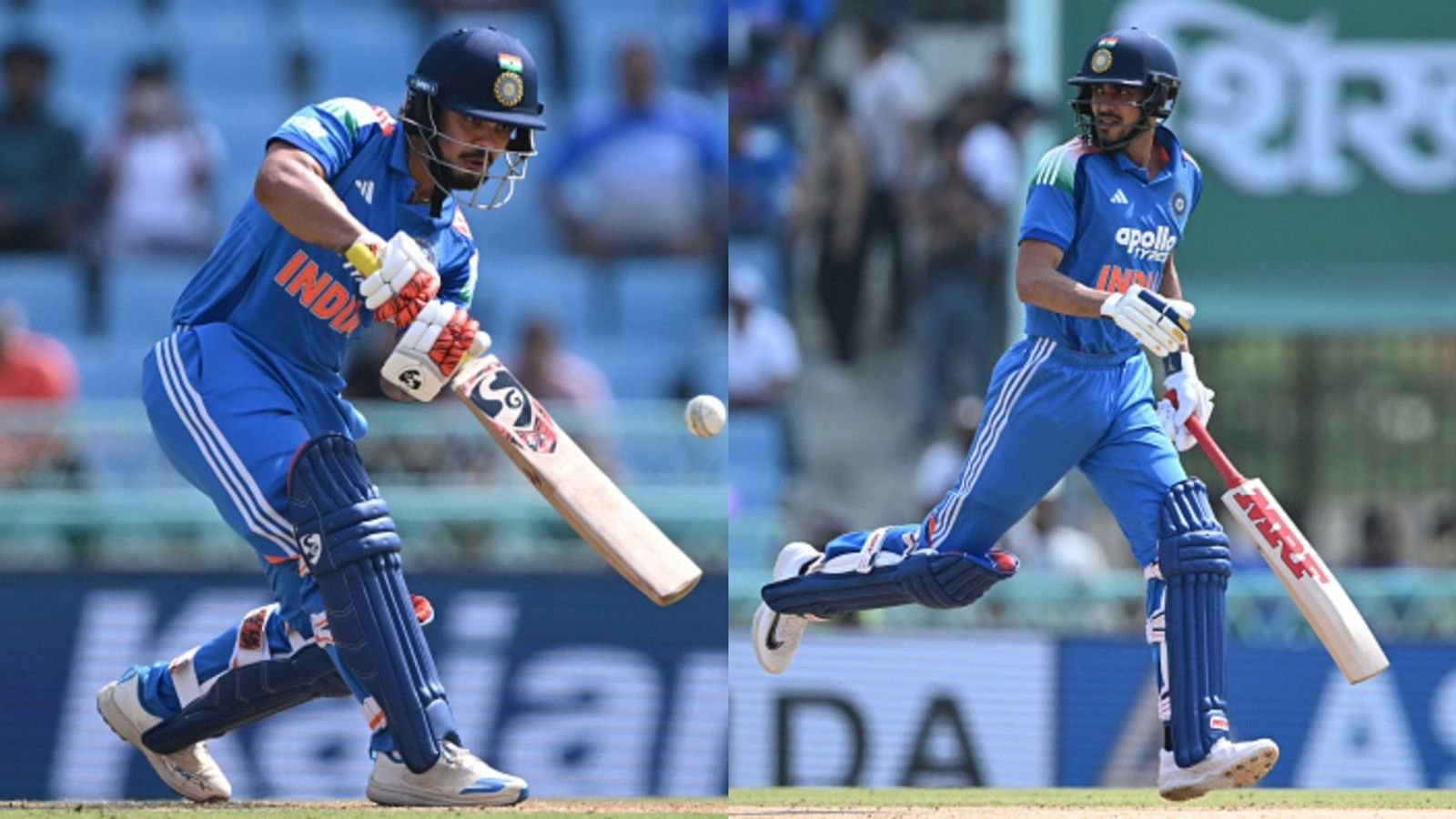
India sealed the three-match ODI series against Afghanistan with a commanding 170-run victory in the second match at Lucknow’s Ekana Cricket Stadium. While the scoreline reflected complete dominance, the bigger story was how India’s next generation stepped up under pressure to deliver a near-perfect all-round performance.
Captain Shubman Gill led from the front with a magnificent 154, his maiden ODI century as skipper, while Ishan Kishan produced a blistering 125 off just 79 deliveries to propel India beyond the 400-run mark. The hosts then backed up their batting masterclass with a disciplined bowling effort led by Arshdeep Singh and Gurnoor Brar, dismissing Afghanistan for 232 in 44.3 overs.
Beyond the result, the contest offered a glimpse into India’s evolving ODI identity—aggressive batting, adaptable bowling resources, and a deeper talent pool capable of sustaining success across formats.
IND vs AFG 2nd ODI: Match Summary at a Glance
| Match Details | Information |
|---|---|
| Fixture | India vs Afghanistan, 2nd ODI |
| Venue | Ekana Cricket Stadium, Lucknow |
| Date | June 17, 2026 |
| Result | India won by 170 runs |
| Series Status | India lead 2-0 and clinch the series |
| India | 402 all out in 49.5 overs |
| Afghanistan | 232 all out in 44.3 overs |
Gill and Kishan Deliver a Batting Masterclass
Afghanistan’s decision to bowl first under the scorching Lucknow sun appeared reasonable, especially given the challenging weather conditions. However, India’s batting duo of Gill and Kishan quickly turned the contest into a one-sided affair.
The pair stitched together a stunning 224-run partnership for the third wicket in just 140 deliveries, combining classical stroke play with modern-day power hitting.
Gill’s innings demonstrated why he is increasingly viewed as the cornerstone of India’s ODI future. His 154-run knock was a masterclass in pacing an innings—absorbing early pressure, rotating strike efficiently, and accelerating at precisely the right moments.
Kishan complemented his captain perfectly. After reaching his half-century at a measured pace, the left-hander shifted gears dramatically, dismantling Afghanistan’s attack with clean hitting and innovative stroke play.
The partnership highlighted a critical evolution in India’s ODI strategy: the ability to sustain attacking intent through the middle overs rather than waiting for a final-overs surge.
How India’s ODI Batting Philosophy Has Changed
For years, ODI cricket revolved around preserving wickets and accelerating late in the innings. Modern cricket has rewritten that formula.
India’s approach against Afghanistan reflected a growing emphasis on maintaining pressure throughout all three phases of an innings.
- Building partnerships without compromising scoring rate.
- Targeting spin aggressively in the middle overs.
- Rotating strike consistently to avoid dot-ball pressure.
- Using batting depth to encourage calculated risks.
- Prioritising intent over conservatism.
The result was a total of 402, a score that underlined India’s capability to dominate ODI contests regardless of conditions.
More importantly, it showcased a batting model increasingly aligned with the demands of major ICC tournaments, where scores above 350 have become the norm rather than the exception.
Extreme Heat Becomes an Unexpected Talking Point
The Lucknow heat proved to be one of the toughest opponents on the day.
Temperatures hovered around 38 degrees Celsius, with the real-feel crossing 42 degrees, forcing multiple drinks breaks during the first innings.
Gill battled visible exhaustion and required an ice collar while batting. The Indian captain ultimately did not return to the field during Afghanistan’s chase due to cramps, handing leadership duties to Shreyas Iyer.
Several Afghanistan players also struggled with the conditions, highlighting the growing challenge of player welfare in an increasingly crowded cricket calendar.
As global temperatures rise and international schedules become more demanding, teams may need to rethink hydration protocols, recovery methods, and match timings to protect player health.
Arshdeep Singh and Gurnoor Brar Continue India’s Pace Revolution
Chasing more than 400 runs demands an extraordinary start, but India’s fast bowlers ensured Afghanistan never gained momentum.
Arshdeep Singh produced another mature performance, claiming 3 wickets for 45 runs with a blend of swing, accuracy, and smart variations.
Gurnoor Brar once again impressed with his ability to hit hard lengths and extract bounce, finishing with figures of 3 for 60.
Their success reflected a broader shift in Indian cricket.
Not long ago, India’s dominance at home depended heavily on spin. Today, the emergence of a strong pace-bowling pipeline provides flexibility across conditions and formats.
The ability to win matches with seamers on surfaces traditionally associated with spin gives India a significant tactical advantage.
Prince Yadav’s Debut Adds to India’s Growing Bench Strength
Debutant Prince Yadav experienced the emotional rollercoaster that often defines an international debut.
He thought he had secured his maiden ODI wicket when Rahmanullah Gurbaz top-edged a pull shot, only for a no-ball review to overturn the dismissal.
Rather than losing confidence, the young pacer remained composed and eventually claimed two wickets, including the crucial scalp of Rahmat Shah.
His resilience and ability to respond positively to setbacks offered another encouraging sign for India’s talent pipeline.
With an increasingly packed international schedule, depth has become as valuable as first-choice quality. India’s willingness to rotate players and back emerging talent could prove decisive in future tournaments.
Afghanistan Show Promise but Miss Key Opportunities
Afghanistan’s growth in international cricket has been remarkable, but this series exposed areas that still require development.
The visitors showed flashes of quality, particularly through Rahmat Shah’s fighting 79 and Rahmanullah Gurbaz’s intent at the top of the order, but they struggled to maintain momentum.
Several factors contributed to their defeat:
- Failure to contain India’s middle-order acceleration.
- Inability to convert starts into match-defining innings.
- Lack of support for frontline bowlers.
- Challenges adapting to extreme weather conditions.
- Limited experience in chasing totals above 350.
Injuries further complicated matters, with Darwish Rasooli battling severe cramps and a hamstring issue after returning to the squad following a difficult personal period.
Despite the result, Afghanistan remain a team capable of challenging stronger opponents, particularly as their younger players gain more experience in high-pressure situations.
What India’s Series Win Means Ahead of Future Challenges
India’s victory was about more than securing another bilateral series.
It reinforced the idea that the team is building a sustainable ODI framework around flexibility, depth, and role clarity.
Gill’s leadership continues to evolve, Kishan has strengthened his case for a regular middle-order role, and the emergence of younger bowlers has expanded India’s options considerably.
The competition for places within the squad is intensifying—a healthy problem for any successful team.
Importantly, India no longer appear dependent on a handful of senior players. Multiple match-winners are emerging across departments, reducing vulnerability during injuries or form slumps.
Can India Complete a Clean Sweep in Chennai?
With the series already secured, the third ODI in Chennai presents an opportunity for experimentation.
India may choose to rotate players, test different combinations, and offer additional opportunities to emerging talents.
Afghanistan, meanwhile, will aim to salvage pride and gain valuable experience against one of the world’s strongest ODI teams.
For both sides, the final match represents more than a dead rubber—it is another chance to refine strategies and assess combinations ahead of future assignments.
Conclusion
India’s emphatic victory over Afghanistan showcased far more than individual brilliance. It highlighted a team embracing modern ODI cricket through fearless batting, dynamic bowling options, and an enviable talent pipeline.
Shubman Gill’s captain’s century and Ishan Kishan’s explosive hundred will dominate headlines, but the performances of Arshdeep Singh, Gurnoor Brar, and Prince Yadav underline a larger narrative: India’s next generation is ready to take centre stage.
For Afghanistan, the defeat offers valuable lessons rather than reasons for discouragement. Competing consistently against elite teams remains an essential part of their development journey.
As international cricket grows increasingly competitive, teams with adaptability, depth, and multiple match-winners will hold the advantage. On current evidence, India appear exceptionally well-equipped for the challenges ahead.
For breaking news and live news updates, like us on Facebook or follow us on Twitter and Instagram. Read more on Latest Sports on thefoxdaily.com.






COMMENTS 0