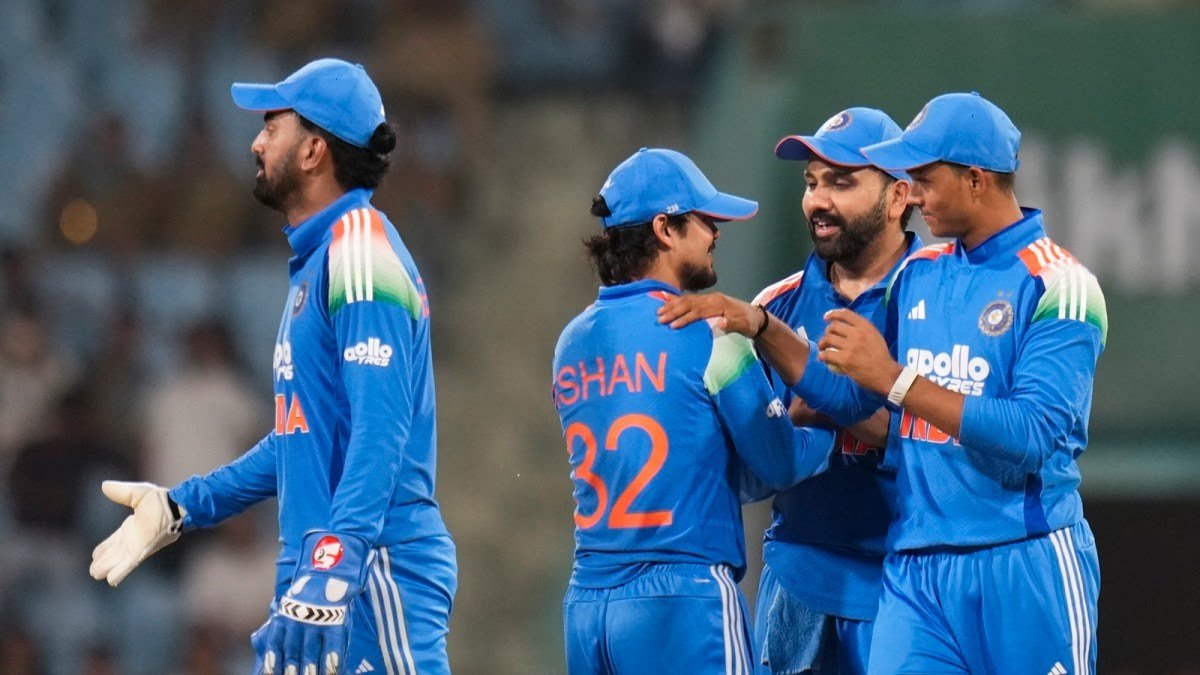
India delivered a statement performance in the second ODI against Afghanistan, securing a comprehensive 170-run victory at the Ekana Cricket Stadium in Lucknow to clinch the three-match series with a game to spare. Powered by brilliant centuries from Shubman Gill and Ishan Kishan, followed by a clinical bowling effort led by Arshdeep Singh and Gurnoor Brar, the hosts showcased their dominance across all departments.
While the result itself was one-sided, the bigger takeaway from India’s triumph extends beyond the scoreline. The match highlighted the emergence of a new core group of players capable of carrying India’s ODI ambitions forward. It also reinforced the team’s growing bench strength, an area that has become increasingly important as international cricket moves into an era of packed schedules and multi-format demands.
For Afghanistan, the defeat served as a reminder of the gap that still exists between promising performances and consistently challenging elite teams over the course of a full ODI contest.
IND vs AFG 2nd ODI: Match Summary
| Match Details | Information |
|---|---|
| Fixture | India vs Afghanistan, 2nd ODI |
| Venue | Ekana Cricket Stadium, Lucknow |
| Result | India won by 170 runs |
| Series Status | India lead 2-0 and clinch the series |
| India Score | 402/8 in 50 overs |
| Afghanistan Score | 232 all out in 44.3 overs |
Gill and Kishan Rewrite the Script With a 224-Run Partnership
Afghanistan’s decision to bowl first under challenging afternoon conditions appeared logical on paper, but India quickly turned the contest into a batting masterclass.
After early wickets threatened to slow the innings, Gill and Kishan combined for a breathtaking 224-run partnership for the third wicket. The duo blended calculated aggression with intelligent strike rotation, ensuring the scoreboard never stopped moving.
Gill’s innings of 154 from 110 deliveries showcased his remarkable ability to pace an ODI innings. He started cautiously, assessed the conditions, and then accelerated with precision. His shot selection, particularly against spin, reflected a batter who understands the nuances of modern one-day cricket.
Kishan, meanwhile, played the aggressor’s role to perfection. His 125 off just 79 balls injected momentum into the innings and demonstrated why he remains one of India’s most dangerous white-ball batters when given a clear role.
Together, they transformed a solid platform into a massive total of 402, effectively putting the game beyond Afghanistan’s reach before the second innings began.
Why India’s Batting Approach Signals a New ODI Blueprint
India’s recent ODI performances indicate a clear shift in philosophy. Instead of preserving wickets for a late surge, the team is embracing an aggressive approach throughout the innings.
This strategy reflects broader changes in global cricket, where teams consistently target scores above 350 rather than viewing 300 as a winning total.
The Gill-Kishan partnership perfectly illustrated this evolution:
- Intent-driven batting from the middle overs.
- Continuous pressure on opposition bowlers.
- Calculated risks instead of reckless hitting.
- Greater emphasis on boundary options against spin.
- Maintaining a scoring rate above seven runs per over.
With major ICC tournaments demanding adaptability across conditions, India’s ability to post massive totals without relying on a single batter is an encouraging sign.
Heat, Fitness and the Modern Cricket Challenge
Lucknow’s intense afternoon heat emerged as a significant subplot during the match. Several players from both sides struggled with cramps and exhaustion, highlighting the physical demands of contemporary cricket.
Gill required an ice collar while batting and did not return to the field after his dismissal due to heat-related fatigue. Afghanistan also faced challenges, with players visibly affected by the conditions throughout the contest.
The incident once again raises questions about player workload management, scheduling, and the need for enhanced hydration protocols during matches played in extreme weather conditions.
As cricket calendars continue to expand, fitness and recovery could become just as important as technical skills in determining success.
Arshdeep Singh and Gurnoor Brar Lead India’s Pace Revolution
Chasing 403 was always going to require an extraordinary effort from Afghanistan, but India’s pace attack ensured the visitors never gained momentum.
Arshdeep Singh delivered another composed spell, finishing with figures of 3/45. His ability to swing the new ball and execute yorkers in the middle overs continues to make him a valuable asset in the ODI format.
Gurnoor Brar complemented him brilliantly with 3/60, using variations in pace and disciplined lines to create constant pressure.
The success of India’s seamers on a surface expected to assist spin highlighted an important development: India’s fast-bowling depth is stronger than ever.
For years, India relied heavily on spin in home conditions. Today, the emergence of versatile pacers gives the team multiple ways to win matches across different venues and situations.
Prince Yadav’s Debut Offers Another Positive Sign
Despite the experienced names dominating headlines, debutant Prince Yadav quietly produced an encouraging performance.
After an early breakthrough was denied due to a no-ball, he remained composed and eventually claimed two wickets, including the crucial scalp of Rahmat Shah.
His ability to recover from disappointment and execute his plans under pressure suggests India may have unearthed another promising fast-bowling option.
Developing bench strength has become essential in modern cricket, and performances like these provide selectors with valuable alternatives for future tours and tournaments.
Afghanistan Continue to Show Promise but Need Greater Consistency
Afghanistan’s cricketing rise over the past decade has been remarkable. They have transformed from emerging contenders into a team capable of challenging established nations on their day.
However, this series has exposed key areas that still require improvement.
- Building longer partnerships during big chases.
- Managing pressure in high-scoring contests.
- Developing greater batting depth.
- Improving death-over bowling execution.
- Enhancing fielding standards under pressure.
Rahmat Shah’s fighting 89 demonstrated resilience, but Afghanistan lacked the sustained aggression required to chase a target exceeding 400.
Injuries also affected their campaign, with Darwish Rasooli forced to retire hurt after battling a hamstring issue.
Despite the setbacks, Afghanistan remain a rapidly improving side capable of producing surprises against top opposition.
What This Series Win Means for India
Beyond securing another bilateral series victory, India’s performance offers important insights into the team’s long-term planning.
The emergence of multiple match-winners reduces dependence on senior players and creates healthy competition within the squad.
Gill’s leadership, Kishan’s resurgence, Arshdeep’s consistency, and the rise of younger bowlers provide India with greater flexibility heading into future assignments.
The team management now faces the enviable challenge of selecting from a deep pool of talent rather than searching for solutions.
That depth could prove decisive as India prepare for major tournaments where injuries, form fluctuations, and changing conditions often determine outcomes.
Can India Complete the Clean Sweep in Chennai?
With the series already secured, the third ODI in Chennai presents India with an opportunity to experiment with combinations while maintaining momentum.
Team management may choose to rotate players, test new bowling options, or offer opportunities to emerging talents.
Afghanistan, meanwhile, will be determined to avoid a whitewash and secure a morale-boosting victory.
The final match could provide valuable lessons for both teams as they continue building towards future international challenges.
Conclusion
India’s 170-run win over Afghanistan was far more than a routine bilateral triumph. It was a showcase of the team’s evolving ODI identity—fearless batting, versatile pace bowling, and impressive squad depth.
Shubman Gill and Ishan Kishan stole the spotlight with their exceptional centuries, but the contributions of Arshdeep Singh, Gurnoor Brar, and Prince Yadav underlined a broader theme: India’s next generation is ready to step up.
For Afghanistan, the series remains a valuable learning experience. Competing against elite teams in challenging conditions is a crucial part of their development journey.
As the cricketing calendar becomes increasingly demanding, teams with depth, adaptability, and multiple match-winners will hold the advantage. On current evidence, India appear well-positioned to meet those demands.
For breaking news and live news updates, like us on Facebook or follow us on Twitter and Instagram. Read more on Latest Sports on thefoxdaily.com.






COMMENTS 0