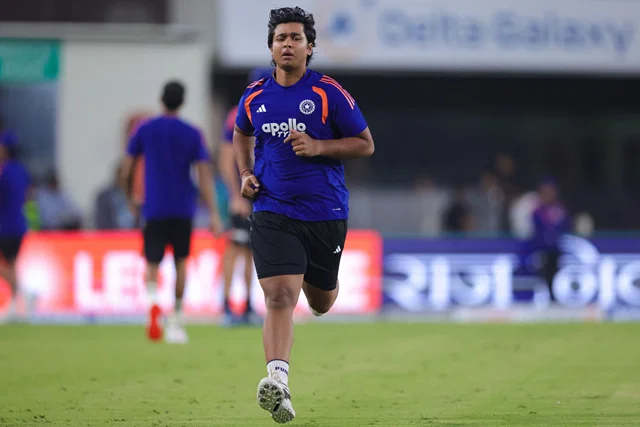
India face a must-win challenge in the fifth and final T20I against the West Indies after suffering a 24-run defeat in the fourth match at the Rajiv Gandhi International Stadium in Hyderabad on Wednesday, October 14. The loss allowed the visitors to level the five-match series at 2-2, setting up an exciting series decider.
The final encounter will take place at the M Chinnaswamy Stadium in Bengaluru on Saturday, October 17. With the series on the line, the Indian team management may need to rethink its playing combination and make a few changes to strengthen the side.
Although several Indian players have delivered promising performances during the series, inconsistency in certain areas has created concerns ahead of the decisive match. India will need to find the right balance between batting firepower and bowling effectiveness to prevent the West Indies from taking control of the contest.
Three potential changes stand out ahead of the fifth T20I: giving young batting sensation Vaibhav Sooryavanshi an opportunity, bringing Shivam Dube back into the playing XI, and considering Kuldeep Yadav in place of Mayank Yadav.
3 Changes India Should Make for the 5th T20I Against West Indies
#3 Vaibhav Sooryavanshi for Sanju Samson
Sanju Samson could be the first player India consider replacing for the series-deciding encounter. The right-handed opener scored a half-century in the fourth T20I, demonstrating his ability to make a significant contribution at the top of the order. However, his recent inconsistency remains a concern.
Samson has produced some promising performances, but he has also struggled to maintain consistency across matches. His tendency to follow a substantial innings with a low score makes his place in the lineup a potential talking point ahead of the Bengaluru encounter.
India could consider giving Vaibhav Sooryavanshi an opportunity to address that concern. The young left-handed batter is regarded as one of the country’s most exciting batting talents and possesses the attacking ability to change the momentum of a T20 match in a short period.
Sooryavanshi’s aggressive approach could provide India with an additional attacking option during the powerplay. Against a West Indies side known for its powerful batting lineup, India may benefit from setting an imposing total or establishing a strong foundation early in the innings.
The youngster’s ability to score quickly could also put pressure on the opposition’s bowlers. In T20 cricket, an explosive start can influence the entire innings, forcing captains to adjust their bowling plans and field placements earlier than expected.
Why India Should Give Vaibhav Sooryavanshi a Chance
One of the strongest arguments in favour of Sooryavanshi’s inclusion is the importance of giving young players meaningful opportunities at the international level. If India consider him ready for the role, the fifth T20I could offer a valuable chance to assess his ability in a high-pressure situation.
The series is currently tied at 2-2, meaning the final match will determine the winner. Such a contest would test the youngster’s temperament, shot selection and ability to handle an experienced opposition bowling attack.
Sooryavanshi has the potential to become a major match-winner if he continues to develop his game. His attacking instincts could give India a different dimension at the top of the order, particularly if the team wants to maximise its scoring opportunities in the first six overs.
However, replacing Samson would not be a straightforward decision. His half-century in the previous match demonstrates that he can deliver valuable runs, and one good innings should not be dismissed when assessing his overall contribution.
India’s decision would therefore depend on whether the management prioritises Samson’s recent experience or wants to use the final match to give Sooryavanshi an opportunity. If the team believes the youngster can handle the pressure, his inclusion could be an intriguing tactical move.
Leaving Sooryavanshi out of the entire five-match series would also mean missing an opportunity to evaluate his readiness against international opposition. Giving him a chance in the final game could help India understand how he fits into their future T20 plans.
#2 Shivam Dube for Axar Patel
Shivam Dube is another player India could consider bringing back into the playing XI for the fifth T20I. He has been left out of the previous two matches in favour of Nitish Kumar Reddy, who has made some useful contributions during his opportunities.
Reddy’s batting contribution in the fourth T20I highlighted the value he can provide when he performs well. However, Dube has also established himself as an important match-winner in the shortest format and could offer India a different option in the middle order.
The question is not simply whether Dube deserves a place in the team, but which player India should leave out to accommodate him. Axar Patel could be the candidate if the management decides that the batting combination needs to change.
Why Shivam Dube Could Strengthen India’s Batting
Dube’s attacking batting makes him a potentially valuable addition to India’s middle order. In T20 cricket, a batter capable of scoring quickly can change the direction of an innings, particularly when the team needs acceleration during the middle overs.
His inclusion could provide India with another power-hitting option and help reduce the pressure on the top order to score at an aggressive rate throughout the innings.
India’s batting combination needs to offer enough depth and firepower to compete with the West Indies. Bringing Dube back into the side could be one way of strengthening that area, provided the team can maintain an effective balance between its batting and bowling resources.
Axar Patel’s recent batting performances have raised questions about his role at No. 8. While he has contributed with the ball, his recent returns with the bat have not been convincing enough to make the position appear ideally suited to him.
His bowling also came under pressure in the fourth T20I. Axar conceded 45 runs in his four overs, giving the West Indies an opportunity to score freely against him.
Could Axar Patel Be Left Out Against the West Indies?
Axar’s possible exclusion would be a tactical decision rather than a judgment based entirely on one expensive spell. His left-arm spin remains an important asset, and he has generally offered India value as a bowler.
However, the composition of the opposition could influence the selection call. The West Indies have several left-handed batters in their lineup, a factor that could make India’s bowling matchups particularly important when the team finalises its combination.
If the management believes Axar’s role is less effective in the specific matchup, it could consider sacrificing his place to bring Dube into the side. The move would increase India’s batting firepower, although it would also require the team to assess whether its remaining bowling options can cover the overs effectively.
That trade-off is central to the decision. Dube could help India produce a stronger batting performance, but the team must avoid weakening its bowling resources too significantly in the process.
Ultimately, India’s choice should depend on the conditions in Bengaluru, the expected opposition combination and the balance the management wants to achieve. Dube’s return is a plausible option if the team prioritises greater power-hitting in the middle order.
#1 Kuldeep Yadav for Mayank Yadav
The third potential change involves India’s bowling attack, with Kuldeep Yadav coming into consideration as a replacement for Mayank Yadav.
Mayank has featured in all four matches of the series so far. While he impressed in the second T20I with his pace during the powerplay and picked up three wickets, his performances in the other matches have been less convincing.
The fast bowler struggled particularly badly in the fourth T20I in Hyderabad, where he conceded 52 runs without taking a wicket in his four overs. That expensive spell increased the pressure on India’s bowling unit and highlighted the challenges he has faced against the West Indies during the series.
Mayank’s pace is an important weapon, but fast bowling alone is not always enough to contain an aggressive batting lineup. Bowlers also need to vary their deliveries, control their lengths and make adjustments when opponents begin to target them.
Why Kuldeep Yadav Could Be a Better Option in Bengaluru
Kuldeep has also experienced some difficult moments during the series, so replacing Mayank with the left-arm wrist-spinner would not guarantee an immediate improvement. Nevertheless, the potential matchup offers India a reason to consider the change.
The West Indies have looked more comfortable against pace than spin, according to the assessment in the supplied report. Introducing Kuldeep could therefore give India a different way to challenge their batters in the final encounter.
As a wrist-spinner, Kuldeep offers a variation that differs significantly from Mayank’s fast bowling. His ability to turn the ball and change its trajectory could force the West Indies batters to adjust their approach, particularly if they are looking to maintain a high scoring rate.
The M Chinnaswamy Stadium is known for its short boundary dimensions, which can make it an attractive venue for aggressive batters. However, the supplied report notes that the ground has not been as batting-friendly as usual in recent times. That could make the conditions worth considering when India decide on their bowling combination.
If the pitch offers enough assistance to spin, Kuldeep could become an important option for the series decider. His inclusion would also give India a different tactical approach rather than relying heavily on pace to restrict the West Indies.
Mayank Yadav Needs to Improve His Limited-Overs Bowling
Mayank’s recent performances suggest that he still has work to do to establish greater consistency in limited-overs cricket. His three-wicket performance in the second T20I demonstrated the threat he can pose, but the expensive spells in the other matches have reduced the overall impact of his pace.
The West Indies appear to have found ways to counter his bowling, making it important for him to develop alternative plans when his speed does not produce the desired results.
For India, the decision is about selecting the bowler most likely to succeed in the conditions and matchup presented by the final T20I. Mayank’s pace could still be useful, but Kuldeep’s spin may offer a more suitable alternative if the team expects the West Indies to be vulnerable against slower bowling.
Replacing Mayank would also give the young fast bowler an opportunity to assess his recent performances and work on the areas that need improvement before future international assignments.
India Must Get Their Playing XI Right for the Series Decider
With the five-match T20I series level at 2-2, India have little room for error in Bengaluru. The West Indies have already demonstrated their ability to challenge the home side, and the 24-run victory in Hyderabad will give the visitors confidence heading into the final match.
India’s selection decisions could play an important role in determining the outcome. Giving Sooryavanshi a chance would introduce an aggressive option at the top of the order, while Dube’s return could strengthen the middle-order batting. Kuldeep’s inclusion would provide a different bowling option against a West Indies lineup that has been comfortable against pace.
Each potential change comes with a trade-off. Sooryavanshi would replace an experienced batter who scored a half-century in the previous match. Dube’s inclusion could come at the expense of Axar’s bowling contribution, while Kuldeep would be replacing a fast bowler who has already shown his ability to take wickets in the series.
The team management must therefore weigh recent performances, matchups and conditions before finalising the playing XI. Making changes simply for the sake of change would not be enough; each selection must serve a clear tactical purpose.
Conclusion
India’s 24-run defeat in the fourth T20I has set up a decisive final encounter against the West Indies, with the five-match series tied at 2-2. The Men in Blue will need a strong all-round performance at the M Chinnaswamy Stadium on October 17 to secure the series.
Three changes deserve consideration: Vaibhav Sooryavanshi could replace Sanju Samson to provide an explosive option at the top, Shivam Dube could come in for Axar Patel to strengthen the batting, and Kuldeep Yadav could replace Mayank Yadav to offer a spin-based alternative.
None of these changes guarantees victory, and the final decision will depend on the team’s assessment of conditions, player form and tactical requirements. However, if India believe these adjustments will improve their balance, the series decider could be the right occasion to make them.
With the series on the line, India’s ability to select the right combination and execute its plans under pressure will be crucial to the outcome of the fifth T20I.
For breaking news and live news updates, like us on Facebook or follow us on Twitter and Instagram. Read more on Latest Cricket on thefoxdaily.com.






COMMENTS 0