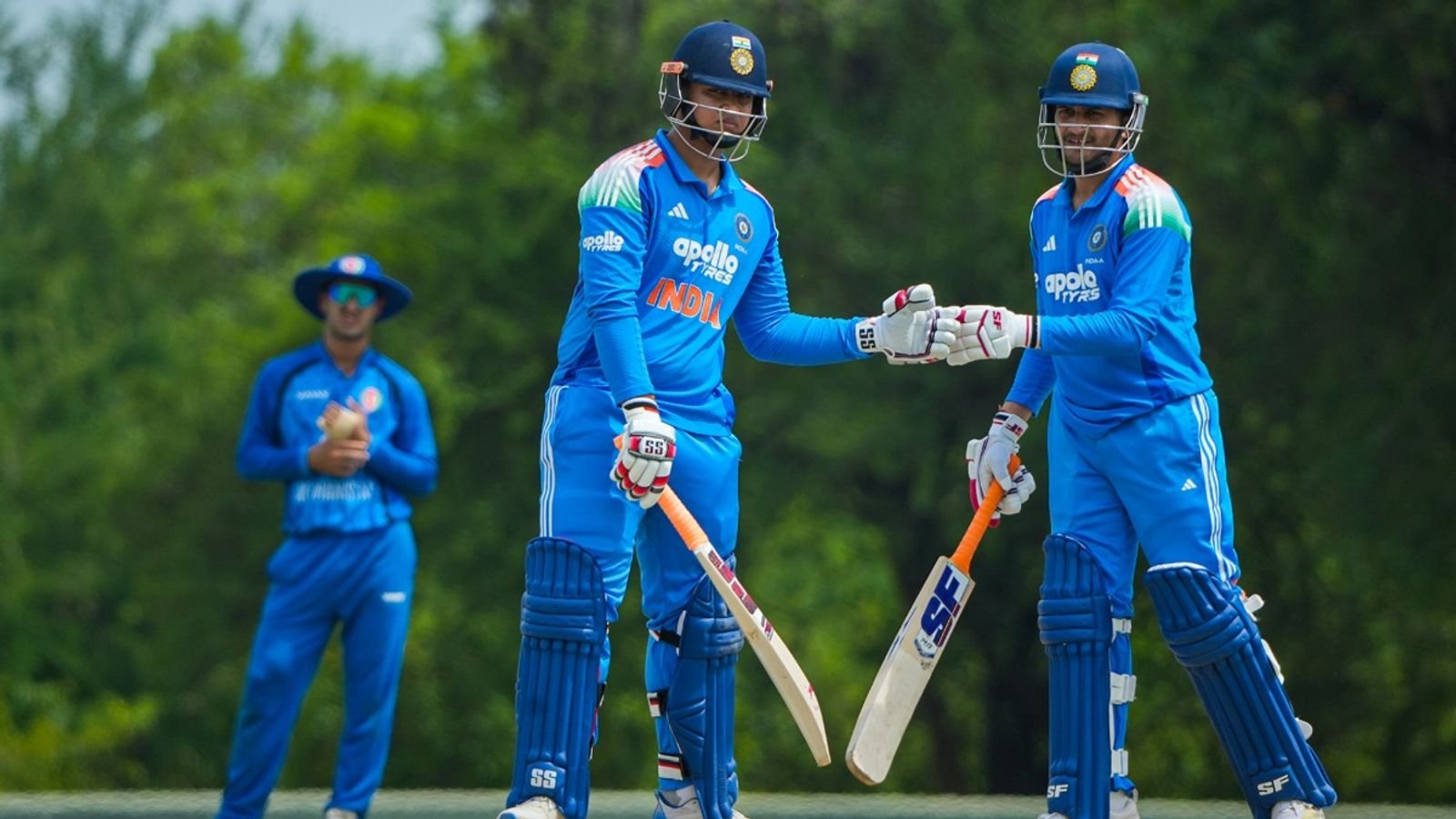
India A’s dominant win over Afghanistan A in the Tri-Nation A Series was more than just a qualification result. It was a glimpse into the depth of India’s emerging cricket talent and a reminder of why the country’s development pipeline remains the envy of world cricket.
In a virtual knockout encounter at the Rangiri Dambulla International Stadium on June 17, 2026, the Tilak Varma-led side delivered a complete performance with both bat and ball to seal a comprehensive 101-run victory.
After posting an imposing total of 319/9, India A bundled out Afghanistan A for 218, securing a place in the tournament final and reinforcing the growing belief that the next generation of Indian cricketers is ready for bigger challenges.
While established names like Tilak Varma and Ruturaj Gaikwad provided stability, it was the contributions of younger prospects such as Priyansh Arya, Vaibhav Sooryavanshi, Kumar Kushagra, Vipraj Nigam and Nishant Sindhu that highlighted the strength of India’s talent pool.
Why the Tri-Nation A Series Matters
For many fans, A-team cricket often flies under the radar. However, these tournaments serve as a critical bridge between domestic cricket and the international stage.
The Tri-Nation A Series offers selectors an opportunity to evaluate players in overseas conditions, test leadership skills and assess how emerging talents handle high-pressure situations.
With senior players frequently occupied by international commitments and franchise leagues, strong performances in A-team cricket can significantly influence national selection decisions.
India’s recent success in nurturing players such as Shubman Gill, Yashasvi Jaiswal and Rinku Singh underscores the importance of this pathway.
India A’s Batting Depth Powers Massive Total
After Afghanistan A captain Imran Mir opted to bowl first, India A’s revamped opening combination immediately seized control.
Priyansh Arya and Vaibhav Sooryavanshi provided a brisk start, combining aggression with smart shot selection.
Arya continued his impressive run of form with a fluent 58 off 42 deliveries, striking nine boundaries and one six. His intent during the powerplay ensured India A built early momentum.
At the other end, Sooryavanshi showcased maturity beyond his years with a composed 38 from 28 balls.
Although both openers missed out on larger scores, they established the platform India A needed.
| India A Top Performers | Runs | Balls |
|---|---|---|
| Tilak Varma | 59 | 75 |
| Priyansh Arya | 58 | 42 |
| Kumar Kushagra | 58 | 67 |
| Vaibhav Sooryavanshi | 38 | 28 |
| Ruturaj Gaikwad | 30 | 31 |
Rather than relying on one standout century, India A demonstrated the value of collective contributions—a hallmark of successful one-day teams.
Tilak Varma’s Leadership Continues to Impress
Captaining an A-team presents a unique challenge. Players are expected to perform individually while simultaneously nurturing teammates and managing match situations.
Tilak Varma has embraced that responsibility with confidence throughout the tournament.
His innings of 59 from 75 balls provided the perfect anchor amid frequent batting changes around him. More importantly, he displayed game awareness by rotating strike effectively and building partnerships.
As India looks ahead to future white-ball leadership options, Tilak’s performances in Dambulla offer encouraging signs.
His ability to balance aggression with composure continues to strengthen his case as a long-term candidate in India’s limited-overs setup.
Kumar Kushagra and the Rise of India’s New Middle Order
One of the most encouraging aspects of India’s performance was Kumar Kushagra’s contribution in the middle overs.
The wicketkeeper-batter scored a well-constructed 58 off 67 deliveries, ensuring India A maintained momentum after the departure of the top order.
His partnership with Tilak Varma prevented Afghanistan A from regaining control and highlighted India’s growing bench strength behind established international players.
With ODI cricket demanding versatility and adaptability, innings like Kushagra’s could significantly boost his standing among selectors.
Late-Order Acceleration Makes the Difference
Modern one-day cricket increasingly rewards teams that can accelerate during the final 10 overs.
India A once again showcased this ability.
Vipraj Nigam’s quickfire 30 off 20 deliveries and Nishant Sindhu’s valuable 21 helped push the total beyond the psychological 300-run barrier.
Crossing 320 transformed the nature of the chase and increased scoreboard pressure on Afghanistan A.
On pitches where batting conditions tend to slow down later in the innings, those extra runs often prove decisive.
Nishant Sindhu Leads Clinical Bowling Display
Afghanistan A began their chase positively, but India A’s bowlers consistently applied pressure through disciplined lines and timely breakthroughs.
Nishant Sindhu emerged as the standout performer, using subtle variations and smart field placements to disrupt Afghanistan A’s rhythm.
He removed captain Imran Mir after the batter had threatened to build a significant partnership.
Sindhu’s contribution extended beyond individual wickets. His control in the middle overs prevented Afghanistan A from sustaining the required scoring rate.
His all-round impact once again demonstrated why he remains one of India’s most promising young cricketers.
Afghanistan A Showed Promise but Lacked Partnerships
Despite the heavy defeat, Afghanistan A produced several encouraging performances.
Bahir Shah scored a determined 57 from 52 deliveries, while Faisal Shinozada added 46 off 56 balls.
However, neither batter received sufficient support from the rest of the lineup.
Chasing more than 300 requires sustained partnerships and calculated risk-taking. Afghanistan A struggled to build meaningful stands after losing key wickets at regular intervals.
Once Bahir Shah was dismissed, the innings quickly unravelled.
| Afghanistan A Top Scorers | Runs | Balls |
|---|---|---|
| Bahir Shah | 57 | 52 |
| Faisal Shinozada | 46 | 56 |
| Imran Mir | 32 | 27 |
The result underlined a recurring challenge for developing cricket nations: building batting depth capable of sustaining pressure during difficult chases.
India’s Talent Pipeline Continues to Deliver
Perhaps the most significant takeaway from this victory is the sheer depth of India’s cricket ecosystem.
India A fielded a squad featuring players from different age groups, domestic systems and IPL franchises, yet the team performed with cohesion and clarity.
From experienced domestic performers like Ruturaj Gaikwad to emerging stars such as Vaibhav Sooryavanshi and Priyansh Arya, the squad reflects the effectiveness of India’s development structure.
The Indian Premier League, robust domestic tournaments and increased exposure to international conditions have created a system where players are better prepared than ever before.
This depth gives selectors the luxury of planning for the future without compromising present-day competitiveness.
What This Victory Means for the Final
By securing a place in the Tri-Nation A Series final, India A have gained valuable momentum heading into the tournament’s decisive match.
The balanced nature of the squad could prove to be their biggest strength.
They possess aggressive openers, adaptable middle-order batters, versatile all-rounders and multiple bowling options capable of succeeding in different conditions.
Equally important, several players have contributed throughout the tournament rather than relying on individual brilliance.
That collective approach often separates champions from contenders.
Players to Watch Ahead of the Final
- Priyansh Arya: His fearless approach at the top of the order provides India A with explosive starts.
- Tilak Varma: The captain’s composure and tactical awareness continue to stand out.
- Nishant Sindhu: His all-round abilities offer crucial balance to the side.
- Kumar Kushagra: His ability to anchor the middle overs adds stability.
- Vaibhav Sooryavanshi: The young opener has shown encouraging signs under pressure.
Conclusion
India A’s 101-run victory over Afghanistan A was not just a qualification result—it was a showcase of the country’s next generation of cricket talent.
Priyansh Arya’s attacking half-century, Tilak Varma’s leadership, Kumar Kushagra’s composure and Nishant Sindhu’s all-round excellence combined to deliver a complete team performance.
As the team prepares for the Tri-Nation A Series final, this dominant display reinforces an increasingly familiar message in world cricket: India’s production line of young talent shows no signs of slowing down.
For selectors, coaches and fans alike, that may be the most significant outcome of all.
For breaking news and live news updates, like us on Facebook or follow us on Twitter and Instagram. Read more on Latest Sports on thefoxdaily.com.




COMMENTS 0