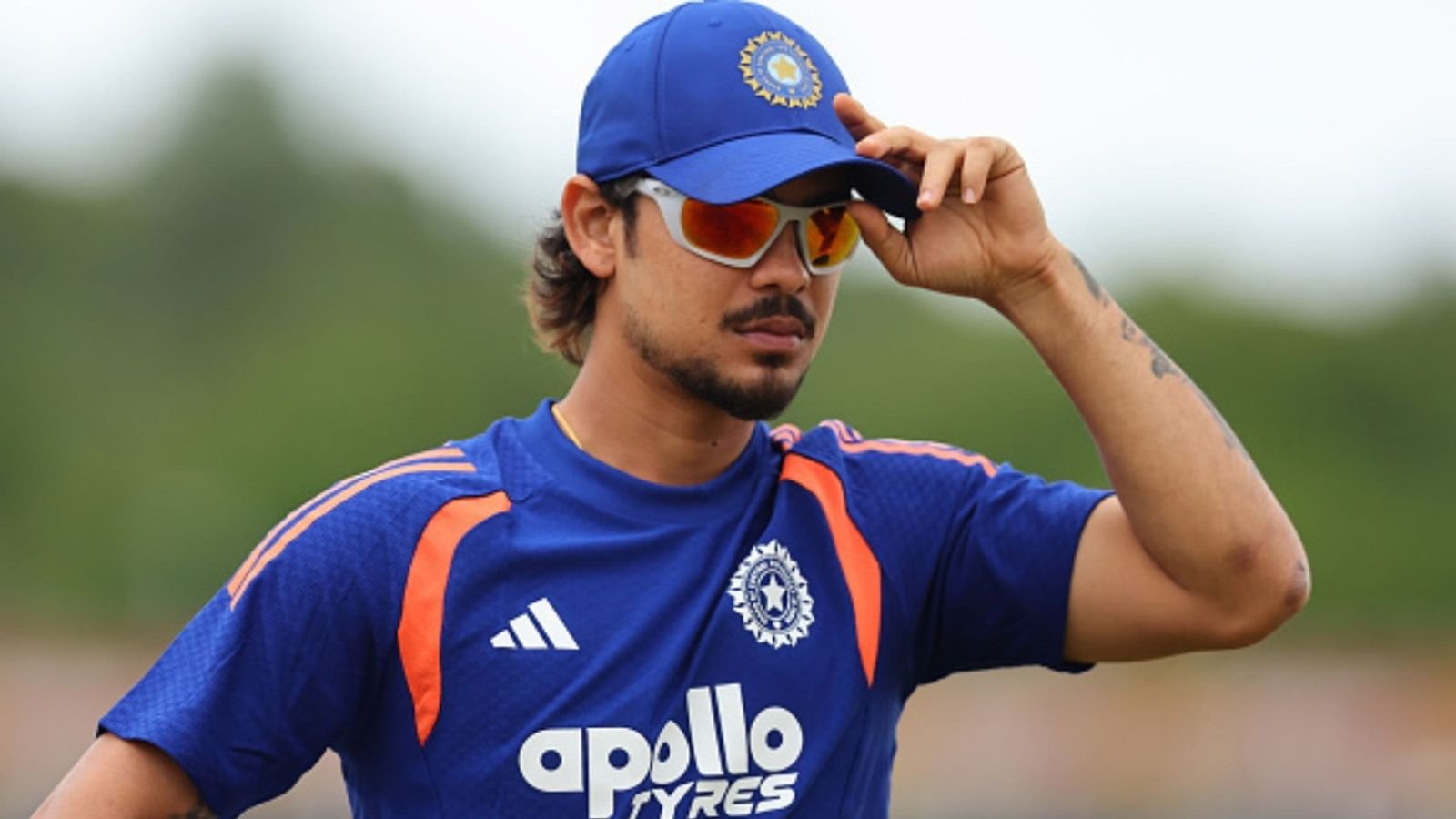
Ishan Kishan’s double century in the Duleep Trophy final became the defining moment of the second day in Chennai, as the East Zone captain transformed a strong position into a commanding one. Kishan resumed his innings on 111 and converted it into a landmark double hundred, reaching the milestone from 270 balls while remaining unbeaten.
The achievement carries significance beyond the number itself. Kishan became only the third East Zone batter to score a double century in Duleep Trophy history, joining Arun Lal and Saba Karim. He also became the seventh batter overall to register a double century in a Duleep Trophy final, joining an elite group featuring Raman Lamba, Yashasvi Jaiswal, Cheteshwar Pujara, Anshuman Gaekwad, Yusuf Pathan and Mansoor Ali Khan Pataudi.
With East Zone moving beyond 550 runs, the match has swung heavily in their favour. Kishan’s innings has not only strengthened the team’s first-innings position but also raised the possibility of East Zone ending its long wait for another Duleep Trophy title.
Why Ishan Kishan’s double century matters
A double century in first-class cricket represents exceptional concentration and endurance. In a final, however, the value of such an innings can be even greater because every run contributes directly to a team’s attempt to win a trophy.
Kishan’s knock came while he was leading East Zone, meaning his contribution had two dimensions. He was responsible for producing runs as a batter while also carrying the expectations that come with being captain in a major domestic final.
Instead of allowing the pressure of the occasion to slow him down, Kishan continued to build his innings after crossing three figures. His unbeaten status was particularly important because it meant East Zone had the option of continuing to build its total around its captain.
From 111 overnight to a historic 200
Kishan began the second day with a century already under his belt. The challenge was no longer simply to make a big score but to turn that foundation into a match-defining innings.
He successfully navigated that challenge and reached 200 from 270 balls. The progression from 111 to double century demonstrated his ability to maintain concentration well beyond the initial milestone.
For a batter, reaching 100 can sometimes create a psychological turning point. The next phase requires renewed focus because bowlers are aware that dismissing an established batter can change the direction of a long innings. Kishan avoided that danger and continued to accumulate runs.
His unbeaten double hundred therefore became both a personal landmark and a strategic advantage for East Zone.
East Zone’s double-century club
Kishan’s achievement also places him among a very small group of East Zone batters who have reached 200 in the Duleep Trophy.
| East Zone double-century achiever | Significance |
|---|---|
| Arun Lal | One of the earlier East Zone batters to reach the landmark |
| Saba Karim | Another notable East Zone batter to score a Duleep Trophy double century |
| Ishan Kishan | Third East Zone batter to achieve the feat |
The achievement is particularly notable because East Zone had previously lacked a double-century maker in this competition before the names already associated with the record. Kishan has now added his name to that historical list while doing so in the biggest match of the tournament.
Kishan enters the Duleep Trophy final double-century elite club
The larger record is equally impressive. Kishan is now the seventh batter to score a double century in a Duleep Trophy final.
| Batter | Achievement |
|---|---|
| Raman Lamba | Duleep Trophy final double-century club |
| Yashasvi Jaiswal | Duleep Trophy final double-century club |
| Cheteshwar Pujara | Duleep Trophy final double-century club |
| Anshuman Gaekwad | Duleep Trophy final double-century club |
| Yusuf Pathan | Duleep Trophy final double-century club |
| Mansoor Ali Khan Pataudi | Duleep Trophy final double-century club |
| Ishan Kishan | Seventh batter to score a double century in a Duleep Trophy final |
The names surrounding Kishan show how rare the achievement is. The list includes players associated with different generations of Indian cricket and different batting styles.
Being added to such a group gives the innings a historical value that will remain long after the 2026 final is completed.
The Wriddhiman Saha connection makes the record more interesting
There is another East Zone statistic that highlights the scale of Kishan’s achievement. Wriddhiman Saha previously held the highest score by an East Zone batter in the Duleep Trophy final, having made 170 against Central Zone in the 2012 final.
Kishan has now gone considerably beyond that mark.
This is more than a numerical comparison. Saha and Kishan are both wicketkeeper-batters, making the comparison especially interesting from a positional perspective. Both have represented India and have been recognised for their batting ability alongside their wicketkeeping responsibilities.
Kishan’s double century therefore represents a new benchmark for East Zone’s wicketkeeper-batters in the competition.
Why the timing of the innings could be decisive
The most important aspect of Kishan’s double century may ultimately be what happens after it.
Individual records attract headlines, but a final is judged by the result. East Zone’s move beyond 550 runs means South Zone now faces the pressure of responding to a substantial total.
A large first-innings score gives a team several tactical advantages. It allows the bowlers more freedom, increases pressure on the opposition’s batting unit and provides greater room for the captain to use attacking fields.
That makes Kishan’s unbeaten innings potentially more valuable than a similar score in a less consequential match.
East Zone’s 13-year title wait adds another layer
East Zone’s immediate objective is bigger than celebrating Kishan’s record. The side is attempting to win the Duleep Trophy after a 13-year wait.
That long gap creates an additional storyline around the final. Kishan’s double century has put the team in an excellent position, but the trophy will ultimately depend on how East Zone handles the remaining stages of the match.
The danger for any team holding a huge first-innings advantage is complacency. Cricket can change quickly if the opposition produces a strong response. East Zone therefore needs to convert its numerical advantage into sustained pressure.
Kishan’s leadership becomes an important subplot
Because Kishan is captaining East Zone, his performance also provides an interesting insight into leadership through batting.
A captain’s role is not limited to field placements and bowling changes. In first-class cricket, spending a long period at the crease can itself become a form of leadership. Kishan has occupied the crease for an extended period and given his teammates a clear platform from which to attack the opposition.
His unbeaten status also leaves East Zone with flexibility. The team can decide how aggressively to pursue further runs before turning its attention to South Zone’s batting.
This is where Kishan’s tactical decisions could become just as important as his batting record.
What the double century says about Kishan as a batter
Kishan has long been associated with an aggressive approach, particularly in limited-overs cricket. A long first-class innings, however, demands a different skill set.
Scoring 200 from 270 balls requires a batter to manage different phases of an innings. There are periods when scoring quickly is possible and others when survival becomes the priority.
The ability to remain unbeaten through such a long innings demonstrates the importance of adapting to match conditions rather than relying on one fixed batting approach.
That adaptability is one of the biggest takeaways from Kishan’s performance.
Double century versus team victory: what matters more?
There is a natural tendency to focus on the individual record when a batter scores 200. But for East Zone, the real value of Kishan’s innings will be measured by the final result.
| Individual achievement | Team impact |
|---|---|
| Kishan reached 200 | East Zone moved beyond 550 |
| He became the third East Zone double-century maker | South Zone faces a substantial first-innings challenge |
| He entered the Duleep Trophy final double-century club | East Zone gained greater control of the final |
| He remained unbeaten | East Zone retains flexibility over when to shift focus to bowling |
This distinction is important because domestic finals are ultimately about winning trophies. Kishan has done his part with the bat; the rest of East Zone now has to turn that foundation into a complete performance.
What happens next could define the final
The next phase of the match will be critical for both teams. East Zone will want to maximise the advantage created by Kishan and the rest of the batting unit, while South Zone must find a way to absorb the pressure of a huge opposition total.
If South Zone loses early wickets, East Zone’s advantage could become even more significant. On the other hand, a strong batting response would prevent the final from becoming one-sided.
That makes the first innings only the beginning of the tactical battle.
Kishan’s double century has changed the shape of the contest, but it has not by itself decided the champion.
The bigger picture for Indian domestic cricket
Performances like Kishan’s also underline why major domestic tournaments remain important in Indian cricket. The Duleep Trophy provides established players and emerging talents with an opportunity to perform in demanding first-class conditions.
A double century in a final is particularly valuable because it combines skill with pressure management. Such innings can strengthen a player’s domestic reputation and provide evidence of their ability to handle long-form cricket.
For Kishan, the performance also arrives at a moment when his leadership responsibilities and batting output are both under the spotlight. Rather than simply producing an eye-catching cameo, he has constructed a marathon innings that has directly influenced a major domestic final.
Final verdict: Kishan has created history, but the trophy remains the target
Ishan Kishan’s double century in the Duleep Trophy final is already one of the defining individual performances of the 2026 tournament. He became only the third East Zone batter to score a double century in the competition and the seventh batter overall to achieve the feat in a final.
His unbeaten 200 from 270 balls has also taken him past East Zone’s previous final batting benchmark of 170, set by Wriddhiman Saha in 2012.
Yet the most important chapter is still unwritten. East Zone entered the final with the ambition of ending a 13-year wait for the title, and Kishan has provided an enormous foundation for that attempt.
The record books will remember the double century regardless of what happens next. But if East Zone converts its commanding position into a championship victory, Kishan’s innings will take on an even greater significance: not just a historic personal milestone, but the performance that helped deliver a long-awaited Duleep Trophy triumph.
For breaking news and live news updates, like us on Facebook or follow us on Twitter and Instagram. Read more on Latest Cricket on thefoxdaily.com.






COMMENTS 0