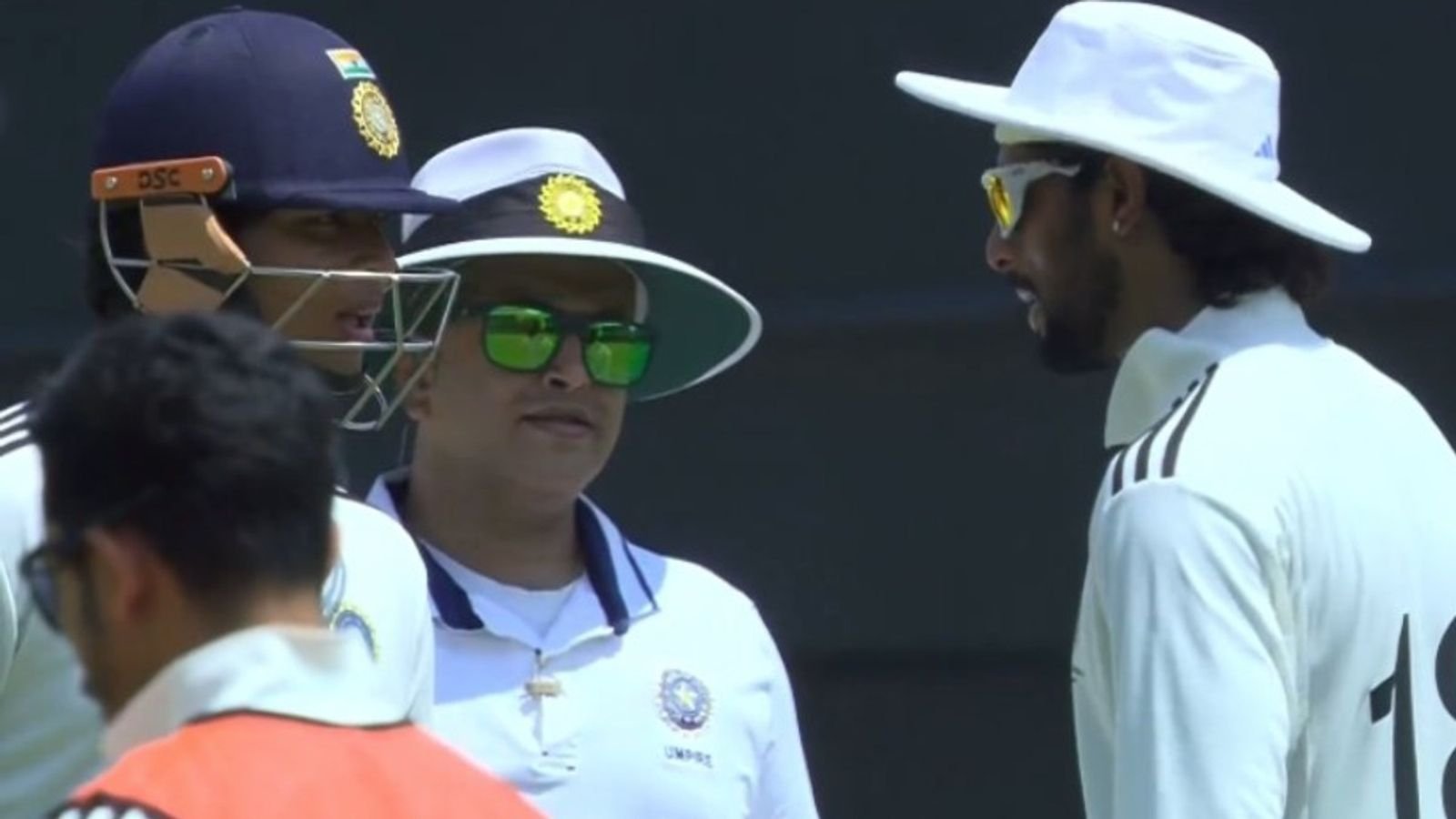
Vaibhav Sooryavanshi produced another aggressive batting display in the Duleep Trophy 2026 final, but his innings ended just short of a half-century after a lively exchange with South Zone captain Tilak Varma became one of the early talking points of the match.
The 15-year-old East Zone batter made a rapid 44 from 37 balls on the opening day of the final against South Zone. His dismissal came after he had helped East Zone make an impressive start alongside Abhimanyu Easwaran.
The moment attracted attention because Varma had earlier engaged the teenage batter in some light-hearted sledging. The South Zone skipper’s comment about Sooryavanshi’s vice-captaincy was picked up by the stump microphone, creating an entertaining subplot during an otherwise high-pressure domestic final.
However, the dismissal itself came from the bowling of Chama V Milind rather than directly from Varma’s words. The episode nevertheless highlighted the fine margins between aggressive batting and an attacking shot going wrong.
Vaibhav Sooryavanshi Starts the Duleep Trophy Final Aggressively
East Zone began their innings with Sooryavanshi and Abhimanyu Easwaran at the top of the order. The pair quickly established control and put together a century opening partnership.
Sooryavanshi immediately adopted the attacking approach that has become a defining feature of his emerging batting style. Instead of allowing the South Zone bowlers to settle, he looked for scoring opportunities whenever the field offered them.
The teenager was particularly effective when South Zone captain Tilak Varma positioned fielders deeper. Those placements created gaps for singles while also allowing Sooryavanshi to attack balls when he saw opportunities to clear the infield.
The result was an innings that combined controlled aggression with quick scoring.
At the other end, Easwaran provided experience and stability. The senior opener was also scoring freely and eventually reached his half-century before Sooryavanshi could complete the same milestone.
Sooryavanshi Takes on Mohammed Siraj
One of the most eye-catching aspects of Sooryavanshi’s innings was his willingness to attack experienced India fast bowler Mohammed Siraj.
Rather than being intimidated by the reputation of the bowler, the young left-hander looked for scoring opportunities and succeeded in putting pressure on Siraj.
In one particularly expensive over, Sooryavanshi collected 16 runs, including two boundaries and a six. The assault demonstrated his confidence against high-quality pace bowling.
For a teenager playing in a major domestic final, that approach carried obvious risks. But it also showed why Sooryavanshi has generated significant attention as one of India’s emerging batting prospects.
His ability to score quickly against experienced bowlers has become an important part of his appeal, particularly in an era where aggressive batting can change the momentum of a match within a few overs.
Tilak Varma Changes Tactics Against the Teenager
Initially, Varma appeared willing to allow Sooryavanshi to take low-risk singles by spreading the field. That approach limited easy boundaries but also gave the young batter room to keep the scoreboard moving.
As the innings developed, Varma began looking for another way to disrupt the teenager’s rhythm.
The South Zone captain engaged Sooryavanshi in a playful verbal exchange. The stump microphone captured Varma questioning his vice-captaincy with the phrase, “Kya yaar ye vice-captain?”
The interaction appeared light-hearted rather than hostile, with the two players smiling during the exchange.
Such moments are a familiar part of competitive cricket. Captains and fielders often attempt to break a batter’s concentration through conversation, humour or tactical pressure, particularly when the batter is scoring quickly.
In this case, the exchange became notable because Sooryavanshi was only 15 and was playing a major role for East Zone in a final.
Did Tilak Varma’s Sledge Actually Cause the Dismissal?
The timing of the incident and the dismissal naturally created a connection between the two moments, but it would be inaccurate to say that Varma directly dismissed Sooryavanshi.
The teenager was eventually removed by Chama V Milind after attempting an attacking stroke. The bowler benefited from Sooryavanshi’s decision to continue playing positively when he was approaching his half-century.
This distinction matters because cricket dismissals generally result from a combination of bowling quality, field settings and batting decisions. A verbal exchange may affect concentration, but it cannot by itself establish the reason for a wicket.
In Sooryavanshi’s case, the more useful lesson is that aggressive batting can produce spectacular results while also increasing the possibility of an early exit.
From 100-Run Partnership to Sudden Setback
East Zone had built an excellent platform through their opening partnership. Reaching a century together gave the team precisely the kind of start required in a major first-class final.
Sooryavanshi’s contribution was particularly valuable because he maintained a high scoring rate while Easwaran provided stability.
That combination placed pressure on South Zone and forced Varma to search for ways to break the partnership.
Once Sooryavanshi departed for 44, South Zone had succeeded in removing one of the most dangerous attacking batters in the East Zone lineup. The wicket therefore had significance beyond the individual score.
For East Zone, the challenge became maintaining the momentum established during the opening partnership while ensuring that the innings did not lose direction after the aggressive opener’s departure.
Another Near-Miss for Sooryavanshi
The 44 against South Zone was not Sooryavanshi’s first near-century of the knockout stage.
In the semi-final against Central Zone, the teenager had scored 92 before falling short of three figures.
Those two innings demonstrate both sides of his current batting profile. He has the ability to produce substantial scores and influence matches, but converting those starts into bigger milestones remains another step in his development.
At just 15, however, the emphasis is unlikely to be solely on statistical milestones. The greater significance is his ability to perform against experienced domestic cricketers in high-pressure matches.
Back-to-back impactful performances in the knockout stages have strengthened the impression that he can handle demanding competitive environments.
Why Vaibhav Sooryavanshi’s Approach Stands Out
Sooryavanshi’s batting is built around intent. He does not appear interested in simply surviving the early overs before accelerating later.
Instead, he looks to identify scoring areas immediately and put bowlers under pressure.
That approach can be especially effective when fielding captains respond by placing more players outside the circle or changing bowling plans.
However, aggressive cricket requires an equally strong understanding of risk. The challenge for Sooryavanshi will be learning when to attack, when to rotate the strike and when a defensive option offers greater value.
Those decisions become increasingly important as opposition teams study him more closely.
The Role of Tilak Varma as South Zone Captain
Varma’s handling of Sooryavanshi offered an interesting glimpse into the tactical side of captaincy.
His initial field placement allowed East Zone’s opener to score singles while protecting the boundary. When that strategy did not sufficiently restrict the scoring rate, Varma added psychological pressure through conversation.
For a captain, such adjustments are important in first-class cricket because matches can develop over long periods. A field that works for one batter or one phase of an innings may become ineffective as conditions and momentum change.
Varma therefore had to balance defensive field placements with the need to create wicket-taking opportunities.
The eventual dismissal of Sooryavanshi gave South Zone an important breakthrough, although Milind deserves credit for executing the delivery that produced the wicket.
East Zone’s Strong Start Has Bigger Significance
The opening partnership was valuable for East Zone because finals are often shaped by the ability of teams to control the early phases.
A strong opening stand can allow the middle order to enter the game without immediate pressure. It can also force the opposition captain to rotate bowlers earlier than planned.
Sooryavanshi’s attacking approach played a major role in creating that pressure.
Even though his dismissal ended his personal innings at 44, the impact of his contribution should not be judged solely by whether he reached fifty or a century.
His aggressive scoring helped East Zone establish momentum and gave the team a platform from which the rest of the batting lineup could build.
Experience Meets Youth in the Duleep Trophy Final
The match also brought together different generations of Indian cricket.
| Player | Role in the Final | Key Talking Point |
|---|---|---|
| Vaibhav Sooryavanshi | East Zone opener and vice-captain | Attacking 44 from 37 balls |
| Abhimanyu Easwaran | East Zone opener | Provided experience alongside Sooryavanshi |
| Tilak Varma | South Zone captain | Used field changes and psychological tactics |
| Mohammed Siraj | South Zone fast bowler | Faced aggressive batting from Sooryavanshi |
| Chama V Milind | South Zone bowler | Claimed Sooryavanshi’s wicket |
This mixture of youth and experience is one of the most interesting aspects of domestic cricket. Emerging players get the opportunity to test themselves against established professionals, while experienced players are required to adapt to new styles of batting.
What the Dismissal Can Teach Sooryavanshi
The biggest takeaway for Sooryavanshi is not that aggressive cricket should be abandoned.
Instead, the next stage of his development will involve refining that aggression. Scoring 44 from 37 balls is valuable, but converting such starts into larger scores could make his impact even greater.
As opponents become more familiar with his strengths, they will likely attempt to deny him his preferred scoring areas and force him to play more deliveries outside his comfort zone.
Learning to respond to those tactical changes will be crucial.
The best aggressive batters are not simply fearless. They are also capable of changing gears when the match situation demands it.
Why This Performance Still Matters Despite the Dismissal
It would be easy to focus on the missed half-century because Sooryavanshi was already well established at the crease.
But the broader context is more encouraging.
He contributed to a century opening stand, attacked experienced bowling and played with confidence in a high-profile domestic final. Those are valuable experiences for a young cricketer.
His semi-final score of 92 had already shown his ability to perform in knockout cricket. The 44 in the final added another significant contribution, even though he did not convert it into a major individual score.
For a player at the beginning of his career, learning from these situations can be more important than chasing milestones.
Conclusion: Sooryavanshi’s 44 Becomes an Early Talking Point
Vaibhav Sooryavanshi’s dismissal for 44 became one of the early talking points of the Duleep Trophy 2026 final after his aggressive innings was followed by a light-hearted exchange with South Zone captain Tilak Varma.
Varma’s playful comment about the teenager’s vice-captaincy added entertainment to the contest, but the actual wicket came from Chama V Milind after Sooryavanshi attempted another attacking shot.
The bigger story remains the teenager’s ability to take on experienced bowlers and contribute significantly in a major domestic match. His 37-ball 44 helped East Zone make a strong start alongside Abhimanyu Easwaran.
For Sooryavanshi, the next challenge is clear: retain the fearless approach that makes him dangerous while developing the composure needed to turn rapid starts into match-defining innings.
For breaking news and live news updates, like us on Facebook or follow us on Twitter and Instagram. Read more on Latest Cricket on thefoxdaily.com.






COMMENTS 0