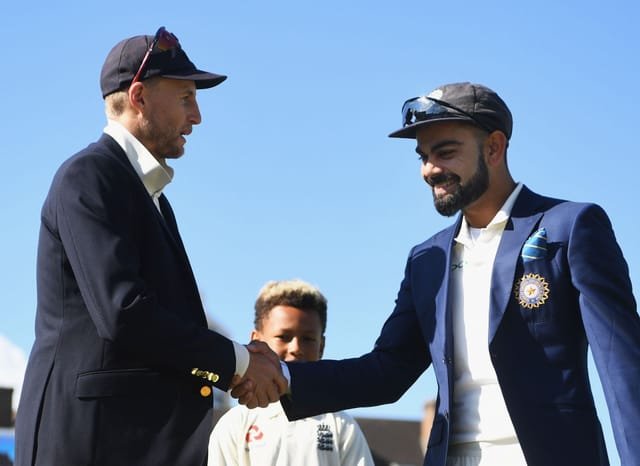
Whenever Joe Root and Virat Kohli are mentioned in the same conversation, cricket fans inevitably find themselves debating two of the greatest batters of the modern era. Both have defined a generation of ODI cricket through consistency, technical excellence, and the ability to anchor innings under pressure.
Root’s unbeaten 76 against India in the first ODI at Edgbaston once again demonstrated why he remains England’s most dependable batter in the 50-over format. The innings also provided an ideal opportunity to compare his ODI career trajectory with that of Virat Kohli after both players completed exactly 179 ODI innings.
While statistics alone cannot determine greatness, they provide valuable insight into how two elite batters have approached the format differently. The numbers reveal a fascinating story of consistency, match-winning impact, chasing mastery, and contrasting batting philosophies.
More importantly, they help explain why Kohli is often regarded as the benchmark for ODI batting excellence, while Root remains one of the most underrated performers of his generation.
Joe Root vs Virat Kohli After 179 ODI Innings: The Overall Numbers
At first glance, both players boast extraordinary records. Crossing 7,500 runs within 179 ODI innings is a feat achieved by only a select group of batters in cricket history.
| Statistic | Joe Root | Virat Kohli |
|---|---|---|
| Innings | 179 | 179 |
| Runs | 7,653 | 8,143 |
| Average | 50.01 | 54.28 |
| Strike Rate | 87.70 | 91.08 |
| Highest Score | 166* | 183 |
| Centuries | 20 | 27 |
| Half-Centuries | 46 | 43 |
The comparison immediately highlights Kohli’s superiority in three major categories: total runs, average, and centuries.
Root’s record remains exceptional, particularly his ability to consistently cross fifty. However, Kohli’s numbers reveal a batter who converted starts into match-defining hundreds more frequently.
Why Kohli’s Run Production Was Historically Exceptional
The most striking difference between the two players lies in their run accumulation rate.
Kohli scored nearly 500 more runs than Root after the same number of innings while maintaining a higher average and strike rate.
This combination is extraordinarily difficult to achieve.
Typically, batters sacrifice average for aggression or strike rate for consistency. Kohli managed to excel in both areas simultaneously.
His ability to rotate strike, punish loose deliveries, and accelerate seamlessly made him one of the most complete ODI batters cricket has ever seen.
Root, meanwhile, has traditionally played a more classical role, focusing on stability and accumulation rather than explosive scoring.
Century Conversion: The Biggest Difference Between the Two
One statistic often separates good batters from all-time greats: conversion rate.
Both Root and Kohli frequently reach fifty, but Kohli has historically been more ruthless once he gets set.
| Milestone | Joe Root | Virat Kohli |
|---|---|---|
| 100s | 20 | 27 |
| 50s | 46 | 43 |
| 50+ Scores | 66 | 70 |
Kohli’s seven additional centuries demonstrate his ability to transform promising innings into match-winning performances.
This conversion rate became one of the defining features of his ODI career and a major reason he dominated batting rankings for so many years.
Root’s consistency is undeniable, but Kohli’s hunger for big scores gave him a clear edge.
The Chase Masters: Who Performed Better Under Pressure?
If there is one area where Kohli’s reputation reaches legendary status, it is run chases.
Modern ODI cricket has produced many exceptional batters, but very few have mastered the art of chasing targets like Kohli.
| Chasing Record | Joe Root | Virat Kohli |
|---|---|---|
| Innings | 83 | 100 |
| Runs | 3,510 | 5,055 |
| Average | 55.71 | 65.64 |
| Strike Rate | 85.27 | 93.50 |
| Centuries | 9 | 17 |
The gap here is significant.
Kohli not only scored substantially more runs in chases but did so at a considerably higher average and strike rate.
His ability to pace innings, calculate required rates, and remain calm under pressure transformed successful run chases into an art form.
Many cricket analysts regard him as the greatest ODI chaser in history, and these numbers explain why.
Joe Root’s Underrated Strength: Batting First
While Kohli dominates chase-related discussions, Root deserves significant credit for his performances when setting targets.
England’s white-ball revolution often required Root to play a balancing role between aggressive openers and power-hitters.
His ability to stabilize innings while maintaining scoring momentum became crucial to England’s success during their rise as an ODI powerhouse.
Unlike Kohli, who frequently became the focal point of India’s chase strategy, Root often played within a system built around collective batting aggression.
This difference in team philosophy partly explains the statistical gap.
Performance in Winning Matches
Elite players are ultimately judged by how often they contribute to victories.
| Record in Wins | Joe Root | Virat Kohli |
|---|---|---|
| Runs | 4,808 | 5,780 |
| Average | 66.77 | 73.16 |
| Strike Rate | 91.21 | 95.15 |
| Centuries | 14 | 23 |
This category perhaps highlights Kohli’s impact more than any other.
His average above 73 in victories is extraordinary and demonstrates how frequently he guided India across the finish line.
Root’s numbers remain world-class, but Kohli’s dominance in winning causes strengthens the argument that he was the more influential ODI batter at this stage of their careers.
Different Roles, Different Eras
Comparing players solely through statistics can sometimes overlook context.
Root and Kohli have operated in different environments despite playing during similar periods.
Kohli spent much of his career in a batting lineup built around calculated chases, where he often carried the responsibility of finishing games.
Root, meanwhile, became a central figure in England’s ultra-aggressive white-ball philosophy, where run rates frequently took precedence over individual milestones.
The expectations placed upon them were not always identical.
This context helps explain why Root’s contributions occasionally appear less spectacular despite being equally valuable to his team.
What Joe Root’s Numbers Say About His Legacy
Even though Kohli leads most statistical categories, Root’s achievements should not be underestimated.
Crossing 7,500 ODI runs while averaging above 50 places him among the finest batters of his generation.
Few players combine technical excellence, adaptability, and consistency as effectively as Root.
His ability to perform against different bowling attacks, in varied conditions, and across multiple roles has made him one of England’s most important cricketers of the modern era.
The comparison may favor Kohli, but it simultaneously reinforces Root’s standing among cricket’s elite.
A Unique Insight: Why This Comparison Matters More Today
One reason this comparison resonates is that both players represent an increasingly rare breed of ODI batter.
In an era dominated by power-hitting and aggressive strike rates, Root and Kohli demonstrated that classical batting fundamentals remain relevant.
Timing, placement, game awareness, and innings construction continue to win matches.
Young cricketers looking to succeed in the ODI format can learn valuable lessons from both players.
Kohli showcases the importance of fitness, intensity, and chase mastery. Root highlights patience, adaptability, and technical precision.
Together, they have helped define ODI batting for more than a decade.
Who Comes Out on Top After 179 ODI Innings?
Based purely on statistics, Virat Kohli holds a clear advantage.
- More runs scored.
- Higher batting average.
- Better strike rate.
- More centuries.
- Superior chasing record.
- Greater impact in victories.
However, the comparison is not a criticism of Root. Instead, it highlights the extraordinary standard Kohli established during the peak years of his ODI career.
Root’s numbers would compare favorably with almost any batter in cricket history. The challenge for him is that Kohli’s ODI record exists in a category occupied by very few players.
Conclusion
Joe Root’s unbeaten 76 against India served as another reminder of his enduring quality and importance to England’s ODI setup. Yet when comparing both players after 179 ODI innings, Virat Kohli emerges with the stronger statistical record across almost every major category.
Kohli’s superior run tally, higher average, greater century count, and unmatched chasing performances underline why he is widely considered one of the greatest ODI batters ever. Root, meanwhile, remains one of the format’s most reliable and technically accomplished players, providing England with consistency and stability for more than a decade.
Rather than diminishing either player, the comparison celebrates two modern legends whose contrasting styles have enriched ODI cricket. One mastered the art of chasing targets; the other became the backbone of England’s batting revolution. Together, they represent a golden era of one-day batting excellence.
For breaking news and live news updates, like us on Facebook or follow us on Twitter and Instagram. Read more on Latest Sports on thefoxdaily.com.






COMMENTS 0