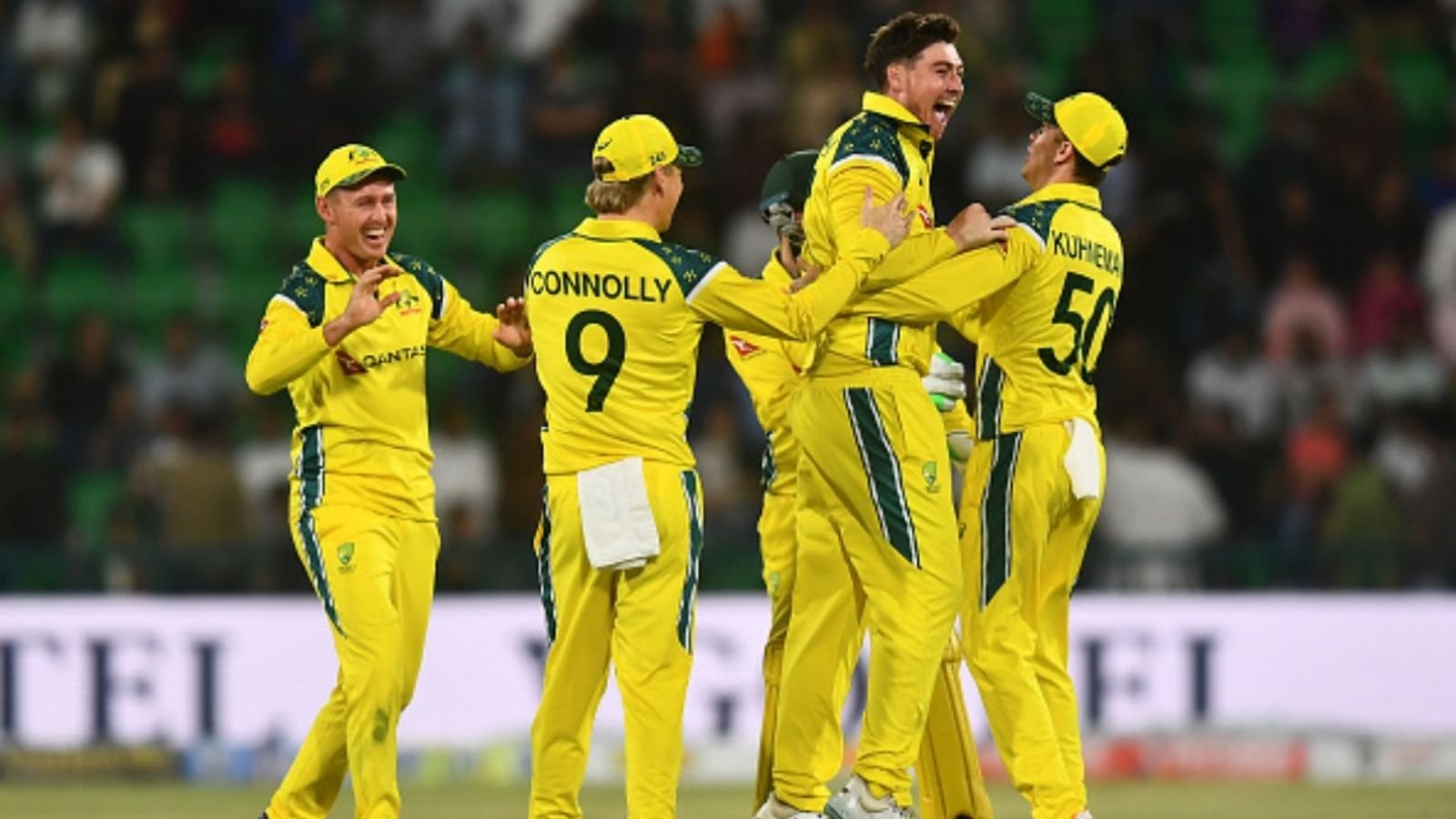
Joel Davies ODI debut is now one of the most interesting storylines in Australia’s upcoming white-ball campaign, with the 22-year-old left-arm spinner included in the squad for the tours of Zimbabwe and South Africa. His selection represents more than a first opportunity in 50-over international cricket: it is a chance to demonstrate that his successful introduction to T20I cricket can translate into a format that demands greater tactical patience.
Australia’s selectors are using the tour to strengthen their options ahead of the 2027 Cricket World Cup, making Davies’ inclusion particularly significant. The young spinner will be tested in conditions that are relevant to Australia’s long-term planning, while experienced campaigners remain available to provide the squad with stability.
The three-match ODI series against Zimbabwe is scheduled to begin in Harare on September 15, followed by a three-match series in South Africa later in the month. For Davies, the sequence could become an important early chapter in his international career.
Who is Joel Davies and why has Australia selected him?
Joel Davies is a New South Wales cricketer who also represents the Sydney Sixers. He is a left-arm spinner and left-handed all-rounder whose development has attracted attention through domestic white-ball cricket.
His performances during the 2025-26 Big Bash League helped establish him as one of Australia’s promising young players. Rather than relying solely on turn, Davies has been noted for his control, ability to vary his bowling and willingness to contribute in the field.
That combination is valuable in modern limited-overs cricket. Teams increasingly look for players who can contribute in multiple areas because a balanced XI provides greater tactical flexibility.
Davies’ selection suggests that Australia’s selectors see him as more than a specialist spinner. His development appears to be viewed through the wider lens of becoming a useful white-ball cricketer.
His T20I debut provided the first major breakthrough
Davies had already received a glimpse of international cricket earlier in the year when Australia handed him his T20I debut against Bangladesh in June.
He responded immediately, taking 3 wickets for 17 runs. Those figures were especially encouraging because they came on debut and helped Australia restrict Bangladesh to 131.
The performance was reportedly the third-best figures by an Australian men’s player on T20I debut.
For a young spinner, making an impact immediately against an international batting lineup can provide valuable evidence that domestic success is transferable to the international level.
However, ODI cricket presents a different examination.
Why ODI cricket will test Davies differently
T20 cricket leaves little room for hesitation. Bowlers have only a small number of overs and are often required to attack immediately or defend against aggressive batters.
ODI cricket offers more time but creates a different tactical challenge.
A spinner may need to bowl several overs through different phases of an innings. The batter can change gears, partnerships can develop and fielding restrictions vary. A bowler must therefore understand when to attack, when to contain and when to change pace.
For Davies, this will be an important test of his cricketing intelligence.
His ability to control the scoring rate could be just as important as his ability to take wickets. If he can consistently bowl economical spells while creating pressure, Australia will have another useful option in the middle overs.
Why a left-arm spinner can be valuable for Australia
Australia has historically possessed several high-quality fast bowlers, but left-arm spin provides a different angle to an attack.
A left-arm spinner can create a different matchup for right-handed batters and can also alter the rhythm of an opposition innings. When combined with Australia’s pace resources, that variation can make the bowling attack less predictable.
Davies also offers the possibility of giving Australia a younger spin option during a period when selectors are thinking beyond the immediate series.
His value will ultimately depend on consistency, but the opportunity itself indicates that the selectors are looking at how Australia’s attack could evolve before the next World Cup.
Zimbabwe tour could be the perfect testing ground
The first part of the assignment comes in Zimbabwe, where Australia will play three ODIs beginning on September 15 in Harare.
For an emerging spinner, the tour offers an important learning environment.
Playing international cricket away from home exposes young players to unfamiliar opposition, different match situations and the pressures associated with representing Australia outside the country’s usual cricketing environments.
Zimbabwe can also provide a different tactical challenge from Australia’s domestic competitions. Davies will have to assess conditions quickly and determine how aggressively he can use flight, variation and changes of pace.
The key will be adaptability rather than simply attempting to reproduce his Big Bash League performances.
South Africa presents an even bigger challenge
After Zimbabwe, Australia will face South Africa in a three-match ODI series later in September.
The South African leg could provide a significantly tougher examination because the opposition is stronger and Australia’s squad will include experienced pace bowlers.
Pat Cummins is expected to return for the South Africa leg, while Mitchell Starc and Josh Hazlewood are also available. Having such an experienced bowling group around Davies could benefit his development.
Rather than carrying the entire burden of the attack, he can focus on executing his role while learning from established international bowlers.
That combination of youth and experience could be particularly useful as Australia assesses its options ahead of the 2027 World Cup.
Australia’s 2027 World Cup planning has already started
The timing of Davies’ selection is important.
The 2027 Cricket World Cup will be co-hosted by South Africa, Zimbabwe and Namibia. Australia therefore has an opportunity to expose potential squad members to conditions in the region well before the tournament begins.
For selectors, that is strategically useful.
Instead of waiting until the World Cup approaches to discover whether a young player can handle international cricket, Australia can give prospects meaningful opportunities now and assess their development over several series.
Davies’ inclusion fits that approach.
His upcoming matches can help Australia answer several questions: Can he handle the pressure of ODI cricket? Can he bowl effectively against established batters? Can he maintain control across a longer spell? And can his all-round skills increase his value to the team?
The biggest difference between Davies and a traditional spinner
Davies’ profile is particularly interesting because he is not being considered solely for his bowling.
His left-handed batting and fielding ability provide additional dimensions to his game. In a World Cup squad, those secondary skills can become important when selectors are balancing specialist players with multi-skilled options.
A player capable of contributing with bat, ball and in the field gives a captain more flexibility.
However, there is also a danger in expecting too much too soon. Davies is still at the beginning of his international career, and his primary objective should be to establish consistency rather than immediately become a central figure in Australia’s ODI plans.
What Davies must improve to become a regular ODI player
The transition from promising domestic cricketer to established international player is rarely straightforward.
Davies will need to demonstrate that he can perform consistently rather than relying on occasional standout spells.
- Control: He must maintain disciplined lines even when batters attack him.
- Variation: Changes in pace and trajectory can help him manage different batting styles.
- Game awareness: He needs to recognise when wickets are worth chasing and when containment is the better option.
- Batting contribution: His left-handed batting can increase his value if he becomes reliable lower down the order.
- Fielding: Strong fielding can help him remain valuable even on days when the ball does not turn.
These qualities could determine whether this tour becomes a one-off opportunity or the beginning of a longer international career.
How Australia’s experienced bowlers could help him
The presence of experienced fast bowlers gives Davies an excellent environment in which to learn.
Pat Cummins, Mitchell Starc and Josh Hazlewood have spent years adapting their bowling to different conditions and opposition. Their experience can help a younger player understand how to construct an attack rather than simply focus on individual deliveries.
For Davies, the lesson may be as much about preparation and planning as about bowling technique.
International cricket requires players to analyse opposition, understand conditions and recover quickly between matches. A tour environment provides an education that domestic cricket cannot fully replicate.
Why Marnus Labuschagne’s omission has also attracted attention
Davies’ selection has come alongside another notable decision: Marnus Labuschagne has been omitted from the ODI squad.
That decision has naturally generated discussion about Australia’s batting plans and Labuschagne’s future in the format.
However, the two selections should not necessarily be treated as connected decisions. Davies’ inclusion is primarily about adding depth and developing a young white-ball player, while Labuschagne’s omission relates to Australia’s current assessment of its ODI batting options.
The broader message from the selectors is clear: established reputations do not guarantee selection, and emerging players can earn opportunities through domestic performances.
Davies has a chance to solve a future selection puzzle
Australia’s selectors will eventually need to determine the balance of the bowling attack for the 2027 World Cup.
Fast bowling is unlikely to be the only consideration. Conditions in South Africa, Zimbabwe and Namibia can vary considerably, and a squad needs enough variety to adapt across venues.
A left-arm spinner who can contribute with the bat could therefore become an attractive option if Davies develops quickly.
The important word, however, is if.
One successful T20I debut and a promising domestic season are encouraging signs, but they do not automatically establish long-term international credentials. The ODI tour will provide a much clearer picture.
What would count as a successful ODI debut?
For Davies, success should not be measured only by the number of wickets he takes.
A young spinner could bowl an excellent spell without taking several wickets, particularly if he controls the middle overs and prevents a partnership from accelerating.
Likewise, one expensive match would not necessarily mean he is not ready for international cricket.
The selectors will be looking at how he responds to different situations. Does he recover after being attacked? Can he maintain his discipline late in an innings? Does he understand when to change his approach?
Those answers will be more valuable than a single match’s statistics.
Prediction: Davies could become an important ODI option if he adapts quickly
The most realistic expectation is that Australia will use this tour as an extended audition rather than immediately treating Davies as a guaranteed World Cup player.
If he performs well in Zimbabwe and handles the South African challenge, his case for more ODI opportunities will become considerably stronger.
The biggest indicator will be consistency. Australia already has established players, so Davies does not need to prove that he is a superstar overnight. He needs to demonstrate that he can perform a specific role reliably and offer additional value with his batting and fielding.
If he can do that, the current tour could become the starting point of a much bigger international career.
The bigger picture for Australian cricket
Davies’ selection represents a broader shift in international cricket. Successful teams increasingly need to prepare for the next major tournament while still competing in the present.
Australia has the advantage of a strong domestic system, experienced international players and regular high-level competitions. The challenge is converting that depth into players who are ready when established stars eventually move on.
Giving a 22-year-old a chance in ODI cricket is therefore a long-term investment.
The Zimbabwe and South Africa tours provide Australia with competitive matches while also giving the selectors an opportunity to evaluate potential future players under genuine international pressure.
Conclusion: Joel Davies has more than a debut to play for
Joel Davies’ ODI debut opportunity represents an important step in Australia’s preparation for the future. The 22-year-old left-arm spinner has already made a strong first impression in T20I cricket and impressed during the Big Bash League, but 50-over cricket will demand a different kind of discipline and tactical maturity.
The Zimbabwe series will provide his first major opportunity to show that he can handle the longer format, while the South Africa leg could offer an even stronger examination. With experienced bowlers such as Cummins, Starc and Hazlewood around him, Davies will also have an ideal environment in which to learn.
Australia does not need him to become the finished product immediately. What the selectors need to see is evidence of growth, control and adaptability.
If Davies can translate his T20I promise into consistent ODI performances, he could move from being an exciting prospect to a genuine contender for Australia’s long-term white-ball plans.
For now, the opportunity is his to seize.
For breaking news and live news updates, like us on Facebook or follow us on Twitter and Instagram. Read more on Latest Cricket on thefoxdaily.com.






COMMENTS 0