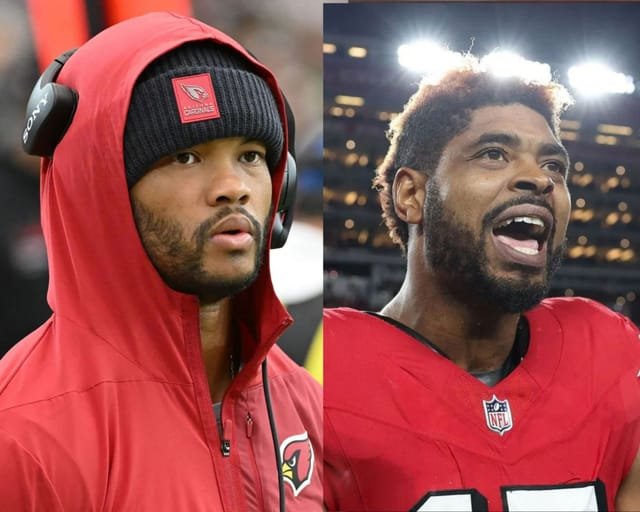
Kyler Murray has never been known to filter his emotions on the football field, and his latest comments about wide receiver Jauan Jennings have once again put him at the center of NFL conversation. As Murray prepares for a new chapter with the Minnesota Vikings, his candid description of Jennings as a “dirtbag type of guy” has gone viral, raising questions about how past rivalries translate into present-day teamwork.
The remark, delivered during a media appearance and later circulated widely on social media, was quickly clarified by Murray himself—but not before it triggered intense discussion among fans and analysts about competitiveness, locker-room dynamics, and leadership tone in modern NFL culture.
What Kyler Murray Actually Said About Jauan Jennings
Murray’s comments came in response to a question about playing alongside former opponents. Reflecting on his past matchups against Jennings, he initially used the word “dirtbag,” before quickly attempting to reframe his meaning.
He clarified that the term was not meant as an insult, but rather as a reference to Jennings’ gritty, physical, and relentless playing style—something that made him difficult to defend against during their NFC battles.
“He just gets it done. It may not be the prettiest, but he finds a way,” Murray explained, emphasizing Jennings’ toughness and competitiveness rather than any personal criticism.
The moment highlights a familiar NFL theme: players often use harsh-sounding language when describing opponents who play with intensity, only to later soften the framing when the clip reaches a wider audience.
From NFC Rivals to Vikings Teammates: A New Reality
The most intriguing part of this situation is not the quote itself, but the context behind it. Murray and Jennings are now expected to share a locker room in Minnesota, a transition that reflects how quickly NFL rosters evolve through trades, signings, and strategic rebuilding.
What was once a heated on-field rivalry is now a professional partnership. This shift is not unusual in the NFL, where teams frequently acquire former opponents specifically because of their competitive traits.
Jennings, known for his physical style and emotional edge, fits that mold perfectly. Players like him are often valued not just for production, but for their ability to raise the intensity of an entire offense.
Why “Dirtbag” Culture Actually Means Something in NFL Context
In NFL locker-room language, words like “dirtbag,” “gritty,” or “scrappy” are often misunderstood outside the sport. Within football culture, these terms frequently describe players who thrive in chaotic, physical situations rather than relying purely on technique or finesse.
Coaches and teammates often appreciate this type of player because they bring consistency in high-pressure moments—especially on third downs, red-zone plays, and contested catches.
Jennings’ reputation across multiple seasons aligns with that identity. He has built a career on effort plays, blocking willingness, and physical route running, making him a valuable complementary piece rather than a traditional star receiver.
Locker Room Chemistry: The Real Challenge for Minnesota
The bigger storyline for the Vikings is not the quote itself, but how quickly the team can integrate strong personalities into a unified system. Minnesota is entering a competitive NFC environment where internal chemistry can decide playoff positioning as much as raw talent.
Murray’s adjustment to a new team structure also adds pressure. Quarterbacks are expected to lead not just through performance, but through communication and emotional control. Public comments—especially those that go viral—can become reference points inside the locker room.
If handled correctly, however, moments like this can also build trust. Many NFL teams intentionally bring together former rivals because shared history can accelerate competitiveness in practice and games.
Comparing NFL Rivalries Turned Teammates
The NFL has a long history of players transitioning from rivals to teammates successfully. In many cases, former adversaries become key contributors once they align under the same system and coaching philosophy.
| Example | Former Rivalry Context | Outcome After Joining Same Team |
|---|---|---|
| Tom Brady & Randy Moss | AFC competition before Patriots tenure | Record-breaking offensive chemistry |
| Aqib Talib & Peyton Manning | AFC West rivalry | Key defensive-offensive synergy in Denver |
| Richard Sherman & Jimmy Garoppolo | NFC West rivalry | Locker room leadership stability in San Francisco |
These examples show that NFL rivalries often fade quickly when players share a common goal. Performance usually outweighs past tension—especially when playoff aspirations are on the line.
What This Means for Jauan Jennings’ Role in Minnesota
For Jennings, joining a new system means more than just learning plays. It involves adapting to new quarterback dynamics, offensive schemes, and expectations regarding leadership roles.
His physical style may actually complement Minnesota’s evolving offensive identity, particularly in short-yardage and contested situations. Coaches often value receivers like Jennings for their reliability in “dirty work” situations that don’t always show up in highlight reels.
If he integrates successfully, Jennings could become a crucial rotational weapon rather than just a depth option.
Kyler Murray’s Leadership Narrative Under the Spotlight
For Murray, the challenge is slightly different. As a quarterback, every public statement is magnified. His ability to transition from emotional competitor to composed leader will be closely watched throughout training camp and the regular season.
This situation also highlights a broader NFL reality: leadership is not just about talent, but about communication style, accountability, and emotional control under media scrutiny.
Murray’s quick attempt to clarify his wording shows awareness of that responsibility, even if the initial phrasing created controversy.
Conclusion: Rivalries Don’t Disappear, They Evolve
Kyler Murray’s viral “dirtbag” comment about Jauan Jennings is less about controversy and more about the language of competitive football. What sounds harsh outside the sport often translates into respect within it.
As both players prepare to potentially share the field in Minnesota, the real test will not be past comments—but present chemistry. NFL history suggests that talent, structure, and shared goals usually win over old rivalries.
Whether this pairing becomes a success story or a locker-room storyline will depend on how quickly both players adjust to their new reality: enemies yesterday, teammates today, and possibly playoff partners tomorrow.
For breaking news and live news updates, like us on Facebook or follow us on Twitter and Instagram. Read more on Latest Sports on thefoxdaily.com.






COMMENTS 0