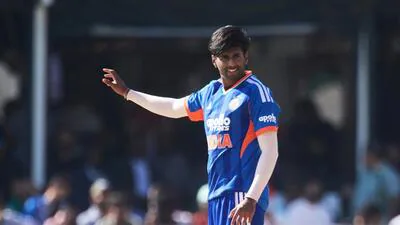
Fast bowling has always been one of cricket’s most demanding crafts. It requires explosive athleticism, relentless physical effort, and the ability to repeatedly push the human body to its limits. For every fast bowler who enjoys a long and successful career, countless others see their progress interrupted by injuries that arrive just as momentum begins to build.
Mayank Yadav knows this reality better than most.
Just a few years ago, the young Indian pacer was being discussed as one of the most exciting fast-bowling prospects in world cricket. His ability to consistently bowl at extreme pace immediately captured attention, generating excitement among fans and selectors alike. Many believed India had discovered a rare fast bowler capable of troubling international batters through sheer speed.
Then came a series of injuries that halted his rise almost as quickly as it had begun.
Instead of building on his early success, Mayank found himself spending crucial developmental years in rehabilitation programs, recovery camps, and fitness assessments. For a young athlete trying to establish himself at the highest level, it was a frustrating detour.
Now, after years of uncertainty, the fast bowler has returned with a performance that suggests his journey may be entering an entirely new chapter.
The Delivery That Symbolized a Career Reborn
Every sporting comeback has a defining moment. For some athletes, it is a century, a match-winning performance, or a championship victory. For Mayank Yadav, it may forever be remembered as a single delivery.
His first ball upon returning to international cricket carried all the elements that originally made him one of India’s most exciting pace prospects. Delivered at high speed, the ball moved late enough to deceive the batter and produced an immediate wicket.
While scorecards will simply record a dismissal, the significance extended far beyond statistics.
That ball represented resilience, persistence, and the successful completion of a recovery journey that many young athletes struggle to navigate.
More importantly, it sent a message to the cricketing world that Mayank’s pace—and his confidence—had survived the long absence.
Why Fast Bowlers Face Unique Career Challenges
To understand the significance of Mayank’s comeback, it is important to understand the demands of fast bowling.
Unlike many other cricketing skills, pace bowling places enormous stress on nearly every part of the body.
- Shoulders absorb repeated impact.
- Back muscles endure significant strain.
- Knees and ankles manage heavy workloads.
- Hamstrings and quadriceps are constantly stressed.
- Core strength is essential for balance and power.
Every delivery involves a complex chain of movements requiring precision, strength, flexibility, and endurance.
Even minor disruptions can affect performance, while serious injuries often require months of rehabilitation.
This is why many of the world’s greatest fast bowlers have experienced prolonged injury battles during their careers.
The Lost Years That Tested His Resolve
For young cricketers, the early years of an international career are often the most important.
They provide opportunities to gain experience, understand different conditions, and develop confidence against elite opponents.
Mayank spent much of that period away from competitive cricket.
While his contemporaries were collecting international appearances and improving through match exposure, he was learning a very different set of lessons.
Recovery programs demand patience, discipline, and mental toughness. Progress is often slow, setbacks are common, and uncertainty becomes part of daily life.
For an athlete in his early twenties, these challenges can be particularly difficult because momentum is such an important factor in career development.
The fact that Mayank remained focused throughout this period speaks volumes about his determination.
What Changed During Rehabilitation?
One of the most interesting aspects of Mayank’s return is that he appears to have come back as a more complete bowler.
In the early stages of his career, discussions about Mayank often centered almost entirely on speed.
His ability to consistently bowl at high pace naturally became the main talking point.
However, elite fast bowling requires much more than raw velocity.
Successful international bowlers combine speed with:
- Control and accuracy.
- Strategic field placement.
- Understanding of conditions.
- Ability to execute plans.
- Mental composure under pressure.
- Adaptability against different batters.
His comeback performance suggested growth in several of these areas.
Rather than relying solely on pace, he demonstrated an understanding of angles, movement, and pressure-building tactics.
India’s Fast Bowling Revolution Continues
Mayank’s return comes during a period when India possesses arguably the deepest fast-bowling resources in its cricket history.
For decades, India was primarily associated with spin bowling. Fast bowlers often played supporting roles while spinners carried the attack.
That perception has changed dramatically over the last fifteen years.
India now regularly produces pace bowlers capable of succeeding across all formats and conditions.
The rise of advanced fitness programs, improved coaching methods, better domestic infrastructure, and increased international exposure has transformed the country’s pace-bowling culture.
Mayank represents the latest product of this evolution.
More Than Pace: The Sign of a Mature Fast Bowler
Perhaps the most encouraging aspect of his return was the evidence of maturity.
Young fast bowlers often become obsessed with speed measurements. The ability to bowl faster than opponents can become a source of pride and identity.
At the highest level, however, wickets are rarely earned through speed alone.
The world’s best fast bowlers understand that pressure creates opportunities.
Building pressure requires discipline, patience, and strategic thinking.
Mayank’s observations about working with fellow bowlers and sharing information about conditions reveal a mindset focused on team success rather than personal headlines.
That evolution may ultimately prove more valuable than any increase in pace.
How Modern Cricket Has Changed Fast Bowling
The demands placed on fast bowlers today are greater than ever before.
Modern cricketers compete across multiple formats, travel extensively, and play significantly more matches than previous generations.
This environment creates both opportunities and risks.
| Modern Challenge | Impact on Fast Bowlers |
|---|---|
| Heavy Match Schedules | Increased injury risk and workload management needs |
| Multiple Formats | Requires different skills and tactical approaches |
| Power-Hitting Era | Greater pressure on bowlers to innovate |
| Data Analytics | More strategic planning and performance analysis |
| Global Competitions | Constant adaptation to varying conditions |
Fast bowlers who succeed over long periods are typically those who learn how to manage both their bodies and their workloads.
Mayank’s injury experiences may ultimately help him develop those skills earlier than many of his peers.
The Mental Side of a Comeback
Physical recovery is only part of the challenge when athletes return from long absences.
Mental recovery can be equally demanding.
Questions naturally arise:
- Can I still perform at the same level?
- Will my body hold up under pressure?
- Have I lost valuable time compared to competitors?
- Can I regain my place in the team?
These doubts affect athletes across all sports.
The confidence displayed by Mayank during his comeback suggests he has successfully navigated many of these psychological obstacles.
That confidence often becomes a critical ingredient in successful returns.
What Makes His Return Different From Many Others?
Many athletes return from injury simply hoping to regain previous levels.
Mayank’s performance hinted at something more ambitious.
Rather than merely restoring lost form, he appeared to have improved certain aspects of his game.
This distinction is important.
The most successful comeback stories often involve athletes using rehabilitation periods as opportunities for growth, reflection, and technical development.
By focusing on skill refinement alongside physical recovery, players can sometimes emerge stronger than before.
Early signs suggest Mayank may be following that path.
Why Workload Management Will Be Crucial
Despite the excitement surrounding his return, India’s team management is likely to proceed carefully.
Fast bowlers recovering from multiple injuries require thoughtful workload planning.
This includes:
- Monitoring bowling volumes.
- Managing recovery periods.
- Rotating across formats when necessary.
- Preventing unnecessary physical stress.
- Maintaining long-term fitness goals.
Given Mayank’s potential value to Indian Cricket, protecting his physical condition will remain a major priority.
The objective will not simply be winning immediate matches but ensuring he can contribute consistently over many years.
The Bigger Impact on Indian Cricket
Mayank’s return carries significance beyond individual success.
Every successful comeback sends an encouraging message to young athletes dealing with injuries and setbacks.
Sporting careers rarely follow straight paths. Progress often includes disappointments, interruptions, and periods of uncertainty.
Stories like Mayank’s demonstrate that setbacks do not necessarily define outcomes.
For Indian cricket, his return also strengthens an already impressive fast-bowling pipeline, providing selectors with additional options across formats.
Prediction: Could Mayank Become a Multi-Format Weapon?
If he remains fit, Mayank possesses qualities that could make him effective across all formats of international cricket.
His pace naturally creates opportunities in Test cricket, where fast bowlers can exploit longer spells and varied conditions.
In white-ball cricket, speed combined with improved control can make him a valuable wicket-taking option.
The key variable remains fitness.
Should he successfully manage his workload and avoid recurring injury issues, there is every reason to believe he can become a major figure in India’s pace attack over the coming years.
Conclusion
Mayank Yadav’s comeback is about far more than a wicket, a spell, or a Player-of-the-Match award. It represents the successful return of one of India’s most exciting fast-bowling talents after a challenging period that could have derailed his career.
The injuries may have delayed his progress, but they also appear to have accelerated his maturity as a cricketer. The bowler who returned looked more composed, more tactical, and more complete than the one who first burst onto the scene.
There will undoubtedly be tougher tests ahead, stronger batting line-ups to challenge him, and ongoing questions about durability. Yet the signs from his return were overwhelmingly positive.
For now, Indian cricket can celebrate the re-emergence of a rare talent. And if that first ball was any indication, Mayank Yadav’s second chapter may prove even more impressive than the first.
For breaking news and live news updates, like us on Facebook or follow us on Twitter and Instagram. Read more on Latest Sports on thefoxdaily.com.






COMMENTS 0