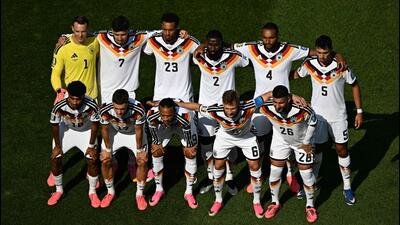
For much of modern football history, Germany represented consistency, resilience, and success on the sport’s biggest stage. Whether reaching finals, winning championships, or producing world-class players, the German national team was widely viewed as one of international football’s most reliable powers.
That reputation has been severely tested over the last decade.
Following their triumph at the 2014 FIFA World Cup, Germany have endured a prolonged period of decline that has resulted in three consecutive disappointing World Cup campaigns. Their latest setback at the 2026 FIFA World Cup has intensified questions about the future direction of one of football’s most successful nations.
Former Germany captain and legendary goalkeeper Oliver Kahn believes the solution goes far beyond replacing coaches or adjusting tactics. In his view, Germany faces a deeper challenge involving player development, mentality, leadership, and national football identity.
His comments have sparked an important debate: Has Germany’s football system lost the qualities that once made it a global powerhouse?
Germany’s Fall Since Winning the 2014 FIFA World Cup
When Germany defeated argentina to win the 2014 World Cup, many believed the country was entering a new golden era.
The squad featured a blend of experienced leaders and emerging stars, while the nation’s development system was widely considered a model for world football.
Instead, the years that followed produced a dramatic decline.
| Tournament | Germany’s Result |
|---|---|
| 2014 FIFA World Cup | Champions |
| 2018 FIFA World Cup | Group Stage Exit |
| 2022 FIFA World Cup | Group Stage Exit |
| 2026 FIFA World Cup | Round of 32 Exit |
For a nation accustomed to challenging for titles, this sequence of results represents one of the most disappointing periods in German football history.
The consistency that once defined Germany has been replaced by uncertainty, inconsistency, and growing frustration among supporters.
What Went Wrong at the 2026 FIFA World Cup?
Germany entered the 2026 tournament hoping to restore their reputation, but the campaign quickly exposed familiar weaknesses.
Although they opened with a convincing victory over tournament debutants Curacao, subsequent performances raised concerns.
A difficult win against Ivory Coast revealed defensive vulnerabilities, while defeat to Ecuador highlighted problems with consistency and game management.
The knockout-stage meeting with Paraguay ultimately ended Germany’s campaign.
After failing to secure victory during normal time and extra time, Germany lost in a penalty shootout, extending a cycle of disappointment that has followed the team for years.
More worrying than the result itself was the manner of the elimination, which raised questions about leadership, confidence, and mental resilience under pressure.
Oliver Kahn’s Core Argument: The Problem Is Bigger Than the Coach
In modern football, coaches are often the first casualties when results disappoint.
However, Oliver Kahn believes Germany has fallen into a dangerous pattern of treating symptoms rather than addressing root causes.
Since 2018, Germany have repeatedly changed leadership without achieving meaningful improvement.
The departures of Joachim Löw, Hansi Flick, and Julian Nagelsmann have each been presented as opportunities for renewal.
Yet the results have remained largely unchanged.
Kahn argues that focusing exclusively on coaches ignores deeper structural issues affecting German football.
“The question is not who the next saviour will be. The question is what kind of players Germany wants to develop in the future.”
This perspective shifts attention from short-term solutions toward long-term planning.
The Mentality Question: Has Germany Lost Its Traditional Identity?
One of Kahn’s strongest criticisms involves mentality.
For decades, German football built its reputation on characteristics such as discipline, responsibility, resilience, and leadership.
Opponents often feared Germany not only because of talent but because of the team’s ability to perform under pressure.
Kahn believes those qualities are no longer as visible.
The penalty shootout defeat against Paraguay became a symbolic example.
According to Kahn, the reluctance of experienced players to step forward during crucial moments reflected a worrying cultural shift.
Football history is filled with examples of teams that possessed exceptional technical ability but lacked decisive leadership when pressure peaked.
Kahn’s concern is that Germany may now belong to that category.
Why Penalty Shootouts Reveal More Than Technical Ability
Penalty shootouts are often described as lotteries, but sports psychologists frequently disagree.
While luck can influence outcomes, shootouts often reveal important aspects of a team’s mentality.
Players must embrace responsibility while managing enormous pressure.
Successful teams typically feature individuals willing to take ownership of critical moments.
Kahn’s comments suggest he viewed Germany’s shootout performance as evidence of a broader issue rather than an isolated incident.
The willingness to step forward when everything is at stake has historically been one of Germany’s defining strengths.
Its apparent absence is therefore particularly concerning.
Germany Still Has Elite Talent—So Why Aren’t Results Improving?
One reason Germany’s struggles are so surprising is the quality of players available.
The national team continues to produce technically gifted footballers capable of competing at the highest level.
| Player | Key Strength |
|---|---|
| Jamal Musiala | Creativity and Dribbling |
| Florian Wirtz | Playmaking Vision |
| Kai Havertz | Versatility and Technique |
| Joshua Kimmich | Leadership and Tactical Intelligence |
| Jonathan Tah | Defensive Presence |
Many nations would gladly build around players of this caliber.
Yet football success requires more than talent alone.
Championship-winning teams typically combine technical quality with leadership, adaptability, collective identity, and mental toughness.
Germany’s challenge appears to involve transforming individual talent into cohesive tournament success.
How Germany Rebuilt Before—and Why History Matters
Germany has experienced football crises before.
Following disappointing performances at the turn of the century, the country launched one of the most successful football development projects in modern history.
Investment in youth academies, coaching education, and talent identification produced a generation that eventually won the 2014 World Cup.
That historical example offers an important lesson.
German football has previously responded to setbacks through structural reform rather than panic.
The current situation may require a similar approach.
Could Jurgen Klopp Be the Solution?
Following Julian Nagelsmann’s departure, speculation has intensified regarding the possibility of Jurgen Klopp becoming Germany’s next head coach.
Klopp’s reputation, leadership style, and track record make him one of the most attractive candidates available.
His ability to build strong team cultures aligns closely with many of the concerns raised by Kahn.
However, even Klopp would face significant challenges.
No coach can single-handedly solve structural issues involving player development, mentality, and national football philosophy.
If Germany appoint Klopp, success will likely depend on broader institutional support rather than tactical expertise alone.
An Overlooked Insight: Modern Football May Be Creating New Challenges for Germany
One factor often ignored in discussions about Germany’s decline is the changing nature of football itself.
Today’s elite players operate in an environment dominated by club football.
Domestic leagues, continental competitions, and commercial obligations place enormous demands on athletes.
As a result, national teams often have limited time to develop chemistry and identity.
Countries that succeed consistently tend to establish strong cultural foundations that transcend coaching changes and tactical systems.
Germany may need to rediscover that foundation.
The challenge is not merely producing talented players but creating a shared football identity capable of thriving under tournament pressure.
What Germany Must Do to Return to World Cup Contention
Based on current challenges, several priorities appear essential for Germany’s future success.
- Strengthen leadership development programs.
- Prioritize mentality alongside technical training.
- Create a clear long-term football identity.
- Improve defensive consistency.
- Develop players comfortable with responsibility.
- Build continuity across youth and senior teams.
These initiatives require patience and long-term commitment.
Quick fixes rarely solve systemic problems in international football.
Can Germany Win Another FIFA World Cup Soon?
Despite recent disappointments, writing off Germany would be premature.
The country continues to possess world-class infrastructure, elite coaching resources, and a deep talent pool.
Football history shows that major nations often recover from difficult periods faster than expected.
The key question is whether Germany chooses meaningful reform or continues searching for short-term solutions.
If lessons are learned from recent failures, the foundations for future success remain firmly in place.
Conclusion: Oliver Kahn’s Warning May Shape Germany’s Future
Oliver Kahn’s assessment of German football is uncomfortable but important. His argument is not that Germany lacks talent or coaching expertise. Instead, he believes the nation must reexamine the qualities that once made it one of football’s most feared teams.
Three disappointing World Cups have exposed deeper issues that cannot be solved simply by appointing a new manager. Questions surrounding mentality, leadership, responsibility, and player development now sit at the heart of Germany’s rebuilding process.
The road back to the top of world football will not be easy. However, Germany has rebuilt successfully before, and its football infrastructure remains among the strongest in the world.
If the country embraces the lessons highlighted by Kahn, the current crisis may eventually be remembered not as the end of an era, but as the beginning of a new one.
For breaking news and live news updates, like us on Facebook or follow us on Twitter and Instagram. Read more on Latest Sports on thefoxdaily.com.






COMMENTS 0