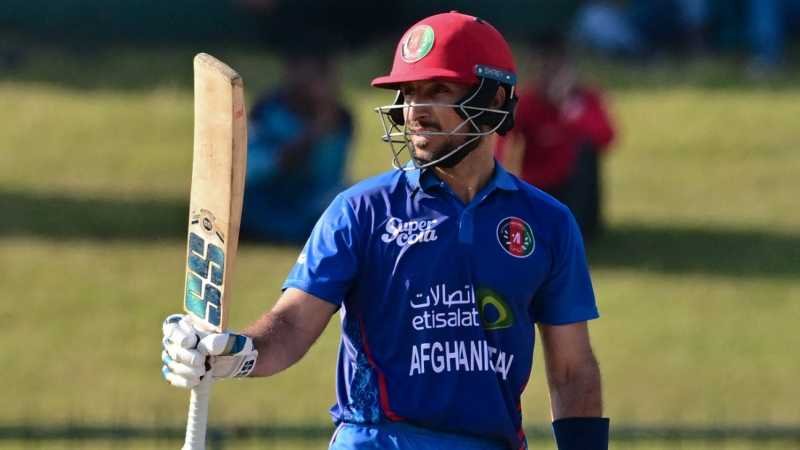
Afghanistan Cricket is entering a significant new phase. The appointment of Rahmat Shah as ODI captain for the five-match series against Ireland represents more than a routine leadership change—it marks the beginning of a fresh era for one of international cricket’s most rapidly improving teams.
For years, Afghanistan’s rise in world cricket has been built on a combination of explosive talent, fearless cricket, and inspirational leadership. Now, with a new captain at the helm and several squad adjustments ahead of a crucial bilateral series, the team has an opportunity to redefine its direction in the 50-over format.
The Ireland series may not carry the profile of a World Cup or ICC tournament, but it could prove highly significant in shaping Afghanistan’s future plans, leadership structure, and squad composition.
Rahmat Shah’s Appointment Marks a New Beginning
Few players in Afghanistan’s cricket history have contributed as consistently as Rahmat Shah.
Often overshadowed by the explosive batting of teammates or the star power of Afghanistan’s world-famous spinners, Rahmat has quietly established himself as one of the most dependable performers in the country’s cricketing journey.
His promotion to captain is therefore a logical progression.
Having served as vice-captain across formats and accumulated years of international experience, Rahmat understands the responsibilities associated with leadership at the highest level.
The Ireland series will provide his first opportunity to lead Afghanistan in One-Day International cricket, placing him at the center of a potentially transformative period.
Why Afghanistan Chose Rahmat Shah
Captaincy appointments are rarely based solely on statistics. Leadership requires temperament, consistency, communication, and the ability to command respect within the dressing room.
Rahmat appears to possess all of those qualities.
Several factors likely influenced Afghanistan’s decision:
- Extensive international experience.
- Previous vice-captaincy responsibilities.
- Strong reputation within the squad.
- Consistency across different conditions.
- Deep understanding of Afghanistan’s cricket culture.
Importantly, his calm personality offers a different leadership style compared to some of Afghanistan’s more emotional and aggressive cricketing figures.
That balance could prove valuable during pressure situations.
Rahmat Shah’s ODI Legacy Before Captaincy
Long before receiving the captain’s armband, Rahmat had already secured his place among Afghanistan’s cricketing greats.
His ODI achievements reflect both durability and consistency.
| Category | Rahmat Shah |
|---|---|
| Role | Top-order batter |
| ODI Runs | 4,121+ |
| Batting Average | 35+ |
| Leadership Experience | Former vice-captain |
| Captaincy Debut | Ireland ODI Series 2026 |
These numbers underline why Afghanistan views him as a reliable figure during a period of transition.
The Significance of the Ireland Series
At first glance, a bilateral ODI series against Ireland might seem routine.
In reality, it serves multiple strategic purposes.
For Afghanistan, the series provides an opportunity to:
- Evaluate a new leadership structure.
- Reintegrate returning players.
- Build squad depth.
- Improve ODI consistency.
- Prepare for future ICC qualification pathways and tournaments.
Ireland, meanwhile, has established itself as a competitive limited-overs nation capable of challenging higher-ranked teams. That makes the series a meaningful test rather than a formality.
The End of One Leadership Era
Rahmat’s appointment follows the conclusion of Hashmatullah Shahidi’s captaincy tenure.
Shahidi oversaw Afghanistan’s ODI team during a period of growth and increasing international respect.
Under his leadership, Afghanistan continued to compete against established cricketing nations while strengthening its reputation as a dangerous limited-overs side.
Although he has stepped down from the captaincy, Shahidi remains a vital member of the squad.
His continued presence provides continuity and experience, helping ease the transition to a new leader.
Why Keeping Shahidi in the Team Matters
Leadership changes are often smoother when former captains remain involved.
Shahidi’s experience can offer valuable support to Rahmat during his first assignment.
Former captains frequently become informal mentors, helping new leaders navigate tactical decisions, media obligations, and dressing-room dynamics.
This arrangement could benefit Afghanistan significantly.
Instead of losing experience through a complete leadership reset, they retain one of their most respected figures while empowering a new captain.
Afghanistan’s Bowling Attack Gets a Boost
One of the most notable squad developments is the return of fast bowlers Fazalhaq Farooqi and Yamin Ahmadzai.
Their inclusion strengthens an area that has often operated in the shadow of Afghanistan’s famous spin department.
For years, Afghanistan’s identity has been built around elite spin bowling, led by players such as Rashid Khan.
However, modern ODI Cricket increasingly requires balanced attacks capable of taking wickets in all phases of an innings.
Farooqi and Ahmadzai provide exactly that possibility.
Why Fazalhaq Farooqi Could Be Key
Farooqi’s return is particularly significant.
As a left-arm fast bowler, he offers variation that many teams struggle to counter effectively.
His ability to swing the new ball, attack stumps, and execute death-over plans makes him one of Afghanistan’s most valuable pace assets.
Recent performances in franchise cricket suggest he arrives in strong rhythm.
Maintaining that form during the Ireland series could significantly improve Afghanistan’s bowling balance.
The Challenge of Replacing Mujeeb Ur Rahman
While Afghanistan welcomes returning pacers, the absence of Mujeeb Ur Rahman remains a setback.
Mujeeb’s unique spin bowling style provides tactical flexibility and often creates pressure during the middle overs.
His injury means Afghanistan must find alternative solutions.
Fortunately, the team still possesses considerable spin resources, including Rashid Khan and emerging young bowlers capable of stepping into larger roles.
The situation also creates opportunities for newer players to gain valuable experience.
Rashid Khan Remains Afghanistan’s X-Factor
No discussion of Afghanistan cricket is complete without Rashid Khan.
Although leadership headlines dominate pre-series discussion, Rashid remains the team’s most influential match-winner.
His ability to alter games within a few overs gives Afghanistan a competitive advantage against almost any opponent.
With a new captain in charge, Rashid’s experience and tactical awareness could become even more important.
Successful captaincy often depends on trusted senior players, and Rashid is certain to play a major role in supporting Rahmat’s transition.
Afghanistan’s Batting Core Looks Strong
Beyond leadership and bowling, Afghanistan enters the series with a strong batting group.
The top order combines experience and youth, offering a solid foundation for the future.
Key names include:
- Rahmanullah Gurbaz.
- Ibrahim Zadran.
- Rahmat Shah.
- Hashmatullah Shahidi.
- Azmatullah Omarzai.
Together, they provide stability, aggression, and versatility across different match situations.
If this batting unit performs consistently, Afghanistan has the potential to become an even stronger ODI side.
What the Absence of Mohammad Nabi Means
Veteran all-rounder Mohammad Nabi’s absence creates another talking point.
For over a decade, Nabi has been one of Afghanistan’s most important cricketers, contributing leadership, experience, and balance.
However, his unavailability also creates opportunities.
Afghanistan’s long-term success depends on developing players capable of eventually replacing established veterans.
Series such as this provide an ideal environment to test squad depth and evaluate emerging talent.
How Important Is This Series for Afghanistan’s Future?
While five ODIs against Ireland may not dominate global cricket headlines, the series carries substantial importance for Afghanistan.
It offers a chance to answer several critical questions:
- Can Rahmat Shah succeed as captain?
- How effective is the pace attack with returning bowlers?
- Can younger players seize bigger responsibilities?
- How does the team perform without certain senior figures?
- What improvements are needed before future ICC events?
The answers could influence selection and strategic planning for years to come.
A Comparison With Afghanistan’s Previous ODI Cycles
One notable difference between Afghanistan’s current squad and earlier generations is depth.
In previous years, the team relied heavily on a handful of star performers.
Today’s squad appears more balanced.
There are multiple batting options, a broader bowling attack, and greater competition for places.
This evolution reflects the growing maturity of Afghanistan’s cricket system and player development pathways.
Can Afghanistan Become a Consistent ODI Force?
Afghanistan has already demonstrated its ability to produce memorable upsets and challenge stronger opponents.
The next step is consistency.
Becoming a genuinely elite ODI nation requires:
- Stable leadership.
- Reliable batting depth.
- Balanced bowling resources.
- Strong fielding standards.
- Effective player development.
Rahmat Shah’s captaincy begins at a time when all of these factors are becoming increasingly important.
His leadership could help determine whether Afghanistan merely remains competitive or evolves into a regular contender against the world’s best teams.
Conclusion
Rahmat Shah’s appointment as Afghanistan’s ODI captain marks a significant milestone for both the player and the national team. As one of the country’s most experienced and respected cricketers, he now carries the responsibility of guiding Afghanistan through an important phase of its development.
The upcoming five-match series against Ireland offers much more than an opportunity to win games. It represents a chance to establish a new leadership identity, integrate returning players, evaluate emerging talent, and build momentum for future international challenges.
With a strong batting lineup, the return of key fast bowlers, and experienced figures such as Rashid Khan and Hashmatullah Shahidi still within the squad, Afghanistan possesses the tools needed for success.
The real question is whether Rahmat Shah can transform those resources into a cohesive and consistently winning ODI unit. The Ireland series will provide the first glimpse of that answer and could mark the beginning of an exciting new chapter in Afghanistan cricket history.
For breaking news and live news updates, like us on Facebook or follow us on Twitter and Instagram. Read more on Latest Sports on thefoxdaily.com.






COMMENTS 0