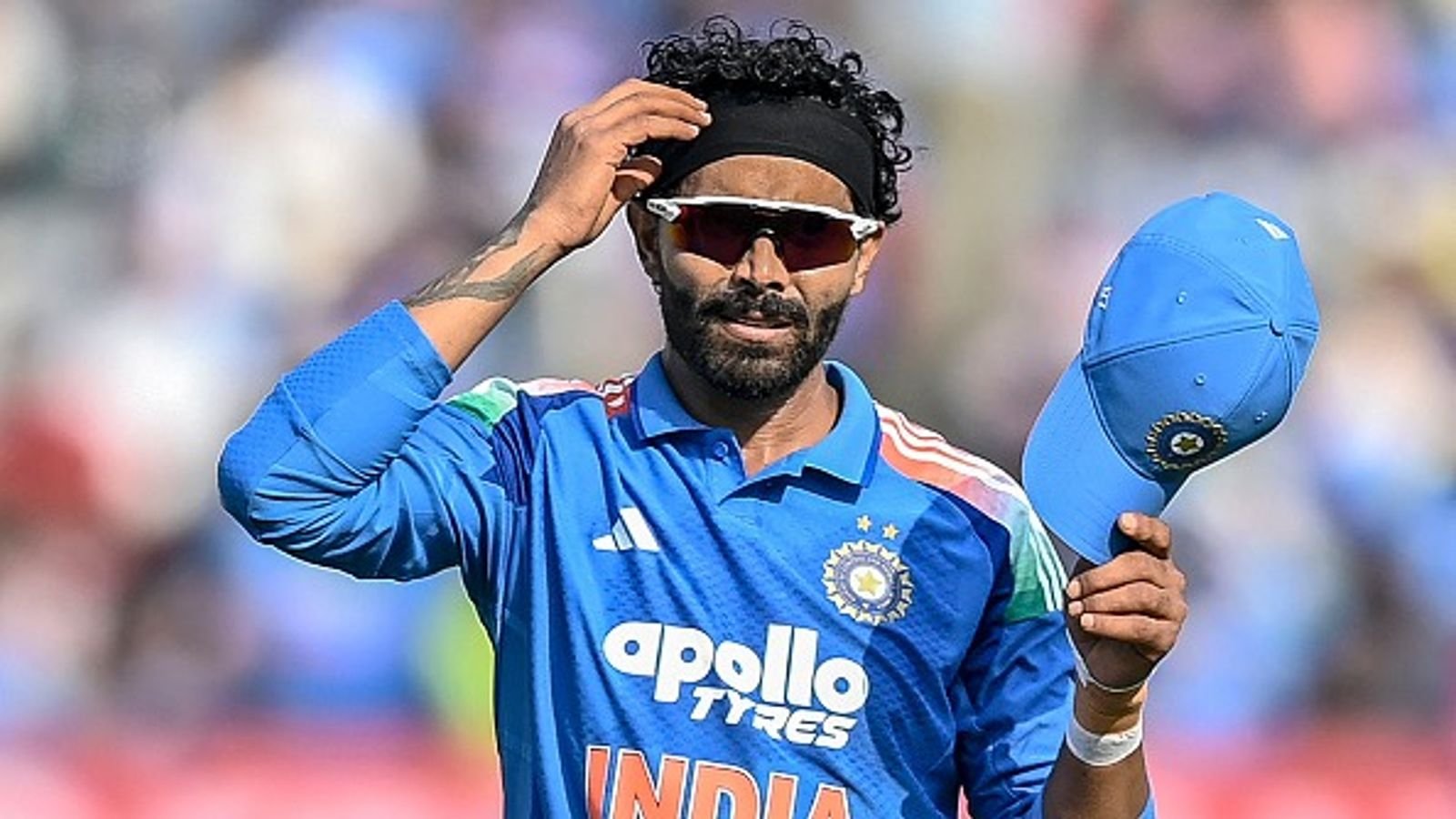
Every World Cup cycle eventually forces difficult decisions. Teams that hope to remain competitive cannot rely solely on past achievements; they must identify the players most likely to succeed in the future. For India, that process appears to have begun as selectors reportedly build a roadmap toward the 2027 ODI World Cup.
One of the biggest talking points emerging from these discussions involves Ravindra Jadeja, a player who has been one of India’s most influential all-rounders across formats for more than a decade. Reports indicate that selectors are increasingly looking beyond the veteran star and investing greater confidence in Axar Patel as the preferred spin-bowling all-rounder for the next World Cup cycle.
If accurate, the development would mark the beginning of one of the most significant transitions in modern Indian cricket. Jadeja has been a cornerstone of India’s white-ball setup for years, contributing with bat, ball, and arguably some of the finest fielding the game has ever seen. Yet international cricket is relentlessly forward-looking, and the 2027 World Cup is still more than a year away.
The question now is not what Jadeja has achieved, but whether India believes he remains the best option for the future.
Why the 2027 ODI World Cup Is Already Influencing Selection Decisions
Major tournaments are won through planning that begins years in advance.
India’s selectors understand that building a World Cup squad requires identifying core players early, allowing combinations to develop through consistent exposure and experience.
The 2027 ODI World Cup presents a unique challenge because several senior players who shaped India’s success during the previous decade will be approaching the latter stages of their careers.
As a result, selectors must balance experience with succession planning.
Every selection decision now carries implications for the future.
Players who receive opportunities today are not merely competing for current series. They are competing for positions in India’s long-term blueprint.
Why Axar Patel’s Rise Has Changed the Conversation
The emergence of Axar Patel as a complete ODI all-rounder is perhaps the biggest factor influencing India’s current thinking.
For much of his career, Axar was viewed primarily as a reliable left-arm spinner capable of contributing useful runs.
Over the last few years, however, his role has evolved dramatically.
He has become a genuine three-dimensional cricketer capable of:
- Taking wickets in the middle overs.
- Containing opposition scoring rates.
- Batting under pressure.
- Finishing innings effectively.
- Providing tactical flexibility.
His recent performances have strengthened the perception that he offers the balance modern ODI cricket increasingly demands.
The Performance That Strengthened Axar’s Case
Few individual displays have better illustrated Axar Patel’s value than his contribution in the ODI series against England.
A strong all-round performance demonstrated exactly why selectors view him as a central figure moving forward.
In modern ODI cricket, teams place enormous value on players who contribute significantly in multiple disciplines.
Axar’s ability to influence matches with both bat and ball reduces the need for specialist compromises elsewhere in the lineup.
This flexibility becomes especially important in overseas conditions where team balance often determines success.
How India’s Spin-All-Rounder Role Has Evolved
The role once occupied by traditional spinning all-rounders has changed significantly.
Modern ODI cricket demands greater batting depth than ever before.
Teams can no longer afford lower-order players who contribute in only one discipline.
The ideal spin-bowling all-rounder now provides value across multiple phases of the game.
| Requirement | Modern ODI Importance |
|---|---|
| Middle-over wickets | High |
| Batting depth | Very High |
| Fielding impact | High |
| Flexibility in team combinations | Critical |
| Performance in overseas conditions | Essential |
This evolution has placed greater emphasis on players capable of consistently contributing with the bat.
That appears to be one reason Axar’s profile continues to rise.
Why Ravindra Jadeja Remains One of India’s Greatest All-Rounders
Any discussion about India’s future must first acknowledge Jadeja’s extraordinary legacy.
Few cricketers have contributed as consistently across formats during the past decade.
His impact extends far beyond statistics.
Jadeja has won matches through brilliant fielding, crucial partnerships, economical bowling spells, and game-changing moments under pressure.
At his peak, he was arguably one of the most complete all-rounders in world cricket.
His ability to influence all three departments made him indispensable to multiple Indian teams.
That legacy remains secure regardless of future selection decisions.
The Reality of Age and World Cup Cycles
One challenge facing every international team is managing aging stars.
Even legendary players eventually encounter questions about long-term sustainability.
The issue is not necessarily declining ability.
Rather, selectors must determine whether a player is likely to remain at peak effectiveness by the time the next major tournament arrives.
World Cup planning often prioritizes future projection over past achievement.
As difficult as those decisions can be, successful teams are often willing to make them earlier rather than later.
Why Team Balance Is Driving Selection Strategy
Reports suggest India’s management increasingly favors a structure featuring one primary spin-bowling all-rounder rather than multiple players competing for similar roles.
This strategy offers several advantages:
- Greater batting depth.
- Clearer role definition.
- Improved squad stability.
- Enhanced tactical flexibility.
- Better balance in overseas conditions.
If selectors believe Axar currently provides the most complete package, it naturally affects opportunities available to other players occupying similar positions.
The Harsh Dubey Factor
An intriguing element of India’s long-term planning involves younger players waiting in the pipeline.
Reports indicate that emerging talents such as Harsh Dubey are being monitored closely as potential future options.
This reflects a broader philosophy focused on succession planning rather than short-term selection.
India’s talent pool remains among the deepest in international cricket.
The challenge for selectors is ensuring that future candidates receive sufficient exposure before major tournaments arrive.
Developing backups is just as important as identifying starters.
How Overseas Conditions Are Influencing Decisions
The conditions expected during future ICC tournaments play a significant role in selection planning.
Selectors increasingly prioritize players capable of contributing in a variety of environments rather than specialists suited primarily to spin-friendly surfaces.
Axar’s recent performances have reinforced confidence in his ability to adapt across different conditions.
Versatility has become one of the most valuable qualities in modern ODI cricket.
Teams that can maintain balance regardless of venue often perform more consistently in global tournaments.
What the Numbers Suggest About the Transition
Selection decisions are rarely based solely on statistics, but performance trends inevitably influence thinking.
Selectors evaluate several factors:
| Evaluation Area | Importance |
|---|---|
| Recent Form | High |
| Batting Contribution | High |
| Bowling Effectiveness | High |
| Fielding Impact | Moderate to High |
| Future Projection | Very High |
The final category—future projection—often becomes the decisive factor when comparing players during a World Cup cycle.
Could Jadeja Still Force His Way Back Into the Conversation?
Absolutely.
International cricket history is filled with players who responded strongly when their positions appeared uncertain.
Elite athletes rarely accept being written off.
Jadeja’s experience, competitiveness, and proven ability make it dangerous to assume his international story is nearing its conclusion.
Strong domestic performances, standout IPL campaigns, or renewed effectiveness in limited-overs cricket could quickly alter perceptions.
Selectors may be planning for the future, but performances remain the ultimate currency in professional sport.
What This Means for India’s ODI Strategy
The reported shift toward Axar Patel reflects more than a preference for one player over another.
It signals a broader strategic vision.
India appears focused on building a squad that emphasizes flexibility, batting depth, athleticism, and multi-dimensional contributors.
This approach mirrors trends visible across successful international teams.
Modern ODI cricket increasingly rewards lineups filled with players capable of influencing multiple aspects of the game.
Specialists still matter, but versatility has become a major competitive advantage.
The Emotional Challenge of Transitioning From Legends
Every cricket generation eventually faces difficult farewells.
Supporters naturally develop strong emotional connections to players who have delivered memorable moments over many years.
Jadeja belongs firmly within that category.
His contributions to Indian cricket have been immense, and any reduction in his role would represent the end of an important era.
However, successful teams continuously evolve.
The ability to manage transitions smoothly often determines whether a side remains competitive across multiple World Cup cycles.
Conclusion: A Defining Selection Story Ahead of the 2027 World Cup
Reports suggesting Ravindra Jadeja is no longer central to India’s ODI World Cup 2027 plans represent one of the most significant developments in the team’s ongoing evolution.
The rise of Axar Patel, combined with a broader focus on future planning, indicates that selectors are increasingly looking ahead rather than backward.
That does not diminish Jadeja’s remarkable legacy. Few players have served Indian cricket with greater consistency, versatility, and impact. His achievements remain among the finest produced by any all-rounder of his generation.
Yet World Cup cycles demand difficult choices. If India believes Axar Patel provides the best balance for the future, the team’s direction may already be becoming clear.
The coming months will reveal whether this is merely a temporary selection trend or the beginning of a permanent transition. Either way, the battle for India’s spin-all-rounder position is shaping up to be one of the defining stories on the road to the 2027 ODI World Cup.
For breaking news and live news updates, like us on Facebook or follow us on Twitter and Instagram. Read more on Latest Sports on thefoxdaily.com.






COMMENTS 0