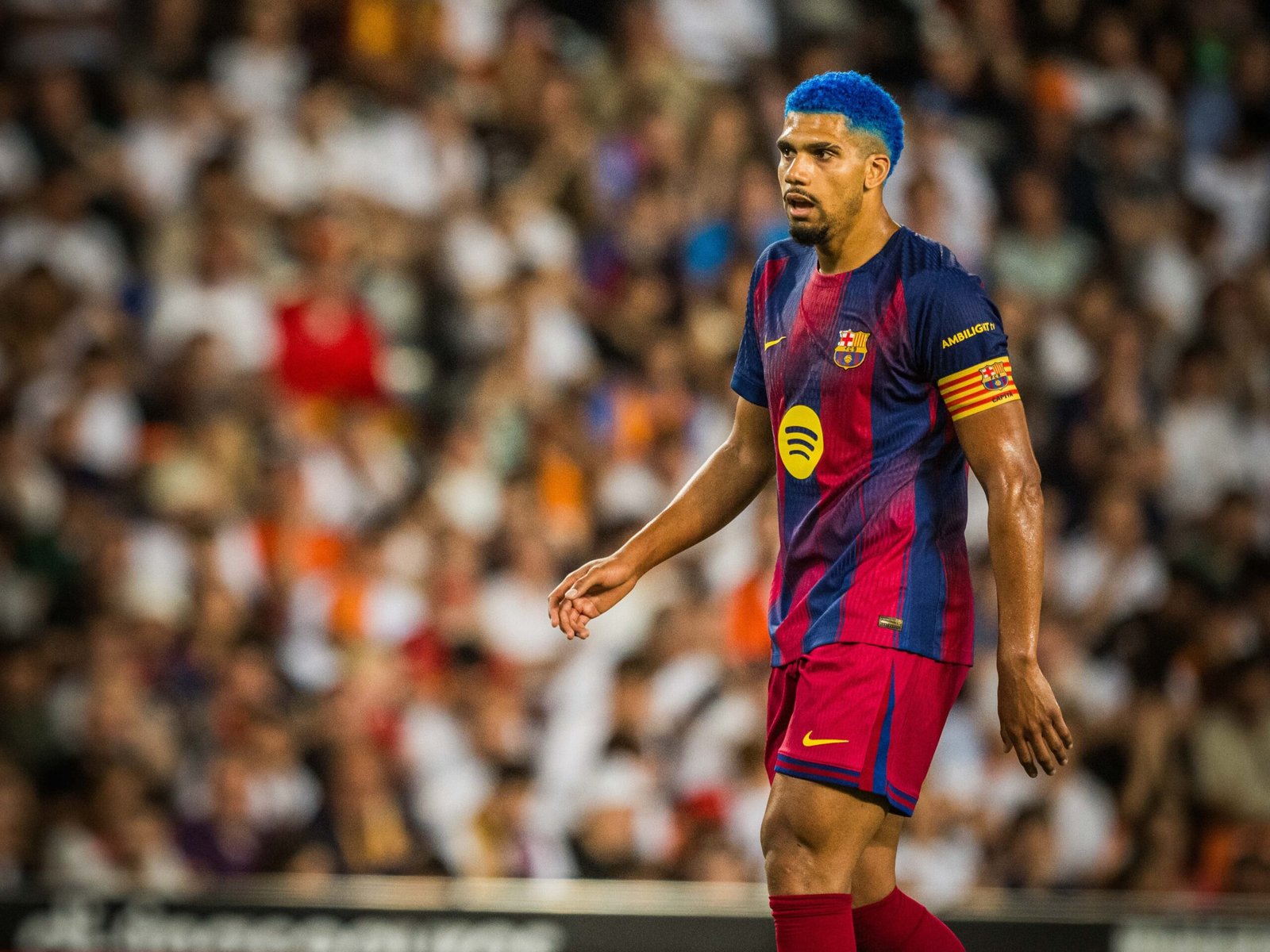
The timing could hardly be worse for Uruguay. Just days before the start of the 2026 FIFA World Cup, Barcelona defender Ronald Araujo suffered a muscle injury that has suddenly cast doubt over his role in one of the most important tournaments of his career. The setback has not only affected Uruguay’s preparations but has also sparked a public reaction from within the player’s family, with his brother openly criticizing head coach Marcelo Bielsa following confirmation of the injury.
The Ronald Araujo injury story goes beyond a single player missing matches. It highlights the growing challenge national teams face in balancing preparation intensity with player fitness during a period when footballers are already carrying the physical burden of a demanding club season. As Uruguay enters the tournament with ambitions of making a deep run, questions are emerging about how the absence of one of their most influential defenders could alter those plans.
Ronald Araujo’s Importance to Uruguay’s World Cup Ambitions
Over the last several years, Ronald Araujo has established himself as one of the most reliable defenders in international football. Known for his strength, recovery speed, aerial ability, and leadership qualities, the Barcelona captain has become a cornerstone of Uruguay’s defensive structure.
His importance extends beyond simply stopping opposition attackers. Araujo’s ability to organize the defensive line, dominate set-piece situations, and initiate attacks from the back makes him one of the most complete defenders in South American football.
For Uruguay, having Araujo available was expected to provide stability and experience in a tournament where defensive discipline often determines success. His injury therefore creates both tactical and psychological challenges for Marcelo Bielsa’s squad.
The Reaction That Sparked Headlines
The situation gained additional attention when Araujo’s brother publicly expressed frustration following confirmation of the defender’s injury. His social media comments suggested dissatisfaction with the circumstances that led to the setback and indirectly questioned Uruguay’s handling of players during the final stages of World Cup preparation.
While family members often react emotionally when elite athletes suffer injuries, the comments have amplified discussion around Uruguay’s training methods and Bielsa’s demanding coaching philosophy.
Marcelo Bielsa has long been respected as one of football’s most influential tactical minds. However, his teams are also known for their intense training sessions, aggressive pressing systems, and physically demanding style of play. Whenever injuries occur under such circumstances, scrutiny inevitably follows.
A Familiar Frustration for Ronald Araujo
Unfortunately for both the player and Uruguay, this is not the first time a major international tournament has been overshadowed by injury concerns.
Four years ago, Araujo arrived at the FIFA World Cup carrying fitness issues and ultimately failed to play a single minute during Uruguay’s campaign. Despite hopes that he could recover in time for the knockout stages, Uruguay exited during the group phase before he could return.
This latest setback revives painful memories for a player who has spent years working to establish himself among football’s elite defenders.
The situation is particularly frustrating because Araujo enters the tournament period as a mature leader rather than a developing prospect. At 27 years old, he is approaching what many consider the peak years of a defender’s career.
Understanding the Modern Injury Challenge in Football
The Ronald Araujo injury also reflects a broader trend affecting football worldwide. Elite players today compete in more matches than ever before.
Between domestic leagues, continental competitions, international fixtures, and expanded tournament schedules, many top footballers are asked to perform at maximum intensity throughout the year.
sports science departments across Europe have repeatedly warned about the growing risk of muscular injuries caused by fixture congestion. Recovery periods have become shorter, travel demands have increased, and players often move directly from club competitions into international camps.
In such circumstances, even minor fatigue can increase vulnerability to muscle-related injuries.
How Uruguay Could Adjust Without Araujo
Losing a player of Araujo’s quality is never ideal, but Uruguay still possesses defensive depth capable of minimizing the damage.
Marcelo Bielsa is expected to turn toward alternative options who have already accumulated valuable international experience.
| Player | Position | Potential Role |
|---|---|---|
| Santiago Bueno | Centre-back | Likely replacement in starting lineup |
| Sebastian Caceres | Centre-back | Rotational defensive option |
| Jose Gimenez | Centre-back | Defensive leader and organizer |
Santiago Bueno appears to be the most likely candidate to step into the starting eleven. His experience at club level and familiarity with Uruguay’s setup make him a logical replacement.
Meanwhile, Jose Gimenez may be required to assume even greater leadership responsibilities as the team’s most experienced central defender.
Marcelo Bielsa’s Tactical Dilemma
Bielsa’s tactical approach relies heavily on defensive organization and aggressive pressing from the front. Losing Araujo complicates both objectives.
Araujo’s athleticism allows Uruguay to defend higher up the pitch because he possesses the speed to recover against counterattacks. Without him, Uruguay may need to adopt a slightly more conservative defensive line in certain matches.
The coaching staff must now determine whether maintaining their preferred system outweighs the risks associated with reduced defensive pace.
This tactical adjustment could influence Uruguay’s performance throughout the group stage and potentially beyond.
Why This Matters Beyond One Tournament
The consequences of the Ronald Araujo injury extend beyond the 2026 FIFA World Cup.
For Barcelona, every international injury involving a key player raises concerns about long-term squad management. Modern clubs invest heavily in sports science and player conditioning, making injuries during national team duty a frequent source of tension.
For Uruguay, the situation highlights the importance of squad depth and succession planning. International tournaments are often defined by how effectively teams adapt to unexpected setbacks.
History has repeatedly shown that successful World Cup campaigns require more than talented starters. They require resilient squads capable of overcoming adversity.
Comparing Uruguay’s Situation to Past World Cups
Major tournaments are filled with examples of teams overcoming injuries to key players.
Several World Cup-winning nations have lost important contributors before or during tournaments yet still managed to succeed because replacements stepped up when needed.
Uruguay now faces a similar challenge. While Araujo’s absence would undoubtedly weaken the squad, it does not eliminate their ability to compete at a high level.
The team’s experienced core, combined with emerging talent, provides a foundation capable of remaining competitive throughout the tournament.
The Mental Side of Recovery
Physical recovery is only part of the equation for injured athletes. Mental resilience plays an equally important role.
Araujo has previously spoken about challenges both on and off the pitch, demonstrating a willingness to address the pressures that come with elite-level football.
His response to this setback could become an important chapter in his career. Remaining engaged with the squad, supporting teammates, and focusing on rehabilitation will be critical as he attempts to return during the tournament.
Can Ronald Araujo Still Play a Role at the World Cup?
One encouraging aspect for Uruguay supporters is that optimism reportedly remains regarding Araujo’s chances of participating later in the tournament.
Muscle injuries vary significantly in severity, and recovery timelines often depend on how players respond to treatment.
If Uruguay advances deep into the competition, there remains a possibility that Araujo could contribute during the knockout rounds.
That scenario would provide both a significant boost for Uruguay and a chance for the defender to finally experience meaningful World Cup action after missing out four years earlier.
Conclusion
The Ronald Araujo injury represents one of the most unfortunate developments for Uruguay ahead of the 2026 FIFA World Cup. Coming at a crucial moment, the setback has sparked public criticism, raised questions about player management, and forced Marcelo Bielsa to reconsider important tactical decisions.
Yet World Cups are often defined by resilience rather than perfection. Uruguay still possesses a talented squad capable of adapting to adversity, while Araujo himself remains determined to avoid another tournament ending in disappointment.
Whether he returns later in the competition or not, the coming weeks will test Uruguay’s depth, Bielsa’s coaching adaptability, and Araujo’s determination. The answers could ultimately shape the nation’s entire World Cup journey.
For breaking news and live news updates, like us on Facebook or follow us on Twitter and Instagram. Read more on Latest Sports on thefoxdaily.com.




COMMENTS 0