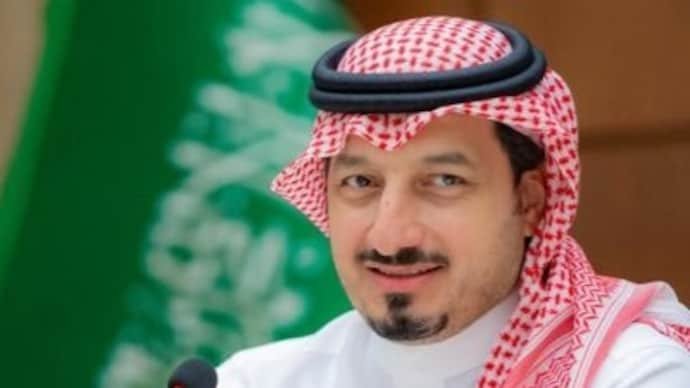
Saudi football crisis after FIFA World Cup 2026 has taken a major turn after Saudi Arabian Football Federation president Yasser Al-Misehal resigned following the national team’s disappointing tournament exit. The decision comes at a crucial moment for Saudi Arabia’s ambitious football project, which has invested heavily in infrastructure, global stars and long-term development plans.
Al-Misehal accepted responsibility for the team’s failure to reach the knockout stage, admitting that the result did not match the expectations surrounding Saudi football. His departure raises bigger questions about whether massive investment alone can transform a national team into a consistent global competitor.
Saudi Arabia entered the tournament hoping to prove that its football revolution was producing results on the biggest stage. Instead, the early exit has created pressure on the leadership structure and forced a reassessment of the country’s football strategy.
Why Yasser Al-Misehal resigned after Saudi Arabia’s World Cup failure
Yasser Al-Misehal announced his decision shortly after Saudi Arabia finished their FIFA World Cup 2026 campaign without reaching the knockout rounds.
In his statement, Al-Misehal said the team’s performance fell below expectations and that he accepted responsibility for the outcome.
“The national team’s failure to qualify for the next round of the World Cup is a result that falls short of all our ambitions.”
His resignation represents a significant leadership change because Al-Misehal was closely connected with Saudi Arabia’s modern football transformation.
During his seven-year tenure, he played a key role in expanding the country’s football ambitions, including the successful bid process for hosting the 2034 FIFA World Cup.
Saudi Arabia’s World Cup 2026 campaign: What went wrong?
Saudi Arabia’s tournament performance did not reflect the scale of expectations around the team.
The national side finished at the bottom of Group H after failing to collect enough points to advance. Despite moments of competitiveness, the team struggled to produce consistent performances throughout the tournament.
| Saudi Arabia World Cup 2026 Result | Outcome |
|---|---|
| Group Position | Bottom of Group H |
| Key Results | Draws against Uruguay and Cape Verde, loss against Spain |
| Knockout Qualification | Failed to advance |
One of the biggest disappointments was seeing tournament debutants Cape Verde progress ahead of Saudi Arabia, despite the huge difference in football investment between the two nations.
The result highlighted a major challenge: building a successful football ecosystem requires more than spending power. It requires player development, tactical stability and long-term sporting planning.
Saudi Arabia’s football revolution: Investment meets expectations
Over recent years, Saudi Arabia has aggressively expanded its presence in global football.
The country’s strategy included:
- Attracting international football stars to the domestic league
- Improving club infrastructure
- Increasing global visibility of Saudi football
- Preparing for the 2034 FIFA World Cup hosting role
The arrival of global names such as Cristiano Ronaldo and Neymar increased worldwide attention on the Saudi Pro League.
However, the national team’s World Cup struggles exposed a gap between domestic league growth and international success.
The biggest issue: Club success does not automatically create national team strength
Saudi Arabia’s experience reflects a common challenge in international football.
A league can attract world-class players and improve commercial value, but a national team requires a strong pipeline of locally developed talent.
Countries that consistently succeed at World Cups usually combine:
- Strong youth academies
- Competitive domestic leagues
- Stable coaching structures
- Players with international experience
Saudi Arabia has made progress in several areas, but the World Cup result suggests that the development cycle still needs time.
Managerial instability added to Saudi Arabia’s problems
Another major challenge before the tournament was instability in the coaching setup.
Saudi Arabia replaced Herve Renard with Georgios Donis shortly before the World Cup, creating uncertainty during one of the most important preparation periods.
Changing managers close to a major tournament often affects:
- Tactical planning
- Player confidence
- Team chemistry
- Match preparation
While a coaching change can sometimes create a positive reaction, Saudi Arabia struggled to find the consistency needed at the highest level.
Comparison: Saudi Arabia’s football model vs traditional World Cup powers
| Factor | Saudi Arabia | Traditional Football Powers |
|---|---|---|
| Investment | Rapidly increasing | Built over decades |
| Global stars | Major recent additions | Long-established talent systems |
| Youth development | Still evolving | Deep academy structures |
| World Cup consistency | Still developing | Regular knockout contenders |
What Al-Misehal’s exit means for Saudi football’s future
The leadership change does not necessarily mean Saudi Arabia will abandon its football ambitions.
The country’s long-term plans remain focused on improving the sport domestically and preparing for the 2034 World Cup.
The next federation leadership will face a difficult task: maintaining investment while improving actual sporting results.
The priority areas are expected to include youth development, coaching improvement and creating a stronger connection between club football and the national team.
The 2034 World Cup challenge: Saudi Arabia cannot rely only on infrastructure
Hosting the World Cup will put Saudi football under even greater global attention.
Modern stadiums and financial resources can create the foundation, but success at international tournaments depends on sporting quality.
The 2026 setback could become an important lesson before 2034. Saudi Arabia now has time to correct weaknesses and create a more sustainable football system.
Future outlook: Can Saudi Arabia become a global football force?
The answer will depend on how the country responds to this setback.
Many football projects experience difficult moments before achieving success. The key difference is whether those setbacks lead to structural improvements.
Saudi Arabia has shown commitment and ambition, but the World Cup result proved that transformation in football cannot happen overnight.
Conclusion: Saudi football enters a new chapter after World Cup disappointment
Saudi football crisis after FIFA World Cup 2026 represents a major test for the country’s ambitious sporting vision. Yasser Al-Misehal’s resignation shows the pressure created when expectations rise faster than results.
The next phase will determine whether Saudi Arabia’s football revolution becomes a long-term success story or remains mainly an investment-driven project.
With the 2034 World Cup approaching, Saudi football now has a clear challenge: turn financial power into sustainable football excellence.
For breaking news and live news updates, like us on Facebook or follow us on Twitter and Instagram. Read more on Latest Sports on thefoxdaily.com.





COMMENTS 0