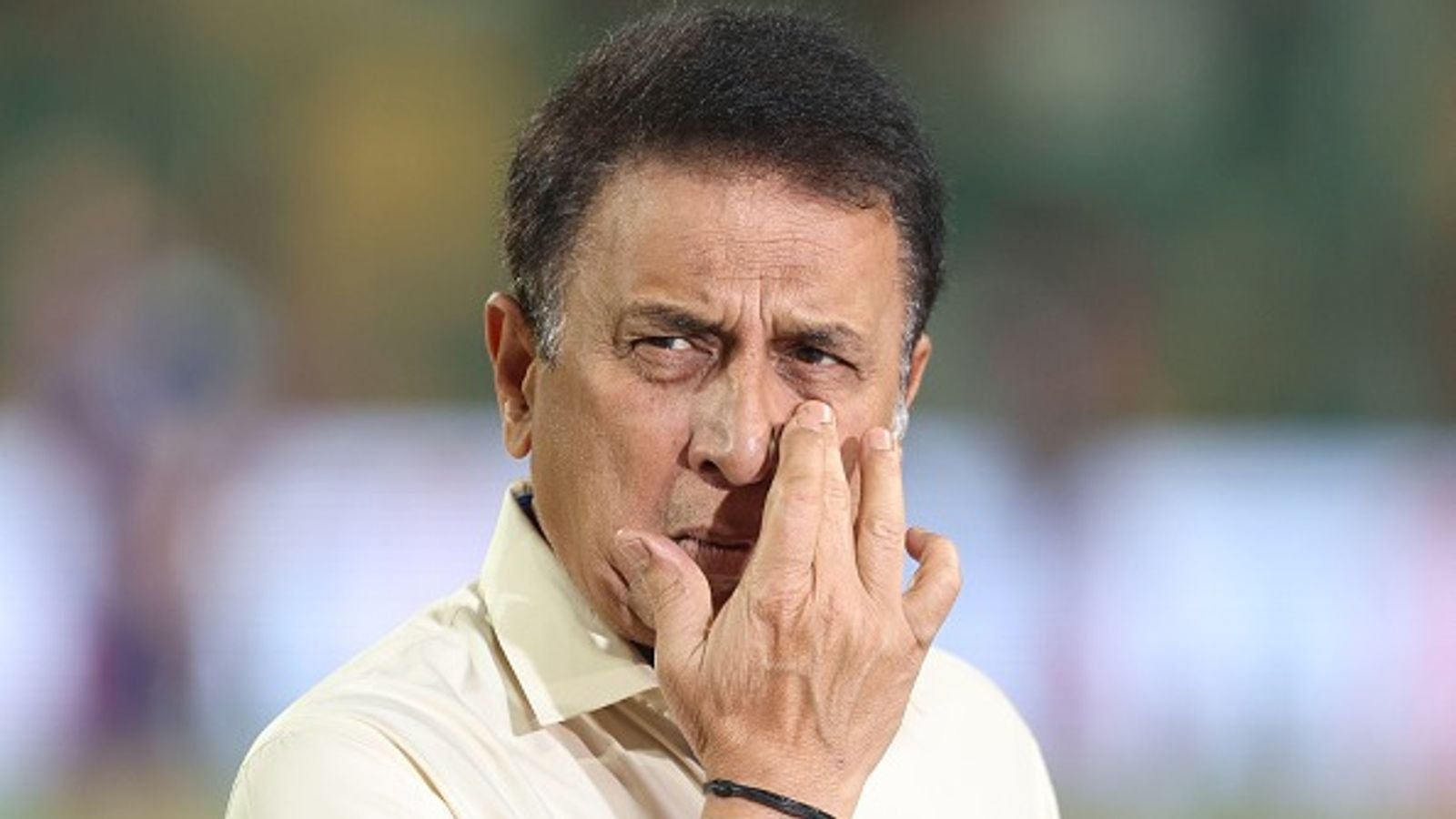
Sunil Gavaskar’s no-ball solution has put the spotlight back on one of India’s most avoidable problems in Test cricket: repeated overstepping by bowlers. The former India captain believes the answer should not be another rule that makes scoring easier for batters, but stronger internal accountability within the team.
India’s no-ball problems became particularly visible during the second Test against Sri Lanka, when Indian bowlers conceded 13 no-balls. Spinners Ravindra Jadeja and Saransh Jain were responsible for 11 of those deliveries, highlighting that the problem was not limited to fast bowlers struggling to control their front foot.
The issue had already appeared in the first Test at Galle, where Jadeja delivered four no-balls. With modern technology capable of detecting overstepping almost instantly, Gavaskar believes there is little justification for allowing the same mistake to continue repeatedly.
His comments have also reopened a broader debate about the balance between bat and ball in Test cricket. While free hits have become an established feature of limited-overs cricket after no-balls, Gavaskar argues that bringing the same punishment into the longest format could unnecessarily tilt the contest further towards batters.
What did Sunil Gavaskar suggest for India’s no-ball problem?
Gavaskar proposed an internal disciplinary system based on escalating fines. His idea is simple: the first offence should carry a financial penalty, and every subsequent offence should become progressively more expensive.
He also suggested that the bowling coach should share responsibility, with half of the fine imposed on the offending bowler also being deducted from the coach.
The concept is designed to create accountability at two levels. The bowler would have a direct incentive to maintain discipline, while the coaching staff would have an additional reason to identify and correct the technical problem before it repeatedly affects matches.
Gavaskar also suggested that the money collected could eventually be used for a team dinner, turning the penalties into something that benefits the squad collectively.
Why Gavaskar rejected the free-hit idea
India’s spin-bowling coach Sairaj Bahutule had jokingly suggested that introducing a free hit after a no-ball in Test cricket could help reduce the problem. The idea was clearly presented in a lighthearted manner, but Gavaskar disagreed with the concept.
His argument is based on the existing balance of Test cricket. Batters already benefit from modern developments such as shorter boundaries and restrictions surrounding short-pitched bowling. Adding a free hit after every no-ball could give them another significant advantage.
The distinction between formats is important. T20 and ODI cricket are designed around rapid scoring and aggressive batting, so a free hit fits naturally into their structure. Test cricket, by contrast, is built around a more prolonged contest between patience, technique, bowling pressure and risk management.
Introducing another batting advantage into that environment could alter the strategic value of a no-ball considerably.
India conceded 13 no-balls in the second Test
The scale of India’s recent problem explains why the discussion has become more serious.
| India’s No-Ball Issue | Details |
|---|---|
| No-balls conceded in second Test | 13 |
| No-balls by Jadeja and Saransh Jain | 11 |
| Jadeja’s no-balls in first Test | 4 |
| Proposed solution | Escalating team fines |
| Additional accountability | Bowling coach shares part of fine |
Thirteen no-balls may look like a relatively small number compared with the hundreds of deliveries bowled during a Test, but their impact cannot be measured only by counting the extra runs.
A no-ball gives the batting side an additional delivery and can disrupt the rhythm of an over. More importantly, if a batter gets an opportunity from a delivery that would otherwise have been legal, the consequences can become far larger than the one-run penalty recorded in the scorebook.
A no-ball is more than just one extra run
This is one of the most important aspects of Gavaskar’s argument.
When a bowler oversteps, the immediate cost is an extra run. But the real cost can include an additional scoring opportunity, a lost wicket opportunity or a change in the batter’s confidence.
Imagine a bowler produces a perfect delivery that appears to dismiss a batter, only for the umpire or technology to reveal that the bowler overstepped. The wicket disappears, the batter remains at the crease and the bowler must start the contest again.
That is why no-balls are especially frustrating for bowling teams. Unlike a difficult batting dismissal or an exceptional boundary from the opposition, overstepping can often be prevented through better technical discipline.
Why modern technology makes repeated overstepping harder to excuse
Cricket has changed dramatically in the technology era. Players have access to detailed video analysis, specialist coaching, workload monitoring and repeated practice sessions.
Front-foot technology also makes it much easier to identify exactly when a bowler is overstepping. Coaches can study the footage and determine whether the problem comes from the length of the run-up, the final stride, balance at delivery or changes in rhythm.
That means a recurring no-ball problem should ideally become a coaching issue before it becomes a match-day issue.
This is particularly relevant for experienced players. A young bowler may need time to establish a consistent delivery stride, but senior international players are expected to have greater control over their mechanics.
Why spin no-balls deserve special attention
India’s recent figures are especially interesting because most of the no-balls mentioned in the second Test came from spinners.
Fast bowlers naturally operate with greater momentum. Their run-ups are longer, their delivery strides are more explosive and their front-foot position can therefore be difficult to control. Spin bowlers generally operate at a slower pace, making repeated front-foot errors particularly frustrating.
That does not mean spin bowling no-balls are technically simple to eliminate. Changes in release point, approach rhythm and delivery stride can still affect a spinner’s landing position. But the pattern gives India’s coaching staff a clear area to investigate.
Instead of treating each no-ball as an isolated mistake, the team can look for common technical causes and address them during training.
Gavaskar’s idea creates accountability beyond the bowler
The most unusual part of Gavaskar’s proposal is his suggestion that the bowling coach should also share the financial penalty.
That idea changes the conversation from individual blame to collective responsibility.
If a bowler repeatedly oversteps, the coaching staff should be asking why the problem has not been corrected. Is the run-up too long? Is the bowler changing their rhythm under pressure? Is the landing position being monitored during practice? Or is the player simply losing concentration?
A coach cannot physically stop a bowler from overstepping during a match, but coaching staff can create systems designed to reduce the likelihood of the error happening.
That makes Gavaskar’s suggestion more interesting than a simple fine. It creates a chain of responsibility between player and coaching staff.
The psychology behind escalating fines
The proposed doubling of fines is designed to make repetition progressively more uncomfortable.
A small penalty may be easy to ignore if a player knows that another mistake will cost exactly the same amount. An escalating penalty creates a different psychological effect because every repeated mistake carries a larger consequence.
There is also an important team dynamic involved. If the fines contribute to a squad event such as the final team dinner, other players have an indirect interest in maintaining discipline across the group.
It transforms the penalty from an isolated punishment into a shared accountability mechanism.
Could financial penalties actually solve the problem?
There is no guarantee that fines would eliminate no-balls. International athletes are already highly motivated to perform well, and most oversteps are not deliberate.
The value of Gavaskar’s suggestion is therefore less about the money itself and more about creating a clear consequence for repeated lapses.
The best solution would probably combine financial accountability with technical intervention. If a player repeatedly oversteps, the coaching staff should examine the mechanics, identify the cause and design specific training drills.
In that sense, the fine becomes the final layer of a broader prevention system rather than the entire solution.
Why Test cricket should be careful about adopting free hits
There is a strong argument for keeping the free-hit rule format-specific.
In limited-overs cricket, the free hit adds drama and encourages attacking play. A batter can take greater risks knowing that the next delivery cannot result in certain forms of dismissal. It has become a major part of the tactical identity of white-ball cricket.
Test cricket has a different rhythm.
A batter’s concentration, the bowler’s patience and the changing condition of the pitch are central to the format. Giving the batter an additional protected attacking delivery after a no-ball could alter the risk-reward calculation significantly.
Gavaskar’s argument is therefore not simply about protecting bowlers. It is about preserving the distinctive tactical character of Test cricket.
The bigger issue is discipline, not the law
The most valuable insight from the debate may be that India do not necessarily need a new cricket law to solve the problem.
They may need better execution.
Overstepping is one of the rare errors in cricket that can be heavily influenced by preparation and repetition. A batter cannot control whether an opponent produces an exceptional delivery. A fielder cannot guarantee that a difficult catch will stick. But a bowler can work extensively on maintaining a consistent delivery stride.
That makes no-balls a particularly frustrating form of lost opportunity.
For a team competing in high-level Test cricket, small avoidable mistakes can eventually become decisive. A single no-ball can extend an innings; several can change the momentum of an entire session.
India’s coaching staff now have a clear challenge
The immediate task for India is not to debate whether free hits should exist. It is to understand why experienced bowlers are repeatedly crossing the line.
Coaches can use training footage and front-foot monitoring to identify patterns. Bowlers can practise their complete run-up rather than focusing only on the release. The team can also introduce match-pressure simulations so that technical discipline becomes automatic even when players are tired.
This approach would address the root of the problem instead of simply punishing the symptom.
Could the problem affect India’s future Test results?
India’s no-ball issue becomes more significant when viewed through the context of tight Test matches.
Against strong opposition, an additional delivery can be extremely valuable. If a frontline bowler produces a wicket-taking delivery but the ball is ruled a no-ball, the batting side receives a second chance.
That can influence partnerships, sessions and ultimately results.
India therefore need to treat bowling discipline as a performance metric rather than an administrative detail. A team that consistently gives away unnecessary deliveries is effectively giving its opponent additional opportunities.
India’s next challenge comes in T20 cricket
After their Test fixtures, India are scheduled to turn their attention to a three-match T20I series against Afghanistan. The matches are scheduled for September 13, 15 and 17 at Arun Jaitley Stadium in Delhi.
The format change will make no-balls even more important because limited-overs cricket already includes the free-hit rule. An overstep can therefore have an immediate strategic consequence beyond the extra run.
That makes the current Test discussion timely. If India can improve their front-foot discipline across formats, the benefits will extend beyond red-ball cricket.
A simple comparison: free hit vs internal discipline
| Approach | Main Effect | Potential Benefit | Potential Concern |
|---|---|---|---|
| Free hit after a Test no-ball | Rewards the batter with an additional protected delivery | Could create greater pressure on bowlers to avoid overstepping | May shift Test cricket further toward batting |
| Escalating fines | Creates internal accountability | Targets repeated indiscipline without changing the laws | May not solve technical problems by itself |
| Technical coaching | Addresses delivery mechanics | Can attack the root cause of overstepping | Requires consistent monitoring and practice |
The best solution may combine Gavaskar’s ideas with modern coaching
Gavaskar’s proposal does not need to be treated as an either-or debate between punishment and coaching.
The strongest approach would combine both. Coaches can identify technical issues, bowlers can work on their delivery stride, and escalating fines can provide an additional reminder that repeated lapses are unacceptable.
The key is making the system preventive rather than purely punitive.
If a bowler has committed multiple no-balls, the response should not simply be, “Pay the fine.” It should be, “Why is this happening, and what are we changing before the next match?”
Conclusion: India need discipline, not another batting advantage
Sunil Gavaskar’s no-ball solution has sparked an important discussion about how India can address repeated overstepping without changing the character of Test cricket.
His rejection of the free-hit idea is based on the belief that Test cricket already provides several advantages to modern batters. Instead, he has proposed escalating fines for repeated no-balls, with the bowling coach also sharing part of the penalty.
The idea is unconventional, but the larger principle is sound: avoidable mistakes require accountability.
India’s recent tally of 13 no-balls in the second Test, including 11 from Ravindra Jadeja and Saransh Jain, shows that the problem deserves attention. The solution, however, should go beyond financial punishment.
Modern technology gives India the tools to analyse delivery mechanics, identify recurring errors and correct them during training. If those technical measures are combined with Gavaskar’s accountability-based approach, India could significantly reduce one of the easiest ways to hand opponents unnecessary opportunities.
For a team competing at the highest level, that could matter enormously. In Test cricket, matches are often decided by small moments. Giving away a free delivery should not be one of the moments India willingly create for their opponents.
For breaking news and live news updates, like us on Facebook or follow us on Twitter and Instagram. Read more on Latest Cricket on thefoxdaily.com.






COMMENTS 0