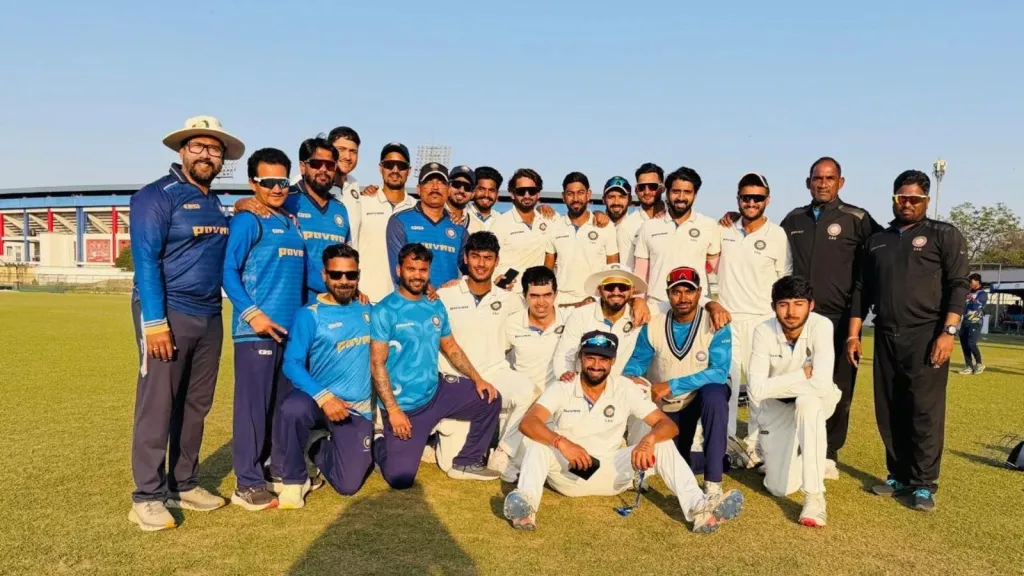
Uttarakhand are steadily establishing themselves as a competitive force in Indian Domestic Cricket, with their impressive run to the Ranji Trophy semifinals last season marking a significant milestone in the team’s development. Once considered a relatively inexperienced side, they are now earning recognition through consistent performances, a renewed focus on red-ball cricket and the emergence of talented young players.
Under head coach Manish Jha, Uttarakhand have shifted their priorities towards long-form cricket, building a team that believes in patience, discipline and collective effort. Their journey has included important victories against Haryana, Tripura and Assam, followed by a commanding innings-and-six-run win over Jharkhand in last season’s quarterfinals.
Now preparing for their second-round Ranji Trophy fixture against Tamil Nadu at the MA Chidambaram Stadium in Chennai, Uttarakhand are looking to continue that progress. Although they remain a work in progress, their recent achievements have ensured that opponents can no longer afford to underestimate them.
For Jha, the team’s identity is clear: red-ball cricket must remain at the heart of its ambitions. For experienced all-rounder J Suchith and the rest of the squad, the challenge is to build on last season’s success without becoming distracted by expectations.
Manish Jha’s Red-Ball Cricket Philosophy Is Driving Uttarakhand Forward
Manish Jha has a straightforward explanation for Uttarakhand’s recent improvement in domestic cricket. The head coach believes the team’s growing strength comes from its commitment to the traditional format of the game.
“Red ball is the USP of this team,” Jha said while discussing Uttarakhand’s preparations for their second-round Ranji Trophy match against Tamil Nadu.
Jha is coaching Uttarakhand in the domestic circuit for the sixth consecutive season. When he took charge five years ago, he identified a need to change the team’s priorities and establish a stronger foundation in first-class cricket.
According to Jha, the squad had previously focused heavily on white-ball formats, including the Indian Premier League and other short-format leagues. While those competitions offer opportunities for players to develop their careers, he believed that sustained success in red-ball cricket would bring greater recognition to Uttarakhand in the domestic game.
“Basically, when I took over this team, the focus was basically on white-ball cricket. They used to focus more on IPL and other small leagues,” Jha explained.
“So, I’ve shifted the team’s focus, and I convinced them that the real cricket is red-ball cricket and we should focus more. That’s how you will get the recognition in Indian cricket.”
The strategy is beginning to deliver results. Uttarakhand’s run to the Ranji Trophy semifinals last season demonstrated their ability to compete over five days, where patience, concentration and sustained performance are essential.
The team’s challenge now is to turn that breakthrough into a consistent pattern of success. Jha has emphasised improvement rather than simply reaching the knockout stages, making long-term development more important than one successful campaign.
Uttarakhand’s Ranji Trophy Semifinal Run Changed Their Reputation
Uttarakhand’s progress became particularly visible during the previous Ranji Trophy season, when they advanced to the semifinals after producing a series of impressive performances.
The team registered victories against Haryana, Tripura and Assam before delivering one of its most significant results against Jharkhand in the quarterfinals. Uttarakhand won that match by an innings and six runs, underlining their ability to dominate an opponent across a first-class contest.
Reaching the semifinals was an important achievement for a side still building its reputation in India’s domestic cricket structure. It also provided evidence that the team’s emphasis on red-ball cricket was beginning to translate into results against established opponents.
Uttarakhand are now approaching the new campaign with greater confidence, although the coaching staff remain conscious that one successful season does not automatically guarantee another.
Jha believes the pressure should come from the need to improve rather than from expectations of reaching the knockouts again.
“There is pressure about improving every year. There is no pressure about going to the knockouts,” he said.
That distinction reflects the approach the team has adopted. Instead of treating last season’s semifinal appearance as a target that must immediately be repeated, Uttarakhand are focusing on developing their players, improving their preparation and maintaining the standards that helped them achieve their breakthrough.
Their performance against Jharkhand remains a major example of what the team can accomplish when its players perform collectively. It has also strengthened the belief that Uttarakhand can compete against stronger domestic sides when they execute their plans effectively.
J Suchith Says Opponents No Longer Underestimate Uttarakhand
Uttarakhand’s progress has not gone unnoticed among players and teams across Indian domestic cricket. J Suchith, the experienced all-rounder who represents the state as a professional player, believes the team’s recent results have changed how opponents view them.
Suchith previously represented Karnataka and played for Nagaland before switching to Uttarakhand. His experience across different domestic teams gives him a useful perspective on how a side’s reputation can evolve through consistent performances.
He recalled receiving congratulations for Uttarakhand’s semifinal run while attending the BCCI’s Naman Awards, where he was recognised as the highest wicket-taker for Nagaland during his time with that team.
“When we are qualifying, I think every team in the country takes note of this,” Suchith said.
“I had been to the Naman Awards (BCCI awards) this year because I was the highest wicket-taker for Nagaland (the team he played for before switching to Uttarakhand). Each and every person over there congratulated me for Uttarakhand reaching the semi-finals. So it is being noted at the biggest stage.”
Suchith believes that recognition reflects the changing status of the team within the domestic cricket structure.
“Nobody thinks of Uttarakhand as a smaller team anymore,” he added.
The statement captures the significance of the team’s recent achievements. Uttarakhand are no longer relying solely on potential or the promise of emerging players. Their performances have given them credibility, and they are beginning to approach matches with the confidence of a side capable of challenging established opponents.
Learning From Jammu & Kashmir’s Rise in Domestic Cricket
Uttarakhand’s progress has drawn comparisons with Jammu & Kashmir, whose rise in domestic cricket has provided an example of how a team can develop from an underdog into a championship-winning side.
Jammu & Kashmir first attracted attention through a series of impressive results against more established teams before developing into a stronger and more consistent outfit. Their success last season demonstrated the potential of sustained investment, improved preparation and the development of players through the domestic system.
Jha has used Jammu & Kashmir as an example to inspire Uttarakhand’s players, encouraging them to believe that their team can follow a similar path.
However, there is an important distinction between the two sides. While Jammu & Kashmir have already completed their transformation into a champion outfit, Uttarakhand are still developing the depth and consistency required to reach that level.
The comparison nevertheless offers a useful model for Uttarakhand. It suggests that teams do not need to possess the biggest reputations or the most celebrated players to achieve significant results. With the right preparation, a clear philosophy and contributions from across the squad, they can gradually close the gap on their rivals.
Uttarakhand’s recent performances indicate that they are moving in that direction. Their next challenge is to maintain the momentum and establish themselves as regular contenders rather than a team enjoying a brief period of success.
How Uttarakhand Prepared for the Ranji Trophy Season
Preparation has been an important part of Uttarakhand’s development, particularly because the state’s weather conditions can make cricket training difficult during the off-season.
With conditions in Uttarakhand often unsuitable for cricket and preparatory camps, the state association decided to send the squad to Jammu & Kashmir for match practice. The team also made stopovers in Delhi, where players were able to feature in red-ball fixtures before the Ranji Trophy season began.
These arrangements gave the squad valuable opportunities to spend time in the middle and prepare for the demands of first-class cricket.
For a team built around the idea that red-ball cricket should be its primary focus, regular match practice is particularly important. Players need to develop the patience required to bat for long periods, maintain discipline over extended spells and adapt their strategies as pitch and match conditions change.
The preparation also allowed the coaching staff to assess players before the competition began. By giving the squad opportunities to play red-ball matches, Uttarakhand could work on their combinations and help players build confidence ahead of the new campaign.
The team’s first-round match against Railways in Mumbai produced three points through a first-innings lead. While it was not a maximum-points victory, the result gave Uttarakhand a positive start to their campaign.
The next assignment against Tamil Nadu presents a different challenge. The match will be played at the MA Chidambaram Stadium in Chennai, a venue that will be unfamiliar to most of the Uttarakhand players.
Only a couple of players have previously experienced the conditions there through the IPL. For the rest of the squad, the fixture will provide an opportunity to adapt to a new environment and test the progress they have made through their preparation.
Young Players Are Strengthening Uttarakhand’s Future
One of the most encouraging aspects of Uttarakhand’s progress has been the gradual development of younger players into the senior team.
When Jha took over, the average age of the squad was in the early 30s. That figure has since fallen to the mid-20s, reflecting a shift towards a younger group of players who can potentially form the core of the team for several seasons.
The transition has not happened overnight. It has involved players progressing through the age-group system and earning opportunities at senior level. The presence of younger cricketers gives Uttarakhand a chance to build continuity while allowing emerging talents to gain experience alongside established performers.
The inclusion of Lakshya Raichandani is one example of that approach. Raichandani was recently part of the India Under-19 squad that played against Australia earlier in October, and his addition gives Uttarakhand another young player with experience in a high-level development environment.
His presence also reflects the importance of creating a pathway between age-group cricket and the senior domestic setup. Players who receive opportunities at the right time can develop their skills while learning the demands of first-class competition.
Uttarakhand’s coaching staff will hope that more players follow a similar route, giving the team a stronger base for future seasons.
Akash Madhwal and Kunal Chandela Lead the Way
While the development of young players is important, Uttarakhand also rely on experienced cricketers who have played central roles in the team’s progress.
Akash Madhwal has become one of the most recognisable names associated with Uttarakhand after his emergence in the Indian Premier League. His rise has given other players in the state a visible example of how strong domestic performances can open doors to bigger opportunities.
Madhwal’s journey is particularly significant for a team trying to improve its reputation. When a player progresses from the domestic setup to the IPL, it demonstrates that talent from Uttarakhand can compete at the highest levels of the sport.
Suchith believes that this kind of breakthrough can encourage others in the squad to aim higher.
“There are a couple of young players coming through as well and the newcomers who played last season made the spots their own,” Suchith said.
“And when a guy like Akash Madhwal can go on and play IPL, it gives a lot of hope to anyone, to be very honest.”
Captain Kunal Chandela has also been a vital part of the team, helping provide stability and direction as Uttarakhand continue their development.
At the top of the batting order, Dega Nischal, another player from Karnataka, adds further experience to the lineup. His presence complements the team’s broader effort to combine professional players with emerging domestic talent.
Together, the contributions of experienced players and younger prospects give Uttarakhand a foundation on which they can continue building their first-class ambitions.
Saurabh Rawat and Tejasvi Jaiswal Add to the Squad’s Depth
Uttarakhand’s squad also includes players who can contribute in important supporting roles. Wicketkeeper Saurabh Rawat has emerged as a dependable option in difficult situations, earning a reputation as a player who can help the team when the pressure is high.
Having a wicketkeeper capable of contributing during challenging periods can be particularly valuable in first-class cricket, where matches often turn on long partnerships, lower-order resistance and the ability to recover from setbacks.
Tejasvi Jaiswal, the elder brother of India opener Yashasvi Jaiswal, is another player waiting for opportunities within the squad. His presence provides the team with another option as the coaching staff look to maintain competition for places.
The combination of established players, emerging prospects and professionals from other states has helped Uttarakhand develop a more competitive squad.
However, the team’s progress will ultimately depend on how consistently its players perform together. Individual talent can make a difference in a match, but sustained success in the Ranji Trophy requires contributions across the batting and bowling departments.
Mayank Mishra Leads Uttarakhand’s Bowling Threat
Uttarakhand’s bowling resources have also played a major role in the team’s rise. Among their most important players is left-arm spinner Mayank Mishra, who was 36 and had taken 59 wickets during the previous season.
His tally placed him just one wicket short of Auqib Nabi’s 60 wickets, highlighting the effectiveness of his bowling throughout the campaign.
Taking wickets consistently is crucial in first-class cricket because bowlers must dismiss the opposition twice to secure many outright victories. A reliable spinner can also play an important role as matches progress, particularly when the pitch begins to offer assistance.
Mishra’s experience and ability to deliver sustained spells provide Uttarakhand with a significant option in the bowling attack. His record from the previous season also underlines the contribution that experienced players can make to a team seeking to establish itself among the stronger domestic sides.
For Uttarakhand, the challenge is to maintain that bowling effectiveness while ensuring that other members of the attack contribute consistently. A balanced bowling unit gives a team more flexibility when conditions change or when its first-choice approach does not produce immediate results.
Uttarakhand’s Biggest Strength Is Their Collective Approach
Despite the emergence of individual performers, both Jha and Suchith believe that Uttarakhand’s progress is rooted in the collective mindset of the squad.
The team has tried to approach victories and defeats with the same level of calm, avoiding the temptation to become overly confident after a good result or discouraged by a setback.
The message from the coaching staff has been to start from zero and concentrate on the next task. That approach encourages players to focus on smaller objectives rather than becoming distracted by the prospect of reaching the semifinals or winning the competition.
In red-ball cricket, where matches can stretch across several days, this mindset can be especially important. Teams must be prepared to recover from difficult sessions, build partnerships patiently and maintain discipline even when results appear to be moving against them.
Suchith believes Uttarakhand’s players are motivated by a shared desire to perform for their state and prove that they belong on the bigger domestic stage.
“We don’t have superstars. We don’t have magical preparation either,” he said.
“Just that we have people wanting to perform for the team, people wanting to put their name up for Uttarakhand, saying that we are ready for the big stage. There is a drive to achieve the pinnacle going forward.”
His comments reflect the team’s belief that progress does not depend on having a collection of high-profile names. Instead, the players are trying to create a competitive identity through commitment, teamwork and consistent performances.
Suchith also made it clear that the squad does not see itself as a small team anymore.
“We are not a small team. We are putting in a lot of big performances,” he said.
Uttarakhand vs Tamil Nadu: A New Test in Chennai
Uttarakhand’s second-round Ranji Trophy fixture against Tamil Nadu will provide another opportunity to measure their development against a different opponent.
The match at the MA Chidambaram Stadium will be particularly interesting because most of Uttarakhand’s players have not previously played at the venue. Adapting quickly to unfamiliar conditions will be an important part of their challenge.
The team will arrive with confidence after securing three points against Railways through a first-innings lead. However, the coaching staff will be aware that the conditions in Chennai may require adjustments to their plans.
For a side that has made red-ball cricket its defining strength, the match will test its ability to remain patient and disciplined while responding to the demands of a new ground.
The result will matter, but Uttarakhand’s broader objective remains consistent with Jha’s philosophy: improve every season, develop the squad and build a reputation through performances rather than expectations.
Can Uttarakhand Become the Next Underdog Success Story?
Uttarakhand’s rise has similarities with the journey of Jammu & Kashmir, but the team still has significant work to do before it can be considered an established domestic powerhouse.
Last season’s semifinal appearance demonstrated that Uttarakhand can compete with stronger opponents, while their innings-and-six-run victory over Jharkhand highlighted the scale of their potential.
The next step is to prove that those results were part of a lasting improvement rather than a one-season breakthrough. Maintaining consistency, developing young players and continuing to prepare effectively will all be important.
The reduction in the squad’s average age provides reason for optimism. With players progressing through the age-group system, Uttarakhand have an opportunity to build a team that can remain competitive over the coming years.
They also have experienced players who understand the demands of domestic cricket, including Suchith, Chandela and Mishra. The challenge is to bring those qualities together consistently while allowing new talent to develop.
Jha’s focus on improvement rather than knockout expectations may help the team manage the pressure that comes with increased attention. By concentrating on individual performances and small targets, Uttarakhand can continue developing without allowing their recent success to become a burden.
Conclusion
Uttarakhand are steadily building their identity in Indian domestic cricket, and their run to the Ranji Trophy semifinals last season has helped transform how they are viewed by opponents and observers.
Under Manish Jha, the team has prioritised red-ball cricket, improved its preparation and created opportunities for younger players to establish themselves in the senior setup. Important performances against Haryana, Tripura, Assam and Jharkhand have shown that the approach is beginning to produce results.
The contributions of players such as Akash Madhwal, Kunal Chandela, J Suchith and Mayank Mishra have helped provide a balance of experience, leadership and skill. Meanwhile, emerging talents such as Lakshya Raichandani offer hope for the team’s future.
Uttarakhand’s next challenge is to maintain their progress as they face Tamil Nadu in Chennai. Although they remain a developing side, their recent performances have shown that they can no longer be dismissed as underdogs without serious consideration.
As Suchith’s comments underline, Uttarakhand believe they belong on the big stage. With a clear red-ball philosophy, a collective mindset and a growing pool of talent, they are working to turn last season’s breakthrough into sustained success in the Ranji Trophy.
For breaking news and live news updates, like us on Facebook or follow us on Twitter and Instagram. Read more on Latest Cricket on thefoxdaily.com.






COMMENTS 0