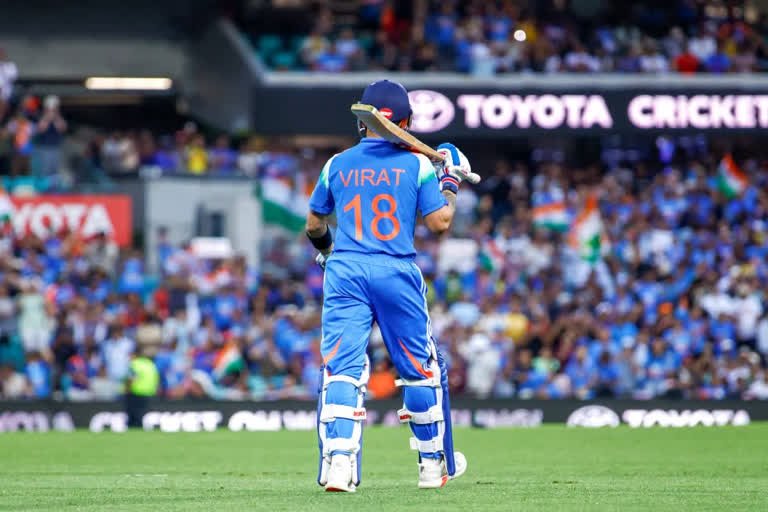
Atul Wassan says he is “actually happy” about Virat Kohli missing the IND vs AFG ODI series, and his reasoning reveals something important about how India should be managing their most precious batting asset on the road to the 2027 World Cup.
When Losing Your Best Player Is the Right Result
Virat Kohli suffered a hamstring tear during the IPL 2026 Final. The injury has ruled him out of India’s three-match ODI series against Afghanistan, which begins on June 13, and placed his availability for the England tour in July under a cloud of uncertainty. For a player of Kohli’s stature, any injury news triggers an almost automatic wave of concern across the Indian cricketing public.
Former India fast bowler Atul Wassan has a different reaction. He is happy about it. Not about the injury itself, he is careful to clarify, but about the outcome: Kohli sitting out a series against Afghanistan and allowing his body the recovery time it has earned and arguably needed.
His response, delivered to ANI, is one of the more refreshingly candid takes to emerge from Indian cricket commentary in recent memory. It is also, when examined properly, one of the most strategically intelligent positions anyone has publicly staked out in the conversation about how India should manage their key personnel on the road to the ODI World Cup 2027.
Wassan’s Core Argument: Playing Every Series Is Not Wisdom. It Is Risk.
“I’m actually happy with this news about Virat Kohli missing this series against Afghanistan. I thought it would have been overkill if Virat played every single series going forward to the next World Cup. And I think, looking at the intensity on his body during the IPL and him playing in this heat at his age, I think it would have been pragmatic for him to actually take a backseat anyway.”
Atul Wassan, ANI
Unpack this carefully and there are two separate but interconnected arguments being made simultaneously. The first is about physical management. Kohli has just completed an intense IPL 2026 campaign in Indian summer heat. The physical and mental demands of a T20 franchise season, with its high-intensity training loads, match-day pressure, and travel, are considerable for any professional cricketer. For a 37-year-old batter in the final act of a remarkable career, they are even more significant.
A three-match ODI series against Afghanistan, scheduled across Dharamshala, Lucknow, and Chennai in June heat, is not the most critical deployment of Kohli’s remaining playing time. The England tour in July is. The ODI World Cup 2027 is. Managing his body to ensure he arrives at those assignments at full capacity is a far smarter use of the asset than squeezing every available appearance out of him in a series whose outcome will not define India’s year.
The second argument is about the broader culture of cricket management. Wassan is implicitly questioning whether it makes strategic sense for India’s most important ODI batter to feature in every series on the calendar between now and the World Cup. The answer, even before the injury, was probably no.
The “Knives Would Have Been Out” Problem: Why Injury Makes This Easier
“But then I know the knives would have been out if Virat Kohli picked and chose. But I think if he’s got a niggle, he’s smart enough to know, and I think he won’t take a chance because we don’t want to take a chance with a genius like him.”
Atul Wassan, ANI
This is the most politically astute observation in Wassan’s entire commentary. Indian cricket has a particular cultural dynamic around player resting and rotation, one that is significantly harsher than what operates in most other cricketing nations. When an elite player voluntarily steps back from a series, regardless of the workload management logic behind it, the public discourse frequently frames it as a lack of commitment, a loss of hunger, or an unwillingness to represent the country.
Kohli, given his profile and the scrutiny that has followed him throughout his career, would have faced an especially fierce version of that criticism. A voluntary absence from an Afghanistan ODI series, even a perfectly sensible one from a workload perspective, would have generated headlines that no amount of rational explanation fully neutralises.
The hamstring tear resolves that problem entirely. Kohli is not choosing to rest. He is injured. There are no knives to sharpen. There is no motivation question to be asked. The narrative writes itself cleanly: India’s star batter is recovering from an injury, and the selectors have managed the situation responsibly by bringing in a quality replacement. Everyone moves on.
Wassan’s point that Kohli is “smart enough to know” when not to take chances with a niggle is also worth dwelling on. Kohli has been a professional cricketer at the elite level for nearly two decades. He understands his body, understands the demands of the coming months, and understands the catastrophic cost of a more serious injury suffered by playing through something that needed rest. The hamstring tear makes the right decision the only decision, and there is something quietly fortunate about that alignment.
Yashasvi Jaiswal: India’s Embarrassment of Riches Laid Bare
“But imagine, Virat goes out, and Jaiswal comes in. Can you imagine the embarrassment of riches of Indian cricket? Even Yashasvi Jaiswal is not getting a place in a one-day team, and he gets to play. So I think it’s a win-win situation for India, and I’m not even a little bit bothered about Virat not playing, and I think it’s good news for me.”
Atul Wassan, ANI
The phrase “embarrassment of riches” is one of cricket’s most overused expressions, but Wassan earns the right to deploy it here because the specific detail he is pointing to is genuinely extraordinary. Yashasvi Jaiswal, a left-handed batter who scored over 1,200 runs in the 2024 Test series against England, who has already demonstrated the capacity to perform at the highest level across formats, was not in India’s original ODI squad for Afghanistan. He was not considered a first-choice selection. He is the replacement for an injured player.
That tells you everything you need to know about where Indian batting depth currently stands. The player stepping in for Virat Kohli is not a makeshift solution or a raw prospect being given an unfamiliar opportunity. He is one of the most talented young batters in world cricket, a player who would walk into almost every other nation’s ODI side as a first-choice opener without debate.
For Jaiswal personally, the opportunity carries additional significance. His IPL 2026 campaign was, by his own standards, an ordinary one. He has had sporadic ODI appearances but no sustained run in the fifty-over format. The Afghanistan series, in the context of India’s ODI World Cup 2027 preparation, represents exactly the kind of consecutive opportunities he needs to establish himself in the pecking order before the tournament planning gets serious.
| Aspect | Virat Kohli | Yashasvi Jaiswal |
|---|---|---|
| Role in Squad | First-choice middle order | Replacement (now starter) |
| Current Availability | Ruled out (hamstring tear) | Available, selected |
| Recent Form | Sublime (NZ ODIs, IPL 2026) | Average IPL 2026, strong Test history |
| ODI Experience | Extensive (veteran) | Sporadic, limited runs |
| World Cup 2027 Relevance | Central, if fit | Opportunity to stake a claim |
India’s ODI Form: The Context That Makes This Series More Important
The Afghanistan ODI series is not just a routine bilateral assignment. It is the first of its kind between the two nations in the fifty-over format, and it arrives at a moment when India’s ODI record since the Champions Trophy 2025 triumph has been far from convincing. Five losses in the last nine matches is a record that raises genuine questions about consistency and adaptability in the format.
That context makes the Afghanistan series more meaningful than the opposition’s ranking alone would suggest. India need wins. They need momentum. And perhaps most importantly, they need answers to a set of middle-order and batting depth questions that the selection debates of the past week have brought sharply into focus.
Jaiswal’s inclusion creates one such answer opportunity. If he performs across the three matches in Dharamshala, Lucknow, and Chennai, he strengthens his case for a more permanent ODI role and reduces India’s dependence on Kohli’s availability as the World Cup draws closer. If he struggles, the selectors at least have actionable information about his fifty-over readiness rather than assumptions based on his Test and T20I performances.
Either way, the series produces more useful intelligence for India’s World Cup planning than it would have done with Kohli in the line-up occupying the role that Jaiswal now has the chance to claim.
Kohli’s Fitness and the England Tour: The Real Question
The Afghanistan series is, for all its significance in the immediate context, a secondary concern compared to the question of Kohli’s availability for the England tour in July. England away is a genuinely demanding assignment, and Kohli’s record in England across formats, including the unfinished business of multiple Test series, gives the tour an additional layer of personal and competitive significance for him.
A hamstring tear sustained in the IPL Final, given appropriate recovery time and management, is unlikely to be a long-term concern for a player of Kohli’s fitness standards and professional discipline. But the timeline between the IPL Final and the start of the England tour is not generous. The selectors and medical staff will be working to a precise schedule, and the decision about his availability will almost certainly come down to the quality of his recovery rather than any question of form or selection policy.
Wassan’s point about not wanting to “take a chance with a genius like him” extends into this conversation naturally. The Afghanistan ODI series is the correct sacrifice to make if it means Kohli arrives in England at full fitness and full readiness. Missing three matches against Afghanistan to be fully prepared for a high-stakes England tour and ultimately a World Cup is not a loss. It is a calculation.
Conclusion: Protecting the Irreplaceable Is Not Weakness
Atul Wassan’s “happy” reaction to Kohli’s absence from the Afghanistan series will strike many fans as counterintuitive, even borderline disrespectful to a player of his stature. Read in context, it is neither. It is the perspective of someone who understands that elite athletes are finite resources, that the Indian summer is not the ideal environment for a 37-year-old to be playing non-critical cricket on a compromised hamstring, and that Yashasvi Jaiswal replacing Virat Kohli in an India ODI side is not a downgrade. It is a depth-of-squad argument made in personnel form.
India’s ODI World Cup 2027 campaign will not be built or broken on a three-match series against Afghanistan in June 2026. It will be shaped by the decisions made over the next twelve months about which players are protected, which are developed, and which are given the right opportunities at the right time.
Kohli’s hamstring injury, unfortunate as it is, has accidentally produced one of those right decisions. Wassan is not wrong to note it.
The IND vs AFG ODI series begins on June 13 in Dharamshala. For Yashasvi Jaiswal, the opportunity is real, the spotlight is bright, and the timing could not be more significant.
For breaking news and live news updates, like us on Facebook or follow us on Twitter and Instagram. Read more on Latest Sports on thefoxdaily.com.






COMMENTS 0