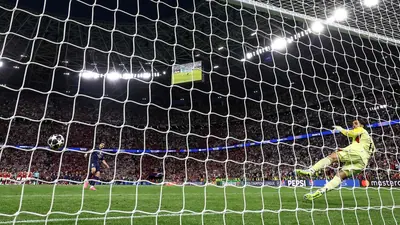
As the FIFA World Cup enters its knockout stages, every match must produce a winner. Unlike the group stage, where teams can share points after a draw, elimination rounds require one team to advance and the other to go home.
That raises a common question among fans: what happens if a World Cup match is tied after the regular 90 minutes?
The answer involves a carefully structured process that includes extra time and, if necessary, a penalty shootout. These rules have produced some of the most dramatic moments in football history and continue to play a crucial role in deciding World Cup champions.
Can Knockout Matches End in a Draw?
No. Once the FIFA World Cup reaches the knockout rounds, matches cannot end in a draw.
Whether it’s the Round of 32, Round of 16, quarterfinals, semifinals, or the final itself, a winner must be determined. If the score remains level after regulation time, additional procedures come into effect.
This format ensures that one team progresses to the next round while the other is eliminated from the tournament.
What Is Regulation Time?
A standard football match consists of 90 minutes divided into two halves of 45 minutes each.
Referees can add stoppage time at the end of both halves to compensate for interruptions caused by injuries, substitutions, VAR reviews, goal celebrations, and other delays.
If the score is tied after the completion of regulation time and stoppage time in a knockout match, the contest moves to extra time.
How Does Extra Time Work?
Extra time consists of 30 additional minutes divided into two 15-minute halves.
Teams are given a short break before extra time begins, as well as a brief interval between the two extra-time periods.
Just like regular time, referees may add stoppage time at the end of each 15-minute period if there have been significant interruptions.
During extra time, teams continue playing under the same rules as normal football. The objective remains simple: score more goals than the opponent before the additional 30 minutes expire.
What Happens If Teams Are Still Tied After Extra Time?
If the score remains level after the full 120 minutes, including extra time, the match proceeds to a penalty shootout.
This is often regarded as one of the most nerve-wracking situations in sport, with players and goalkeepers facing immense pressure.
Penalty shootouts are designed to provide a clear winner when neither team can be separated through open play.
How Do Penalty Shootouts Work?
Before the shootout begins, the referee conducts a coin toss to determine which team takes the first penalty.
Each team then selects five players to take penalties.
The penalties are taken alternately, with one player facing only the opposing goalkeeper from the penalty spot.
After both teams have taken five penalties, the team with the most successful conversions wins the match.
However, a shootout can end before all five kicks are taken if one team gains an insurmountable lead.
What Is Sudden Death in Penalty Shootouts?
If both teams remain tied after their initial five penalties, the shootout enters sudden death.
In this phase, teams continue taking one penalty each per round.
If one team scores and the other misses during the same round, the scoring team immediately wins the match.
Sudden death continues for as many rounds as necessary until a winner emerges.
Some of the longest and most memorable penalty shootouts in football history have been decided during this stage.
Why Are Penalty Shootouts So Dramatic?
Penalty shootouts create unique pressure because every kick can determine a nation’s fate.
Players must remain calm despite millions of viewers watching worldwide, while goalkeepers attempt to anticipate the direction of the shot.
The psychological battle often becomes just as important as technical skill.
Many football legends have experienced both heartbreak and glory from the penalty spot during World Cup tournaments.
Famous World Cup Finals Decided on Penalties
Several FIFA World Cup finals have required penalty shootouts to determine the champion.
The most recent example came in 2022, when Argentina defeated France in one of the greatest finals ever played.
After an epic contest that finished level following extra time, Argentina prevailed in the shootout to secure a third World Cup title and complete Lionel Messi’s long-awaited quest for football’s biggest prize.
Penalty shootouts have repeatedly produced unforgettable moments and remain one of the defining features of knockout football.
Key FIFA World Cup Knockout Rules at a Glance
- Matches begin with 90 minutes of regulation time.
- Stoppage time is added at the end of each half.
- If scores are level, 30 minutes of extra time are played.
- Extra time consists of two 15-minute halves.
- If still tied, the match proceeds to a penalty shootout.
- Each team initially takes five penalties.
- If tied after five kicks each, sudden death penalties decide the winner.
Final Thoughts
The FIFA World Cup knockout stage is designed to guarantee a winner in every match. When teams cannot be separated after 90 minutes, extra time offers one final chance to settle matters through open play. If the deadlock remains, penalty shootouts provide the ultimate test of composure, skill, and nerve.
From legendary saves to title-winning spot-kicks, these rules have helped create some of the most iconic moments in football history and continue to shape the drama of every World Cup knockout round.
For breaking news and live news updates, like us on Facebook or follow us on Twitter and Instagram. Read more on Latest Sports on thefoxdaily.com.






COMMENTS 0