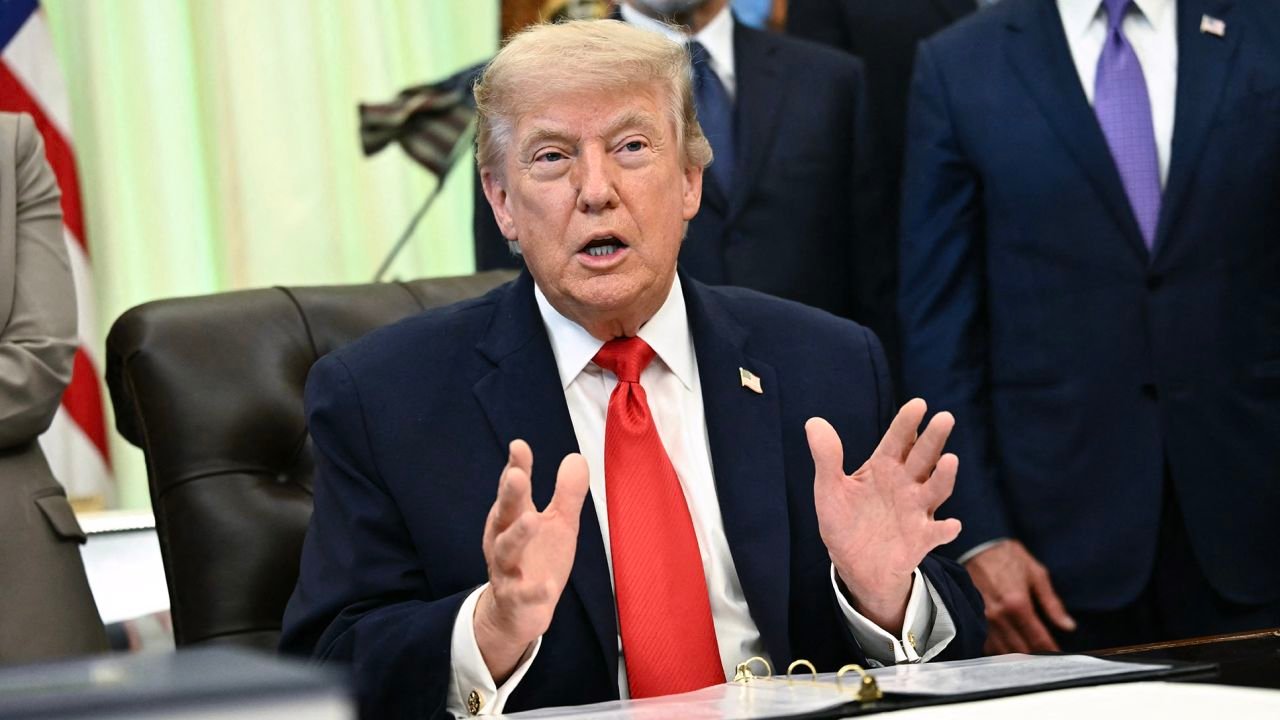
The 2026 FIFA World Cup has officially begun on North American soil, marking one of the most significant sporting events in modern history. Yet ahead of the United States men’s national team’s opening match against Paraguay, attention has shifted from the field to the White House after confirmation that President Donald Trump will not attend the team’s first game.
While presidential attendance at major sporting events often generates headlines, Trump’s absence from the United States’ opening World Cup fixture has sparked debate because host-nation leaders are typically expected to be visible during landmark international tournaments. However, the situation is more nuanced than it initially appears.
Rather than focusing solely on one missed match, the story reveals how modern World Cups have become intersections of sports, diplomacy, politics, national branding, and global influence.
Why Donald Trump Is Not Attending the USA vs Paraguay Match
According to officials connected with the U.S. World Cup task force, President Trump will remain in Washington due to a packed schedule that includes preparations for UFC Freedom 250, an event scheduled at the White House on June 14, coinciding with his 80th birthday.
Although many expected the president to attend the United States’ opening match, organizers indicated that his schedule made participation difficult. Officials have also emphasized that Trump is expected to remain engaged with the tournament throughout its duration.
The decision means the United States delegation at the match will instead be represented by senior government officials, demonstrating continued federal support for the tournament despite the president’s absence.
Is It Unusual for a Host Nation Leader to Miss the Opening Match?
Historically, heads of state frequently attend opening matches involving their national teams, especially when their country is hosting a major sporting event. Such appearances often symbolize national unity and provide an opportunity to showcase the host nation on a global stage.
However, missing an opening match is not without precedent.
In the same tournament, Mexico’s President Claudia Sheinbaum did not attend Mexico’s opening victory over South Africa. Her absence illustrates that political responsibilities and scheduling conflicts can sometimes outweigh ceremonial appearances.
As international tournaments grow larger and more complex, attendance by political leaders increasingly depends on broader national priorities rather than tradition alone.
The 2026 FIFA World Cup Is Unlike Any Previous Tournament
The significance of this story becomes clearer when viewed through the broader lens of the 2026 FIFA World Cup.
This edition is already considered historic for several reasons:
- It is the first World Cup jointly hosted by the United States, Canada, and Mexico.
- The tournament features an expanded format with 48 teams.
- It is expected to attract record global audiences.
- Host nations are projected to receive significant economic benefits.
- The competition serves as a major diplomatic and cultural platform.
Because of these factors, every decision involving political leaders inevitably attracts attention beyond the sports world.
The Growing Relationship Between Politics and Global Sports
Major sporting events have long served purposes that extend beyond competition.
Governments frequently use international tournaments to promote tourism, strengthen diplomatic relationships, and enhance national image. Sporting events create unique opportunities to communicate values, showcase infrastructure, and attract global investment.
The FIFA World Cup, in particular, operates as one of the world’s most powerful soft-power platforms. Billions of viewers watch matches, ceremonies, and related coverage, making the tournament a valuable opportunity for nations to shape international perceptions.
This explains why attendance by presidents, prime ministers, and monarchs often receives almost as much media attention as the matches themselves.
The Economic Stakes Behind the 2026 World Cup
The World Cup’s importance extends far beyond symbolic appearances.
Economic analysts expect the tournament to generate billions of dollars in direct and indirect economic activity across host cities. Tourism, hospitality, transportation, retail spending, and infrastructure development all benefit from the influx of visitors.
| World Cup Impact Area | Expected Benefits |
|---|---|
| Tourism | Millions of international visitors |
| Hospitality | Increased hotel and restaurant revenue |
| Transportation | Growth in air and local travel demand |
| Media Rights | Record global broadcasting audiences |
| Local Business | Higher consumer spending during the tournament |
The United States, already one of the world’s largest sports markets, views the tournament as an opportunity to further strengthen soccer’s position within the country’s sporting landscape.
Can the World Cup Boost Soccer’s Popularity in America?
One of the most fascinating aspects of the 2026 tournament is its potential impact on soccer’s long-term growth in the United States.
While the sport has expanded dramatically over the past two decades, it still competes with American football, basketball, baseball, and other major sports for attention.
The World Cup offers a unique opportunity to accelerate that growth.
Past tournaments have shown that hosting major events often leads to increased youth participation, stronger professional leagues, improved infrastructure, and greater commercial investment.
For American soccer, the tournament may represent a pivotal moment capable of influencing the sport’s trajectory for years to come.
The United States Team Faces High Expectations
Regardless of political storylines, the primary focus remains the U.S. men’s national team.
Playing a World Cup on home soil creates both opportunity and pressure. The United States has not hosted a World Cup since 1994, making this a rare chance for players to perform in front of home crowds during football’s biggest event.
History suggests host nations often receive a competitive boost from familiar conditions, strong fan support, and reduced travel demands.
The opening match against Paraguay therefore carries significant importance. A positive result could generate momentum and energize supporters throughout the tournament.
How Presidential Attendance Has Evolved at Sporting Events
Modern presidents face a different environment than leaders of previous generations.
Today’s political schedules are increasingly demanding, while security requirements surrounding major public appearances have become more complex. As a result, attendance decisions often involve logistical considerations that extend far beyond personal preference.
At the same time, social media and 24-hour news cycles amplify every public appearance—or absence—creating narratives that can overshadow the sporting event itself.
This reality explains why attendance at major sporting events is now frequently analyzed through political, cultural, and strategic lenses.
What Trump’s Absence Means for the Tournament
From a practical perspective, Trump’s absence from the opening match is unlikely to affect tournament operations or fan enthusiasm.
The World Cup remains one of the most anticipated sporting events in the world, and attendance figures are expected to remain exceptionally strong regardless of political participation.
However, the discussion highlights the extraordinary scale of modern World Cups. Few events possess the ability to generate simultaneous conversations about sports, economics, diplomacy, politics, tourism, and culture.
That broader influence is precisely what makes the World Cup unique among global sporting competitions.
A Comparison With the 1994 FIFA World Cup
| 1994 World Cup | 2026 World Cup |
|---|---|
| Hosted solely by the United States | Hosted by the United States, Canada, and Mexico |
| 24 teams | 48 teams |
| Limited digital engagement | Global digital-first audience |
| Traditional television dominance | Multi-platform streaming ecosystem |
| Emerging U.S. soccer market | Established and rapidly growing soccer ecosystem |
The differences illustrate how dramatically both the sport and the tournament have evolved over the past three decades.
Looking Ahead: Will Trump Appear Later in the Tournament?
Officials have not ruled out future appearances by President Trump during the World Cup. Given the tournament’s month-long schedule and national significance, there remain numerous opportunities for presidential engagement.
Major knockout matches, diplomatic events, and ceremonial occasions could all provide future opportunities for involvement.
As tournament organizers have suggested, the unpredictability surrounding future appearances remains part of the broader story.
Conclusion
President Donald Trump’s decision not to attend the United States’ World Cup opener against Paraguay may have generated headlines, but the larger story lies in the growing influence of the FIFA World Cup itself. The tournament has evolved into far more than a sporting competition, becoming a global platform where sports, politics, economics, and culture intersect.
While presidential attendance often attracts attention, the success of the 2026 FIFA World Cup will ultimately be determined by the action on the pitch, the experiences of millions of fans, and the lasting impact the tournament leaves on soccer across North America.
As the competition unfolds, the focus will gradually shift from political schedules to sporting drama—exactly where the world’s biggest football tournament thrives.
For breaking news and live news updates, like us on Facebook or follow us on Twitter and Instagram. Read more on Latest Sports on thefoxdaily.com.






COMMENTS 0