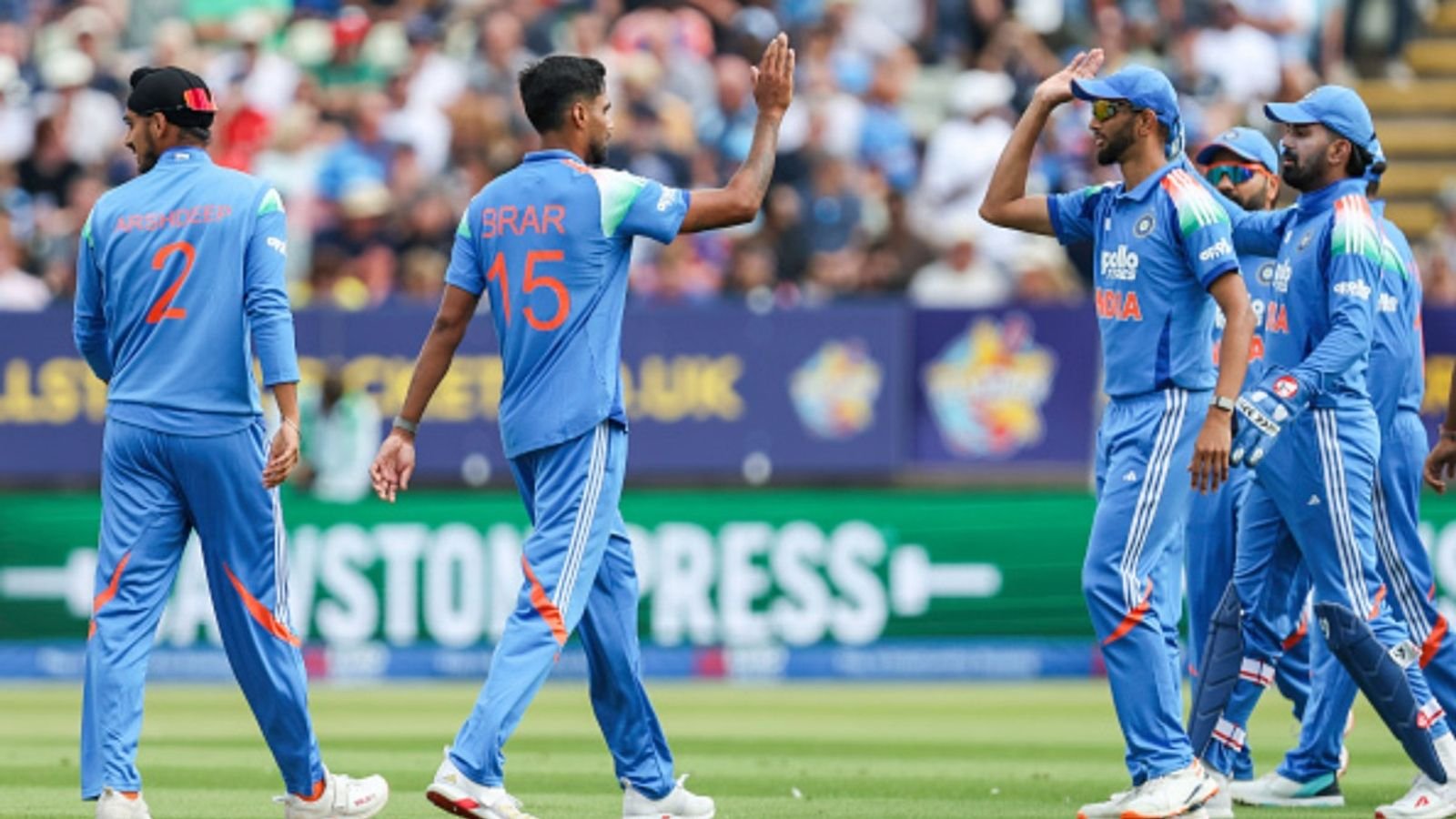
Just as India prepares for a crucial second ODI against England, an unexpected disciplinary development has brought young fast bowler Gurnoor Brar into the spotlight. The International Cricket Council (ICC) has sanctioned the left-arm pacer for breaching the ICC Code of Conduct during the opening ODI, handing him an official reprimand and one demerit point.
At first glance, the punishment may appear insignificant. After all, Brar remains available for selection and faces no suspension. However, the episode offers a deeper look into how international cricket governs player behaviour, why the ICC takes such incidents seriously, and what this means for one of India’s emerging pace-bowling prospects.
With India leading the ODI series against England and Brar attempting to establish himself at the international level, the timing of the sanction has generated significant discussion among fans and analysts alike.
Why Was Gurnoor Brar Penalised by the ICC?
The ICC found Gurnoor Brar guilty of breaching Article 2.9 of the ICC Code of Conduct, which relates to throwing a ball at or near a player in an inappropriate or dangerous manner during an international match.
The incident occurred during England’s innings in the first ODI. After fielding the ball, Brar threw it towards the batter. Match officials determined that the action crossed the acceptable threshold of on-field conduct and warranted disciplinary action.
Importantly, the ICC did not classify the incident as severe misconduct. Instead, it was treated as a Level 1 offence, the least serious category under the Code of Conduct.
Brar admitted the offence and accepted the punishment proposed by the match referee, avoiding the need for a formal disciplinary hearing.
What Is a Level 1 ICC Code of Conduct Offence?
Many cricket fans hear terms such as “Level 1 breach” or “demerit point” without fully understanding their significance.
The ICC’s disciplinary framework is designed to address player behaviour while ensuring consistency across international cricket.
| Offence Level | Severity | Typical Punishment |
|---|---|---|
| Level 1 | Minor misconduct | Reprimand, fine, 1-2 demerit points |
| Level 2 | Moderate misconduct | Higher fines and suspension points |
| Level 3 | Serious misconduct | Match suspensions likely |
| Level 4 | Most serious offences | Extended bans and major sanctions |
Since Brar’s case falls under Level 1, it represents a relatively minor disciplinary issue. Nevertheless, the ICC records every offence, and repeated violations can accumulate into more significant consequences.
Understanding the Demerit Point System
The demerit point system is one of the ICC’s most important disciplinary tools.
Instead of immediately suspending players for minor incidents, the ICC tracks offences over a rolling 24-month period. When players accumulate too many demerit points, those points can convert into suspension points, leading to bans.
In Brar’s case, the single demerit point is his first recorded offence during the relevant period. Therefore, there is no immediate threat to his availability.
However, the sanction serves as a formal warning. Any future disciplinary breaches could increase scrutiny and accelerate the path toward suspension thresholds.
Why the ICC Is Increasingly Strict About Player Conduct
Modern cricket operates under far greater scrutiny than ever before. High-definition broadcasts, multiple camera angles, ball-tracking technology, stump microphones, and social media mean every player action is instantly visible worldwide.
As a result, the ICC has become more proactive in addressing behaviour that may create safety concerns or undermine the spirit of the game.
Throwing a ball near a batter, even without causing injury, can be viewed as potentially dangerous. The governing body wants to discourage actions that could escalate tensions or create avoidable risks.
This approach reflects a broader trend across international sport, where governing bodies increasingly prioritise player safety and professional conduct.
The Bigger Challenge for Young Fast Bowlers
Fast bowlers traditionally walk a delicate line between aggression and discipline.
The greatest pacers in cricket history—from Glenn McGrath and Dale Steyn to Mitchell Starc and Jasprit Bumrah—have built their reputations on intensity, competitiveness, and relentless pressure.
Yet modern cricket demands that aggression remains controlled.
Young bowlers entering international cricket often face a learning curve. They must balance emotional intensity with the behavioural standards expected at the highest level.
For Brar, this incident may ultimately become an important developmental lesson rather than a setback.
Many elite fast bowlers experienced disciplinary issues early in their careers before evolving into more mature competitors.
How Important Is Gurnoor Brar to India’s ODI Plans?
The sanction arrives at a time when Brar’s cricketing reputation is actually rising.
Despite being relatively inexperienced at the international level, the left-arm seamer has already attracted attention because of his ability to generate bounce, movement, and variation.
India’s pace-bowling ecosystem remains highly competitive, but selectors are constantly searching for quality left-arm options capable of providing variety alongside right-arm stars.
Brar fits that profile.
His performance in the first ODI against England demonstrated why management continues to invest in him. By dismissing key England batters Ben Duckett and Jacob Bethell, he delivered exactly the kind of early breakthroughs captains value in limited-overs cricket.
Why Left-Arm Pacers Remain Valuable in Modern Cricket
One reason Brar’s progress is closely monitored is the unique tactical advantage left-arm seamers provide.
International teams frequently seek bowling attacks with contrasting angles because they create different challenges for batters.
- Different release points disrupt batting rhythm.
- Natural angles create uncertainty outside off stump.
- Powerplay wickets become more achievable.
- Matchups against specific batting line-ups improve.
- Variation increases overall bowling flexibility.
India’s success over the years has often been enhanced by quality left-arm pacers who complemented the rest of the attack.
Brar’s emergence offers another potential option in that tradition.
India vs England ODI Series: Why the Timing Matters
The disciplinary announcement comes at a critical moment in the series.
India currently hold a 1-0 lead after securing a convincing victory in the opening ODI. Another win would effectively seal the series and strengthen India’s momentum ahead of future international assignments.
Because Brar remains available for selection, the sanction is unlikely to disrupt India’s plans significantly.
However, the attention surrounding the incident inevitably creates additional pressure on the young bowler.
How he responds could reveal important aspects of his temperament and long-term potential.
What India’s Team Management Will Be Watching
For coaches and selectors, the incident is probably less concerning than Brar’s reaction to it.
International cricket is filled with moments that test a player’s character:
- Poor form
- Media scrutiny
- Disciplinary investigations
- Selection uncertainty
- High-pressure matches
The most successful cricketers are often those who learn quickly and move forward without allowing distractions to affect performance.
If Brar responds with disciplined bowling and continued wicket-taking ability, the ICC sanction will quickly become a footnote rather than a defining storyline.
Comparing This Incident to Other ICC Disciplinary Cases
One reason the punishment has generated discussion is because ICC disciplinary actions often vary dramatically in severity.
Some incidents involve verbal altercations, dissent, or excessive celebrations. Others concern dangerous conduct or breaches of playing conditions.
Compared to many headline-grabbing controversies seen in international cricket over the years, Brar’s offence falls firmly into the minor category.
The official reprimand and single demerit point reflect that assessment.
There is no suggestion of malicious intent, nor any indication that the incident escalated beyond the isolated moment identified by match officials.
The Real Story: Cricket’s Professional Standards Are Rising
The most important takeaway may not be the punishment itself.
Instead, the incident illustrates how professional cricket continues evolving.
Actions that might once have been dismissed as part of the game’s natural aggression are increasingly evaluated through the lens of player safety, professionalism, and global accountability.
That evolution places greater responsibility on players while helping maintain consistent standards across international competitions.
For emerging cricketers like Brar, understanding those expectations is now as important as mastering swing, pace, or yorkers.
What Happens Next for Gurnoor Brar?
The immediate answer is straightforward: he remains available and is expected to continue competing for a place in India’s ODI side.
His disciplinary record now contains one demerit point, but the punishment carries no suspension.
The focus will quickly shift back to cricketing matters, particularly his ability to contribute in the remaining matches of the England series.
If he continues delivering wickets and improving his consistency, discussions about his bowling are likely to replace conversations about the ICC sanction.
Conclusion: Minor Punishment, Valuable Lesson
The ICC’s sanction against Gurnoor Brar is ultimately a relatively minor disciplinary episode rather than a major controversy.
The young Indian pacer received an official reprimand and one demerit point after breaching Article 2.9 of the ICC Code of Conduct during the first ODI against England. While the incident has attracted attention because of its timing, it does not threaten his immediate international future.
More importantly, it offers a reminder of the standards expected in modern international cricket. For a promising fast bowler still establishing himself on the global stage, the episode can serve as a valuable learning experience.
As India pursue a series victory against England, Brar now has the perfect opportunity to shift the narrative back where he would prefer it to be—on his bowling performances rather than disciplinary headlines. If he does, this incident may eventually be remembered not as a setback, but as a small lesson in an otherwise promising international journey.
For breaking news and live news updates, like us on Facebook or follow us on Twitter and Instagram. Read more on Latest Sports on thefoxdaily.com.






COMMENTS 0