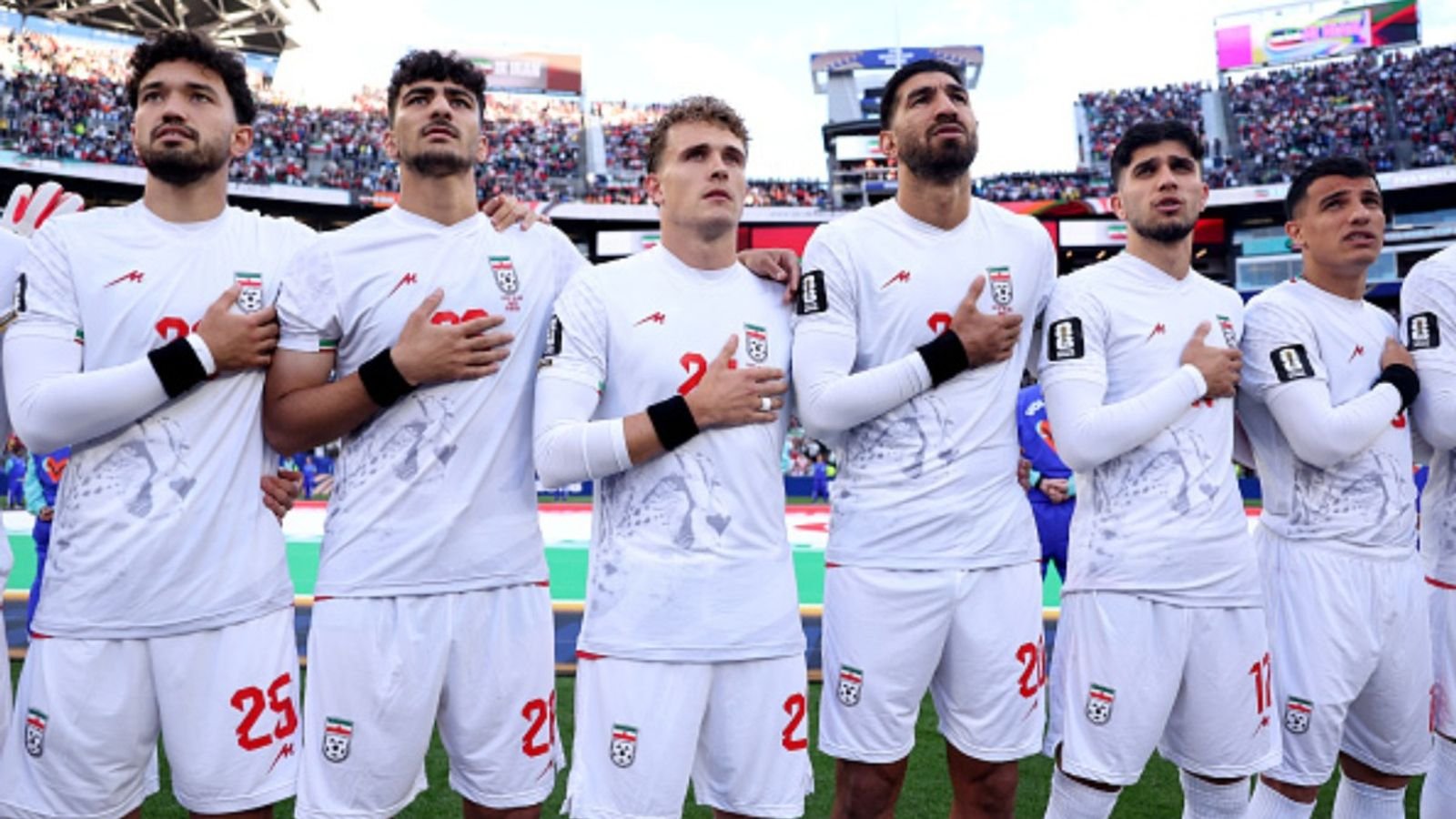
The moment before the Iran vs Egypt FIFA World Cup 2026 match attracted worldwide attention when sections of Iranian supporters booed their own national anthem at Seattle’s Lumen Field. The reaction was not aimed at the players representing Iran on the pitch, but was widely understood as a political protest connected to opposition toward Iran’s current ruling system.
During the national anthem ceremony, some Iranian fans turned their backs, while others displayed Iran’s pre-revolution flag. The unusual scene happened before a high-pressure World Cup group-stage match and quickly became one of the most discussed off-field moments of the tournament.
The incident reflected a complicated relationship between sport, national identity, and politics. For many Iranian supporters, international football has become a platform where they express views that go beyond the game itself.
What happened before Iran vs Egypt at FIFA World Cup 2026?
Before kickoff between Iran and Egypt, the traditional national anthem ceremony took place at Lumen Field. Instead of a unified response from all supporters, sections of Iranian fans reacted with boos and protests.
Some supporters chose not to sing along, some turned away from the field, and some displayed the pre-revolution Iranian flag, which was used before the 1979 Iranian Revolution changed the country’s political system.
The match had additional significance because organisers promoted it as the “Pride Match”, creating a global spotlight around the event. The combination of a major football tournament and visible fan demonstrations made the moment especially notable.
| Question | Explanation |
|---|---|
| Who protested? | Sections of Iranian supporters attending the World Cup match |
| What happened? | Fans booed the anthem, turned their backs, and displayed alternative national symbols |
| When did it happen? | Before Iran’s FIFA World Cup 2026 group-stage match against Egypt |
| Where did it happen? | Lumen Field, Seattle |
| Why did fans do it? | As a political expression against Iran’s current ruling establishment |
| How did it affect the match? | The protest created global discussion while the game itself ended in a draw |
Why did Iranian fans boo their own national anthem?
The anthem protest was widely interpreted as a symbolic political statement. For some Iranian supporters, the national anthem represents the Islamic Republic of Iran’s government structure rather than their personal feelings toward the country itself.
These fans have previously used sporting events as opportunities to express dissatisfaction with Iran’s political leadership. Football matches, especially those watched globally during the World Cup, provide a rare international stage where messages can reach audiences around the world.
The distinction is important: many protesters separate their feelings about the Iranian national team from their criticism of the government. Supporting the players and challenging political authorities are viewed by some fans as two different things.
The history behind Iran’s football and political protests
Iran has a long history of football being connected with national identity and social issues. The national team carries enormous emotional importance because football is one of the country’s most popular sports.
However, major international tournaments have also become moments when political tensions become visible.
In recent years, Iranian athletes and fans have faced global attention over issues involving personal freedoms, government policies, and social movements. As a result, football stadiums have sometimes become places where supporters communicate messages that extend beyond sport.
The World Cup provides an especially powerful stage because millions of people worldwide watch these moments.
Why the pre-revolution flag appeared in the stadium
The display of Iran’s pre-revolution flag was another major part of the protest. The symbol is associated with Iran before the 1979 revolution, when the country’s political system changed dramatically.
For some supporters, displaying the old flag represents opposition to the current government and nostalgia for a different national identity. For others, it remains a controversial symbol because of its historical and political associations.
The appearance of the flag during a World Cup match highlighted the broader debate over identity, history, and representation among Iranian communities worldwide.
Iran fans and World Cup restrictions
The presence of political symbols inside international sporting venues can create challenges for organisers. Reports surrounding the tournament noted discussions and restrictions related to certain flags and political displays involving Iranian supporters.
Despite these limitations, some fans still found ways to communicate their message through actions such as turning their backs and vocal reactions during the anthem.
This shows how sporting protests are often not limited to banners or signs. Gestures, silence, and crowd reactions can also become powerful forms of expression.
Iran’s FIFA World Cup 2026 campaign: What happened on the pitch?
While the anthem controversy dominated headlines before the match, Iran’s football situation remained equally important. Their clash against Egypt ended in a draw after a dramatic finish.
Iran believed they had secured a late winning goal, but the effort was ruled out, preventing them from collecting all three points.
The result left Iran’s qualification hopes uncertain. Under the expanded 48-team World Cup format, teams finishing among the best third-placed sides can still advance to the Round of 32.
Iran’s tournament future therefore depended not only on their own performance but also on results from other groups.
Football, politics, and the World Cup: Why this moment matters
The Iranian anthem protest represents a larger pattern seen throughout sports history: athletes and supporters often use major events to highlight social and political issues.
The Olympics, World Cups, and other global competitions have repeatedly provided platforms where identity and politics intersect.
The unique power of football comes from its global reach. A few seconds before kickoff can sometimes generate as much international discussion as 90 minutes of football.
World Cup moments are not always defined only by goals and results. Sometimes the most memorable scenes happen before the first whistle.
Comparison: Traditional football protest vs modern World Cup activism
| Aspect | Traditional Sports Protests | Modern World Cup Protests |
|---|---|---|
| Main purpose | Raise awareness about an issue | Combine sport with global messaging |
| Methods | Banners, demonstrations | Social media, gestures, symbolic actions |
| Audience | Mostly stadium spectators | Global television and online audiences |
| Impact | Local discussion | International debate |
The wider impact on Iranian football
The anthem incident also raises questions about the role of national teams in politically divided societies. Players often find themselves representing an entire nation while supporters may have different views about what that representation means.
For Iranian footballers, the challenge is balancing sporting responsibility with the expectations and emotions of millions of supporters.
International tournaments can amplify these tensions because every action receives global attention.
Future outlook: Will football remain a platform for political expression?
As global sporting events become more connected through television and social media, moments like the Iranian anthem protest are likely to continue receiving attention.
Fans increasingly view football as more than entertainment. It can represent culture, identity, social issues, and national conversations.
The Iran vs Egypt anthem controversy will likely be remembered not only as a World Cup moment but also as an example of how football reflects wider realities beyond the stadium.
Conclusion
The booing of Iran’s national anthem before the FIFA World Cup 2026 match against Egypt was a symbolic protest by sections of Iranian supporters expressing political dissatisfaction.
The reaction was not focused on the players themselves but on what some fans believe the anthem represents. The appearance of pre-revolution flags and the decision by supporters to turn away showed how football can become a powerful stage for social and political expression.
While Iran’s qualification hopes remained uncertain after the draw with Egypt, the biggest conversation surrounding the match happened before the football began — proving once again that the World Cup is about much more than what happens on the pitch.
For breaking news and live news updates, like us on Facebook or follow us on Twitter and Instagram. Read more on Latest Sports on thefoxdaily.com.






COMMENTS 0