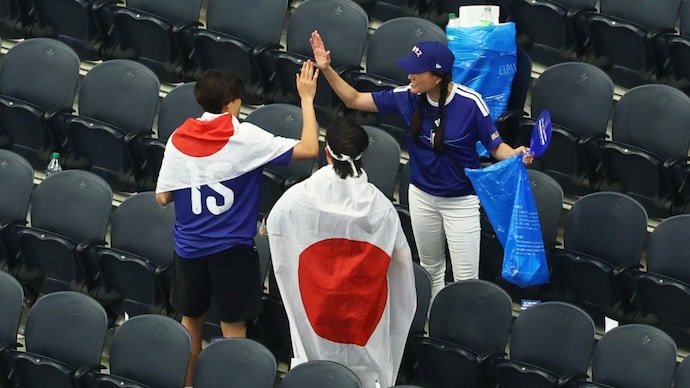
As football fans around the world celebrated Japan’s dramatic late comeback against the Netherlands in their FIFA World Cup 2026 opener, another familiar scene unfolded in the stands of Dallas Stadium.
Long after the final whistle, groups of Japanese supporters remained in their seats, carefully collecting bottles, food wrappers, and other litter into blue rubbish bags.
Videos and photographs of the gesture quickly spread across social media, earning praise from fans, players, and commentators worldwide.
For many observers, the images were inspiring. For Japanese supporters, however, it was simply business as usual.
The practice of cleaning stadiums after matches has become one of the most admired traditions in international football and reflects values that extend far beyond the sport itself.
Why Do Japan Fans Clean Stadiums?
The answer lies in Japan’s cultural emphasis on cleanliness, respect for shared spaces, and collective responsibility.
From an early age, many Japanese children participate in school cleaning routines known as osoji, where students help tidy classrooms, hallways, and common areas instead of relying solely on custodial staff.
This practice encourages the belief that maintaining public spaces is a shared duty rather than someone else’s job.
As a result, cleaning up after sporting events is viewed by many Japanese supporters as a natural extension of everyday life.
Rather than considering the gesture extraordinary, fans see it as a simple act of courtesy toward stadium staff, fellow spectators, and the host city.
A Tradition That Predates Social Media
Although the practice gained worldwide attention during recent World Cups, Japan’s supporters have been cleaning stadiums for decades.
The tradition was visible at previous FIFA World Cups, continental tournaments, and international sporting events long before smartphones and viral videos amplified its reach.
However, it became a global phenomenon during the FIFA World Cup 2022 in Qatar.
After Japan stunned Germany with a memorable comeback victory, fans celebrated briefly before staying behind to collect rubbish from the stands.
Even more remarkably, Japanese supporters were spotted cleaning sections of stadiums during matches that did not involve their national team.
That consistency demonstrated that the gesture was not about publicity or recognition but a deeply ingrained cultural habit.
| Japan Fans’ Stadium-Cleaning Tradition | Key Details |
|---|---|
| Core Values | Respect, responsibility, cleanliness, community |
| Cultural Influence | School cleaning practices (Osoji) |
| Global Recognition | FIFA World Cup 2022 in Qatar |
| Continued At | FIFA World Cup 2026 in the United States |
| Purpose | Leave shared spaces cleaner than they were found |
What Happened in Japan vs Netherlands?
Japan opened their FIFA World Cup 2026 campaign with a resilient 2-2 draw against the Netherlands in Group F.
The Dutch twice took the lead through Virgil van Dijk and Crysencio Summerville, appearing to edge closer to victory on both occasions.
However, Japan’s determination once again came to the forefront.
The Samurai Blue responded each time, with Daichi Kamada scoring a dramatic late equaliser in the 88th minute to secure a valuable point.
The result highlighted Japan’s growing reputation as one of the tournament’s most resilient teams and boosted their hopes of progressing to the knockout stages.
Yet, despite the excitement on the pitch, it was the supporters’ actions after the match that generated some of the biggest headlines.
More Than a Gesture: What Japan Fans Teach the World
In an era where major sporting events often leave behind significant amounts of waste, Japan’s supporters offer a different perspective on fan culture.
Their actions challenge the idea that spectators are only responsible for enjoying the event itself.
Instead, they demonstrate that small individual efforts can create a positive collective impact.
Stadium staff frequently work long hours to prepare venues before and after matches. By cleaning up their sections, Japanese fans help reduce that burden while setting an example for others.
The gesture also highlights an important truth: respect for a sporting event extends beyond supporting a team or celebrating a result.
It includes respect for the venue, the host community, and fellow fans.
How Social Media Amplified the Tradition
Social media has played a major role in transforming Japan’s stadium-cleaning habit into a global symbol of sportsmanship.
Images and videos from tournaments are often shared millions of times within hours, inspiring conversations about fan behaviour and public responsibility.
Unlike many viral moments that disappear quickly, this tradition continues to resonate because it offers something positive and universally relatable.
Each new tournament introduces a fresh generation of fans to the story, ensuring the practice remains an enduring part of football culture.
At FIFA World Cup 2026, the images from Dallas once again reminded supporters that meaningful moments can happen long after the final whistle.
Could Other Fan Groups Follow the Example?
While cultural traditions differ around the world, Japan’s example shows that positive habits can transcend national boundaries.
Several fan groups from other countries have already adopted similar initiatives at recent international tournaments, proving that small actions can inspire wider change.
Cleaning a stadium section may seem insignificant in isolation, but when thousands of supporters participate, the impact becomes substantial.
As sustainability becomes an increasingly important topic in global sports, simple practices like these could play a meaningful role in reducing waste at major events.
Conclusion
Japan’s supporters once again demonstrated why they are regarded as some of the most respected fans in world football.
After witnessing their team’s dramatic 2-2 draw against the Netherlands, they stayed behind to clean Dallas Stadium—not for recognition, but because it reflects deeply held values of responsibility and respect.
The gesture has become a defining symbol of Japanese football culture and continues to inspire fans around the world.
In a tournament filled with spectacular goals and unforgettable moments, Japan’s supporters proved that sportsmanship is not limited to what happens on the pitch.
Sometimes, the most memorable acts come with a rubbish bag and a simple belief: leave every place better than you found it.
For breaking news and live news updates, like us on Facebook or follow us on Twitter and Instagram. Read more on Latest Sports on thefoxdaily.com.






COMMENTS 0