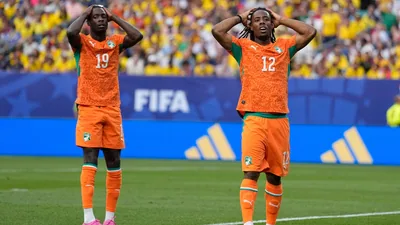
The 2026 FIFA World Cup has already produced dramatic results, emotional moments, and unforgettable performances. Yet one of the tournament’s most talked-about stories has emerged away from the pitch.
Ivory Coast striker Elye Wahi, who featured in his nation’s Group E opener against Ecuador in Philadelphia, is reportedly under investigation by French authorities over allegations linked to a Ligue 1 match played in May. While no charges have been filed and the player remains eligible to compete, the revelations have intensified discussions around spot-fixing, sports betting, and football’s ongoing battle to protect its integrity.
As Ivory Coast prepares for a crucial World Cup clash against Germany, the case serves as a reminder that off-field controversies can quickly overshadow even the world’s biggest sporting event.
Who Is Elye Wahi?
At just 23 years old, Elye Wahi has established himself as one of French football’s most promising attacking talents. Known for his pace, movement, and clinical finishing, the forward built his reputation in Ligue 1 before becoming an important figure for Ivory Coast’s national team.
His inclusion in Ivory Coast’s 2026 FIFA World Cup squad was viewed as a significant boost for a team aiming to make a deep run in the tournament. However, the emergence of an ongoing investigation has shifted attention away from his footballing abilities.
What Is the Investigation About?
French authorities are reportedly investigating whether Wahi deliberately received a yellow card during Nice’s Ligue 1 fixture against Metz on May 17, 2026.
The booking was significant because it was his fifth yellow card of the league season, automatically triggering a one-match suspension for the first leg of Nice’s relegation playoff against Saint-Etienne.
According to reports, Wahi was detained and questioned by authorities on May 29 as part of an investigation into allegations involving organized fraud, sports corruption, money laundering, and handling proceeds of crime.
After questioning, he was released without charges. The investigation remains active, and no conclusions have been reached regarding his involvement.
It is important to note that Wahi has not been found guilty of any wrongdoing. Under French law and international sporting regulations, he remains presumed innocent unless evidence proves otherwise.
What Is Spot-Fixing?
Unlike traditional match-fixing, where the final outcome of a game is manipulated, spot-fixing involves influencing specific incidents within a match.
These incidents can include:
- Yellow or red cards
- Corner kicks
- Penalty decisions
- Throw-ins
- Substitutions
- First fouls or offsides
Modern betting markets allow gamblers to place wagers on these seemingly minor events, creating opportunities for manipulation that may not directly affect the final score.
Because these actions often appear ordinary within the flow of a game, spot-fixing cases are notoriously difficult to detect and prove.
Why the Yellow Card Is Under Scrutiny
The timing of the booking has become a focal point of the investigation.
Wahi’s suspension ruled him out of the first leg of Nice’s relegation playoff against Saint-Etienne, a match that ended in a goalless draw.
He returned for the decisive second leg and scored twice in Nice’s 4-1 victory, helping the club retain its Ligue 1 status.
Investigators are reportedly examining whether the yellow card was part of a broader scheme involving betting markets.
However, football experts caution against making assumptions. Players frequently receive bookings for tactical reasons or as part of the natural intensity of competitive matches.
Determining intent requires far more than match footage. Authorities typically analyze betting patterns, communication records, financial transactions, and other evidence before reaching conclusions.
Timeline of Events
| Date | Key Development |
|---|---|
| May 17, 2026 | Wahi receives his fifth Ligue 1 yellow card during Nice’s match against Metz. |
| May 29, 2026 | French authorities detain and question Wahi as part of an ongoing investigation. |
| May 29, 2026 | He is released without charges following questioning. |
| May 30, 2026 | Wahi returns for the second leg against Saint-Etienne and scores twice in Nice’s 4-1 victory. |
| June 2026 | He joins Ivory Coast’s World Cup squad. |
| June 2026 | Wahi plays 55 minutes in Ivory Coast’s 1-0 win over Ecuador in Philadelphia. |
How Football Governing Bodies Tackle Match Manipulation
Football authorities have intensified efforts to combat match-fixing and spot-fixing over the past decade.
Organizations such as FIFA, UEFA, and national federations work closely with betting regulators, law enforcement agencies, and integrity monitoring companies to identify suspicious activity.
Advanced technology now tracks unusual betting patterns across global markets in real time, allowing investigators to flag potential irregularities more quickly than ever before.
Players, coaches, and officials are also required to complete integrity training programs that outline the risks and consequences associated with sports corruption.
Penalties for proven offenses can include lengthy suspensions, lifetime bans, financial penalties, and criminal prosecution.
Why This Story Matters Beyond One Player
The investigation highlights a broader challenge facing modern football.
The growth of online sports betting has transformed the economics of the game, creating new revenue streams while simultaneously increasing the risk of manipulation.
Even allegations of spot-fixing can damage public trust, raise questions about competitive integrity, and place immense pressure on players and teams.
For tournaments such as the FIFA World Cup, preserving credibility is essential. Fans must believe that every match, every tackle, and every result is determined solely by sporting merit.
The case also underscores the importance of due process. Allegations alone should not be treated as proof of guilt, particularly when investigations remain ongoing.
How Could This Affect Ivory Coast at the World Cup?
Ivory Coast opened their campaign with a hard-fought victory over Ecuador, but attention has now shifted toward Wahi’s status ahead of the team’s showdown with Germany.
From a sporting perspective, uncertainty surrounding a key player can create distractions within the squad.
Coaches often face difficult decisions in such situations, balancing team performance with the psychological impact of external scrutiny.
If Wahi continues to play, every aspect of his performance may attract increased attention from fans, media, and analysts.
However, unless governing bodies impose restrictions or new developments emerge, there is no regulatory basis preventing him from representing his country.
The Bigger Picture: Football’s Integrity Challenge in the Betting Era
The digital betting revolution has created unprecedented challenges for sports administrators.
With thousands of betting markets available during a single football match, opportunities for criminal exploitation have expanded significantly.
Experts believe the future of integrity enforcement will depend on greater collaboration between sports organizations, governments, betting operators, and technology companies.
Artificial intelligence, data analytics, and international information-sharing networks are expected to play a larger role in identifying suspicious behavior before it influences competitions.
As football continues to evolve, protecting the sport’s credibility will remain just as important as developing tactics, improving facilities, or expanding global audiences.
Conclusion
Elye Wahi’s reported involvement in an ongoing French investigation has added an unexpected layer of intrigue to the 2026 FIFA World Cup.
While the allegations surrounding his yellow card against Metz are serious, it is essential to remember that no charges have been filed and no findings of wrongdoing have been made.
The case shines a spotlight on the growing threat of spot-fixing in modern football and the increasing complexity of safeguarding sporting integrity in an era dominated by real-time betting markets.
For now, the focus remains on the investigation and the evidence it may uncover. Until then, Wahi remains eligible to play, Ivory Coast continues its World Cup journey, and football once again confronts one of its most persistent challenges: ensuring that every moment on the pitch remains authentic.
For breaking news and live news updates, like us on Facebook or follow us on Twitter and Instagram. Read more on Latest Sports on thefoxdaily.com.






COMMENTS 0