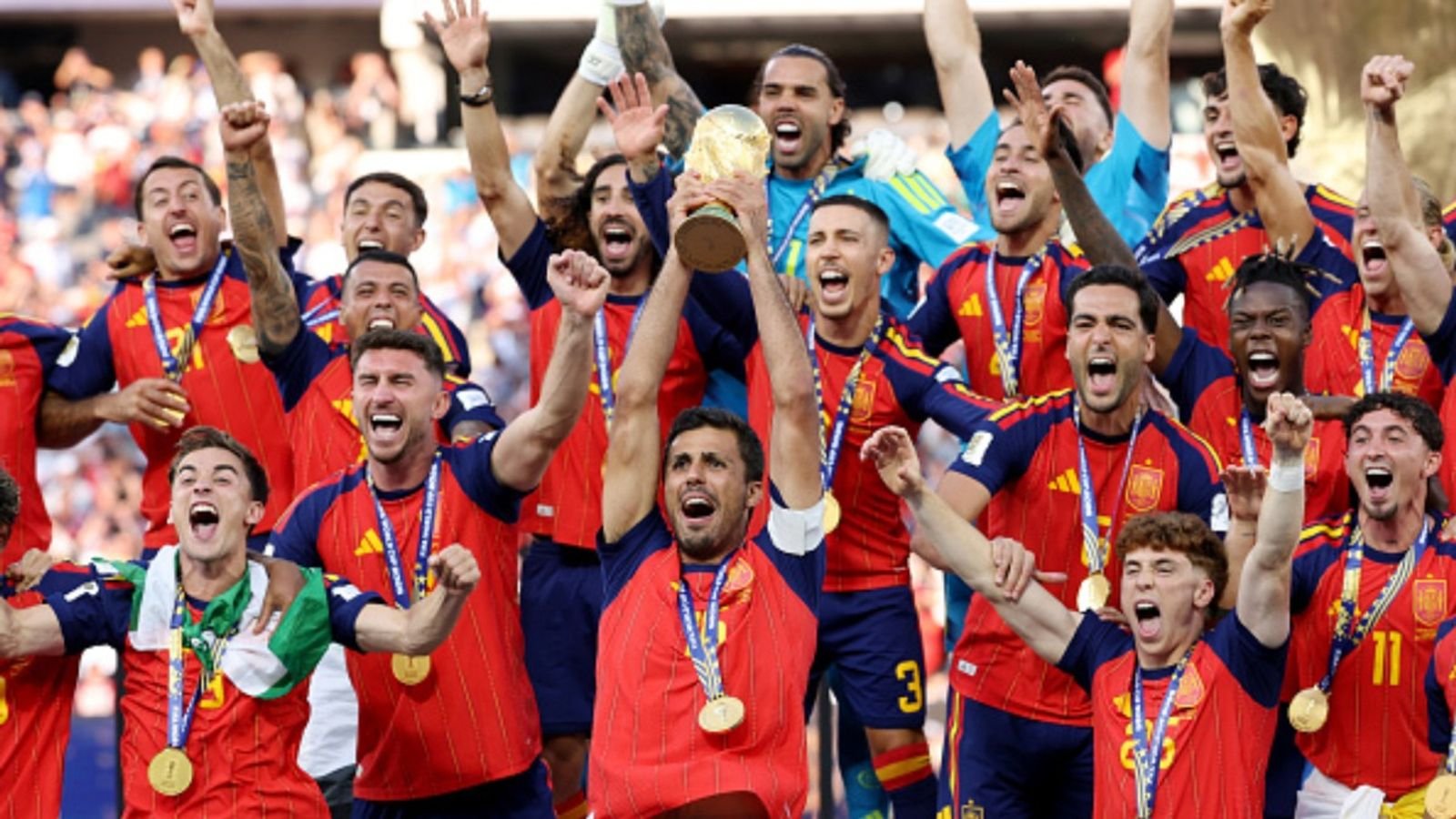
When Spain defeated argentina 1-0 in the FIFA World Cup 2026 final, most fans assumed they had become the undisputed kings of international football. In official terms, that assumption is absolutely correct. Spain are the reigning FIFA World Cup champions and currently sit at the summit of the international game.
However, football has a unique alternative championship known as the Unofficial Football World Championships (UFWC), and surprisingly, Spain’s World Cup triumph did not earn them that crown. Instead, the title belongs to Turkey, a nation that did not even make it past the group stage of the tournament.
This unusual situation has sparked curiosity among football fans worldwide. How can a World Cup-winning team fail to become football’s unofficial world champions? The answer lies in one of the sport’s most fascinating and long-running traditions.
What Is the Unofficial Football World Championships (UFWC)?
The Unofficial Football World Championships is an alternative method of determining the world’s best national football team. Unlike FIFA’s official competitions, the UFWC operates using a simple concept inspired by boxing and wrestling championship belts.
The idea is straightforward: if a team holds the title and loses an international match, the team that defeats them becomes the new champion.
This creates a continuous championship line that stretches back to the very first recognized international football match between England and Scotland in 1872.
Supporters of the concept often describe it as football’s version of a heavyweight title fight. Every match involving the reigning champions effectively becomes a title defense.
How Does the UFWC System Work?
The rules are remarkably simple compared to FIFA’s complex ranking systems and tournament structures.
- The reigning champion enters every international match as the title holder.
- If they win or draw, they retain the title.
- If they lose, the winning nation becomes the new champion.
- The process continues indefinitely.
- Only official senior international matches count.
This means the unofficial championship can change hands multiple times within a single year, unlike the FIFA World Cup, which is contested every four years.
The beauty of the system lies in its unpredictability. A relatively modest football nation can suddenly become the unofficial world champion if it defeats the title holder on the right day.
The Key Difference Between FIFA World Cup Champions and UFWC Champions
One of the biggest misconceptions surrounding the UFWC is that the FIFA World Cup winner automatically becomes the unofficial world champion.
That only happens if the World Cup winner defeats the reigning UFWC holder during the tournament.
The UFWC follows a continuous championship lineage independent of FIFA competitions. Therefore, winning the World Cup alone is not enough to inherit the title.
| Category | FIFA World Cup | UFWC |
|---|---|---|
| Determined By | World Cup Tournament | Continuous Match Results |
| Frequency | Every 4 Years | Changes Anytime |
| Official Status | Official FIFA Competition | Unofficial Historical Championship |
| Current Holder After World Cup 2026 | Spain | Turkey |
This distinction explains why Spain’s World Cup victory did not automatically grant them the unofficial title.
How Turkey Became Football’s Unofficial World Champions
The journey of the UFWC title during 2026 demonstrates exactly how unpredictable the system can be.
Before the FIFA World Cup, Australia had secured the unofficial championship after defeating Kosovo during an international fixture in March 2026.
During the World Cup group stage, the United States defeated Australia and inherited the title.
Later in the tournament, Turkey defeated the United States 3-2 in a dramatic group-stage encounter.
That single victory transferred the UFWC crown from the Americans to Turkey.
Although Turkey failed to advance deep into the tournament and endured a disappointing overall campaign, the championship belt effectively traveled home with them because they defeated the reigning holders.
As a result, Turkey remain football’s unofficial world champions despite Spain lifting the sport’s most prestigious trophy.
Why Spain Could Not Win the UFWC During the World Cup
For Spain to become the unofficial world champions, they would have needed to face and defeat the reigning UFWC holders after Turkey captured the title.
That opportunity never arose.
Because Turkey exited the tournament early and Spain followed a different path through the knockout rounds, the reigning unofficial champions were eliminated before Spain had a chance to challenge them.
Consequently, Spain completed a magnificent World Cup campaign without ever entering a match that carried the unofficial title.
The result is one of football’s most unusual paradoxes: the official world champions and the unofficial world champions are two completely different teams.
Why Football Fans Love the UFWC Concept
The popularity of the UFWC stems from its ability to create unique storylines outside traditional tournaments.
Fans enjoy tracking the title because it transforms ordinary international fixtures into championship contests.
A friendly match, Nations League game, or World Cup qualifier can suddenly carry significant historical importance if the unofficial title is on the line.
The concept also rewards consistency rather than tournament success alone. Every international match matters because any defeat can cost the reigning champions their crown.
This creates an alternative narrative running alongside FIFA’s official competitions.
Has the UFWC Ever Matched the FIFA World Cup Champion?
Yes. Throughout history, there have been several occasions when the FIFA World Cup winner also held the UFWC title.
When the reigning unofficial champions win the World Cup, both titles become unified.
However, because the UFWC changes hands so frequently, those periods often do not last long.
A single defeat in a subsequent international match can separate the two titles once again.
This dynamic nature is one reason the UFWC has remained a popular football curiosity for decades.
What Spain’s World Cup Victory Really Means
While the unofficial championship discussion is entertaining, it does not diminish Spain’s achievement in any way.
The FIFA World Cup remains the highest honor in international football. Winning it requires navigating a month-long tournament against the strongest teams in the world under immense pressure.
Spain’s triumph showcased tactical discipline, defensive solidity, squad depth, and resilience.
The team conceded only one goal throughout the tournament and defeated elite opposition on their way to lifting the trophy.
In practical terms, Spain are unquestionably the best national team in world football right now.
The UFWC title is best viewed as a fascinating historical side story rather than a rival championship.
A Unique Angle: Why the UFWC Reflects Football’s Unpredictability Better Than Rankings
One reason the UFWC continues to attract attention is that it highlights football’s unpredictability.
Official rankings rely on formulas, points systems, and tournament performances. The unofficial championship relies on something much simpler: winning the next match.
This creates opportunities for underdog nations to enjoy moments of global recognition.
In many ways, the UFWC captures one of football’s most beloved qualities—the possibility that any team can defeat any opponent on a given day.
Turkey’s current status as unofficial world champions is a perfect example of that principle.
Could Spain Become the Unofficial World Champions Soon?
Absolutely.
If Spain face Turkey in a future international fixture and win, they would inherit the UFWC title.
Alternatively, another nation could defeat Turkey first and become the new unofficial champions, creating a new championship lineage.
That uncertainty is what makes following the UFWC so enjoyable for dedicated football supporters.
Unlike the FIFA World Cup, which requires years of waiting, the unofficial championship can change hands at any moment.
Conclusion
Spain’s FIFA World Cup 2026 victory established them as the official kings of international football, but it did not make them the holders of the Unofficial Football World Championships.
The UFWC operates under a unique boxing-style system where the title changes hands whenever the reigning champions lose an international match. Through a chain of results involving Australia, the United States, and Turkey, the unofficial crown currently belongs to Turkey.
While the distinction may seem unusual, it highlights one of football’s most fascinating traditions and adds another layer of intrigue to the international game.
For Spain, however, there is little reason for concern. The FIFA World Cup trophy remains the ultimate prize in football, and after their outstanding 2026 campaign, La Roja are the team every nation will be chasing until the next World Cup cycle begins.
For breaking news and live news updates, like us on Facebook or follow us on Twitter and Instagram. Read more on Latest Sports on thefoxdaily.com.






COMMENTS 0