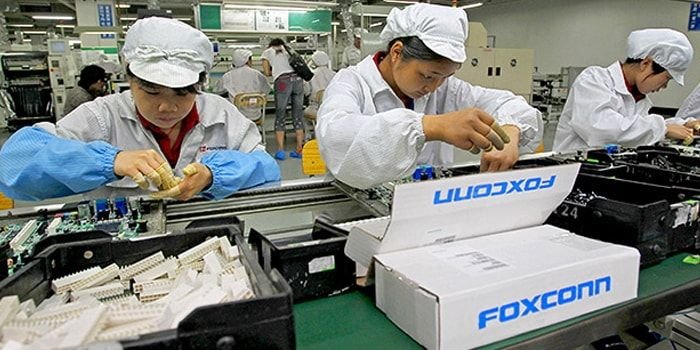
OpenAI’s rumoured first smartphone could be assembled by Foxconn subsidiary FIH Mobile, according to a new Chinese supply chain report. If the information proves accurate, the company behind ChatGPT could rely on a manufacturing partner already associated with Apple’s iPhone production. The device is reportedly being developed as an AI-first smartphone, potentially replacing the traditional app-focused experience with an AI agent capable of handling tasks across different services.
The latest report also suggests that Luxshare Precision, previously tipped as OpenAI’s exclusive design and manufacturing partner, may instead focus on supplying components. Other companies reportedly involved in the supply chain include Lingyi iTech and AAC Technologies.
The smartphone could arrive as early as late 2027, although a 2028 launch is also being discussed. Neither OpenAI nor Foxconn has officially confirmed the project, and important details such as the phone’s design, production volume and final hardware specifications remain unverified.
Foxconn Subsidiary FIH Mobile Reportedly Wins OpenAI Phone Assembly Order
According to a report from China’s Securities Times, citing unnamed supply chain sources, FIH Mobile has reportedly secured an order to assemble OpenAI’s first smartphone. FIH Mobile is a subsidiary of Foxconn, the Taiwanese manufacturing group widely associated with assembling Apple’s iPhones.
The reported development would give OpenAI access to an established electronics manufacturing network as it explores a move into consumer hardware. Building a smartphone involves more than developing software and selecting components. Manufacturers must coordinate display production, camera modules, batteries, processors, circuit boards, assembly, quality control and large-scale distribution.
Working with an experienced contract manufacturer could help OpenAI manage some of those challenges. However, the reported assembly arrangement does not establish that Apple is directly involved in the project. FIH Mobile and Foxconn are separate from Apple’s product-development operations, even though Foxconn has a longstanding manufacturing relationship with the iPhone maker.
The latest report does not disclose the size of the assembly order, the manufacturing locations, the expected production capacity or the precise stage of development. It also does not confirm whether FIH Mobile will handle the entire manufacturing process or work alongside other production partners.
What Happened to Luxshare’s Reported OpenAI Manufacturing Partnership?
The latest supply chain information represents a possible change from earlier reports about OpenAI’s hardware plans. In April 2026, analyst Ming-Chi Kuo identified Luxshare Precision as a potential exclusive design and manufacturing partner for OpenAI’s first smartphone.
However, the new reports suggest that Luxshare may not be responsible for final assembly. Instead, it could supply components alongside other companies involved in the device’s manufacturing ecosystem.
Cailian Press has separately reported that Luxshare Precision, Lingyi iTech and AAC Technologies could participate in the component supply chain. These companies have experience in areas of electronics manufacturing and component production, although their exact responsibilities for an OpenAI phone have not been officially established.
One explanation offered in the reports is that Luxshare may have faced capacity constraints that affected its ability to take on the assembly work. If FIH Mobile has secured the reported order, OpenAI could be using different suppliers for design support, components and final assembly rather than relying on a single manufacturing partner.
It is important to distinguish between these reported roles. A company supplying components is not necessarily responsible for designing the finished phone, while an assembly partner may manufacture a device using specifications developed by another organisation.
OpenAI Phone Could Launch in Late 2027 or 2028
The launch timeline remains uncertain. According to Cailian Press, OpenAI’s first smartphone could arrive in late 2027 or sometime in 2028. The latest supply chain report does not provide a confirmed production schedule or a commercial launch date.
Earlier expectations around OpenAI’s hardware ambitions have changed several times. This makes it difficult to establish whether the smartphone is already moving towards mass production or remains at an earlier development stage.
Kuo has previously discussed the possibility of OpenAI entering the smartphone market, including potential hardware specifications and manufacturing arrangements. However, analyst forecasts and supply chain reports should not be treated as official product announcements.
OpenAI itself has not publicly confirmed that it is developing a smartphone. Until the company announces a device, its release window, name, design and availability remain speculative.
Custom MediaTek Dimensity Chipset Could Power the OpenAI Phone
One of the more interesting details from earlier reports concerns the processor. Kuo has suggested that OpenAI’s phone could use a customised MediaTek Dimensity 9600 chipset, potentially manufactured using TSMC’s 2nm process.
The reported configuration could include dual neural processing units (NPUs) designed to handle Artificial Intelligence workloads. NPUs are specialised processors built to accelerate machine-learning operations, including tasks involving image recognition, speech processing and other AI features.
A customised processor could give OpenAI greater control over how its software interacts with the phone’s hardware. Instead of relying entirely on general-purpose smartphone processing, the company could optimise selected components for its AI assistant and agent-based features.
However, the reported Dimensity 9600 configuration has not been confirmed by MediaTek or OpenAI. The final chipset could also differ from the hardware described in early analyst reports.
Dimensity 9600 and the Reported Hardware Configuration
The leaked information has also mentioned LPDDR6 RAM and UFS 5.0 storage. These technologies could provide higher memory bandwidth and faster data access, depending on the final implementation.
The reported specifications can be summarised as follows:
| Component | Reported specification |
|---|---|
| Processor | Custom MediaTek Dimensity 9600 |
| Manufacturing process | TSMC 2nm process, as tipped |
| AI processing | Dual NPUs |
| RAM | LPDDR6 |
| Storage | UFS 5.0 |
| Expected launch | Late 2027 or 2028 |
| Assembly partner | FIH Mobile, reportedly |
These are preliminary claims rather than confirmed specifications. The final hardware configuration, including the processor model and manufacturing process, could change before the device reaches the market.
What About the Dimensity 9600 Chipset?
The chipset naming requires some caution. MediaTek’s Dimensity processor family includes different versions and configurations, and reports about future flagship chipsets can change as development progresses.
A reported custom Dimensity 9600 should not be confused with an officially announced commercial processor. OpenAI and MediaTek have not confirmed that the smartphone will use this specific chip, and the exact relationship between the reported standard and other possible variants remains unclear.
The most important question is how the final processor will balance local AI processing, battery consumption, heat generation and everyday smartphone performance. A phone designed around AI agents may need to handle several demanding operations without making the device uncomfortable to use or draining its battery too quickly.
OpenAI Phone Could Replace the Traditional App Grid With an AI Agent
The biggest potential difference between OpenAI’s rumoured smartphone and conventional devices may be its software experience. Instead of relying primarily on a traditional home screen filled with individual app icons, the phone is expected to centre around an AI agent that can carry out tasks across applications.
In a conventional smartphone experience, users usually open separate applications to complete different activities. Booking a service, organising a schedule, searching for information or sending a message can involve switching between multiple apps and repeating several steps.
An AI-first device could attempt to simplify that process. Users might describe what they want in natural language, allowing an assistant to interpret the request, identify the necessary services and coordinate actions across supported applications.
For example, a user could potentially ask an AI agent to organise a meeting, check availability, prepare a message and add the event to a calendar. Instead of manually navigating each application, the agent would coordinate the workflow where permissions and integrations allow it.
However, this type of functionality depends on more than a powerful AI model. The operating system would need secure access to applications, reliable permission controls, clear confirmation steps for important actions and safeguards against mistakes.
Why OpenAI May Be Interested in an AI-First Smartphone
OpenAI already operates ChatGPT across mobile applications, browsers and desktop environments. A dedicated smartphone could give the company more control over the relationship between its AI software and the underlying hardware.
That control could make it easier to integrate voice interactions, contextual assistance, notifications and background tasks into a single experience. It could also allow OpenAI to optimise how its AI services use microphones, cameras, sensors and local processing resources.
There are still significant challenges. Users expect Smartphones to provide dependable calling, messaging, photography, navigation, payments and access to established applications. An AI assistant would need to complement these functions rather than make basic tasks more complicated.
Privacy will also be a central issue. An agent that can access messages, contacts, location information and personal accounts would need strong permission management and transparent data-handling policies. Users would need to understand what information the device can access, when it is processed locally and when data is sent to cloud services.
OpenAI Could Ship Up to 30 Million Phones, Analyst Estimates
Kuo has reportedly estimated that OpenAI could ship as many as 30 million smartphone units across 2027 and 2028 if the project progresses according to plan.
That figure is an analyst estimate rather than a confirmed production target or sales forecast from OpenAI. It also depends on several conditions, including the device’s final design, manufacturing capacity, launch timing, pricing and consumer demand.
Entering the smartphone market would be a major undertaking for OpenAI. Established manufacturers already have global distribution networks, retail partnerships, after-sales support operations and mature hardware ecosystems. A new entrant would need to convince customers that an AI-first experience offers enough practical value to justify switching from familiar devices.
The reported shipment estimate therefore illustrates the potential scale of the ambition, but it should not be interpreted as evidence that OpenAI has committed to producing or selling 30 million units.
OpenAI’s First Hardware Device May Not Be a Smartphone
While reports about a smartphone have attracted attention, earlier coverage has suggested that OpenAI’s first consumer hardware product could be something different.
Bloomberg reported in July 2026 that OpenAI was working on a speaker-style device designed by a team associated with former Apple design chief Jony Ive. The reported product was described as a separate hardware project rather than a conventional smartphone.
This matters because OpenAI’s hardware strategy could involve several products rather than a single device. A speaker or other dedicated assistant could provide a simpler way to bring conversational AI into the home, while a smartphone would require a much broader combination of communications, software, security and hardware capabilities.
Neither project should be treated as a confirmed commercial product until OpenAI provides official details. The company has not publicly established a launch sequence for its rumoured hardware devices.
Apple’s Dispute With OpenAI Could Complicate Its Hardware Plans
Another development that could affect the wider relationship between OpenAI and the Apple ecosystem is a reported dispute involving confidential supplier information.
Apple has accused OpenAI of obtaining confidential supplier information through former Apple employees. The allegation adds another layer of complexity to the companies’ relationship, particularly as OpenAI is reportedly exploring its own consumer hardware products.
The allegation should be distinguished from an established finding of wrongdoing. The available information does not demonstrate that the reported supplier relationships for an OpenAI smartphone are connected to the dispute or that the claims will prevent the device from being manufactured.
Even so, the situation highlights how sensitive information can become in the technology supply chain. Smartphone development depends on relationships with component makers, assembly companies and manufacturing specialists. Companies operating in the same industry may work with overlapping suppliers while maintaining separate commercial agreements.
What the Reported Foxconn Partnership Means for OpenAI
If FIH Mobile has secured the reported assembly order, the arrangement could provide OpenAI with access to established smartphone manufacturing capabilities. Foxconn’s experience in large-scale electronics production could help the AI company address some of the practical challenges involved in bringing a new device to market.
However, manufacturing expertise alone will not determine whether an AI-first smartphone succeeds. OpenAI would still need to deliver a reliable operating system, a compelling user experience, strong privacy protections and a useful ecosystem of services.
The device would also enter a highly competitive market where customers already have access to established smartphones from Apple, Samsung and other manufacturers. A new AI interface could attract interest, but users will expect it to work consistently across everyday tasks rather than simply provide another way to access a chatbot.
When Will OpenAI’s First Phone Launch?
OpenAI’s first smartphone could reportedly arrive in late 2027 or 2028, but there is no confirmed launch date. The latest reports point to FIH Mobile as a possible assembly partner, with Luxshare Precision, Lingyi iTech and AAC Technologies potentially involved in component supply.
The reported hardware could include a customised MediaTek chipset, dual NPUs, LPDDR6 memory and UFS 5.0 storage. Its software is expected to focus on an AI agent capable of coordinating tasks across applications rather than relying exclusively on a conventional app-based interface.
For now, the project remains unconfirmed. OpenAI has not announced a smartphone, and the reported manufacturing arrangements, specifications and shipment estimates all come from supply chain reports and analyst predictions. Until the company makes an official announcement, the proposed device should be treated as a developing hardware rumour rather than an imminent product launch.
Frequently Asked Questions
1. Is OpenAI making its own smartphone?
Supply chain reports suggest that OpenAI is developing an AI-first smartphone, but the company has not officially confirmed the project. Its design, specifications and release plans remain unannounced.
2. Which company will reportedly assemble OpenAI’s first phone?
Foxconn subsidiary FIH Mobile has reportedly won the assembly order, according to a Chinese supply chain report. Neither FIH Mobile nor OpenAI has officially confirmed the arrangement.
3. Will Foxconn manufacture OpenAI’s phone like Apple’s iPhone?
FIH Mobile is a Foxconn subsidiary, and Foxconn is widely associated with iPhone manufacturing. However, the reported OpenAI arrangement does not mean Apple is involved in developing or producing the rumoured smartphone.
4. What happened to Luxshare’s reported OpenAI partnership?
Earlier reports identified Luxshare Precision as a potential exclusive design and manufacturing partner. Newer reports suggest it may instead supply components, while FIH Mobile handles final assembly. These arrangements remain unconfirmed.
5. When will OpenAI’s first smartphone launch?
The phone could reportedly launch in late 2027 or 2028. OpenAI has not announced an official release date, and the timeline may change.
6. Which processor could power OpenAI’s phone?
Analyst Ming-Chi Kuo has suggested that the device could use a customised MediaTek Dimensity 9600 chipset manufactured using TSMC’s 2nm process. This specification has not been officially confirmed.
7. How will OpenAI’s AI-first smartphone work?
The phone is expected to centre on an AI agent capable of handling tasks across applications. Instead of manually opening multiple apps, users could potentially describe a task and let the assistant coordinate the required actions, subject to permissions and software support.
8. How many OpenAI phones could be shipped?
Kuo has reportedly estimated that OpenAI could ship up to 30 million units across 2027 and 2028 if the project proceeds as expected. This is an analyst estimate, not an official company target.
9. Will OpenAI’s phone use a traditional Android-style app grid?
Reports suggest that the device could prioritise an AI agent instead of a conventional app-grid experience. However, its operating system, interface and application compatibility have not been revealed.
10. Has OpenAI confirmed the phone’s specifications?
No. The reported processor, memory, storage, manufacturing partners and launch timeline are based on supply chain information and analyst predictions. OpenAI has not officially confirmed the smartphone or its specifications.
For breaking news and live news updates, like us on Facebook or follow us on Twitter and Instagram. Read more on Latest Technology on thefoxdaily.com.






COMMENTS 0