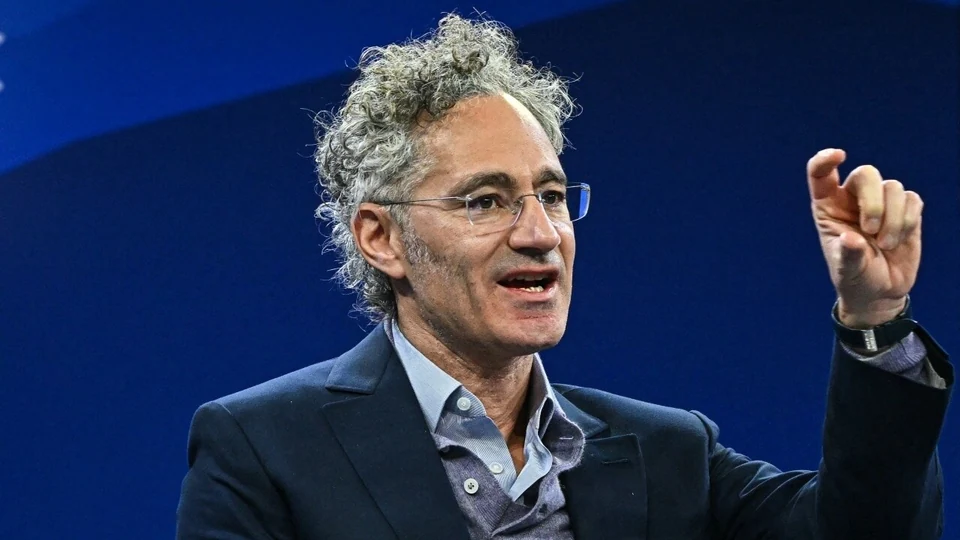
Artificial Intelligence could create new opportunities for neurodivergent workers as companies reconsider traditional hiring practices and workplace expectations. Palantir CEO Alex Karp has highlighted the potential for AI to change how businesses value different thinking styles, while workplace inclusion advocates have stressed that Technology alone will not eliminate the barriers many neurodivergent employees face.
Neurodivergent people, including those with autism, attention-deficit/hyperactivity disorder (ADHD) and dyslexia, may process information, communicate and approach problems differently from neurotypical people. As companies adopt AI tools, these differences could become more relevant to how employees complete tasks, solve problems and contribute to teams.
However, the potential benefits should not be confused with a guarantee that neurodivergent employees will automatically perform better in an AI-driven workplace. Experts cited by Fortune have warned against portraying neurodivergence as an inherent advantage or assuming that everyone with a particular condition has exceptional abilities.
Who Are Neurodivergent People?
Neurodivergence is a broad term used to describe people whose brains process information, communicate or learn in ways that differ from what is considered typical. Autism, ADHD and dyslexia are among the conditions commonly included under the term.
Neurodivergent people have varied abilities, experiences and support needs. Some may excel at particular tasks, while others may face challenges involving organisation, communication, attention, sensory environments or conventional workplace routines. These experiences differ from person to person.
Traditional hiring systems can create obstacles when they place too much emphasis on a narrow set of communication styles or interview behaviours. A candidate who struggles with an unstructured interview, for example, may still possess the technical knowledge and problem-solving skills needed for a role.
This has led some employers to explore alternative recruitment methods and workplace adjustments designed to help candidates demonstrate their actual abilities. The growing use of AI could provide another reason for businesses to review how work is organised and evaluated.
How AI Could Change Opportunities for Neurodivergent Workers
As businesses integrate AI into daily operations, they may need to reconsider which skills matter most and how employees can use technology to complete their work. Rather than requiring everyone to approach tasks in the same way, companies could give workers more flexibility to organise information, communicate ideas and solve problems.
Wendler, whose comments were reported by Fortune, said many workplaces have traditionally been designed around the needs and strengths of neurotypical employees. Such environments can leave neurodivergent workers facing unnecessary difficulties, even when they have the skills required for their jobs.
AI could create an opportunity to reconsider these systems. Employers may be able to redesign workflows, offer different ways to communicate and make certain tasks easier to manage through digital assistance. The potential benefit lies not only in the technology itself but also in whether organisations change their expectations and working practices.
For example, an employee who finds a complex assignment difficult to organise could use an AI assistant to break it into smaller steps. Someone who needs help structuring written communication could use a language model to develop a clearer draft. These applications may reduce some practical barriers, although their usefulness will depend on the individual, the task and the quality of the tools.
AI adoption could also place employees and employers on unfamiliar ground. As businesses learn how to use the technology, established assumptions about job responsibilities and productivity may change. This transition could create openings for workers whose abilities have not always been recognised through conventional recruitment and performance systems.
Why the AI Transition Could Put Workers on More Equal Footing
Wendler described the arrival of AI as a new phase in which employees are still learning how work will change.
“We are now entering a new frontier, where everybody is on more equal footing because nobody really knows how we navigate this new chapter, or what AI is going to do, or the future of work,” he said, according to Fortune.
The argument is that rapid technological change can disrupt established workplace routines. When businesses introduce unfamiliar tools, they may have to reconsider how tasks are assigned, how performance is measured and which working methods are most effective.
For neurodivergent employees, this could offer a chance to demonstrate skills in ways that do not depend entirely on traditional processes. AI-assisted workflows might make it easier for some workers to manage complex information, prepare written material or organise their responsibilities.
Nevertheless, a changing workplace does not automatically become an inclusive one. Employers still determine how AI is introduced, which tools employees can access and whether workers are given enough training and flexibility to use them effectively. Without thoughtful implementation, new technology could leave existing barriers untouched or create additional ones.
How AI Chatbots Can Support Everyday Work
Large language models (LLMs), the technology behind many AI chatbots, can assist with tasks that involve processing information and generating text. For some neurodivergent employees, these tools may help make demanding assignments more manageable.
Potential applications include:
- Breaking down assignments: An AI chatbot can help divide a large project into smaller tasks with a clearer sequence of steps.
- Organising work: Employees can use AI to create task lists, outline deadlines and structure information.
- Supporting written communication: Language models can help organise messages, summarise material or improve the clarity of a draft.
- Explaining complex information: Workers can ask AI tools to restate instructions or explain difficult concepts in a different format.
- Generating ideas: AI can help users explore possible approaches to a problem or develop an initial outline before refining it themselves.
These uses may reduce the effort required for certain activities, allowing employees to focus more attention on the parts of their work that require their judgement and expertise. However, AI-generated responses can be inaccurate, incomplete or unsuitable for a particular situation, so human review remains important.
Wendler said some neurodivergent employees may be particularly interested in adopting AI because conventional workplace systems have not always accommodated their needs. Fortune’s reporting also noted that attitudes towards AI differ among workers, meaning that neurodivergent employees should not be treated as a single group with uniform preferences.
Access is another important consideration. AI tools may require training, financial resources or adjustments to existing systems. Employers need to consider data privacy, confidentiality and accuracy when allowing workers to use chatbots for professional assignments.
SAP, Microsoft, Dell and JPMorgan Chase Have Introduced Inclusion Initiatives
Some major companies have already introduced programmes intended to recruit and support neurodivergent employees. According to Fortune, these efforts reflect growing recognition that traditional recruitment processes may not always provide an effective way for every candidate to demonstrate their abilities.
SAP’s Autism at Work programme
Software company SAP has spent more than a decade working to improve opportunities for neurodivergent people. Its Autism at Work programme is one example of an initiative designed to include autistic candidates in recruitment and provide support after they join the organisation.
Such programmes can help employers consider whether conventional hiring procedures unnecessarily exclude qualified applicants. They also highlight that recruitment is only one part of inclusion: employees may need appropriate management practices and workplace support to succeed over time.
Microsoft and Dell
Technology companies Microsoft and Dell have also introduced initiatives to recruit and support neurodivergent workers, Fortune reported. These efforts include changes to traditional interview practices that may not always allow candidates to demonstrate their capabilities effectively.
Alternative recruitment approaches can give applicants different ways to show their skills, depending on the role and programme. However, the available information does not establish that every business unit uses the same approach or that all candidates receive identical adjustments.
JPMorgan Chase
Banking company JPMorgan Chase has also taken steps to recruit and support neurodivergent people. Its inclusion efforts, alongside those reported at SAP, Microsoft and Dell, demonstrate that the discussion extends beyond technology companies.
These programmes provide examples of how employers can review recruitment and employee support. Their existence does not, by itself, establish how effective each initiative has been or whether similar practices are widespread across the wider labour market.
Palantir’s Neurodivergent Fellowship Offers Salaries of $110,000 to $200,000
Palantir has its own recruitment initiative for neurodivergent candidates through a Neurodivergent Fellowship. The programme is intended to attract people whose approaches to thinking and problem-solving could contribute to the company’s work.
A job posting cited by Fortune listed an estimated annual salary range of $110,000 to $200,000 for the programme. The posting also stated that participants would be expected to meet the same performance standards as other Palantir engineers.
The salary range is an estimate associated with the cited job posting, rather than a guarantee that every fellow will receive an amount within that range. Actual compensation may depend on the role and applicable Employment terms.
The posting argues that certain cognitive traits associated with some neurodivergent people could be valuable in an AI-driven environment. It specifically refers to pattern recognition, non-linear thinking and intense focus as potential strengths.
“The current LLM tech landscape positions them to dominate. Pattern recognition. Non-linear thinking. Hyperfocus. The cognitive traits that make the neurodivergent different are precisely what make them exceptional in an AI-driven world,” the Palantir job posting said, according to Fortune.
The statement reflects the company’s recruitment message and should not be interpreted as evidence that all neurodivergent people possess these traits or that neurodivergence guarantees superior performance. Individual skills and support needs vary considerably.
Why Neurodivergent Workers Should Not Be Expected to Be Geniuses
Wendler cautioned against presenting neurodivergent people as naturally gifted individuals who will automatically excel during the AI transition. Although some people may have particular strengths, treating exceptional ability as a defining feature of neurodivergence risks creating unrealistic expectations.
This stereotype can also obscure the contributions of people who do not fit the image of an extraordinary innovator. Employees should not have to demonstrate rare talents to be treated fairly, given reasonable workplace support or considered for employment.
Autism, ADHD and dyslexia can also be associated with challenges in everyday life and at work. Depending on the individual and environment, these may involve organisation, attention, reading, communication or other activities. Focusing exclusively on possible advantages can overlook the adjustments some people need.
Wendler argued that neurodivergent workers should be valued for the contributions they can make rather than being expected to prove that they possess exceptional abilities.
“A person does not need to be a genius superhuman, you know, Spider-Man, to be able to have something to offer and to deserve a seat at the table,” Wendler said, according to Fortune.
The point is central to the broader debate over inclusive employment. A fair workplace should allow people to contribute without requiring them to fit a narrow stereotype of what neurodivergence looks like or what a successful employee must be.
AI Alone Cannot Remove Workplace Barriers
AI tools may help some employees manage tasks, communicate information and organise their work, but technology cannot independently resolve every challenge faced by neurodivergent people. Recruitment rules, management expectations, workplace environments and access to support can all influence whether employees are able to perform at their best.
Companies seeking to benefit from AI will therefore need to consider more than software adoption. They may need to review how interviews are conducted, whether job requirements are genuinely necessary, how productivity is measured and whether employees can request appropriate adjustments.
Employers must also avoid assuming that every neurodivergent employee wants to use AI or will benefit from the same tools. Some people may find AI assistance useful, while others may prefer different methods or require specific support. Consultation with employees can help organisations make more suitable decisions.
Privacy and accountability will matter as well. Workers should understand how AI tools handle information, particularly when assignments involve confidential company data or sensitive personal details. AI-generated work should be checked for errors rather than accepted without review.
What AI Could Mean for the Future of Inclusive Hiring
The spread of AI is giving companies a reason to revisit long-standing assumptions about productivity, communication and problem-solving. For neurodivergent workers, that transition could create new opportunities to demonstrate their skills and use tools that make certain tasks easier to manage.
Palantir’s Neurodivergent Fellowship and programmes at companies such as SAP, Microsoft, Dell and JPMorgan Chase illustrate different efforts to broaden employment opportunities. Their approaches also underline the importance of recruitment and workplace support alongside technological change.
However, AI should not be treated as a universal solution or as proof that neurodivergent people are inherently better suited to the future of work. The potential benefits will depend on individual needs, access to appropriate tools and employers’ willingness to address barriers that technology cannot remove.
The larger opportunity is to build workplaces where people can contribute through different ways of thinking and working. If companies use AI as a reason to improve flexibility and inclusion, rather than simply expecting employees to adapt to new systems, the technology could help more workers demonstrate their abilities and participate meaningfully in the workplace.
For breaking news and live news updates, like us on Facebook or follow us on Twitter and Instagram. Read more on Latest World on thefoxdaily.com.






COMMENTS 0