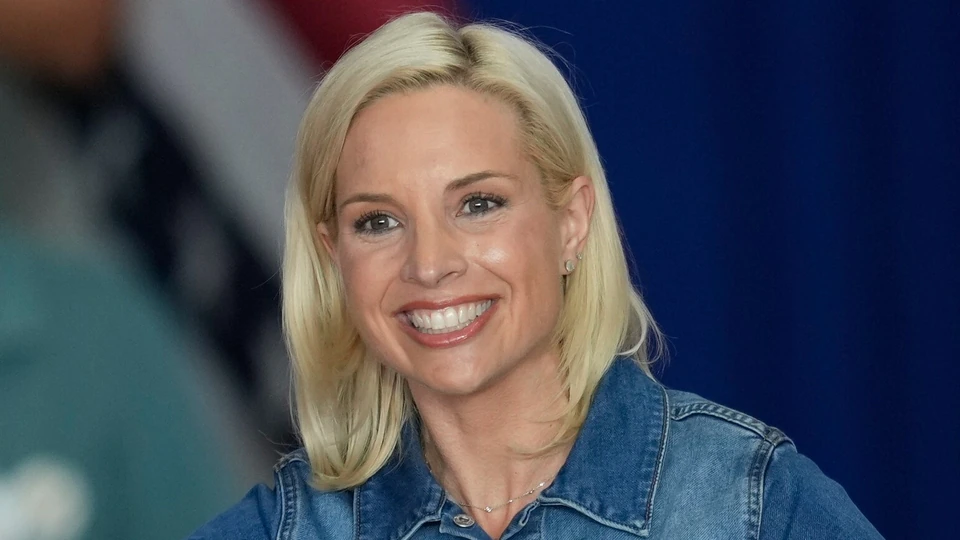
Republican Representative Ashley Hinson is competing against Democratic candidate Josh Turek for Iowa’s US Senate seat in the 2026 Midterm Elections, with her campaign facing scrutiny over an ethics complaint involving her husband’s connections to the insurance industry. Backed by President Donald Trump, Hinson has focused her campaign on healthcare affordability, inflation, border security, government accountability and economic growth.
The race follows Republican Senator Joni Ernst’s decision not to seek re-election, creating an open contest for the seat. Hinson, a former television news anchor who entered politics in 2015, won the Republican primary against Jim Carlin and advanced to the general election.
Her political record includes support for stricter immigration enforcement, lower prescription drug costs, parental choice in education and restrictions on congressional stock trading. However, her campaign has also faced criticism over allegations of unattributed copied material in 2020 and a September 2026 ethics complaint alleging that her husband used his industry connections to arrange access to lawmakers. Hinson’s campaign has denied the latter allegations.
Who Is Ashley Hinson?
Ashley Elizabeth Hinson is a Republican politician from Iowa who previously worked in television journalism before entering public office. She began her broadcasting career as a news anchor at KCRG-TV and left the industry in 2015 to run for the Iowa House of Representatives.
She later won election to the US House of Representatives, representing Iowa’s 1st Congressional District. Following congressional redistricting, she represented the 2nd Congressional District from 2023. Her experience in state and federal politics has become a central part of her profile as she seeks a seat in the US Senate.
Hinson has received Trump’s endorsement for elections since 2020, according to the supplied report. Her Senate campaign has sought to appeal to voters concerned about rising prices, rural healthcare access, job creation, public spending and national security.
Her opponent, Democrat Josh Turek, is challenging her in a contest shaped by debates over economic policy, healthcare, immigration, trade and the role of the federal government. The two candidates have also clashed over Hinson’s record on foreign policy and campaign finance.
Ashley Hinson’s Background, Education and Family
Ashley Elizabeth Hinson was born on June 27, 1983, in Des Moines, Iowa. She graduated from Valley High School in 2001 and earned a bachelor’s degree in broadcast journalism from the University of Southern California in 2004.
Before entering politics, Hinson worked as a television journalist at KCRG-TV. Her experience reporting on local issues, including healthcare costs and challenges facing Iowa communities, helped shape her transition from journalism to public service.
Hinson entered the Iowa House of Representatives in 2017 and served there until 2020. She subsequently won election to Congress, taking office in January 2021. Her progression from local journalism to state and federal office has been a defining feature of her political career.
Her family also has a strong musical background. Her parents met while playing in the Des Moines Symphony, and her grandparents were involved in orchestral music. Her brother, Blake Hinson, became a musician with the New York Philharmonic.
Hinson began taking piano lessons at the age of five and violin lessons at seven. She met her husband, Matt Arenholz, on a blind date at a wedding. The couple have two children, Max and Jax, and live in Marion, Iowa.
Healthcare Affordability and Rural Hospital Access
Healthcare affordability is one of the central issues in Hinson’s campaign. She has emphasized lowering prescription drug costs, improving access to medical services in rural communities and increasing accountability across the pharmaceutical industry.
Her stated priorities include greater transparency in pharmaceutical pricing and holding pharmacy benefit managers accountable. These companies act as intermediaries between health insurers, pharmacies and drug manufacturers, making their role in prescription drug costs a recurring subject of policy debate.
Hinson has also highlighted the importance of protecting people with serious medical conditions and improving access to healthcare in rural Iowa. Rural communities can face particular challenges when hospitals and clinics have limited resources or when residents must travel long distances to receive care.
Healthcare policy is likely to remain an important point of comparison between Hinson and Turek. Both candidates are campaigning in a state where affordability and access to essential services are prominent concerns, although their broader political approaches differ.
Hinson’s record and proposals will be scrutinized by voters seeking to understand how her policies would affect healthcare costs, rural providers and families who depend on affordable prescription medicines.
Abortion, Education and Childcare Policies
Hinson’s positions on reproductive policy and education reflect her conservative political outlook. In 2025, she voted for the Born-Alive Abortion Survivors Protection Act. She also sponsored the Pregnant Students’ Rights Act, which aimed to inform college students about their rights and available resources during pregnancy.
On education, Hinson has supported expanding school choice, arguing that parents should have greater freedom to select educational options that suit their children’s needs. She has also advocated for increasing parental control over decisions affecting children’s education.
Childcare affordability is another issue she has addressed. Hinson has supported measures intended to improve childcare access for working families, presenting the issue as part of a broader effort to help parents balance employment and family responsibilities.
These positions place education and family policy alongside healthcare and the economy among the issues shaping her Senate campaign. Voters will also be weighing how her proposals compare with Turek’s positions and priorities.
Government Accountability and Congressional Stock Trading
Hinson has called for reducing government spending and increasing accountability among elected officials. She supports banning members of Congress from trading individual stocks, arguing that lawmakers should not use public office for personal financial gain.
In 2026, she joined Democratic Representative Jared Golden in introducing legislation intended to prevent government officials from immediately leaving their positions to become paid lobbyists. The proposal reflects a broader debate over the relationship between public service, private-sector employment and lobbying.
Hinson has also criticized outside spending in the Senate campaign, accusing Turek of benefiting from outside groups and calling for greater transparency in campaign finance.
Her emphasis on accountability has taken on additional significance amid the ethics complaint concerning her husband’s connections to the insurance industry. The complaint raises questions about access to lawmakers and possible conflicts of interest, although the allegations have not themselves established that Hinson violated ethics rules.
Immigration and Border Security
Hinson supports stricter border security and enforcement of federal immigration laws. She has advocated for deporting immigrants who have committed violent crimes and supported increased funding for border patrol agents.
She has also raised concerns about fentanyl trafficking and its implications for public safety. These positions align with the Trump administration’s emphasis on border enforcement and tougher immigration measures.
Hinson has supported ending birthright citizenship, describing the existing provision as a “con”. The issue is part of a wider national debate over immigration policy and the constitutional protections associated with citizenship.
Her approach places border security and enforcement among the major themes of her campaign. Turek and Hinson are offering voters different political perspectives as they compete for the seat, with immigration likely to remain a significant issue in the broader national debate surrounding the midterm elections.
Jobs, Trade, Taxes and Iowa Farmers
Hinson has made economic concerns a central part of her campaign, focusing on inflation, job creation, tax relief and support for small businesses. She has also backed workforce training and technical education as ways to help workers obtain better-paying jobs.
Her trade policies emphasize protecting American businesses from unfair competition, particularly from China. She has supported tax relief for working families and policies intended to strengthen domestic economic activity.
However, Hinson has not agreed with every trade proposal advanced by Trump. In August 2026, she opposed his plan to increase beef imports, arguing that the move could harm Iowa cattle producers.
The disagreement highlights a challenge for Hinson as a Republican candidate endorsed by Trump: maintaining support for the president while demonstrating that she will defend the interests of Iowa’s agricultural communities when their concerns differ from his policies.
Some critics have questioned whether her positions adequately prioritize local farmers. One social media user wrote, “Ashley backs Trump, not Iowa farmers.” That comment represents criticism of her political alignment rather than an independently established assessment of her record.
Agriculture is economically and politically important in Iowa, making policies affecting cattle producers, fuel costs, trade and agricultural inputs relevant to the Senate contest.
Hinson Calls for an End to the Iran War
Hinson has called for an immediate end to the Iran war, citing rising fuel prices and the financial pressure facing Iowa households, farmers and businesses.
She has argued that the United States must prevent Iran from acquiring nuclear weapons but has opposed sending American troops into the country. Her campaign proposals for addressing rising energy costs include temporarily suspending the federal gas tax and pausing diesel exports.
She has also proposed measures involving fuel availability and financial relief for farmers and truckers. Her position reflects concern that higher fuel costs can affect household budgets as well as the cost of operating farm equipment and transporting agricultural products.
However, Hinson’s position on ending the war has drawn criticism from Turek because she previously voted against war powers resolutions intended to limit US military action in Iran.
Turek has argued that her votes supporting the administration’s approach conflict with her later calls to bring the war to an end. The disagreement has become part of the campaign’s broader debate over foreign policy, energy prices and the economic consequences of military action.
Hinson’s position combines opposition to Iran obtaining nuclear weapons with calls to end the conflict and reduce its financial effects on Americans. Her record of voting against measures to limit military action remains a point of dispute between the candidates.
Artificial Intelligence and Data Centre Development
Hinson has supported the use of artificial intelligence to strengthen the US economy and improve government efficiency. She has argued that technological development could help the United States remain competitive with China.
She has also pointed to possible applications of AI in agriculture. Technology could help farmers use fertilisers and weed killers more efficiently, potentially improving how agricultural resources are managed.
Data centres are another part of her economic outlook. Hinson has described them as potential sources of employment and economic growth, linking investment in digital infrastructure with broader opportunities for local communities.
At the same time, she has called for protecting Iowa’s water resources. Data centres can require significant infrastructure and, depending on their design and cooling systems, substantial water and electricity resources. Her position reflects the challenge of balancing technological investment with environmental and resource concerns.
As AI investment expands across the United States, the issue could become increasingly relevant to debates over jobs, infrastructure, water conservation and economic development. Hinson’s approach seeks to encourage technological growth while recognising the importance of protecting local resources.
2020 Plagiarism Controversy
Hinson faced criticism during her first campaign for the US House of Representatives in 2020 over passages on her campaign website and in opinion articles published under her name.
A report by The New York Times found passages that appeared to have been copied from other publications without proper attribution. The material included content associated with The New York Times, CNBC, The Hill and The Des Moines Register.
Some sections of her veterans’ affairs policy were also reported to resemble material published by her Democratic opponent at the time, Abby Finkenauer. Hinson subsequently apologized.
The episode remains part of the public record of her political career and may resurface as voters assess her record and credibility. The controversy concerned the use of unattributed material in political communications, rather than a finding that every policy position in question was invalid.
September 2026 Ethics Complaint Involving Her Husband
In September 2026, Defend the Vote and the Iowa Democratic Party raised concerns about Hinson’s husband’s connections to the insurance industry. An ethics complaint was filed seeking an investigation into whether Hinson had used her congressional position to provide Arenholz with special access to lawmakers.
Arenholz has worked in the insurance industry and served as government affairs chair for the Independent Insurance Agents of Iowa. The complaint alleged that his professional connections were used to arrange meetings with Iowa lawmakers despite him not being a registered lobbyist. Critics described the alleged role as that of a “shadow lobbyist”.
The complaint focuses on whether the relationship between Hinson’s congressional role and her husband’s industry activities created a potential conflict of interest or provided access that warranted scrutiny. Hinson’s campaign denied the allegations.
The existence of an ethics complaint does not, by itself, establish misconduct. Determining whether a violation occurred would require an examination of the relevant communications, meetings, applicable ethics rules and any other evidence considered by the appropriate investigative body.
The issue has nevertheless become a campaign controversy because Hinson has made government accountability a prominent part of her political platform. Her critics argue that the allegations deserve scrutiny, while her campaign rejects the accusations.
The complaint also intersects with broader questions about lobbying and public service, including how lawmakers and their families interact with industry groups seeking access to elected officials.
Ashley Hinson’s Financial Disclosures and Reported Wealth
Hinson’s financial disclosures have also attracted attention during the Senate campaign. According to the 2025 disclosure figures cited in reporting, her reported assets fall within a range of approximately $2.26 million to $8.77 million, including her husband’s stake in an insurance company.
The Iowa Democratic Party has claimed that Hinson’s wealth increased 15 times after she entered Congress. That figure should be understood as a political claim rather than a precise measure of her wealth growth.
Financial disclosures generally report assets in value ranges rather than providing a single exact net-worth figure. Comparisons between different years can therefore produce substantially different estimates depending on which points within those ranges are used.
Reporting on Hinson’s disclosures has identified her husband’s interest in Highstreet Insurance Partners as a major contributor to the family’s declared assets. The company’s stake is listed within a broad valuation range, which limits the precision of any calculation based on the disclosure.
Financial disclosure figures also include assets held by a spouse and do not necessarily represent cash available to a candidate. The reported range should therefore not be treated as an exact measure of Hinson’s personal wealth.
The disclosures have become relevant to the campaign because they intersect with the debate over her husband’s insurance-industry connections and the ethics complaint. However, asset ownership and the existence of an ethics complaint are separate matters; neither alone establishes an ethics violation.
What to Watch in the Iowa Senate Race
As the November 3, 2026, midterm elections approach, Hinson and Turek are competing over a range of issues that include household costs, healthcare, immigration, trade, agriculture and national security.
Hinson’s campaign is built around her congressional experience, support for Trump and promises to pursue conservative economic and border policies. Her positions on rural healthcare, tax relief and government accountability are also central to her message.
Turek has challenged her record on the Iran war, tariffs and other issues, arguing that her congressional votes have contributed to economic pressures facing Iowa residents. He has also highlighted the ethics complaint involving Hinson’s husband as an issue requiring scrutiny.
The race has implications beyond Iowa because control of the Senate will be determined by the outcomes of several competitive contests across the country. The state’s open seat, following Ernst’s decision not to seek another term, has therefore attracted national attention.
Hinson faces the challenge of appealing to voters who support Trump’s agenda while addressing concerns among Iowans about fuel costs, agricultural profitability and the consequences of federal policies. Her disagreements with Trump on some trade and foreign-policy issues illustrate the balancing act she faces as a candidate with his endorsement.
The ethics complaint adds another dimension to the contest, but its allegations should be distinguished from any formal finding of wrongdoing. Voters will also be assessing the candidates’ stated policies, legislative records and explanations of how they would represent Iowa in the Senate.
Conclusion
Republican Ashley Hinson is running against Democrat Josh Turek for Iowa’s open US Senate seat in the 2026 midterm elections. A former television journalist and current member of Congress, Hinson has campaigned on healthcare affordability, border security, tax relief, government accountability and economic growth while maintaining President Donald Trump’s endorsement.
Her record also includes disagreements with Trump over beef imports and calls to end the Iran war, despite her previous votes against measures intended to limit US military action. Meanwhile, the 2020 plagiarism controversy and the September 2026 ethics complaint involving her husband’s insurance-industry connections remain subjects of scrutiny. Her campaign has denied the allegations in the ethics complaint.
With the election approaching, the contest is likely to continue focusing on the economy, healthcare, agricultural interests, foreign policy and public accountability. The ethics complaint remains an allegation rather than a finding of misconduct, while voters will ultimately decide between Hinson and Turek at the ballot box.
For breaking news and live news updates, like us on Facebook or follow us on Twitter and Instagram. Read more on Latest World on thefoxdaily.com.






COMMENTS 0