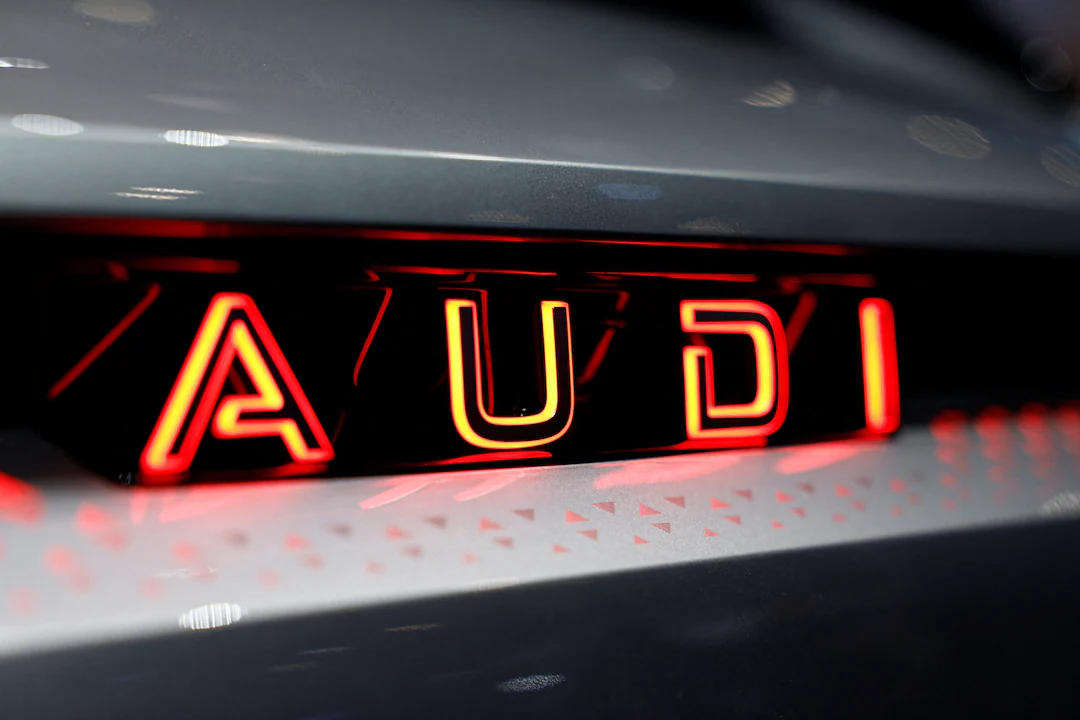
Audi, the premium automotive subsidiary of Germany’s Volkswagen Group, has announced a leadership shake-up in China as it faces intensifying competition, declining sales and a rapid shift towards Electric Vehicles in the world’s largest car market. The company has appointed Jeff Zhang, formerly chief executive of Chinese automaker Chery’s overseas business, as its new China president, effective November 1, 2026.
The leadership change comes at a critical time for Audi and its parent company Volkswagen, which have struggled to keep pace with domestic Chinese manufacturers offering competitively priced electric vehicles and increasingly technology-focused products. The changes are intended to help Audi respond more quickly to customer demands and strengthen its position in a market that has historically been important to the group’s premium-car business.
Zhang will lead Audi’s China business alongside Rolf Michl, who will become chief operating officer of Audi China on the same date. Michl previously served as managing director of Audi Sport GmbH. Zhang will replace Johannes Roscheck, who is returning to Germany after overseeing what Audi chief executive Gernot Döllner described as a period of profound transformation for the brand in China.
Who Is Jeff Zhang, Audi’s New China President?
Jeff Zhang brings experience from the Chinese automotive industry to his new position at Audi. Before joining the German premium-car manufacturer, he served as chief executive of Chery’s overseas business, giving him experience in international automotive operations and the expansion of a Chinese car brand beyond its domestic market.
His appointment comes as established foreign automakers reassess their strategies in China. Domestic manufacturers have become increasingly competitive in electric vehicles, battery technology, digital features and pricing. Their growing influence has put pressure on international brands that once enjoyed strong advantages in prestige and customer perception.
Zhang’s experience in Chery’s overseas operations could be relevant as Audi works to adapt its business to changing consumer expectations and a more competitive automotive environment. However, his appointment alone does not establish what specific product, pricing or manufacturing changes Audi will introduce under his leadership.
His immediate challenge will be to help Audi strengthen its competitiveness while maintaining the premium positioning associated with the brand. That could require closer attention to local preferences, product development priorities and the speed at which new technologies reach customers.
Audi has not disclosed a detailed timetable for any strategic changes associated with Zhang’s appointment. The company has also not announced specific sales targets for the incoming China leadership team in the information provided.
Rolf Michl to Become Audi China’s Chief Operating Officer
Audi has also appointed Rolf Michl as chief operating officer of its China business, effective November 1, 2026. Michl previously served as managing director of Audi Sport GmbH, the company’s performance-car division.
His appointment alongside Zhang creates a new leadership structure as Audi works to address the challenges facing its Chinese operations. While Zhang’s previous role involved Chery’s overseas business, Michl brings experience from Audi’s own performance-oriented operations.
The company has not publicly detailed the precise division of responsibilities between the two executives. Nevertheless, their appointments indicate that Audi is changing its leadership team as it seeks to improve its response to competitive pressures in China.
Leadership changes are one part of a broader response to the transformation of the Chinese automotive market. Manufacturers must also make decisions about electric-vehicle development, product pricing, software, distribution and the pace of innovation. The effectiveness of Audi’s new leadership will ultimately depend on how its strategy translates into products and customer demand.
Johannes Roscheck Returns to Germany After a Period of Transformation
Zhang will succeed Johannes Roscheck, who is returning to Germany after leading Audi’s China operations through a period of significant change.
Audi chief executive Gernot Döllner acknowledged Roscheck’s work, describing his tenure as a period of profound transformation for the company in China. The leadership transition comes as the automaker faces continued pressure to adapt its business to a market where customer preferences and competitive conditions have changed rapidly.
The company has not provided further details in the supplied announcement about Roscheck’s next position in Germany. His departure from the China leadership role is part of the management reshuffle announced on October 22.
The transition also reflects the strategic importance of China to Audi. The country is not simply a major sales market; it is a highly competitive automotive ecosystem in which local brands are pushing established manufacturers to reconsider how they develop and market vehicles.
Why Audi Is Struggling in China’s Automotive Market
Audi’s leadership reshuffle comes amid falling sales and growing competitive pressure in China. The company, together with Volkswagen and fellow premium subsidiary Porsche, has struggled to keep pace with a rapid shift towards electric vehicles led by lower-cost domestic brands.
Chinese automakers have expanded their presence across multiple vehicle segments, including battery-electric cars and plug-in hybrid models. Many compete on price while also offering technology features that appeal to consumers who increasingly expect digital connectivity and modern in-car experiences.
This has changed the environment for foreign brands that previously benefited from strong reputations, established dealer networks and demand for imported or internationally developed vehicles. Brand recognition remains relevant, but it may no longer be enough to maintain market share when competitors offer attractive combinations of price, technology and product features.
For Audi, the challenge is particularly significant because its premium positioning generally places it in a different price category from many mass-market Chinese brands. The company must balance the need to remain recognisably premium with the need to provide products that meet local expectations in a market evolving quickly.
The pressure also extends beyond vehicle prices. Electric-vehicle buyers increasingly consider factors such as battery performance, charging convenience, software capabilities, connected services and the overall digital experience. Automakers that cannot keep pace with these expectations risk losing customers to rivals that respond more quickly.
The Reuters report did not provide specific sales figures or quantify the extent of Audi’s decline in China. It described the company’s sales as being in freefall, underscoring the urgency of the competitive challenge without establishing a precise percentage or year-on-year comparison.
China’s Electric-Vehicle Shift Is Reshaping the Premium-Car Market
China’s transition towards electric vehicles has become a major strategic challenge for global automotive manufacturers. Domestic companies have built a strong presence in the EV market, forcing established international brands to adjust their products and business models.
The shift is changing the definition of competitiveness. Traditional strengths such as engine performance, interior quality and brand prestige remain important in the premium segment, but customers may also expect advanced driver-assistance features, integrated digital systems and software that can be updated over time.
These expectations create pressure on manufacturers to shorten development cycles and respond to changing preferences. In a market where new models and technology features arrive quickly, lengthy product-development processes can make it harder for established brands to match local competitors.
Pricing adds another challenge. Chinese manufacturers compete across a wide range of price points, and competition can place pressure on margins as companies attempt to attract customers. Premium brands must decide how to respond without weakening the value of their products or undermining profitability.
For Audi, strengthening its position may require a combination of locally relevant products, technology development and a more responsive commercial strategy. The precise measures the company will pursue under Zhang have not yet been announced in the supplied material.
Volkswagen Faces a Major Strategic Restructuring in China
Audi’s difficulties form part of a wider challenge facing Volkswagen Group. Once a highly profitable market for the German automotive group, China has become increasingly difficult for Western manufacturers as domestic competitors gain ground and consumer preferences change.
The pressure has prompted Volkswagen to initiate what the Reuters report described as the most dramatic restructuring in its history. The group must adapt to a market where traditional advantages are being challenged by new products, local technology capabilities and aggressive competition.
Volkswagen’s position in China matters to its broader global business because the market has long been a significant part of its international operations. Changes in Chinese consumer demand can affect sales, product planning and strategic priorities across the group.
The challenges facing Audi and Porsche also demonstrate that premium positioning does not insulate a manufacturer from changes in the competitive landscape. Even well-established brands must adapt when customers increasingly compare vehicles on technology, value and electric-driving capabilities.
For Volkswagen, the response involves more than changing executives. The group must determine how its brands can compete effectively in China’s evolving market while managing the cost and complexity of the transition to electrification.
The supplied announcement did not specify the full scope, financial impact or completion timetable of Volkswagen’s broader restructuring. It did, however, place Audi’s leadership change within the context of the group’s wider efforts to respond to the changing market.
Audi CEO Gernot Döllner Emphasises Faster Customer Response
Audi chief executive Gernot Döllner said the company’s objective was to implement its strategy consistently, respond more quickly to customer needs and strengthen competitiveness over the long term.
His remarks highlight the priorities behind the leadership changes. In a market moving quickly towards electric vehicles and digitally connected products, manufacturers need to understand changing preferences and translate that understanding into commercial decisions.
Responding faster to customers can involve several areas of the business, including product planning, technology features, pricing decisions and the way new models are introduced. However, Audi has not disclosed which specific measures will be prioritised by the new China leadership team.
The emphasis on execution also reflects a broader challenge for established automotive groups. A strategy may identify the right market trends, but delivering results requires effective coordination among management, engineering teams, suppliers, dealers and local operations.
For Audi, the central question is whether its updated leadership structure can help turn strategic priorities into products and services that resonate with Chinese customers while protecting the brand’s premium identity.
What Zhang’s Appointment Could Mean for Audi’s China Strategy
Zhang’s appointment brings leadership experience from a Chinese automaker into Audi’s operations at a time when international manufacturers are under pressure to improve their understanding of local competition.
Experience with Chery’s overseas business may provide useful perspective on how Chinese automotive companies approach international markets. His background could also be relevant as Audi examines the factors influencing customer choices and the competitive strengths of local brands.
However, it would be premature to assume that Zhang will immediately introduce a particular pricing policy, launch a specific electric vehicle or change Audi’s manufacturing arrangements. The company has not confirmed such plans in the supplied announcement.
The immediate priorities will be shaped by Audi’s existing strategy, the responsibilities assigned to the new leadership team and the commercial conditions in China. Any meaningful turnaround would likely need to be supported by competitive products, effective execution and sustained customer demand.
The appointment is therefore an important management development, but it is not itself evidence that Audi’s sales decline has been reversed. The company’s progress will need to be assessed through future product announcements, market performance and updates on its China strategy.
Key Challenges Facing Audi in China
Audi’s new leadership team faces several interconnected challenges as it works to strengthen the brand’s position in the Chinese automotive market.
- Intensifying domestic competition: Chinese brands are challenging established automakers with competitive pricing, electric vehicles and technology-focused features.
- Changing consumer preferences: Buyers increasingly consider digital experiences, connectivity and electric powertrains alongside traditional premium-car attributes.
- Falling sales: Audi must address declining demand in a market that has been important to Volkswagen Group’s business.
- Maintaining premium positioning: The company needs to remain competitive without undermining the brand identity associated with its vehicles.
- Responding more quickly: Audi’s stated objective includes improving its ability to respond to customers and execute its strategy.
- Group-wide restructuring: Audi’s China operations are part of a wider Volkswagen Group effort to adapt to changing market conditions.
These challenges are closely connected. A more responsive product strategy may help Audi address consumer preferences, but its success will also depend on pricing, technology, brand perception and the strength of competing models.
What to Watch After November 1, 2026
The leadership changes take effect on November 1, 2026, giving Audi a new management structure for its China operations. The next stage will be to determine how the company intends to respond to the competitive pressures described in its announcement.
Several developments will help clarify the direction of Audi’s strategy:
- New product plans: Whether Audi announces vehicles or product updates tailored to the preferences of Chinese customers.
- Electric-vehicle competitiveness: Whether future models can compete more effectively with domestic brands on technology, features and pricing.
- Sales performance: Whether the company reports a stabilisation or improvement in its China sales following the leadership transition.
- Strategic execution: Whether Audi provides concrete details about the measures intended to improve its responsiveness to customers.
- Volkswagen Group’s wider changes: How Audi’s China strategy fits into the parent company’s broader restructuring and efforts to adapt to the market.
No specific recovery target or timetable has been disclosed in the supplied announcement. As a result, the significance of the reshuffle will become clearer as Audi outlines its plans and reports subsequent business performance.
Frequently Asked Questions (FAQs)
Who is Audi’s new China president?
Jeff Zhang, who most recently served as chief executive of Chinese automaker Chery’s overseas business, has been appointed Audi China president. His appointment takes effect on November 1, 2026.
Who will replace Johannes Roscheck at Audi China?
Jeff Zhang will replace Johannes Roscheck as Audi China president. Roscheck is returning to Germany after overseeing a period of significant transformation for Audi in China.
Who is the new chief operating officer of Audi China?
Rolf Michl will become chief operating officer of Audi China from November 1, 2026. He previously served as managing director of Audi Sport GmbH.
Why is Audi changing its leadership in China?
The reshuffle comes as Audi faces falling sales and intensifying competition from domestic Chinese automakers, particularly in the electric-vehicle market. The company aims to execute its strategy more consistently, respond faster to customers and strengthen its competitiveness.
Why are Chinese electric-vehicle brands putting pressure on Audi?
Domestic manufacturers have expanded their presence with competitively priced electric vehicles and technology-focused features. Their growth has made it more difficult for established Western brands to rely solely on reputation and traditional premium-car strengths.
Is Volkswagen also facing challenges in China?
Yes. Volkswagen Group and its subsidiaries, including Audi and Porsche, are struggling to keep pace with changes in the Chinese automotive market. The group has initiated a major restructuring in response to the changing competitive environment.
Has Audi announced a new China sales target?
The supplied announcement does not include a specific sales target, recovery timetable or quantified goal for the new leadership team. Audi’s progress will need to be assessed through future company announcements and sales results.
Conclusion
Audi’s appointment of Jeff Zhang as China president marks a leadership change at a time when the premium automaker faces declining sales and growing pressure from Chinese electric-vehicle manufacturers. Zhang will take over on November 1, 2026, working alongside incoming chief operating officer Rolf Michl as the company seeks to strengthen its position in the world’s largest automotive market.
The reshuffle also reflects the broader challenges facing Volkswagen Group as established Western brands adapt to China’s rapidly changing automotive industry. Stronger execution, faster responses to customers and competitive products will be important to Audi’s efforts, although the company has yet to disclose a detailed turnaround plan.
The leadership transition is a significant development in Audi’s China strategy, but its longer-term impact will depend on whether the company can translate its stated priorities into products that attract buyers and improve business performance.
For breaking news and live news updates, like us on Facebook or follow us on Twitter and Instagram. Read more on Latest World on thefoxdaily.com.




COMMENTS 0