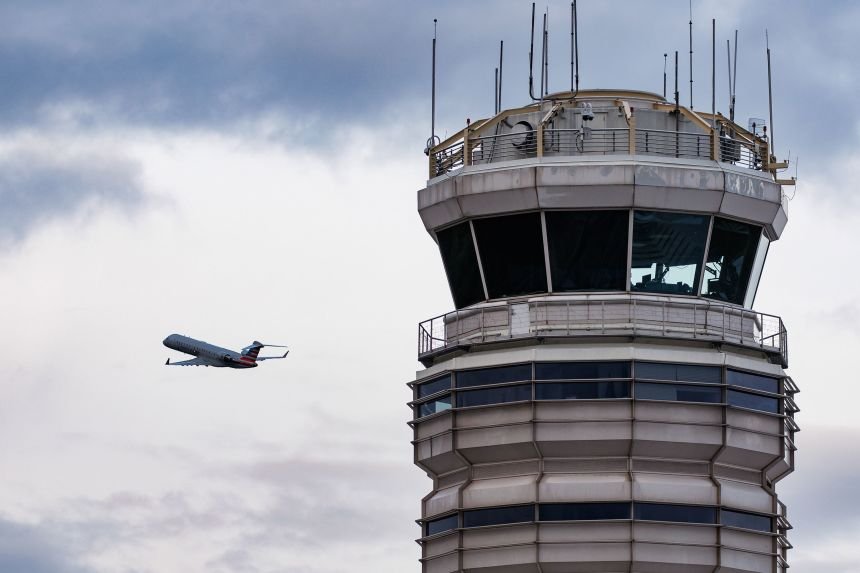
The United States aviation system faced an unusual nationwide disruption on Friday, November 13, after the Federal Aviation Administration (FAA) ordered airports across the country to stop departing flights until further notice. The emergency directive came amid reported communications problems affecting the country’s Air Traffic Control network, raising concerns about the ability to coordinate aircraft movements safely.
The FAA’s advisory instructed aircraft operators to keep departing traffic on the ground. International flights arriving in the United States would be handled individually, depending on operational circumstances. The agency did not immediately provide a detailed explanation of the underlying technical problem or announce when normal departures would resume.
The decision was particularly significant because a nationwide ground stop is an extraordinary measure in the US Aviation system. Rather than restricting operations at one airport or within a particular region, the directive affected departures across the national airspace network.
Initial reporting indicated that air traffic control communications problems had emerged earlier in the day, with operations in Chicago affected before the restrictions were expanded nationwide. The situation raised questions about the reliability of critical aviation communications infrastructure and the challenges of managing thousands of flights when coordination systems experience disruptions.
Why Did the FAA Order a Nationwide Ground Stop?
The immediate trigger for the nationwide restriction was reported to be a communications problem affecting Air Route Traffic Control Centers, which coordinate aircraft movements across large sections of US airspace.
Unlike airport control towers, which primarily manage aircraft movements on runways and in the immediate vicinity of airports, Air Route Traffic Control Centers oversee aircraft travelling between airports. Their responsibilities include coordinating flight movements across different regions, maintaining separation between aircraft and communicating with pilots as flights progress along their routes.
These facilities are an essential part of the National Airspace System. Commercial aircraft travelling between major cities depend on coordinated instructions from multiple air traffic control facilities during a single journey.
When communications infrastructure becomes unreliable, controllers may face difficulties exchanging information with pilots or coordinating aircraft movements with neighbouring facilities. Even if aircraft remain technically capable of flying, the loss of dependable communication can make normal traffic volumes difficult to manage safely.
The FAA’s decision to impose a nationwide ground stop therefore needs to be understood as a precautionary aviation safety measure rather than evidence that aircraft were experiencing a particular emergency.
Communications Problems First Affected Chicago
According to initial reporting by Investing.com, the FAA first halted traffic in Chicago following communications difficulties before extending the restriction to airports nationwide.
Chicago is an important aviation hub, with major passenger operations connecting domestic and international destinations. Disruptions in the region can affect aircraft movements well beyond the airports directly experiencing problems because airlines operate interconnected flight networks.
However, the expansion of the restriction suggests that the FAA considered the situation significant enough to require a broader operational response.
The precise technical cause remained unclear in the initial announcements. There was no confirmed public explanation establishing whether the problem involved particular communication equipment, network infrastructure, software or another operational component.
It would therefore be premature to describe the incident as a cyberattack, equipment failure or deliberate interference. Those possibilities require evidence that was not established in the initial reports.
What Exactly Did the FAA’s Nationwide Ground Stop Order Say?
The FAA’s air traffic control advisory used unusually broad language, instructing operators to follow a nationwide restriction.
The agency cited extraordinary circumstances and safety considerations before directing aircraft operators to keep departing traffic grounded until further notice.
One particularly important part of the advisory concerned international arrivals. Instead of automatically stopping every aircraft approaching US airports, the FAA stated that inbound international flights would be managed on a case-by-case basis.
This distinction matters because a nationwide ground stop does not necessarily mean that every aircraft already flying must immediately land or that all airport operations have completely ceased.
The restriction primarily prevents affected departing aircraft from taking off. Aircraft already airborne can remain under air traffic control, subject to the instructions and operational decisions of the relevant authorities.
Departures, Arrivals and International Flights Explained
The FAA’s instructions created different operational considerations for aircraft depending on their location and flight status.
- Domestic departures: Airlines were instructed to keep affected departing flights on the ground until the FAA provided further direction.
- International departures: Departures were also subject to the nationwide restriction, depending on the applicable operational instructions.
- Inbound international flights: These were to be managed individually rather than automatically treated in the same way as departing traffic.
- Aircraft already airborne: The ground stop should not be interpreted as an instruction for every aircraft in the sky to land immediately.
The distinction between departing and airborne aircraft is important for understanding how aviation authorities manage safety during major disruptions.
Keeping additional aircraft on the ground can prevent traffic volumes from increasing while controllers work through a communications or coordination problem. At the same time, aircraft already in the air require continued monitoring, communication and appropriate arrival arrangements.
How a Ground Stop Works in the US Aviation System
A ground stop is one of the Federal Aviation Administration’s most restrictive air traffic management measures. It temporarily prevents specified aircraft from departing when continuing normal operations could create safety or capacity problems.
The FAA uses ground stops in different situations. They can be limited to an individual airport, a particular region, specific aircraft categories or a wider portion of the national aviation network.
For example, an airport experiencing severe weather or an operational emergency might temporarily stop incoming traffic. Aircraft scheduled to travel to that airport would remain at their departure locations rather than entering an already constrained airspace environment.
A nationwide ground stop is considerably broader. It requires affected aircraft operators across the country to follow the central traffic management instruction.
Why Keeping Aircraft on the Ground Can Be Safer
Modern aviation depends on continuous coordination between pilots, controllers, airport operators and airline dispatch teams.
Aircraft do not simply select a destination and fly independently. Their movements are coordinated through flight plans, assigned routes, altitude restrictions, air traffic clearances and communications procedures.
If an important part of this coordination network becomes unreliable, allowing additional departures could increase pressure on the system.
A temporary restriction provides controllers and aviation authorities with an opportunity to assess the problem, establish reliable operating conditions and prevent additional aircraft from entering an environment where normal coordination may be compromised.
There is also a practical advantage. Holding aircraft at departure airports can be easier to manage than allowing a large number of flights to enter the airspace and subsequently requiring diversions, extended holding patterns or complicated arrival arrangements.
In other words, a ground stop can create temporary disruption for passengers while helping prevent a more complicated operational situation.
How the 2026 FAA Ground Stop Compares With the January 2023 Aviation Disruption
The latest incident brings back memories of January 11, 2023, when the FAA ordered a nationwide pause on domestic departures following an outage affecting its Notice to Air Missions system, commonly known as NOTAM.
The 2023 disruption was significant because pilots and flight crews rely on NOTAM information to identify operational hazards and important changes affecting airports and flight routes.
These notices can include information about closed runways, unavailable navigation equipment, airport restrictions and other conditions that could affect flight safety.
When the system experienced an outage, the FAA temporarily stopped domestic departures while technicians worked to restore the service and validate the accuracy of the information.
The agency subsequently announced that its preliminary investigation had traced the problem to a damaged database file. A later FAA statement explained that contract personnel had unintentionally deleted files while attempting to correct synchronization problems between the primary and backup databases.
The January 2023 incident demonstrated how a disruption involving an important information system could affect aviation operations across the country, even without a physical problem involving aircraft or airport runways.
The November 2026 incident, however, involves reported air traffic control communications problems. These are different operational functions, and the two events should not be treated as identical technical failures.
Key Differences Between the Two Incidents
- January 2023: A failure affecting the NOTAM system disrupted the distribution of essential flight safety information, prompting the FAA to pause domestic departures.
- November 2026: Reported communications problems affecting air traffic control operations prompted a nationwide ground stop covering departing traffic.
- Common factor: Both incidents demonstrated how problems involving critical aviation infrastructure can lead to restrictions across the national airspace system.
The comparison also highlights an important characteristic of aviation safety: the industry depends on several interconnected systems, and a problem in one critical area can affect operations far beyond the location where the disruption first appears.
Why the September 11 Attacks Are Part of the Ground Stop Comparison
The January 2023 disruption was widely described as an exceptionally rare nationwide aviation shutdown. Before that incident, the September 11, 2001, terrorist attacks represented the most prominent historical example of a nationwide interruption to US commercial aviation.
Following the attacks, US aviation authorities ordered aircraft across the country to land and halted normal civil aviation operations as part of the emergency response.
The circumstances surrounding the two events were fundamentally different.
In September 2001, the restrictions followed coordinated terrorist attacks and an immediate national security emergency. In January 2023, the FAA acted because a technical failure affected the availability of critical flight information.
The November 2026 incident represents another situation in which the FAA has considered nationwide restrictions necessary for safety reasons.
These comparisons help explain why the latest directive attracted attention. Nationwide restrictions are not routine responses to ordinary airport delays or local weather disruptions.
What Does the Ground Stop Mean for Passengers and Airlines?
The immediate consequences of a nationwide ground stop can extend well beyond the period during which the original restriction remains active.
Airlines operate interconnected schedules in which the same aircraft may complete several journeys throughout a day. A delay affecting one departure can therefore create additional problems for subsequent flights.
Passengers Could Face Delays and Cancellations
Passengers scheduled to depart from US airports could face delayed boarding, extended waits at airport gates, missed connections and possible cancellations.
Even after the FAA removes a ground stop, airlines cannot necessarily return to their original schedules immediately.
Aircraft and crews may be positioned at the wrong airports, departure slots may need to be reorganised and arriving passengers may miss their connecting services.
For example, a passenger travelling from Chicago to New York before connecting to an international flight could experience disruptions if the first journey is delayed. The airline may need to arrange a different connection or provide alternative travel options.
Airlines Must Reorganise Their Operations
Airlines face a more complicated challenge than simply restarting departures once restrictions are lifted.
Aircraft scheduling depends on the availability of pilots, cabin crew, ground staff, airport facilities and suitable departure windows.
When several flights are delayed simultaneously, airlines may need to prioritise departures, reposition aircraft and adjust crew assignments.
Airports must also manage passenger congestion, aircraft waiting areas and changing arrival schedules.
The longer a nationwide restriction continues, the greater the possibility that its operational effects will extend into later flights.
International Connections May Also Be Affected
The FAA’s case-by-case approach to inbound international flights adds another layer of complexity.
International airlines must coordinate with US aviation authorities, departure airports and their own operations teams when approaching the United States during a disruption.
Some flights may continue under specific arrangements, while others could experience delays or changes to their arrival plans.
Passengers travelling internationally should therefore avoid assuming that their flights will operate normally simply because the advisory distinguishes inbound international traffic from departing aircraft.
What Should Travellers Do During the FAA Ground Stop?
Passengers with upcoming flights should rely on direct airline communications rather than assuming that a general announcement provides the latest information about individual journeys.
The most practical steps include:
- Check flight status: Use the airline’s official website or mobile application to monitor departure times and cancellations.
- Monitor airport announcements: Airport information screens and public announcements may provide updates about gate changes and boarding arrangements.
- Avoid unnecessary airport travel: Passengers who have not yet left home should check with their airline before travelling to the airport.
- Keep travel documents accessible: Booking confirmations, identification and relevant travel information can help when arranging alternative flights.
- Check connecting flights: Travellers with multiple bookings should monitor every segment of their journey rather than focusing only on the first departure.
- Contact the airline: Passengers facing cancellations or significant schedule changes should seek information about rebooking and available alternatives.
Travellers should also distinguish between an FAA ground stop and an airline-specific cancellation. The FAA controls air traffic restrictions, while airlines communicate individual booking changes and manage passenger arrangements.
What Happens Next? Key Questions About the Nationwide Flight Suspension
The next stage will depend on how quickly the FAA can identify and address the reported communications problems.
Removing a ground stop requires more than simply deciding that enough time has passed. Aviation authorities need to establish that the relevant operational conditions are sufficiently reliable for aircraft movements to resume safely.
When Will US Flights Resume?
The initial FAA advisory did not provide a confirmed nationwide restart time. It instructed departing traffic to remain grounded until further notice.
Airlines and passengers therefore need to wait for updated instructions from the FAA and their respective carriers.
Even after the restriction is lifted, a gradual return to normal operations may be necessary because aircraft movements and airport capacity will need to be coordinated.
Will the FAA Reveal the Cause of the Communications Problem?
Identifying the technical cause will be an important part of understanding the incident.
Investigators and aviation officials may need to determine which communication facilities or systems were affected, how widely the disruption spread and whether backup arrangements functioned as intended.
These details matter because different technical failures require different corrective measures.
A problem involving a particular communication network would require a different response from one involving controller equipment, software or wider infrastructure.
Until the FAA provides a more detailed explanation, claims about the exact cause should be treated cautiously.
Could the Disruption Affect Flights Beyond November 13?
Yes, operational effects could continue after the original restriction ends.
The January 2023 ground stop provides a useful example. Although the FAA lifted the departure restriction after restoring its NOTAM system, airlines still had to manage the resulting delays and scheduling disruptions.
The same general challenge could arise in November 2026, depending on the duration of the ground stop, the number of affected flights and the time required to restore normal traffic flows.
The available information does not establish how long the latest disruption will affect airline schedules.
Why the Incident Raises Questions About US Aviation Infrastructure
The nationwide ground stop highlights the importance of communications infrastructure in maintaining the safety and efficiency of commercial aviation.
Air traffic control is not a single computer system or one central facility. It involves a network of controllers, communications equipment, operational databases, airport facilities and coordination procedures.
These components must work together to support aircraft movements across a large and heavily used airspace network.
Modern aviation has become increasingly dependent on digital systems, but reliable communication between pilots and controllers remains essential.
The latest incident also illustrates why backup arrangements and contingency procedures are important. When a critical system experiences problems, authorities need ways to maintain safe operations while the issue is investigated and resolved.
For the aviation industry, the longer-term question is not simply how quickly flights can resume. It is whether the incident reveals weaknesses that need to be addressed to reduce the likelihood or impact of similar disruptions.
However, determining whether the event exposed a broader infrastructure weakness will require more information about the technical failure and the FAA’s subsequent assessment.
FAA Nationwide Ground Stop: What Is Confirmed So Far?
The November 13 incident remains a developing aviation story. The key confirmed details from the initial advisory and early reporting are:
- The FAA issued a nationwide ground stop covering departing traffic across US airports.
- The agency cited extraordinary circumstances and safety considerations.
- Air traffic control communications problems were reported before the nationwide restriction.
- Chicago operations were initially affected before the restriction expanded nationally, according to early reporting.
- Inbound international flights were to be managed on a case-by-case basis.
- The initial announcement did not establish a definitive technical cause or confirmed time for the resumption of normal departures.
The FAA’s decision underscores the importance of maintaining dependable communication and coordination across the US aviation network. Although a nationwide ground stop can create considerable inconvenience for passengers and airlines, the immediate priority remains ensuring that aircraft can operate under safe and reliable conditions.
The next major developments will be the identification of the communications problem, further FAA instructions and confirmation of when normal flight departures can resume.
For breaking news and live news updates, like us on Facebook or follow us on Twitter and Instagram. Read more on Latest World on thefoxdaily.com.






COMMENTS 0