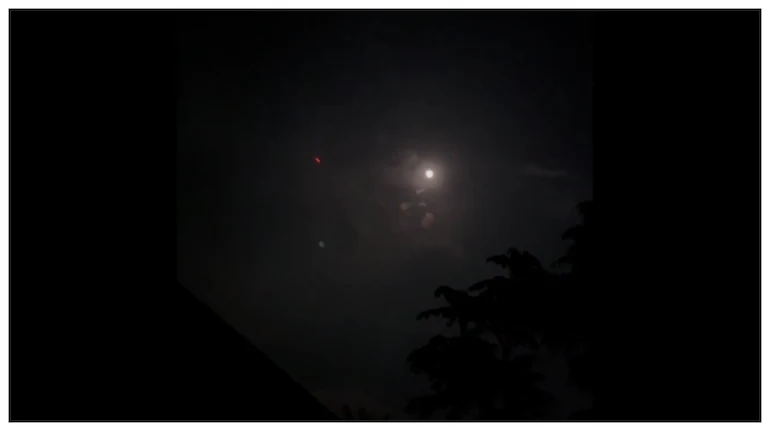
Unauthorised drone activity over a major US Military installation in Britain has triggered a security response, raising fresh questions about the vulnerability of military bases to unmanned aerial surveillance and potential security threats. The incident occurred at Royal Air Force Base Lakenheath in eastern England, where US military personnel operate and maintain aircraft supporting American and NATO air operations.
The US European Command confirmed on Friday that security forces at RAF Lakenheath had responded to reports of unauthorised drone activity. A military spokesperson said the United States was taking all necessary measures to protect the installation, aircraft and service members.
Despite the security response, the military reported no immediate damage or disruption. No personnel, aircraft or infrastructure had been affected by the activity, according to the spokesperson, who spoke anonymously because the matter involved sensitive military security issues.
The development is particularly significant because it comes only days after the US military moved more than a dozen aircraft from another American-operated base in eastern England following a separate threat. The proximity of the two incidents has drawn attention to security arrangements surrounding US military installations in the United Kingdom.
However, officials have not established that the drone activity and the earlier aircraft relocation are connected. The identity of the drone operators, the number of drones involved and their purpose were not immediately disclosed.
What Happened at RAF Lakenheath?
The latest security incident involves RAF Lakenheath, a military airbase located in Suffolk, eastern England. The installation is operated by the Royal Air Force but hosts significant US Air Force operations under longstanding defence arrangements between the United States and the United Kingdom.
According to US European Command, security personnel responded after unauthorised drone activity was detected around the installation.
The military did not immediately provide a detailed account of when the drones appeared, how many were involved or how long the activity continued.
It also did not identify the specific areas of the base where the drones were observed.
The response indicates that military security personnel treated the activity as something requiring attention rather than dismissing it as routine civilian drone use.
US Military Says No Damage Has Been Reported
One of the most important details in the initial announcement was the confirmation that the activity had not affected military personnel, aircraft or infrastructure.
This means the incident had not resulted in a publicly confirmed physical attack or damage to the installation at the time of the statement.
Nevertheless, the absence of immediate damage does not eliminate the security concerns associated with unauthorised drone operations near military facilities.
Drones can potentially collect visual information, observe activity around restricted locations or create operational disruptions without physically striking anything.
For military authorities, identifying the operator and understanding the purpose of an unauthorised flight can therefore be as important as assessing whether damage has occurred.
Why RAF Lakenheath Is an Important US Military Base in Britain
RAF Lakenheath is one of the most significant American military installations in the United Kingdom. It serves as a major operating location for the US Air Force in Europe and plays an important role in American airpower across the region.
The base is home to the US Air Force’s 48th Fighter Wing, commonly known as the Liberty Wing.
The installation supports fighter aircraft operations, training, maintenance, logistics and other activities associated with maintaining combat-ready air forces.
Its location in eastern England also gives the US military an important operating position for missions involving Europe and the wider NATO area.
The Base Hosts F-15 and F-35 Fighter Aircraft
RAF Lakenheath is particularly important because of its role in operating advanced American fighter aircraft.
The 48th Fighter Wing operates F-15E Strike Eagle and F-35A Lightning II aircraft.
The F-15E is a multirole fighter designed to perform air-to-air and air-to-ground missions. It can carry a range of weapons and is used for operations requiring both air superiority and precision strike capabilities.
The F-35A is a fifth-generation stealth fighter developed to combine advanced sensors, information sharing, electronic warfare capabilities and precision strike functions.
These aircraft represent valuable military assets. Their presence makes the protection of the installation important not only for the United States but also for broader NATO Security arrangements.
Unauthorised drone activity near such an installation naturally attracts attention because military authorities must protect aircraft, personnel, maintenance facilities and operational information.
Why Are Unauthorised Drones Near Military Bases a Security Concern?
Small unmanned aerial vehicles have become increasingly accessible, with commercially available models capable of carrying cameras and other equipment.
Although many drones are used for legitimate purposes, including photography, surveying and recreational flying, unauthorised operations near military installations can create security problems.
The main concern is not necessarily that every drone represents an attack. Rather, military authorities cannot automatically determine the intentions of an unidentified operator simply by observing a drone in restricted airspace.
1. Potential Surveillance of Military Facilities
Drones equipped with cameras can capture images and videos from locations that may be difficult to observe from the ground.
Depending on their capabilities and operating conditions, they could potentially record aircraft movements, infrastructure layouts, security arrangements and other visible activity.
Such information could be useful to someone attempting to understand the operational routines of a military installation.
However, there is no publicly confirmed evidence that the drones observed at RAF Lakenheath were conducting surveillance or collecting military information.
2. Risks to Aircraft Operations
Drones can create physical hazards when they enter areas used by military or civilian aircraft.
Even relatively small unmanned aircraft can pose risks if they come too close to aircraft during take-off, landing or other flight operations.
A collision could damage aircraft components or force pilots and controllers to change their operating procedures.
This is one reason military authorities take unauthorised drone activity seriously, particularly around installations with active fighter aircraft operations.
3. Possible Disruption to Military Activities
Unidentified drones can also create operational uncertainty.
Security personnel may need to investigate sightings, monitor restricted areas and assess whether aircraft or personnel should be moved away from potentially affected locations.
Depending on the circumstances, even an incident that causes no physical damage could require additional security measures and temporary changes to normal operations.
4. Difficulty Identifying Drone Operators
Identifying the person responsible for an unauthorised drone flight can be challenging, particularly when the aircraft is small and operating over a large area.
Authorities may need to examine surveillance footage, flight information, witness reports and other available evidence.
Determining whether the activity was accidental, recreational, deliberately intrusive or connected to a wider security threat requires an investigation.
For RAF Lakenheath, the initial military statement did not establish who operated the drones or why they were present.
Why the Latest Incident Is Drawing Attention: More Than a Dozen US Aircraft Were Recently Relocated
The drone incident has attracted additional attention because it follows another security-related development involving American military aircraft in eastern England.
According to the initial report, the United States moved more than a dozen aircraft from a different base in the region after a threat emerged just days before the RAF Lakenheath incident.
The relocation raised questions about the security environment surrounding American military operations in Britain.
However, the two developments must be considered separately unless authorities establish a direct connection.
The earlier aircraft movement followed a threat, while the latest incident involved unauthorised drone activity at RAF Lakenheath.
The available information does not establish that the same individuals, organisation or security threat were responsible for both situations.
Why Military Aircraft May Be Relocated During Security Concerns
Moving aircraft between installations can be part of broader military security and operational planning.
Military aircraft are valuable assets, and commanders may consider changing their location when they believe doing so would reduce exposure to a particular threat or support operational requirements.
Aircraft relocation does not automatically indicate that an attack has occurred or that a base is no longer safe.
Military forces routinely manage aircraft positioning based on mission requirements, maintenance needs, training schedules and security assessments.
In a developing security situation, however, moving aircraft can provide an additional layer of protection while authorities evaluate available information.
Could the Drone Activity Be Linked to a Foreign Intelligence Operation?
The possibility of hostile surveillance is one of the questions that can arise when unidentified drones appear near sensitive military installations.
Military bases contain information and equipment that may be of interest to foreign intelligence services or other hostile actors.
Unmanned aircraft could theoretically be used to observe activity without requiring an individual to enter the installation physically.
However, the existence of that possibility does not establish that the RAF Lakenheath incident involved foreign intelligence activity.
The US military has not publicly identified the operators, provided evidence of espionage or attributed responsibility to any country or organisation.
It would therefore be premature to describe the incident as a confirmed foreign intelligence operation, sabotage attempt or military attack.
Investigators would need evidence about the drones, their operators, their equipment and their flight patterns before drawing conclusions about their purpose.
How the US and UK Protect Military Installations Against Drone Threats
Military installations in the United Kingdom operate within a security framework involving the armed forces, law enforcement agencies and national aviation authorities.
Protecting an installation against unauthorised drone activity requires a different approach from conventional perimeter security because drones can approach from above and may be difficult to identify at a distance.
Security responses can involve several layers of monitoring and investigation.
Detection and Monitoring
Military authorities can use surveillance systems and other monitoring capabilities to identify suspicious activity around restricted locations.
The objective is to establish whether an unidentified object is a drone, determine its approximate location and monitor its movements.
Security Personnel and Incident Response
Once unauthorised activity is identified, security personnel may investigate the reported location and assess whether additional protective measures are necessary.
The response depends on factors such as the drone’s proximity to sensitive areas, the nature of the activity and the potential risk to personnel or aircraft.
Coordination With Civilian Authorities
Drone incidents near military bases may also involve civilian aviation and law enforcement considerations.
Authorities may need to establish whether a flight violated applicable restrictions and whether further investigation or enforcement action is appropriate.
In Britain, drone operations are subject to aviation rules administered by the Civil Aviation Authority. Restrictions apply around certain sensitive locations, including military installations.
The precise response to an incident depends on the circumstances and the legal authority of the agencies involved.
What Is the Wider Significance for NATO and European Security?
RAF Lakenheath’s importance extends beyond the United States and the United Kingdom.
American forces stationed in Britain contribute to NATO’s broader military capabilities, including air operations, training and regional security arrangements.
The installation’s fighter aircraft and supporting infrastructure form part of the wider network through which the United States maintains its military presence in Europe.
Security incidents involving such facilities can therefore attract attention beyond the immediate location.
Unauthorised drone activity also presents a challenge because modern military installations must account for threats that do not necessarily resemble conventional military attacks.
Small unmanned aircraft can be inexpensive, relatively accessible and capable of operating near restricted areas. This creates a security challenge that requires detection, identification and appropriate response procedures.
For NATO countries, protecting airbases and other critical military infrastructure is an important part of maintaining operational readiness.
Nevertheless, the RAF Lakenheath incident should not automatically be interpreted as evidence of a wider coordinated campaign against NATO installations. That conclusion would require additional verified information.
What Happens Next at RAF Lakenheath?
The immediate priority for the US military is to establish the nature of the unauthorised drone activity and ensure that the installation remains secure.
Several questions remain unanswered, including how many drones were involved, where they were detected, who operated them and whether they were observed collecting information.
Further information from US European Command, the US Air Force or relevant British authorities could clarify the incident.
The next developments will likely focus on several areas:
- Identification of the drones: Authorities may seek to establish the type, capabilities and origin of the unmanned aircraft.
- Investigation of operators: Security agencies may attempt to identify the individuals responsible for the unauthorised flights.
- Security assessment: Military officials will assess whether existing protective measures need to be strengthened.
- Aircraft and infrastructure safety: Authorities will continue monitoring the installation to ensure that personnel and military equipment remain protected.
- Possible official updates: Additional statements may clarify whether the activity was isolated or part of a wider pattern.
Until further details emerge, the incident remains a security response to unauthorised drone activity rather than a confirmed attack on the military base.
Drone Activity at RAF Lakenheath: What Is Confirmed So Far?
The key details established by the initial US military announcement include:
- Unauthorised drone activity was reported at RAF Lakenheath in eastern England.
- Security forces responded to the activity.
- The US European Command confirmed that protective measures were being taken.
- The military said no personnel, aircraft or infrastructure had been affected.
- The incident occurred days after the United States relocated more than a dozen aircraft from another base in eastern England following a separate threat.
- Authorities had not publicly established the identity or intentions of the drone operators.
- No confirmed connection between the two security developments had been announced.
The drone activity at RAF Lakenheath highlights the growing importance of protecting military installations against unauthorised unmanned aircraft. While the US military reported no damage or injuries, the incident demonstrates why even unexplained drone sightings near sensitive facilities can trigger an immediate security response.
The most important unanswered questions concern who operated the drones, what they were attempting to do and whether the activity was connected to any broader security concern. Until investigators establish those details, the incident should be viewed cautiously, without assuming that it was an act of espionage or a direct attack.
For breaking news and live news updates, like us on Facebook or follow us on Twitter and Instagram. Read more on Latest World on thefoxdaily.com.




COMMENTS 0