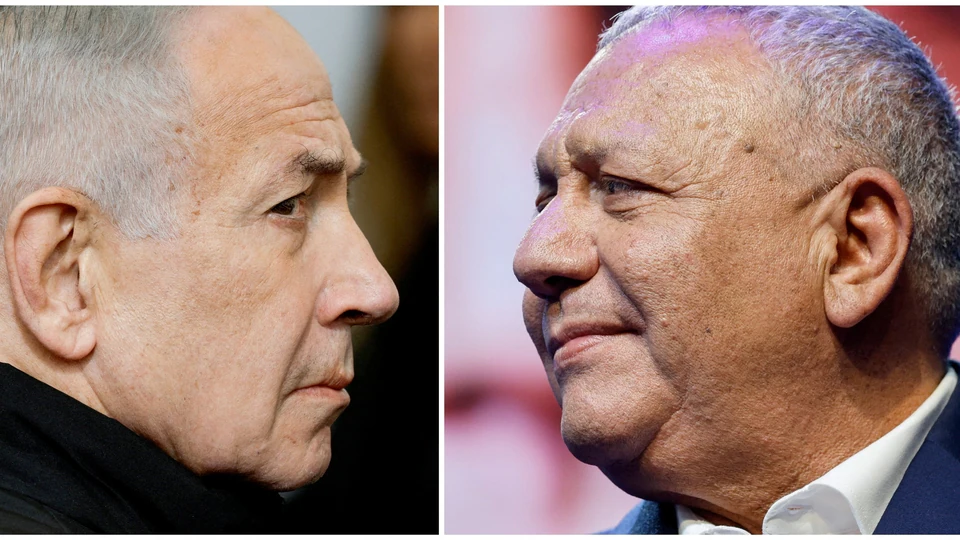
Israel’s opposition leader Gadi Eisenkot has rejected the possibility of joining a government led by Prime Minister Benjamin Netanyahu, drawing a clear line against a potential national unity arrangement following the country’s October 27 elections. Eisenkot has reportedly said that he would not change his position even if US President Donald Trump personally asked him to join such a government.
The remarks, made during a recent closed-door meeting, were reported by The Jerusalem Post, citing Israeli public broadcaster KAN News. Eisenkot’s position comes at a time of political uncertainty, with neither Netanyahu’s bloc nor the opposition securing enough seats to form a government independently in the 120-member Knesset.
The Yashar party chairman indicated that he would be willing to meet Trump if invited but would oppose any attempt by the American president to influence Israel’s internal political decisions. His comments underline the distinction between maintaining diplomatic relations with Washington and allowing an external leader to shape domestic coalition negotiations.
The political developments have placed the possibility of a national unity government under scrutiny. Trump’s representatives have reportedly explored an arrangement involving Netanyahu and Eisenkot, while opposition leaders are discussing a coordinated approach to government formation.
Eisenkot Rejects Joining a Netanyahu-Led Government
Gadi Eisenkot has reiterated that he will not participate in a government led by Benjamin Netanyahu. According to The Jerusalem Post, which cited KAN News, Eisenkot made the statement during a closed-door meeting.
He was quoted as saying that he would not sit in a government headed by Netanyahu. The statement indicates that his opposition to such an arrangement remains firm despite reported efforts to explore a broader coalition involving political figures from different camps.
Eisenkot also addressed the possibility of intervention by Donald Trump. He reportedly said that he would respect an invitation from the US president and agree to meet him. However, he would make clear that the formation of Israel’s government is an internal Israeli matter.
His position is significant because Trump has reportedly favoured a unity arrangement that could bring Netanyahu and Eisenkot together. Eisenkot’s refusal complicates the possibility of such a deal, particularly as political parties attempt to secure the parliamentary support required to establish the next government.
Trump Reportedly Supports a Netanyahu-Eisenkot Unity Government
Eisenkot’s remarks come amid reports that representatives associated with Donald Trump have explored the possibility of forming a national unity government in Israel. The proposed arrangement would bring together Netanyahu and opposition leader Eisenkot following the inconclusive election result.
The Jerusalem Post reported that people associated with Trump had spoken to Israeli officials after the election about the possibility of such an agreement. The reported objective was to encourage political stability and avoid prolonged negotiations over government formation.
A Likud official, quoted by The Washington Post, said Trump’s priority was to see a stable Israeli administration established quickly after the election.
The reported comments suggest that Washington is interested in an Israeli government capable of maintaining political stability and providing a reliable partner for the United States. However, the possibility of external diplomatic involvement has become sensitive because coalition formation is determined through Israel’s parliamentary and political processes.
The Washington Post also reported that Netanyahu had told US officials he considered Eisenkot the most suitable partner if hostilities between Israel and Iran resumed. Netanyahu reportedly suggested that an alliance with Eisenkot could result in a more moderate coalition.
Such an arrangement could potentially bring together political forces that have remained divided over Netanyahu’s leadership. However, Eisenkot’s latest remarks indicate that he is unwilling to join a government headed by the current prime minister.
Israel Election Results Leave Both Political Blocs Short of a Majority
The October 27 election produced a fragmented result in Israel’s 120-member Knesset. Neither Netanyahu’s political bloc nor the opposition secured the 61 seats required to form a government independently.
Netanyahu’s bloc won 53 seats, while opposition parties secured 48. Arab parties collectively won 19 seats, making their parliamentary position potentially important in the negotiations over the next government.
The outcome has left political parties facing the challenge of building a coalition that can command sufficient support in the legislature. In Israel’s parliamentary system, a government generally depends on agreements between multiple parties, making negotiations especially important when no single political camp has a majority.
The fragmented result has also increased the significance of smaller parties and political alliances. Their decisions about supporting a candidate or joining a coalition can influence which political leader receives the opportunity to form the next administration.
For Netanyahu, the election result means that his bloc cannot establish a government without securing additional support. The opposition faces a similar challenge, despite having a combined potential path to a parliamentary majority through cooperation with other parties.
Opposition Leaders Consider Recommending Eisenkot to Form Government
Opposition leaders Naftali Bennett, Yair Golan and Avigdor Liberman have reportedly agreed to recommend Eisenkot to President Isaac Herzog as the candidate best positioned to form the next government.
With support from these parties and backing from Arab lawmakers, Eisenkot could potentially secure the support of 67 members of the Knesset. This would be above the 61-seat threshold required for a parliamentary majority.
The potential support arrangement reflects efforts by opposition parties to coordinate their positions after the election. Rather than negotiating independently, their cooperation could strengthen the possibility of presenting a common candidate during consultations with the president.
However, securing recommendations during the presidential consultation process is not the same as completing the formation of a government. A candidate tasked with forming the administration must still negotiate with political parties and establish an arrangement capable of maintaining parliamentary support.
The reported backing for Eisenkot therefore represents an important development in the opposition’s strategy, but the final outcome will depend on the coalition negotiations and the positions adopted by individual parties.
How Israel’s Government Formation Process Works
Israel follows a parliamentary system in which the government is formed through the support of political parties represented in the Knesset. Because multiple parties often enter the legislature, coalition agreements play a central role in determining who becomes prime minister and which parties participate in the administration.
After an election, President Isaac Herzog consults political parties to assess which candidate has the best chance of forming a government. Following these consultations, the president assigns a candidate the task of putting together a coalition.
The selected candidate must then negotiate with other parties to secure sufficient parliamentary support. These discussions can involve agreements over policy priorities, ministerial positions and the distribution of responsibilities within the government.
The requirement to secure 61 seats in the 120-member Knesset makes coalition negotiations particularly important. A candidate may receive support from several parties during the consultation process but must still translate that support into a workable governing arrangement.
The current political situation demonstrates how a fragmented election result can complicate the process. With Netanyahu’s bloc holding 53 seats and opposition parties securing 48, both sides need additional support to establish a government.
Avigdor Liberman Rules Out Government Dependent on Arab Parties
Avigdor Liberman has ruled out joining a government that depends on the support of Arab parties. He has also rejected the possibility of participating in a national unity government led by Netanyahu.
Liberman’s position adds another challenge to the opposition’s efforts to coordinate a common strategy. Although opposition leaders have reportedly agreed to recommend Eisenkot as a candidate to form the next government, differences over the role of Arab parties could complicate the negotiations.
Arab parties collectively secured 19 seats in the election, giving them a potentially important position in the parliamentary arithmetic. Their support could help an opposition candidate reach the 61-seat threshold, but Liberman’s stated position limits the possibility of forming an arrangement that relies on their backing.
The disagreement highlights the difficulty of building a coalition from parties that may share opposition to Netanyahu’s leadership but differ on other political questions.
For Eisenkot, the challenge will be to determine whether the parties supporting his candidacy can reach an agreement that provides sufficient parliamentary backing without creating divisions among potential coalition partners.
Opposition Leaders Schedule Joint Meeting After Election
Eisenkot, Naftali Bennett, Yair Golan, Avigdor Liberman and outgoing opposition leader Yair Lapid are scheduled to hold their first joint meeting since the election on Tuesday, according to The Jerusalem Post.
The meeting is expected to focus on coordinating the opposition’s position and discussing the next steps in the government formation process. The discussions come as political parties assess the available options following the inconclusive election result.
A coordinated approach could help opposition leaders present a common position during consultations with President Isaac Herzog. It could also provide an opportunity to address differences over coalition arrangements, including the role of Arab lawmakers and the possibility of a unity government.
However, agreement on recommending Eisenkot does not necessarily mean that all opposition parties have resolved their differences over the structure of the next administration. Their positions on Netanyahu, Arab party support and coalition participation will remain important factors in the negotiations.
Why Eisenkot’s Position Matters for Israel’s Political Future
Eisenkot’s refusal to join a Netanyahu-led government is significant because the possibility of a national unity arrangement has reportedly been discussed by figures associated with the Trump administration. Such an arrangement could have offered one possible route to overcoming the political deadlock created by the election result.
His comments also highlight the limits of international influence over domestic political decisions. Although the United States is an important diplomatic and strategic partner for Israel, the formation of an Israeli government remains dependent on the country’s political parties, parliamentary support and constitutional procedures.
For the opposition, Eisenkot’s position provides a clear basis for discussions about an alternative government. However, the opposition parties must still overcome differences over coalition participation and the role of Arab lawmakers before they can turn their combined parliamentary numbers into a governing arrangement.
Netanyahu’s bloc, meanwhile, faces the challenge of finding additional support after winning 53 seats. The reported interest in a unity government suggests that political figures have considered alternatives to a conventional coalition, but Eisenkot’s rejection makes that particular arrangement more difficult.
What Happens Next in Israel’s Coalition Negotiations?
The next phase of Israel’s political process will depend on consultations with President Isaac Herzog and the ability of political leaders to negotiate a coalition with sufficient parliamentary support.
The opposition’s reported plan to recommend Eisenkot could strengthen his position as a potential candidate to form the next government. However, the support of 67 lawmakers remains a potential parliamentary calculation rather than a confirmed coalition agreement.
Liberman’s rejection of a government dependent on Arab parties is another important factor. Even if opposition leaders agree on Eisenkot as their preferred candidate, they will need to address disagreements over how a government could secure and maintain parliamentary backing.
Trump’s reported preference for a Netanyahu-Eisenkot unity government also remains part of the political discussion. Eisenkot has made clear that he would not join a government led by Netanyahu and would oppose attempts to influence Israel’s internal political decisions.
With both major political blocs short of a majority, Israel’s government formation process remains uncertain. The outcome will depend on negotiations among political parties, the presidential consultation process and the ability of a candidate to secure the support required in the Knesset.
For breaking news and live news updates, like us on Facebook or follow us on Twitter and Instagram. Read more on Latest World on thefoxdaily.com.



COMMENTS 0