- Why Iran Frames Its Conflict as a Sovereignty Struggle
- The Strait of Hormuz Is More Than a Strategic Waterway
- How Iran Sees the Rise of a Multipolar World
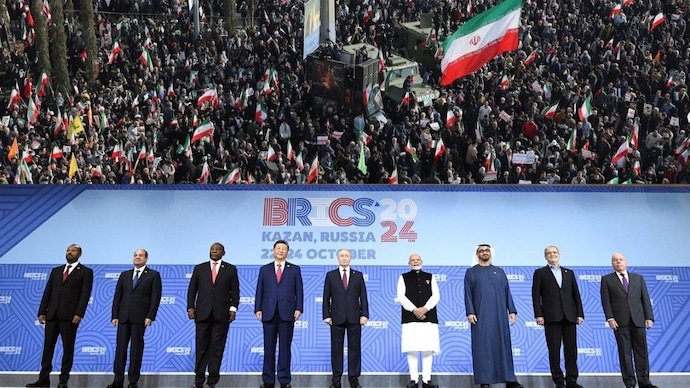
- Why BRICS Matters So Much to Iran
- India’s Position in Iran’s Strategic Thinking
- The Deep Distrust Toward Western Institutions
- Why Iran Believes the US Misunderstood Iranian Society
- The Role of Martyrdom and Collective Resistance
- The Information War Is Also Central
- Can Iran Ever Trust the United States Again?
- The Bigger Global Question Emerging From Tehran
- Conclusion
As Military tensions reshape the Middle East and Global Power rivalries intensify, voices emerging from Tehran are increasingly framing the current crisis not simply as a regional conflict, but as part of a much larger transformation in the international order.
One of the clearest articulations of that worldview came in an exclusive interview with Iranian researcher and social activist Dr. Sara Larijani, who spoke from Tehran during one of the most volatile periods in recent Iranian history.
Her comments provide a rare insight into how segments of Iran’s intellectual and political class interpret the ongoing confrontation with the United States and Israel. More importantly, they reveal how Iran increasingly sees itself not as an isolated state under pressure, but as part of a wider Global South realignment involving BRICS, China, Russia and emerging non-Western economic partnerships.
The interview also highlights a growing ideological divide shaping modern Geopolitics: whether the future global order will continue to be dominated by Western-led institutions or evolve toward a more multipolar system driven by alternative alliances.
Why Iran Frames Its Conflict as a Sovereignty Struggle
One of the central themes in Dr. Larijani’s analysis is the idea that Iran’s confrontation with Western powers is fundamentally about sovereignty rather than ideology alone.
According to her, Iran’s historical relationship with global powers dates back to the 19th century, when the country’s geography and natural resources became strategically important to imperial powers because of proximity to India, control over maritime routes, and access to oil.
From Tehran’s perspective, the modern dispute with the United States is viewed by many not simply as a nuclear disagreement, but as part of a longer historical struggle over political independence and control of resources.
This narrative is deeply embedded in Iranian political discourse.
Following the 1979 Iranian Revolution, the state increasingly positioned itself as resistant to foreign domination, especially Western influence. Over decades, sanctions, military tensions and diplomatic isolation reinforced that worldview internally.
For many Iranian thinkers, sovereignty is not merely territorial. It includes:
- Economic independence
- Control over energy resources
- Strategic influence in regional waterways
- Resistance to foreign pressure
- Cultural and political autonomy
This framework helps explain why Tehran often interprets geopolitical conflicts through an anti-imperialist lens.
The Strait of Hormuz Is More Than a Strategic Waterway
Dr. Larijani’s comments repeatedly emphasized the Strait of Hormuz, describing it as both a geopolitical choke point and a symbol of shifting power dynamics.
The narrow maritime corridor carries a substantial share of Global Oil shipments, making it one of the world’s most sensitive energy routes.
However, for Iran, Hormuz represents far more than economic leverage.
It symbolizes strategic relevance.
Control or influence over the strait allows Tehran to project itself as a central player in global energy security discussions despite sanctions and diplomatic isolation.
Iran’s recent military posture in the region has strengthened domestic narratives that the country can resist pressure from larger powers.
Dr. Larijani suggested that even many Iranians were surprised by the extent of Iran’s ability to maintain influence in the Strait of Hormuz during heightened tensions.
That perception matters because in geopolitical conflicts, symbolism can become as important as battlefield outcomes.
How Iran Sees the Rise of a Multipolar World
A major argument emerging from the interview is that the current international order is undergoing irreversible change.
According to Dr. Larijani, the decline of American influence is already underway, driven by several global developments:
- The rise of China’s economy
- Russia’s renewed geopolitical assertiveness
- Weakening trust in Western-led institutions
- Growing frustration across the Global South
- Expansion of alternative economic partnerships
This perspective reflects a broader trend increasingly visible across parts of Asia, Africa, Latin America and the Middle East, where many governments seek to reduce dependence on Western financial and political systems.
The concept often described as a “multipolar world” is becoming central to international debates.
Under this framework, power is distributed across multiple global centres rather than concentrated primarily in Washington and Western Europe.
For countries like Iran, this transition creates opportunities to bypass traditional Western pressure mechanisms.
Why BRICS Matters So Much to Iran
Among the most significant aspects of the interview was Dr. Larijani’s emphasis on BRICS and Global South alliances.
Iran increasingly sees organizations such as BRICS and the Shanghai Cooperation Organisation as pathways toward reducing vulnerability to Western sanctions.
These platforms offer alternatives in areas including:
| Strategic Area | Why It Matters to Iran |
|---|---|
| Trade partnerships | Reducing dependence on Western markets |
| Alternative currencies | Bypassing dollar-based systems |
| Energy cooperation | Expanding oil and gas partnerships |
| Infrastructure corridors | Building regional connectivity |
| Financial systems | Reducing sanctions exposure |
Iran’s interest in BRICS is not only economic. It is ideological.
Tehran increasingly portrays these alliances as mechanisms through which Global South countries can reshape global governance structures traditionally dominated by Western powers.
This is why discussions about BRICS expansion now carry geopolitical importance far beyond trade.
India’s Position in Iran’s Strategic Thinking
One of the more striking elements of the interview was the repeated reference to India.
Dr. Larijani framed Iran and India as countries connected historically through anti-colonial struggles and shared experiences with imperial power structures.
This reflects an important aspect of Iranian foreign policy thinking: India is viewed not only as a regional power but as a potentially influential partner in any future Global South realignment.
For Iran, India offers several strategic advantages:
- A massive energy market
- A growing global economic role
- Influence within BRICS
- Regional diplomatic importance
- Potential connectivity partnerships
At the same time, India carefully balances its relationships with the United States, Gulf nations, Israel and Iran simultaneously.
This balancing act makes India one of the most strategically important countries in emerging multipolar Diplomacy.
The Deep Distrust Toward Western Institutions
Another major theme in the interview was criticism of international institutions such as the United Nations and international legal systems.
Dr. Larijani argued that many in the Global South increasingly perceive these institutions as disproportionately shaped by Western interests.
This perception intensified significantly after the events following October 7 and subsequent conflicts in the Middle East.
Across many non-Western societies, debates have grown around:
- Selectivity in international law enforcement
- Unequal geopolitical influence
- Representation imbalance in global institutions
- Western dominance in financial systems
- Double standards in conflict responses
Whether or not one agrees with these critiques, they are becoming increasingly influential in shaping international political narratives outside the West.
Why Iran Believes the US Misunderstood Iranian Society
One of the most revealing parts of the interview involved Dr. Larijani’s claim that Western analysts fundamentally misread Iranian society.
She argued that many academic and political interpretations of Iran rely too heavily on Eurocentric frameworks that fail to fully understand Iranian cultural and religious identity.
This argument reflects a broader frustration among many non-Western intellectuals who believe global political analysis often applies Western historical experiences universally without fully accounting for local civilizational contexts.
In Iran’s case, Dr. Larijani emphasized:
- Religious identity
- National pride
- Historical memory
- Cultural continuity
- Resistance narratives
as forces that outsiders frequently underestimate.
This perspective helps explain why external pressure campaigns sometimes produce stronger nationalist reactions rather than internal collapse.
The Role of Martyrdom and Collective Resistance
Perhaps the most emotionally powerful section of the interview involved Dr. Larijani’s discussion of martyrdom and sacrifice within Iranian culture.
She connected modern resistance narratives to the Shia Islamic story of Imam Hussain, whose death at Karbala remains central to Shia religious identity.
According to her, this idea of standing for a “right cause” even against overwhelming odds shapes not only religious believers but broader Iranian cultural consciousness.
This is important because it influences how conflict, sacrifice and resistance are understood socially.
In many Western strategic analyses, military strength and economic pressure are viewed primarily through material calculations. However, ideological and cultural motivations can significantly alter how societies respond under pressure.
Iranian state narratives have long integrated concepts of sacrifice, endurance and resistance into national identity.
The Information War Is Also Central
Dr. Larijani also discussed what she described as attempts to influence Iranian society through media, entertainment and digital culture.
She argued that satellite television channels, films, social media and even online games were part of broader efforts to reshape cultural values inside Iran.
This reflects a growing reality of modern geopolitical conflict: information warfare now extends beyond news media into entertainment, technology and online culture.
Governments increasingly recognize that public opinion, identity and cultural influence can become strategic battlegrounds.
Iran’s leadership has long viewed foreign media influence as part of broader political pressure campaigns, while critics argue such perspectives are used to justify information restrictions internally.
Either way, digital influence is now inseparable from modern geopolitical competition.
Can Iran Ever Trust the United States Again?
One of the interview’s clearest conclusions was the deep erosion of trust toward the United States after years of sanctions, failed agreements and military tensions.
Dr. Larijani specifically referenced the collapse of the JCPOA nuclear deal after the Trump administration withdrew from the agreement.
For many in Iran, that episode reinforced fears that negotiated settlements with Washington may not remain stable across changing US administrations.
This distrust is likely to influence Iranian diplomacy for years regardless of which political factions hold power internally.
The Bigger Global Question Emerging From Tehran
At its core, the interview reflects a broader global debate now accelerating across international politics:
Is the Western-led international order entering a period of structural decline, or are emerging powers simply gaining greater influence within an evolving system?
Iran clearly views the current moment as historic.
From Tehran’s perspective, the rise of BRICS, China’s economic expansion, Russia’s geopolitical assertiveness and growing Global South coordination represent signs that the balance of global power is changing.
Whether that transformation succeeds remains uncertain.
But the fact that these ideas are increasingly shaping political thinking across multiple regions suggests the debate itself is no longer peripheral.
Conclusion
Dr. Sara Larijani’s interview offers more than an Iranian perspective on current tensions. It provides insight into how parts of the Global South increasingly interpret the future of world politics.
For Iran, the confrontation with the United States and Israel is viewed not only as a regional security crisis but as part of a much larger struggle involving sovereignty, economic independence and resistance to Western dominance.
The growing emphasis on BRICS, alternative financial systems and Global South alliances reflects Tehran’s belief that a multipolar order is emerging one in which countries outside traditional Western power structures seek greater influence and autonomy.
Whether or not that vision materializes fully, one thing is becoming increasingly clear: geopolitical competition today is no longer only about military power. It is equally about narratives, institutions, economic systems, and competing ideas about how the world itself should be organised.
And from Tehran to Beijing, Moscow to New Delhi, those debates are only intensifying.
For breaking news and live news updates, like us on Facebook or follow us on Twitter and Instagram. Read more on Latest World on thefoxdaily.com.


COMMENTS 0