- Primary Keyword: Pakistan Army spokesperson English remark
- What Exactly Did Pakistan’s Army Spokesperson Say?
- Why Indian Military Briefings Often Use English
- The Irony Pakistanis Immediately Pointed Out
- The Bigger Issue: Credibility and Public Trust
- Operation Sindoor Still Casts a Shadow
- The Language Debate Is Really About Class and Power
- Why the ISPR Faces More Scrutiny Today Than Before
- Pakistanis Were Not Just Mocking the Comment They Were Questioning Priorities
- The Information War Between India and Pakistan Has Changed
- A Comparison That Explains the Backlash
- The Real Strategic Lesson India and Pakistan Both Understand
- Prediction: Such Narrative Battles Will Become Even More Frequent
- Conclusion: A Language Remark Became a Mirror of Deeper Tensions
What began as a rhetorical jab at India quickly turned into an embarrassing social media moment for Pakistan’s Military establishment.
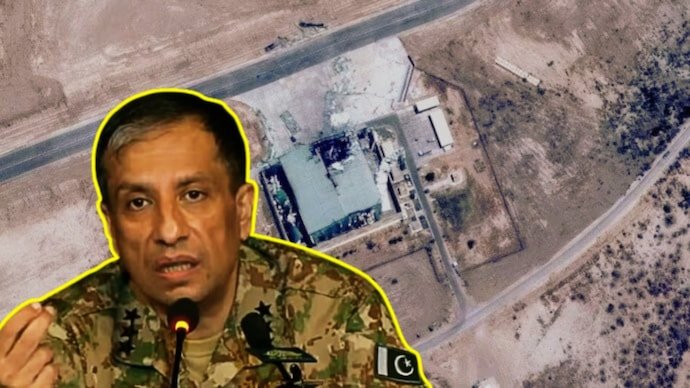
During comments linked to the first anniversary of Operation Sindoor, Pakistan Army spokesperson Lt Gen Ahmed Sharif Chaudhry questioned why Indian military officers were briefing the media in English instead of local languages. The remark appeared aimed at portraying India’s military communication as overly Western-facing or disconnected from ordinary citizens.
But the comment immediately triggered backlash online including from Pakistanis themselves.
Critics pointed out that English remains deeply embedded within Pakistan’s military, bureaucracy, judiciary, and elite institutions. Former Pakistani military officers, journalists, and ordinary users on X and Reddit accused the Inter-Services Public Relations (ISPR) chief of hypocrisy, arguing that the Pakistan Army itself conducts much of its operational and administrative communication in English.
The Controversy rapidly evolved from a debate about language into something much larger: identity, class divides, propaganda credibility, military transparency, and the Politics of perception between India and Pakistan.
Primary Keyword: Pakistan Army spokesperson English remark
Search Intent
Users want to understand why Pakistan’s army spokesperson questioned Indian officers for speaking English, why the comment triggered trolling inside Pakistan, and what the controversy reveals about military communication and public perception in South Asia.
LSI Keywords
- Ahmed Sharif Chaudhry controversy
- Operation Sindoor anniversary
- Pakistan Army trolling
- Indian Army English briefing
- ISPR criticism
- Pakistan military hypocrisy
- India Pakistan military narrative
- Pakistan social media backlash
- English language in South Asia
- Pakistan Army propaganda criticism
What Exactly Did Pakistan’s Army Spokesperson Say?
The controversy erupted after Indian military officials held a joint briefing marking one year of Operation Sindoor, India’s retaliatory military operation following the Pahalgam terror attack that killed 26 civilians.
During the briefing, senior officers from the Indian Army, Navy, and Air Force discussed operational lessons, strategic outcomes, and security implications.
Lt Gen Ahmed Sharif Chaudhry, head of Pakistan’s military media wing ISPR, later questioned why the Indian officers were speaking in English.
“Who asked you to speak in English? Is it because you want to tell the world your version of events?”
The remark was likely intended as criticism of India’s international messaging strategy.
Instead, it opened the floodgates to ridicule.
Why Indian Military Briefings Often Use English
To understand why the comment backfired, it is important to understand how language functions in India.
India is one of the world’s most linguistically diverse countries, with hundreds of languages and dozens of major regional languages spoken across states.
English often serves as a neutral operational bridge language between:
- Military branches
- State administrations
- National institutions
- International audiences
- Media organisations
Unlike many countries with a dominant single-language structure, India’s armed forces recruit personnel from virtually every linguistic region.
That makes English not merely a colonial leftover, but also a practical interoperability tool.
In fact, English is extensively used in:
- Military documentation
- Technical manuals
- Joint operations
- Diplomatic communication
- International defence coordination
So the Indian officers speaking English during a high-profile briefing was not unusual at all.
The Irony Pakistanis Immediately Pointed Out
The strongest backlash against Chaudhry did not come from Indian users.
It came from Pakistanis.
Former Pakistan Army officer Major Adil Farooq Raja was among the most prominent critics. He highlighted what many described as a glaring contradiction:
“From the highest to the lowest level, all instructions in the Pakistan Army are issued in English.”
That criticism resonated because English occupies an even more entrenched position inside Pakistan’s military and bureaucratic elite structures than many ordinary Pakistanis publicly acknowledge.
In Pakistan:
- Military training materials are heavily English-based
- Official documentation is often in English
- Elite education systems prioritise English fluency
- Government communication frequently uses English terminology
Critics therefore accused the ISPR chief of selectively weaponising language for optics while ignoring Pakistan’s own institutional realities.
The Bigger Issue: Credibility and Public Trust
The reason the controversy escalated so quickly is because it touched an already sensitive nerve inside Pakistan.
Over recent years, sections of Pakistani society have become increasingly skeptical of official military narratives, especially on National Security matters.
Social media has weakened the military’s long-standing ability to fully control information flows.
Today, alternative narratives spread instantly through:
- X (formerly Twitter)
- YouTube commentary
- Independent journalists
- Exiled political voices
As a result, seemingly minor statements can rapidly become symbols of broader frustrations.
In this case, many Pakistanis interpreted the English-language criticism as an attempt to divert attention from more serious military questions.
Operation Sindoor Still Casts a Shadow
The timing of the controversy is important.
The remarks came during discussions surrounding the first anniversary of Operation Sindoor, India’s military response to the April 2025 Pahalgam terror attack.
India claimed the operation targeted terror infrastructure across Pakistan and Pakistan-occupied Kashmir using precision strikes.
The operation remains politically and psychologically significant because it reinforced several Indian strategic narratives:
- Cross-border terrorism would invite direct retaliation
- India was willing to escalate militarily
- Precision strike capability had improved
- Joint-force coordination had strengthened
For Pakistan, controlling the narrative around the operation became equally important.
That explains why discussions around perception, media messaging, and information warfare remain highly sensitive.
The Language Debate Is Really About Class and Power
One of the most fascinating dimensions of the controversy is that it accidentally exposed South Asia’s complicated relationship with English.
In both India and Pakistan, English is more than a language.
It is often associated with:
- Elite status
- Institutional authority
- Education access
- Global legitimacy
- Professional mobility
This creates a strange contradiction.
Public rhetoric may sometimes criticise English as colonial or elitist.
But state institutions, militaries, courts, corporations, and diplomatic systems still depend heavily on it.
The controversy therefore exposed a deeper tension:
Many institutions publicly resist English symbolism while privately relying on English functionality.
Why the ISPR Faces More Scrutiny Today Than Before
The ISPR has long played a major role in shaping Pakistan’s national security narrative.
But unlike previous decades, public trust is no longer automatic.
Several factors have changed:
| Past Environment | Current Environment |
|---|---|
| State-controlled narratives dominated | Social media decentralises information |
| Limited public fact-checking | Instant online scrutiny |
| Few independent voices | Ex-officers and journalists challenge narratives |
| Television shaped opinion | Memes and viral clips shape opinion |
| Institutional authority rarely questioned | Public skepticism increasing |
This transformation explains why Chaudhry’s remark was instantly clipped, memed, and reframed online.
In today’s digital Environment, rhetorical attacks can backfire within minutes.
Pakistanis Were Not Just Mocking the Comment They Were Questioning Priorities
One recurring criticism from Pakistani users was that the military spokesperson appeared focused on optics rather than substance.
Critics asked:
- Why focus on language instead of military realities?
- Why not discuss operational losses openly?
- Why avoid transparent public briefings?
- Why attack communication style instead of addressing strategic questions?
This reflects a broader frustration visible in many politically polarised societies:
People increasingly distrust symbolic rhetoric when they believe substantive questions remain unanswered.
The Information War Between India and Pakistan Has Changed
Traditionally, India-Pakistan information battles were fought through:
- Television channels
- Official press releases
- Diplomatic statements
- Newspaper editorials
Now, they are fought through:
- Viral clips
- Social media memes
- Short-form commentary
- Influencer narratives
- Online ridicule
And ridicule is often more damaging than formal criticism.
Because once public figures become meme material, controlling the narrative becomes far harder.
That is exactly what happened here.
A Comparison That Explains the Backlash
One reason the trolling intensified is because many Pakistanis compare official messaging with lived reality.
For example:
| Public Messaging | Observed Reality |
|---|---|
| Criticism of English usage | Military institutions heavily use English |
| Anti-elite rhetoric | Elite institutions operate in English |
| Nationalist communication | International military coordination uses English |
| Claims of transparency | Public seeks fuller operational details |
That disconnect created fertile ground for mockery.
The Real Strategic Lesson India and Pakistan Both Understand
Beyond the online trolling, there is a more serious strategic reality underneath.
Modern warfare is no longer only fought on battlefields.
It is also fought through:
- Perception management
- International media narratives
- Public morale
- Diplomatic framing
- Information dominance
That is why military briefings today are carefully crafted communication exercises.
English, in this context, serves an obvious purpose:
It allows governments to communicate simultaneously with domestic audiences, international media, foreign diplomats, analysts, and global institutions.
In other words, language itself has become part of strategic communication.
Prediction: Such Narrative Battles Will Become Even More Frequent
The controversy surrounding Ahmed Sharif Chaudhry’s remarks reflects a larger future trend.
India and Pakistan are increasingly competing not just militarily, but informationally.
Future conflicts and crises will likely involve:
- Real-time narrative warfare
- Viral propaganda battles
- AI-generated misinformation
- Social media influence operations
- Instant public fact-checking
In that environment, even a single poorly framed comment can trigger international embarrassment.
And because online audiences now react faster than governments can respond, controlling perception has become exponentially harder.
Conclusion: A Language Remark Became a Mirror of Deeper Tensions
What appeared to be a simple criticism of Indian military officers speaking English quickly evolved into a revealing moment about identity, power, credibility, and public trust inside Pakistan.
Lt Gen Ahmed Sharif Chaudhry’s comment unintentionally exposed contradictions that many Pakistanis already recognise: the gap between public rhetoric and institutional reality.
The backlash also demonstrated how dramatically the information landscape has changed in South Asia.
Today, military messaging is no longer shaped only by official statements. It is shaped by instant public reaction, digital scrutiny, memes, ex-officers, independent voices, and viral commentary.
And in this new environment, even a question about language can rapidly become a debate about legitimacy itself.
For breaking news and live news updates, like us on Facebook or follow us on Twitter and Instagram. Read more on Latest World on thefoxdaily.com.






COMMENTS 0