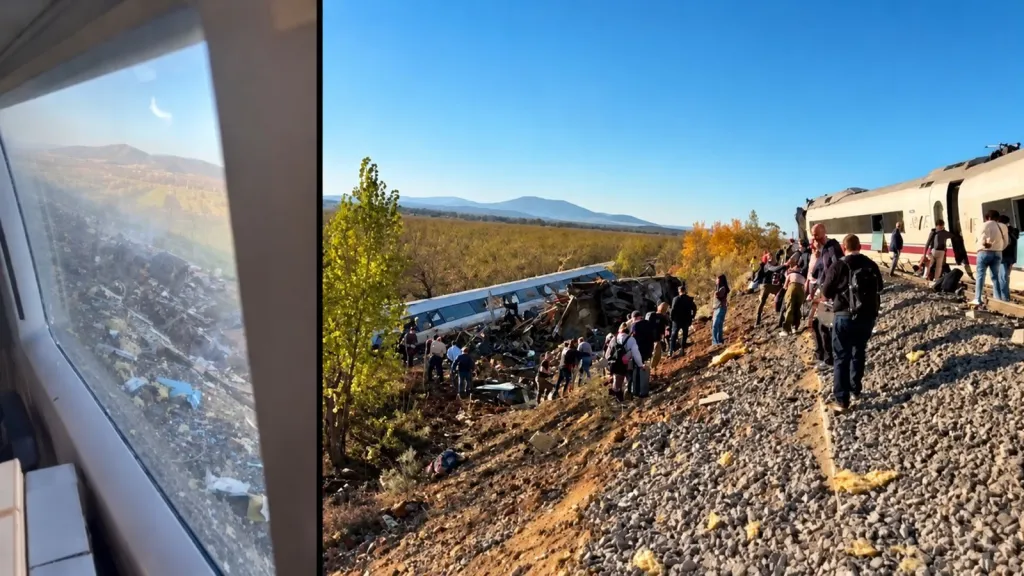
At least 39 people were reported dead after two high-speed trains collided in central Spain on Wednesday morning, according to initial reports cited by The Independent. The crash involved trains operated by Spain’s Renfe and private rail company Iryo in Toledo province, triggering the suspension of high-speed rail services connecting Madrid with southern Spain.
The collision occurred shortly after 9 am local time, according to the initial report. A spokesperson for the Castilla-La Mancha regional government said the impact caused two carriages to derail.
Spain’s rail Infrastructure operator, ADIF, confirmed that the accident occurred on Wednesday morning and announced the suspension of services along the affected route. Emergency workers were deployed to assist passengers, rescue survivors and assess the extent of the damage.
The incident has raised fresh concerns about railway safety in Spain, following another deadly train accident earlier in 2026. Authorities were working at the scene as information about the casualties and circumstances of the latest collision continued to emerge.
What Happened in the Spain High-Speed Train Crash?
The collision involved two high-speed passenger trains operated by Renfe and Iryo. According to initial reports, the accident happened in Toledo province, in central Spain, shortly after 9 am local time on Wednesday, October 28.
A local news report indicated that one train struck the rear of the other, knocking two carriages off the tracks. Early accounts described the incident as a rear-end collision, although the full circumstances and sequence of events had not been established in the initial reporting.
ADIF confirmed that the collision disrupted railway operations along the Madrid-Andalusia high-speed corridor. The infrastructure operator announced that services had been suspended following the accident.
Emergency teams were sent to the site to assist passengers and respond to the casualties. As rescue operations continued, officials faced the task of identifying victims, assessing injuries and determining the precise circumstances of the collision.
At Least 39 People Reported Dead
Initial reports put the death toll at at least 39 people. The Independent reported the figure as details of the collision emerged, while emergency personnel continued working at the scene.
The number of casualties in a major railway accident can change as rescue teams gain access to damaged carriages and authorities receive information from hospitals. The initial death toll should therefore be understood in the context of a developing emergency rather than treated as a final assessment.
Passengers were also reported to have suffered injuries. Emergency workers were focused on reaching people trapped or injured in the most severely damaged sections of the trains.
Spanish Health Minister Mónica García said rescue personnel were concentrating on recovering survivors and bodies from the two most damaged carriages. She added that injured passengers had been transported to hospitals across the region.
“It was a high-speed impact, so we are expecting this to be a tragedy,” García said while addressing the press.
Her remarks reflected the severity of the damage and the challenges facing emergency services as they worked to reach affected passengers.
Rail Services Suspended Between Madrid and Andalusia
The crash forced the suspension of high-speed rail services along a major route connecting Madrid with destinations in southern Spain.
ADIF announced that railway traffic had been interrupted following the collision. According to an Associated Press report cited in the initial coverage, services were suspended between Madrid, Ciudad Real and Andalusia.
The disruption affected a key rail corridor used by passengers travelling between the Spanish capital and southern parts of the country. The suspension was necessary while emergency teams worked at the accident site and railway authorities assessed the condition of the tracks and infrastructure.
The interruption also created uncertainty for passengers scheduled to travel along the affected route. The initial reports did not provide a confirmed timetable for restoring normal services.
Railway authorities were expected to assess the damage and coordinate the response before determining when trains could resume operating safely. The duration of the disruption would depend on the emergency response and subsequent inspections.
Spanish Prime Minister Pedro Sánchez Responds to the Crash
Spanish Prime Minister Pedro Sánchez expressed concern over the collision and said he was in contact with senior officials responsible for transport and regional administration.
In a post on X on Wednesday, Sánchez said he was shocked by the serious train accident in Toledo. He added that he remained in constant contact with the transport minister, Óscar Puente, and the president of Castilla-La Mancha, Emiliano García-Page.
The prime minister also highlighted the work being carried out by emergency services to assist those affected and protect their safety.
“Emergency services are working on the ground to assist those affected and ensure their safety, in coordination with all the involved administrations,” Sánchez said in his post.
He also expressed solidarity with the victims and their families, adding: “My affection, solidarity, and support to all the victims and their families.”
The response indicated that national and regional authorities were coordinating their efforts as the emergency unfolded. The immediate priority remained assisting injured passengers, recovering victims and establishing the full extent of the accident.
Health Minister Says Rescue Teams Are Focusing on Damaged Carriages
Spanish Health Minister Mónica García said emergency workers were concentrating on the two most damaged train carriages, where they were attempting to rescue survivors and recover bodies.
The minister also confirmed that injured passengers had been transferred to different hospitals in the region. The distribution of patients across medical facilities was part of the emergency response to the collision.
Rescue operations following a high-speed train crash can be complicated by the condition of derailed carriages, damaged equipment and the need to reach passengers safely. The minister’s remarks highlighted the difficulties emergency personnel faced while working through the wreckage.
Authorities had not established all the details of the incident in the initial reports. The cause of the collision and the complete circumstances leading up to it remained matters requiring further investigation.
Spain Faces Fresh Questions About Railway Safety
The Toledo collision comes months after another deadly railway accident in southern Spain. In January 2026, a train derailment followed by a collision with an incoming train killed 45 people, according to the supplied report.
The January crash was described in the initial coverage as Spain’s deadliest railway accident since a 2013 disaster that killed 80 people.
The latest collision has brought railway safety back into focus as authorities respond to another major incident involving passenger trains. However, the precise cause of the Toledo crash had not been established in the initial reports, and no conclusion about responsibility or any technical failure could be drawn from the available information.
Investigators will need to establish the sequence of events leading to the collision and examine the relevant operational circumstances. Until the findings are available, explanations about what caused the trains to collide remain unconfirmed.
What Happens Next in the Toledo Train Crash Investigation?
The immediate response centres on rescue operations, medical treatment for injured passengers and the recovery of victims from the damaged carriages. Emergency services are also working with the relevant authorities to manage the aftermath of the collision.
Railway officials will need to assess the condition of the affected infrastructure before services can safely resume along the suspended route. The disruption between Madrid, Ciudad Real and Andalusia could continue while the response and necessary inspections are carried out.
Authorities will also need to establish the circumstances surrounding the collision. The initial reports described a train striking the rear of another, but the available information did not provide a complete explanation of how the accident occurred.
The casualty figures and operational impact may become clearer as emergency services complete their work and officials issue further updates. The initial report of at least 39 deaths reflects the seriousness of the disaster, but the final toll and the findings of any investigation depend on information confirmed by the authorities.
Key Facts About the Spain Train Crash
- Location: Toledo province in central Spain.
- Date: Wednesday, October 28, 2026.
- Trains involved: Two high-speed trains operated by Renfe and Iryo.
- Initial reported death toll: At least 39 people.
- Damage: Two carriages were reported to have derailed.
- Rail disruption: High-speed services between Madrid, Ciudad Real and Andalusia were suspended.
- Emergency response: Rescue teams worked to reach survivors, recover victims and transport injured passengers to hospitals.
- Investigation: The full circumstances and cause of the collision had not been established in the initial reports.
Note: The casualty figure in the headline reflects the initial report supplied for this article. In a developing incident, figures may change as authorities release updated information.
For breaking news and live news updates, like us on Facebook or follow us on Twitter and Instagram. Read more on Latest World on thefoxdaily.com.




COMMENTS 0