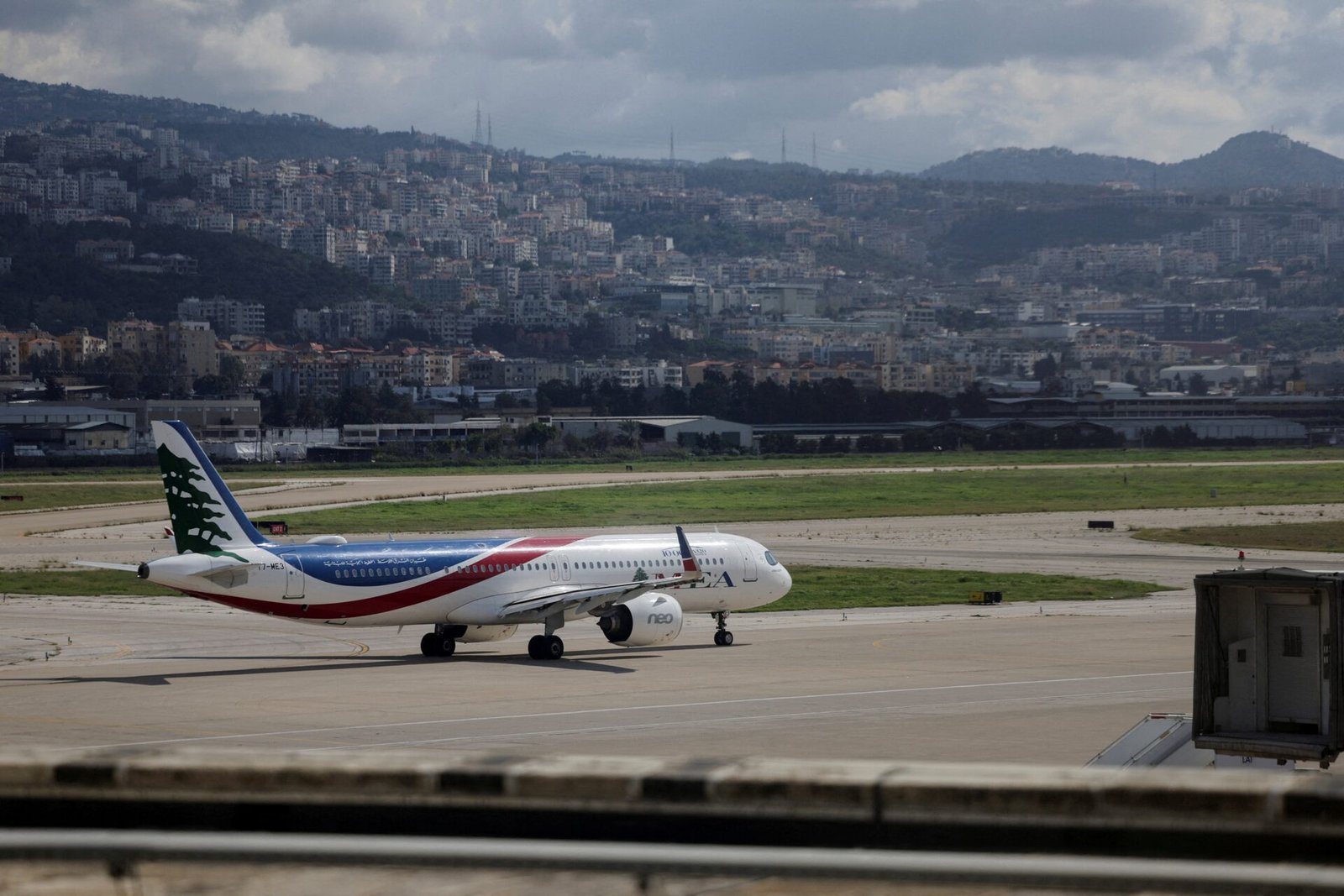
US President Donald Trump’s effort to restore direct air travel between the United States and Lebanon has encountered a significant obstacle after the United Nations’ aviation agency found that Beirut’s main international airport lacks valid certification and has several safety-related deficiencies.
The International Civil Aviation Organization (ICAO) identified shortcomings at Beirut-Rafic Hariri International Airport and within Lebanon’s aviation regulatory system during a technical assistance mission conducted in July, according to a summary of an internal report seen by Reuters.
The findings raise questions about how quickly direct flights between Beirut and the United States can resume. Although Trump announced the initiative in July and signed an order last month to allow direct services, airlines would still need the necessary safety reviews and regulatory clearances before operations could begin.
Two senior industry officials familiar with the matter told Reuters they expected the ICAO findings to delay the restoration of direct service. The concerns include inadequate firefighting capabilities for certain aircraft, the absence of an airport emergency plan and an expired conditional certification.
Lebanese officials, however, say they are working to address the deficiencies. Public Works and Transport Minister Fayez Rasamny said efforts to certify the airport would begin on Saturday, with the Lebanese Civil Aviation Authority (LCAA) expecting to issue conditional certification in the coming days.
The dispute highlights the gap between Washington’s diplomatic ambition to restore air links and the technical requirements that must be satisfied before airlines can safely operate long-haul services to Beirut.
Trump’s plan to restore direct US-Beirut flights
Trump announced plans to revive direct flights between the United States and Lebanon in July. He subsequently signed an order last month directing the US government to allow direct air service between the two countries, reversing a suspension that has remained in place for approximately four decades.
The suspension followed the hijacking of TWA Flight 847 in 1985. The aircraft was seized and forced to land in Beirut, becoming a defining incident in the history of US-Lebanon aviation relations.
Restoring direct flights would represent a significant change for travellers between the two countries, who currently have to rely on connecting services. Lebanon already has air links with several major European cities, but there are no direct commercial flights between Beirut and the United States.
The Lebanese embassy in Washington welcomed Trump’s order, describing it as “a significant first step toward restoring direct air service between Lebanon and the United States.”
However, the presidential order does not automatically clear the way for airlines to launch flights. The US Federal Aviation Administration (FAA) and the Transportation Security Administration (TSA) would still need to conduct safety reviews before direct services could resume.
The ICAO findings have introduced another layer of complexity by identifying deficiencies that Lebanese authorities must address as they work towards meeting the requirements for airport certification and international operations.
ICAO identifies major airport safety shortcomings
The ICAO technical assistance mission to Lebanon in July identified several concerns at Beirut-Rafic Hariri International Airport. The agency prepared its internal report at the request of the Lebanese Civil Aviation Authority and sent it to Lebanon in September.
According to the report summary, the airport’s firefighting resources are equipped to handle single-aisle aircraft but are not sufficient for twin-aisle jetliners commonly used on long-haul international routes.
The airport also lacks an emergency plan, while its conditional certification has expired. These findings raise questions about its readiness to accommodate the type of aircraft that could be used for direct flights from the United States.
The report summary described the certification issue as urgent, stating: “This is a serious and time-critical matter that must be addressed immediately to preserve the airport’s operational status.”
The findings do not simply concern the introduction of a new route. They point to broader issues involving the airport’s emergency preparedness and its ability to meet the operational requirements expected of an international aviation facility.
Firefighting capacity is a critical component of airport safety because emergency services must be equipped to respond to incidents involving the aircraft operating at a facility. A gap between existing resources and the requirements of larger aircraft can complicate approval for certain operations.
The absence of an emergency plan is another concern identified by ICAO. Airport emergency arrangements are intended to establish how relevant authorities and response teams coordinate when an incident threatens passengers, crews or airport operations.
The expired conditional certification presents an additional regulatory obstacle. Until the relevant requirements are addressed and certification is restored, the proposed return of direct US flights faces uncertainty.
Lebanon’s aviation regulator faces oversight challenges
The ICAO assessment also identified weaknesses within Lebanon’s aviation regulatory system, including a shortage of qualified inspectors responsible for overseeing air traffic control licensing.
The report further found that Lebanon did not have a fully established, operational and independent aircraft accident investigation authority with clearly defined responsibilities.
These concerns extend beyond the physical infrastructure of Beirut airport. An effective aviation system also depends on regulators being able to oversee licensing, enforce safety requirements and investigate accidents independently.
The shortage of qualified inspectors could affect the regulator’s ability to carry out its oversight responsibilities. Similarly, the absence of a fully operational and independent accident investigation authority raises questions about whether the institutional arrangements necessary for aviation investigations are sufficiently established.
Addressing these issues may require administrative and regulatory changes alongside improvements to airport infrastructure and emergency arrangements.
The ICAO findings were also discussed during a two-day workshop held last month, where officials from the agency, the Lebanese government, the FAA and other participants considered efforts to restore direct air service. The industry officials and an agenda from the meeting reviewed by Reuters indicated that the concerns had been raised during those discussions.
The workshop underscored the range of agencies involved in assessing whether direct flights can return. Even with political support for the initiative, aviation authorities must be satisfied that the airport and the wider regulatory system meet the necessary standards.
Lebanon says corrective measures are underway
Lebanon’s government has said it is taking steps to address the problems identified by ICAO. Public Works and Transport Minister Fayez Rasamny said work to certify Beirut airport would begin on Saturday, and the Lebanese Civil Aviation Authority expected to issue conditional certification in the coming days.
Rasamny also disputed the suggestion that the concerns had caught Lebanese authorities entirely by surprise. He said the civil aviation regulator had already identified most of the issues and had begun corrective action before the report’s findings became a focus of attention.
“Most of the issues highlighted in the report had already been identified by the LCAA, and corrective action had already been initiated,” Rasamny said in a statement.
The minister added that progress had been delayed by war, which has continued to affect the security environment in and around Lebanon.
Israeli forces remain in southern Lebanon and have continued strikes despite a US-brokered framework agreement signed in June between Israel and Lebanon. Hezbollah, the Iran-backed armed group that was not a party to the agreement, has rejected it.
The continuing conflict adds to the challenges facing the aviation sector. While Lebanese authorities work to resolve certification issues, the wider security situation remains an important consideration for airlines assessing whether to introduce or restore services.
The Lebanese government’s efforts to secure conditional certification represent a step towards addressing the immediate regulatory concerns. However, the report’s findings suggest that several operational and institutional shortcomings must be resolved before the proposed flights can move forward.
Security reviews remain necessary before flights can resume
Even after Lebanese authorities address the airport’s certification issues, the United States will still need to complete its own safety assessments. The FAA and the Transportation Security Administration would have to review the relevant requirements before direct services could be authorised.
The US State Department currently advises American citizens against travelling to Lebanon because of safety concerns. It has also highlighted risks associated with the regional security environment.
The department said the FAA advises caution for flights operating in Lebanese airspace because of heightened military activity in or around Syria. The risks include the possibility of errant long-range surface-to-air missiles originating from Syrian territory.
Those warnings illustrate why airport certification alone may not determine whether American airlines are prepared to resume service. Carriers must also consider the security risks associated with operating flights through the region.
The FAA and ICAO declined to comment on the findings when approached by Reuters. Their lack of comment does not change the outstanding issues identified in the report summary or the requirement for further safety reviews.
Three US airline officials told Reuters, speaking on condition of anonymity, that they did not expect American carriers to resume flights to Lebanon in the near term. They cited security concerns as a major obstacle.
Their assessment suggests that restoring direct flights may take longer than the political announcement initially indicated. Airlines must evaluate whether the airport, regulatory environment and surrounding airspace provide acceptable conditions for regular commercial operations.
Middle East conflict continues to disrupt air travel
The proposed return of US flights to Beirut comes as security concerns continue to disrupt aviation across the Middle East. Foreign airlines have avoided large areas of regional airspace because of missile and drone threats following US and Israeli strikes on Iran in February that triggered wider hostilities.
An airport in Saudi Arabia was the latest site to come under attack, according to the report, underscoring the risks facing aviation infrastructure during periods of regional conflict.
Airlines must account for these threats when deciding which routes to operate, which airspace to avoid and whether destinations can be served safely. Changes in military activity can affect flight planning even when an airport itself remains operational.
For Lebanon, these regional risks compound the certification and regulatory challenges identified by ICAO. The country needs to address the technical issues at Beirut airport while airlines weigh the wider security situation.
Despite the difficulties, Lebanon and its national carrier have received domestic praise for maintaining air navigation services and flights. Continued aviation activity has helped support an economy that depends heavily on tourism and remittances from Lebanese citizens living abroad.
Restoring direct flights to the United States could provide travellers with another connection between Lebanon and a major overseas market. However, the timing will depend on whether the necessary safety requirements can be met and whether airlines consider the regional risks manageable.
European airlines also assess airport safety independently
The ICAO report has implications beyond the proposed return of American carriers. The European Union Aviation Safety Agency (EASA) said it was aware of the assessment and emphasised that European airlines must conduct their own evaluations of an airport’s safety and operational readiness before launching services.
This means that the decision to operate flights to Beirut is not determined solely by the position of the US government or the Lebanese authorities. Airlines and relevant aviation regulators must assess whether the conditions are suitable for the services they intend to provide.
Although Lebanon continues to maintain air links with several major European cities, each carrier must consider its own operational requirements and the safety of its planned routes.
The ICAO findings could therefore influence broader discussions about aviation operations at Beirut airport, depending on how quickly the identified deficiencies are addressed and how individual regulators and airlines evaluate the results.
What happens next for Trump’s direct-flight plan?
The immediate priority for Lebanon is to address the certification and safety shortcomings identified by ICAO. The Lebanese Civil Aviation Authority has said it expects to issue conditional certification in the coming days, while the government maintains that corrective measures were already underway.
That process will be important, but it is not the only requirement for restarting direct US-Beirut flights. The FAA and TSA must still conduct their safety reviews, and American airlines will need to decide whether operating the route is practical given the continuing security concerns.
The US administration’s support for restoring direct air service has created a potential path towards ending a suspension that began after the 1985 hijacking of TWA Flight 847. Yet the latest assessment shows that diplomatic decisions cannot replace the technical standards required for international aviation.
Lebanon’s ability to resolve the airport’s certification problems, strengthen regulatory oversight and maintain safe operations will be central to the process. The continuing conflict and warnings about regional airspace will also remain significant considerations for airlines.
For now, Trump’s plan remains dependent on further technical and security assessments. Lebanese authorities say they are working to address the problems, but the ICAO findings and concerns expressed by US airline officials indicate that the return of direct flights is unlikely to be immediate.
The effort to restore the route has therefore reached a crucial stage: political approval is in place, but airport certification, regulatory readiness and regional security must still align before direct commercial services can return.
For breaking news and live news updates, like us on Facebook or follow us on Twitter and Instagram. Read more on Latest World on thefoxdaily.com.





COMMENTS 0