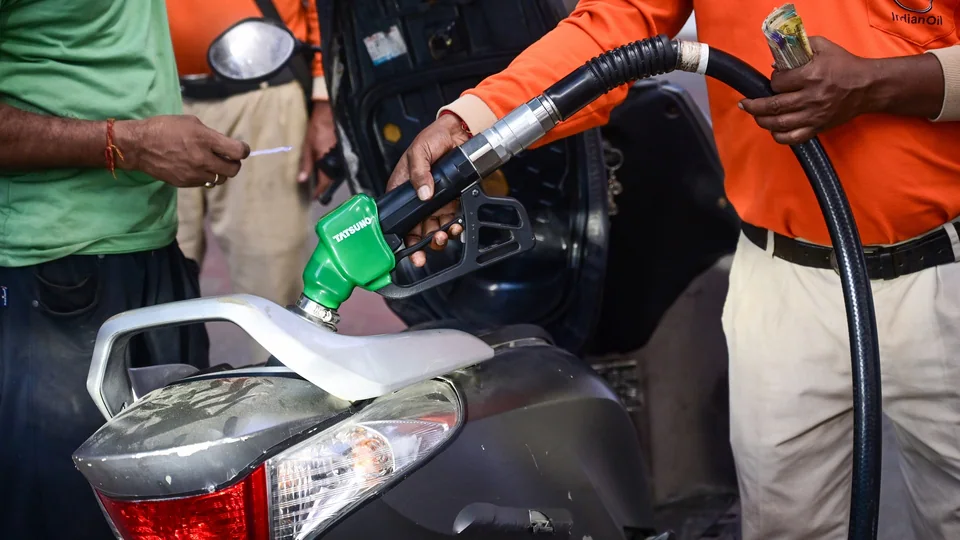
The Karnataka government has urged the Centre to review the implementation of the E20 petrol programme, alleging that inspections and independent laboratory tests found ethanol levels exceeding the prescribed 20% blend in several fuel samples collected across the state. Karnataka Minister for Food, Civil Supplies and Consumer Affairs Rizwan Arshad has called for a discussion with the Union Government, arguing that the transition to higher ethanol-blended fuel must not compromise consumer interests.
In a letter dated November 17 to Union Minister for Petroleum and Natural Gas Hardeep Singh Puri, Arshad presented the findings of statewide inspections and independent tests. He clarified that Karnataka was not opposed to ethanol blending but was concerned about alleged over-blending, inconsistent fuel quality and the possible impact on consumers and vehicles.
The issue comes amid the wider implementation of India’s E20 programme, which aims to increase the use of ethanol in petrol. Karnataka believes that the transition requires adequate preparation of vehicles, fuel infrastructure, storage facilities and testing systems.
Karnataka Alleges Excess Ethanol In Petrol Samples
According to Arshad, state officials inspected 63 retail fuel outlets across different districts in September 2026. The inspections covered outlets operated by Indian Oil Corporation Limited (IOCL), Bharat Petroleum Corporation Limited (BPCL), Hindustan Petroleum Corporation Limited (HPCL) and Mangalore Refinery and Petrochemicals Limited (MRPL).
The collected samples were sent through the Oil Marketing Companies’ (OMCs) State Level Coordinator to designated laboratories operated by the three public sector oil marketing companies. However, the minister said that reports for only 42 of the 63 samples had been received so far, and none of those reports specified the actual ethanol content.
When the state government sought clarification, it was reportedly informed that Research Octane Number (RON) was the parameter used to determine compliance. However, Arshad said the OMCs had acknowledged that Indian Standard IS 17021 requires ethanol content to be measured in blended petrol, but that no such measurement had been carried out in the tests.
Reports for the remaining 21 samples were also awaited, with the minister saying that no explanation had been provided for the delay.
Independent Tests Find Ethanol Levels Above 20%
Following the concerns over the initial laboratory reports, the Karnataka government collected fresh fuel samples and sent them to independent laboratories accredited by the National Accreditation Board for Testing and Calibration Laboratories (NABL).
Arshad said that 11 out of the 14 samples tested were found to contain more than 20% ethanol. The highest reported concentration was over 31%.
The minister further stated that ethanol content across the tested samples ranged from 13.5% to 31.2%, indicating significant variations from the prescribed 20% blend. These findings have raised questions about the consistency of fuel blending and the effectiveness of existing monitoring procedures.
He also flagged concerns about premium high-speed petrol, which is sold at prices ranging from approximately Rs 120 to Rs 140 per litre. According to the minister, tests had also found high ethanol content in these fuel grades.
These are findings presented by the Karnataka government and have not been established as a nationwide pattern. The OMCs have disputed the state’s testing process, making further independent verification important.
Oil Marketing Companies Question Karnataka’s Testing Procedure
The OMCs reportedly contested the Karnataka government’s initial findings, arguing that the fuel samples had not been collected according to the prescribed procedure and raising questions about their density.
However, Arshad rejected these allegations, maintaining that authorised state officers had collected the samples in accordance with Clause 8 of the Motor Spirit and High Speed Diesel (Regulation of Supply, Distribution and Prevention of Malpractices) Order, 2005.
He said counterpart samples were sealed and handed over on the spot, following the prescribed procedure. The disagreement between the state government and the oil companies has added another layer to the debate over how ethanol content should be monitored and verified.
Arshad also suggested that the state’s inspections may have had a deterrent effect, with indications that ethanol blending levels could have been corrected subsequently. However, he stressed that continuous monitoring would be necessary to prevent similar deviations in the future.
Karnataka Questions Changes To Fuel Dispenser Verification Rules
Apart from ethanol content, the Karnataka government has raised concerns about changes to the rules governing the verification of petrol and diesel dispensing machines at retail outlets.
Arshad objected to two Central Government notifications that, according to the state, weakened existing safeguards for consumers.
- December 18, 2025 notification: Doubled the mandatory verification interval for petrol and diesel dispensers from 12 months to 24 months.
- May 8, 2026 notification: Allowed private government-approved testing centres to verify fuel dispensers, a responsibility previously handled by government inspectors.
To assess the impact of these changes, Karnataka’s Department of Legal Metrology conducted a statewide inspection survey. According to the minister, 101 fuel outlets were found dispensing fuel beyond the maximum permissible error and were booked.
Fines amounting to Rs 6.66 lakh were collected during the enforcement exercise. The findings have strengthened the state’s argument for retaining regular government inspections of fuel dispensing equipment.
Karnataka has decided not to implement either notification and will continue conducting annual verification of all fuel dispensers through government inspectors. The state has also written to Union Minister for Consumer Affairs, Food and Public Distribution Pralhad Joshi, seeking reconsideration of the changes.
Five Measures Karnataka Wants The Centre To Consider
In his letter to Hardeep Singh Puri, Arshad proposed five measures aimed at improving transparency, fuel quality monitoring and consumer protection under the E20 programme.
1. Display Actual Ethanol Content At Fuel Stations
Karnataka wants every petrol retail outlet to prominently display the actual ethanol percentage in each available grade of petrol. This would allow customers to know the composition of the fuel before making a purchase.
2. Mention Ethanol Percentage On Fuel Bills
The state has also proposed printing the ethanol percentage on every fuel bill or receipt. This would give consumers a record of the fuel blend purchased and improve transparency at retail outlets.
3. Make E10 And Ethanol-Free Petrol Available
Arshad has sought the availability of E10 petrol and ethanol-free petrol alongside E20 at affordable prices until vehicles across the country become fully compatible with higher ethanol blends.
This proposal is intended to give consumers more fuel choices, particularly those who own older vehicles or models that may not be designed for higher ethanol concentrations.
4. Introduce Independent Fuel Testing
Karnataka has called for an independent and random fuel-testing mechanism through NABL-accredited laboratories. The state wants every laboratory report to clearly specify the ethanol content rather than relying only on other fuel-quality parameters.
5. Create A Dedicated E20 Compensation Fund
The state has also proposed creating a dedicated E20 compensation fund. The objective would be to compensate consumers whose vehicles suffer damage due to petrol containing ethanol above the prescribed limits.
Such a mechanism, according to the proposal, would provide consumers with a channel for seeking compensation if excessive ethanol content is established as the cause of vehicle-related damage.
Why Is Karnataka Seeking A Review Of The E20 Programme?
India’s ethanol blending programme is intended to reduce dependence on conventional fossil fuels, support domestic ethanol production and improve energy security. However, Karnataka’s concerns focus on the manner in which the transition is being implemented and whether the supporting infrastructure is ready.
Vehicles designed and calibrated for particular ethanol blends may not necessarily be compatible with every higher concentration. Fuel composition, engine calibration, storage systems and other vehicle components can influence compatibility. This makes accurate labelling and consistent fuel-quality checks important for consumers.
The state has argued that a transition of this scale requires the entire ecosystem to be prepared, including vehicles, fuel infrastructure, dispensing equipment, storage facilities and testing laboratories.
Arshad said, “The Ethanol Blending Programme cannot come at the cost of the citizens. A transition of this scale needs the whole ecosystem to be ready, including fuel infrastructure and ethanol-compliant vehicles, and that transition takes time.”
Karnataka Wants Centre-State Consultation On E20 Implementation
In his letter, Arshad urged the Union Government to review the implementation of the E20 programme in consultation with state governments. He said Karnataka had placed its inspection findings and independent laboratory results before the Centre and was open to a detailed discussion.
He added, “I would therefore urge you to review the implementation of the E20 programme in the light of these findings, in consultation with the States. Karnataka has now placed all its evidence before the Government of India and would welcome a detailed discussion at the earliest, so that together we can protect the people and restore public trust.”
The Karnataka government’s position is that ethanol blending should continue with adequate safeguards, rather than being implemented at the expense of fuel quality and consumer confidence. The Centre’s response to the state’s findings and proposals will be important in determining whether changes are made to the monitoring and implementation framework.
For now, the dispute highlights the need for reliable fuel testing, transparent labelling and effective enforcement as India continues its transition towards higher ethanol-blended petrol.
For breaking news and live news updates, like us on Facebook or follow us on Twitter and Instagram. Read more on Latest Automobile on thefoxdaily.com.





COMMENTS 0