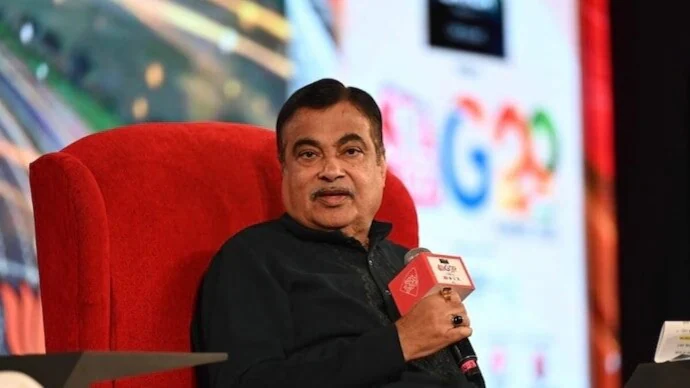
Union Road Transport and Highways Minister Nitin Gadkari has defended the government’s ethanol-blending programme, dismissing claims that ethanol-blended petrol is damaging vehicles. He alleged that a paid campaign had been launched to create fear among motorists and discourage the use of ethanol in petrol.
Speaking at the 14th CII Bioenergy Summit in New Delhi, Gadkari accused oil-import lobbies of spreading doubts about ethanol-blended fuel to protect their commercial interests. He reiterated that alternative fuels are important for reducing India’s dependence on imported crude oil and addressing pollution.
“No one’s car is getting damaged. The car is fine now,” Gadkari said while responding to criticism of ethanol-blended petrol.
His remarks come amid continuing public debate over the use of E20 petrol, which contains 20% ethanol, particularly its suitability for older vehicles and its potential impact on fuel efficiency.
Gadkari Accuses Oil Lobby of Campaign Against Ethanol
Gadkari alleged that a campaign had been launched two to three months earlier to portray ethanol-blended petrol as harmful to vehicles. According to the minister, the campaign was paid for and intended to create doubts among consumers about the safety of Ethanol Blending.
He accused oil-import lobbies of opposing the government’s ethanol push because greater use of domestically produced alternative fuels could affect their business interests.
The minister has consistently supported the expansion of ethanol blending as part of India’s broader strategy to diversify its energy sources. The country relies heavily on imported crude oil to meet its fuel requirements, making alternative fuels an important part of discussions around energy security.
At the CII Bioenergy Summit, Gadkari also highlighted several alternatives to conventional petrol and diesel, including ethanol, methanol, biodiesel and hydrogen.
His comments underline the government’s effort to promote a wider range of fuel options rather than relying exclusively on petroleum-based energy. However, the adoption of these alternatives also depends on production capacity, distribution infrastructure, vehicle compatibility and consumer confidence.
What Is E20 Petrol?
E20 petrol is a fuel blend containing 20% ethanol and 80% petrol. Ethanol is an alcohol-based fuel that can be produced from agricultural feedstocks and other biomass sources.
India has been expanding ethanol blending as part of its efforts to reduce crude oil imports, support domestic biofuel production and create additional demand for agricultural feedstocks.
For motorists, however, the shift towards higher ethanol blends has raised practical questions about mileage, engine compatibility and the long-term effects on vehicle components.
These concerns are particularly relevant for older vehicles that were manufactured before E20 compatibility became a consideration in vehicle design. The compatibility of a vehicle depends on its engine specifications and fuel-system materials, which is why manufacturers’ recommendations remain important when choosing fuel.
What Gadkari Said About E20 Petrol and Older Vehicles
Gadkari’s latest remarks follow his statement in Parliament in August, when he said E20 petrol was safe for older vehicles, including models manufactured before E20 compatibility standards were introduced.
He said laboratory studies and field trials had not identified abnormal wear and tear or major changes in vehicle performance after using the fuel.
The minister was responding to a question from DMK MP Constandine Ravindran, who sought clarification on the impact of nationwide E20 availability on older vehicles. The question specifically covered vehicles manufactured and registered before April 1, 2017, including BS-III models.
While defending the fuel, Gadkari acknowledged that E20 petrol could result in a reduction in fuel efficiency of around 2% to 6%.
This means motorists may notice some difference in mileage after switching to higher ethanol-blended petrol. The extent of the change can vary depending on the vehicle, its condition and driving conditions.
The distinction between vehicle damage and fuel efficiency is important. A possible reduction in mileage does not automatically mean that an engine is being damaged. These are separate issues that need to be evaluated independently.
Factors Other Than Fuel That Affect Vehicle Mileage
Gadkari also pointed out that fuel efficiency depends on several factors beyond the composition of petrol. Driving habits, vehicle maintenance and road conditions can all influence how much fuel a car consumes.
Some of the factors highlighted by the minister include:
- Driving habits: Frequent acceleration, sudden braking and aggressive driving can increase fuel consumption.
- Engine oil changes: Timely replacement of engine oil helps maintain engine performance and reduces unnecessary friction.
- Air-filter condition: A clean air filter supports proper airflow to the engine, while a clogged filter can affect performance.
- Tyre pressure: Incorrect tyre pressure can increase rolling resistance and reduce fuel efficiency.
- Wheel alignment: Poor alignment can create additional resistance and affect vehicle performance.
- Use of air conditioning: Running the air conditioner places an additional load on the engine and can increase fuel consumption.
These factors matter when comparing mileage figures before and after a change in fuel. A vehicle’s fuel efficiency can vary even when the fuel type remains unchanged.
For consumers, the practical approach is to follow the vehicle manufacturer’s fuel recommendations and maintenance schedule. Vehicle-specific guidance is especially relevant for older models, as compatibility can differ across manufacturers and engine designs.
Gadkari Pitches Alternative Fuels to Reduce India’s Oil Imports
Beyond defending ethanol blending, Gadkari used the summit to highlight the potential of biofuels and other alternative energy sources. He argued that expanding their use could help India reduce its dependence on imported petroleum products.
One of the initiatives he discussed was the development of around 3,000 upcoming GOBARdhan plants. These facilities are intended to convert organic waste into useful energy, creating an opportunity to make productive use of agricultural and other biodegradable waste.
The GOBARdhan initiative is also linked to the broader concept of a circular economy, in which waste materials are processed and converted into useful products instead of being discarded. Such projects could support local energy production while creating additional value from organic waste.
Gadkari also discussed the possibility of producing aviation fuel from ethanol. Aviation is a challenging sector to decarbonise because aircraft require energy-dense fuels and cannot easily switch to conventional battery-based power for long-distance flights.
Producing aviation fuel from alternative feedstocks could therefore become one area of development for the biofuel industry. However, commercial viability would depend on production technology, costs, fuel standards and the ability to manufacture sufficient quantities.
Another proposal highlighted by the minister involved converting carbon dioxide into urea. The idea reflects an effort to explore ways of using industrial emissions as a resource in the production of useful materials.
DME Could Offer an Alternative to LPG
Gadkari also highlighted dimethyl ether (DME) as another possible alternative fuel. DME can be used as a substitute for conventional LPG in suitable applications and could contribute to efforts to diversify India’s fuel supply.
India imports a substantial share of the petroleum products and energy resources it consumes. Expanding domestic alternatives could help reduce exposure to international price movements and supply disruptions.
However, replacing or supplementing existing fuels requires more than developing an alternative energy source. Production facilities, storage systems, transportation networks, distribution arrangements and compatible equipment must also be established.
For DME to become a widely used alternative to LPG, these practical requirements would need to be addressed alongside questions of cost, safety and supply availability.
Why Ethanol Blending Matters for India’s Energy Security
India’s ethanol-blending programme is closely linked to its efforts to reduce crude oil imports. Since a significant portion of the country’s fuel requirements is met through imported petroleum, higher domestic production of alternative fuels could help diversify the energy mix.
Ethanol blending also creates an additional market for agricultural feedstocks used in biofuel production. This can connect the energy sector with agriculture and provide opportunities for domestic producers.
At the same time, the programme involves several challenges. Ethanol production requires suitable feedstock supplies, processing capacity and reliable distribution infrastructure. The expansion of blending levels must also be supported by vehicles and fuel systems designed or approved to use the relevant fuel mixture.
Consumer confidence is another important consideration. Motorists need clear information about vehicle compatibility, mileage expectations and manufacturer recommendations. Public statements defending ethanol blending may address some concerns, but transparent technical information remains essential for consumers making fuel choices.
What Motorists Should Watch Next
The debate over E20 petrol is likely to remain focused on three main issues: vehicle compatibility, fuel efficiency and the availability of clear guidance from automobile manufacturers.
Gadkari has maintained that studies and field trials have not found abnormal vehicle damage, while also acknowledging a possible 2% to 6% reduction in fuel efficiency. These points highlight why motorists should distinguish between concerns about engine damage and changes in mileage.
For owners of older vehicles, manufacturer guidance is particularly important. Compatibility can depend on the vehicle’s model, engine design and fuel-system components, so a general statement about E20 should not replace vehicle-specific recommendations.
The wider alternative-fuel agenda will also depend on how quickly India can expand biofuel production and supporting infrastructure. The proposed GOBARdhan plants, ethanol-based aviation fuel and DME are among the options discussed by Gadkari, but their broader impact will depend on implementation and commercial viability.
Ultimately, the minister’s remarks reflect the government’s continued push to make alternative fuels a larger part of India’s energy mix. The success of that transition will depend not only on reducing oil imports but also on ensuring that new fuel options are technically suitable, economically practical and supported by reliable information for consumers.
For breaking news and live news updates, like us on Facebook or follow us on Twitter and Instagram. Read more on Latest Business on thefoxdaily.com.






COMMENTS 0